
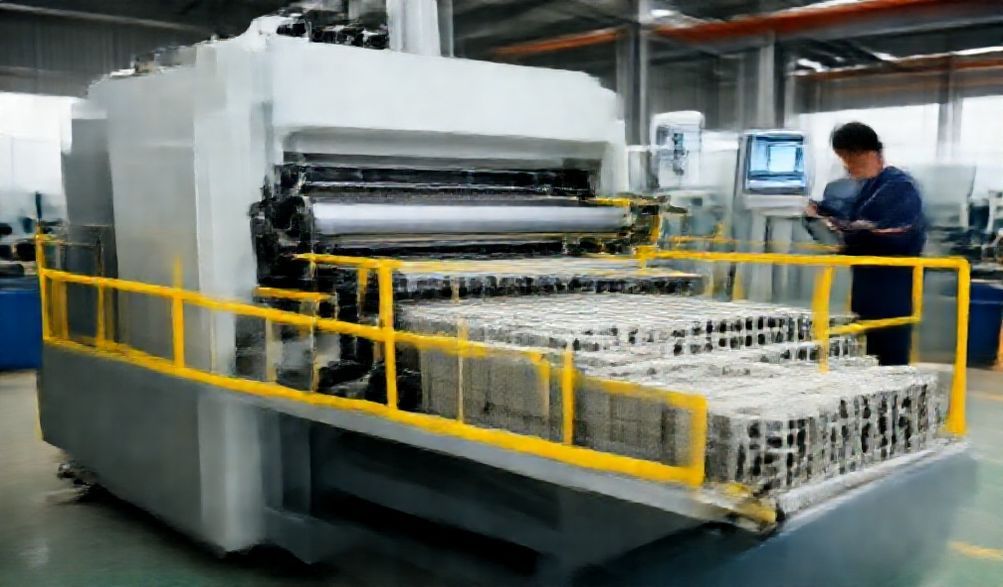
Cement Bricks Making Machine Cost: A 2026 Investment Guide from FUDA Block Making Factory
Finding the right block making machine is crucial for launching or scaling your construction business, but unpredictable costs and hidden expenses can derail even the most carefully planned project budget. It’s a common pain point: you see an attractive sticker price, only to later face steep installation fees, unexpected operating costs, or premature breakdowns that halt production.
At FUDA Block Making Factory, with over two decades of manufacturing excellence and a proven track record of serving clients in more than 50 countries, we understand this dilemma intimately. We know that the true cost of a cement bricks making machine is far more than just its purchase price—it’s an investment in your business’s future productivity and profitability.
This comprehensive guide is designed to cut through the confusion. We will break down the complete financial picture of investing in a block making machine. We’ll move beyond the initial quote to explore the key factors that impact your long-term return on investment (ROI), from production capacity to after-sales support.
เมื่อจบบทความนี้ คุณจะมีความเข้าใจที่ชัดเจนเกี่ยวกับ:
* Realistic price ranges for different machine types.
* The critical factors that drive costs up or down.
* The ongoing operational expenses you must budget for.
* A strategic framework for evaluating suppliers to secure the best long-term value for your investment.
Understanding the Investment: More Than Just a Purchase Price
When business owners ask, “How much does a block machine cost?”, they are often only thinking of the invoice amount. This narrow focus can lead to costly mistakes. The savvy investor looks at the ต้นทุนรวมในการเป็นเจ้าของ (TCO).
The Total Cost of Ownership (TCO) Framework
TCO is a holistic financial assessment that accounts for every expense associated with a machine throughout its operational life. Choosing a machine based solely on the lowest purchase price often results in a significantly higher TCO.
A comprehensive TCO for a cement brick making machine includes:
- ราคาซื้อครั้งแรก The base cost of the machine.
- การติดตั้งและการทดสอบระบบ Costs for foundation work, electrical hookup, and initial setup by technicians.
- การฝึกอบรม Ensuring your operators know how to run the machine efficiently and safely.
- Operating Costs: The ongoing expenses of power (electricity or diesel), labor, and raw materials (cement, aggregates).
- Maintenance & Parts: The cost of routine servicing, wear parts (like molds, liners, and hydraulic seals), and unexpected repairs.
- ค่าใช้จ่ายจากการหยุดทำงาน The lost revenue and project delays when a machine is non-operational due to breakdowns or lack of spare parts.
In essence, a slightly more expensive, high-quality machine from a reputable manufacturer like FUDA often has a lower TCO. It runs more reliably, consumes less power, has accessible spare parts, and comes with expert support to minimize costly downtime.
Core Price Ranges: From Manual to Fully Automatic Systems
Machines are broadly categorized by their level of automation and output, which directly correlates to price. Here’s a general overview:
- Manual & Semi-Automatic Machines ($1,500 – $15,000): These are entry-level, often mobile machines. Operation requires significant manual labor for feeding mix and removing blocks. Ideal for very small-scale projects, rural construction, or entrepreneurs testing the market. Output is low, and consistency depends heavily on the operator’s skill.
- Stationary Block Making Machines ($18,000 – $80,000): This is the sweet spot for small to medium-scale factories. These electric or diesel-powered machines are fixed in place and produce blocks using high-pressure vibration. They offer a excellent balance of output, consistency, and affordability. Models like the FUDA QMJ series can produce thousands of solid, hollow, or paving blocks per day with a small crew.
- Fully Automatic Production Lines ($85,000 – $350,000+): This is a complete factory-in-a-line. It includes automatic batching, mixing, conveying, block molding, curing, and stacking/palletizing. Labor requirements are minimal (often just 1-3 supervisors), and output is massive and consistent. This is a high-capital investment for large-scale commercial production or government projects, where the ROI comes from volume and efficiency.
Key Factors That Determine Cement Brick Machine Cost
Why does one machine cost $25,000 while another with a similar description costs $45,000? The devil is in the details. Here are the primary cost drivers.
กำลังการผลิตและผลผลิต (บล็อกต่อชั่วโมง)
This is the most direct cost factor. A machine designed to produce 2,000 blocks per 8-hour shift has a fundamentally different design—and price—than one built to produce 2,000 blocks ต่อชั่วโมง.
* Higher output requires a more powerful vibration system, a larger and more robust hydraulic press, a bigger hopper, and stronger structural steel. All of this increases material and manufacturing costs.
* Strategic Tip: Carefully match the machine’s capacity to your realistic business plan. Over-investing in unused capacity hurts your cash flow, while under-investing leaves money on the table and frustrates customers with delayed orders.
Level of Automation: Manual, Semi-Auto, Fully Automatic
Automation is a trade-off between upfront capital and long-term operational expense.
* Manual/Semi-Auto: Low upfront cost, but high and variable long-term labor cost. Output and quality can fluctuate.
* อัตโนมัติเต็มรูปแบบ: High upfront investment, but drastically reduced labor costs and superior, consistent quality. The ROI period is calculated on labor savings and increased output. For example, a client in Kenya replaced 8 manual stations with one FUDA automatic line, reducing their labor force from 16 to 4 while tripling daily output, paying back the investment in under 22 months.
Machine Type & Mold Versatility
- Standard Brick Machines: Designed primarily for solid or common hollow blocks. They are typically the most affordable option within each category.
- เครื่องจักรอเนกประสงค์: These can produce a wide array of products—interlocking paving stones, garden curbs, slope protection blocks, and various hollow block sizes—by changing the mold. This versatility commands a higher price but opens multiple revenue streams from a single investment.
- Mold Cost: Remember, molds are critical wear parts. The cost and availability of high-quality, hardened steel molds (like those used at FUDA) should be factored in. Cheap molds wear out quickly, affecting block quality and increasing long-term costs.
Brand, Quality, and Country of Origin
Not all steel is created equal, and not all engineering is equally robust.
* The Established Brand Premium: Brands like FUDA invest heavily in R&D, use certified high-grade steel for frames and components, and integrate name-brand hydraulic systems (e.g., Rexroth, Yuken) and PLC controls (e.g., Siemens, Mitsubishi). This ensures reliability, durability, and precision, which justifies a higher initial price.
* The Hidden Cost of “Cheap” Alternatives: A lower price tag often signals compromises: thinner, lower-grade steel that fatigues; generic hydraulics that leak and fail; poor vibration isolation leading to cracks; and no rigorous factory testing. The result? Frequent breakdowns, shorter machine lifespan, poor block quality, and ultimately, a much higher TCO. The savings on the purchase order are quickly erased by lost production and repair bills.
Beyond the Machine: Essential Associated Costs to Budget For
A successful block making plant is more than just the molding machine. Failing to budget for these associated costs is a common startup mistake.
Raw Material Preparation Equipment Cost
To feed your block machine, you need a consistent supply of well-mixed concrete. This may require:
* เครื่องบดและตะแกรง: To process raw aggregate to the correct size.
* Batching Plants: For precise measurement of cement, sand, and aggregate.
* เครื่องผสม: Pan or planetary mixers to create a homogeneous, workable mix.
* Conveyors: To move raw materials and mixed concrete to the block machine hopper.
Installation, Foundation, and Logistics
- Foundation: A stationary machine needs a solid, level concrete foundation. This is a civil work cost.
- Electrical Work: Machines require a dedicated power supply, often three-phase, installed by a qualified electrician.
- Shipping & Import Duties: Don’t forget the cost of sea/land freight, insurance, and any import taxes or customs clearance fees in your country. A reputable supplier will provide a clear CIF (Cost, Insurance, and Freight) quote.
Operating Costs: The Ongoing Expenses
This is where your monthly profit is determined.
* การใช้พลังงาน Electric models have defined kWh consumption. Diesel models have fuel costs. Automatic lines, while more efficient per block, have a higher absolute power draw.
* แรงงาน Factor in wages for machine operators, maintenance technicians, and material handlers. Automation reduces this number significantly.
* Wear Parts & Maintenance: Regular maintenance is non-negotiable. Budget for scheduled replacement of wear parts like mold liners, springs, conveyor belts, and hydraulic filters. A reliable supplier will provide a maintenance schedule and spare parts list with expected lifespans.
How to Get the Best Value: A Buyer’s Checklist from FUDA Experts
Navigating the market requires a methodical approach. Use this checklist to guide your procurement process.
Define Your Project Requirements Clearly
Before you contact a single supplier, answer these questions:
* ประเภทบล็อก What products will you sell? (Solid, hollow, paver, curb?)
* Daily Output Target: How many blocks do you need to produce per 8-hour shift?
* Available Space & Power: What is your factory floor space? What power supply is available (Voltage, Phase)?
* วัตถุดิบ: What is the local availability and specification of cement, sand, and aggregate?
* Budget Range: What is your total investment budget (including machine, installation, and 3-6 months of operating capital)?
Evaluate Suppliers for Expertise and Trustworthiness
Use the E-E-A-T framework to assess potential partners:
- ประสบการณ์ How long has the company been manufacturing? Can they provide verifiable client references or case studies from your region? At FUDA, our 20+ year history allows us to share solutions we’ve developed for specific challenges in markets from Southeast Asia to Africa.
- ความเชี่ยวชาญ Do they offer in-depth technical support? Will they provide installation drawings and foundation plans? Do their engineers understand how local materials might affect machine settings? True expertise is shown in pre-sales consultation.
- ความน่าเชื่อถือ Are they a direct manufacturer (like FUDA) or just a trading company? Do they hold relevant international certifications (ISO, CE) for quality and safety? Do they have patents for their core technologies?
- ความน่าเชื่อถือ What is the warranty period and what does it cover? What is their after-sales service policy? Do they have a local agent or technician? Is there a guaranteed supply of spare parts? Transparency here is key.
Analyzing Quotes: Red Flags vs. Green Flags
When you receive quotations, scrutinize them carefully.
- Red Flags:
- Vague or missing technical specifications.
- No clear warranty terms or after-sales service description.
- Pressure to sign immediately with a “today-only” discount.
- Unwillingness to arrange a video call to see the factory floor or a live machine test.
- Green Flags:
- Detailed quotation listing major components by brand and model.
- Clear warranty document and service agreement.
- Invitation to visit the factory or witness a production test with your own raw materials.
- Provision of detailed installation manuals and foundation drawings upfront.
- Willingness to discuss flexible payment terms or financing options.
Frequently Asked Questions (FAQ) on Block Machine Costs
Q1: What is the cheapest cement brick making machine available?
A: The cheapest options are manual press machines, which can cost as little as a few thousand dollars. However, it’s crucial to understand their limitations: very low output, high physical labor requirements, and inconsistent block quality. For any serious commercial venture, a stationary semi-automatic or automatic machine offers far better value and profitability over time.
Q2: Can I get a good quality automatic block machine under $50,000?
A: Yes, absolutely. In this price range, you can find robust semi-automatic and entry-level fully automatic machines suitable for small to medium-scale production. For instance, a FUDA QMJ semi-automatic system with a capacity of 3,000-5,000 blocks per day can fit this budget, including key auxiliary equipment. The focus should be on build quality and supplier support within that range.
Q3: How much does it cost to run a medium-sized block making plant per month?
A: For a plant producing ~10,000 blocks per day, a simplified monthly operational cost breakdown might include:
* Electricity: $800 – $1,500 (depending on local rates)
* Labor (3-4 personnel): $2,000 – $3,500
* Routine Maintenance & Wear Parts: $300 – $600
* Raw Materials (Cement, Aggregate): This is the largest variable, directly tied to your production volume.
Q4: Why are machines from some suppliers so much cheaper than others?
A: The price difference typically reflects a difference in critical quality. Cheaper machines often use inferior materials (low-grade steel, generic hydraulics), have less precise engineering, undergo minimal factory testing, and come with little to no after-sales support. This leads to higher failure rates, more downtime, and a shorter machine life, making them more expensive in the long run.
Q5: Does FUDA offer financing or payment plans for their machines?
A: Yes, FUDA understands that capital investment is significant. We work with trusted financial partners to offer flexible payment solutions, including letter of credit (L/C) terms and tailored installment plans, to help qualified buyers secure the equipment they need to grow their business.
สรุป
Investing in a cement bricks making machine is a significant decision that forms the foundation of your block manufacturing business. As we’ve explored, the true cost extends far beyond the initial purchase price and is deeply influenced by production capacity, level of automation, machine quality, and the reliability of the supplier.
Choosing a machine based solely on the lowest bid is a high-risk strategy. The intelligent approach is to analyze the Total Cost of Ownership, prioritize durability and support, and partner with a manufacturer that stands behind its product.
At FUDA Block Making Factory, our goal is to be that partner. We combine over 20 years of manufacturing experience with a commitment to transparency, providing detailed technical guidance, robust after-sales support, and spare parts supply to protect your investment for the long haul. We don’t just sell machines; we help build profitable, sustainable businesses.
Ready to calculate the exact cost for your specific project vision? Contact the FUDA engineering team today for a free, no-obligation quotation and a customized project plan designed for your success.
The right machine is the first step toward a profitable future. Let’s build it together.
<