
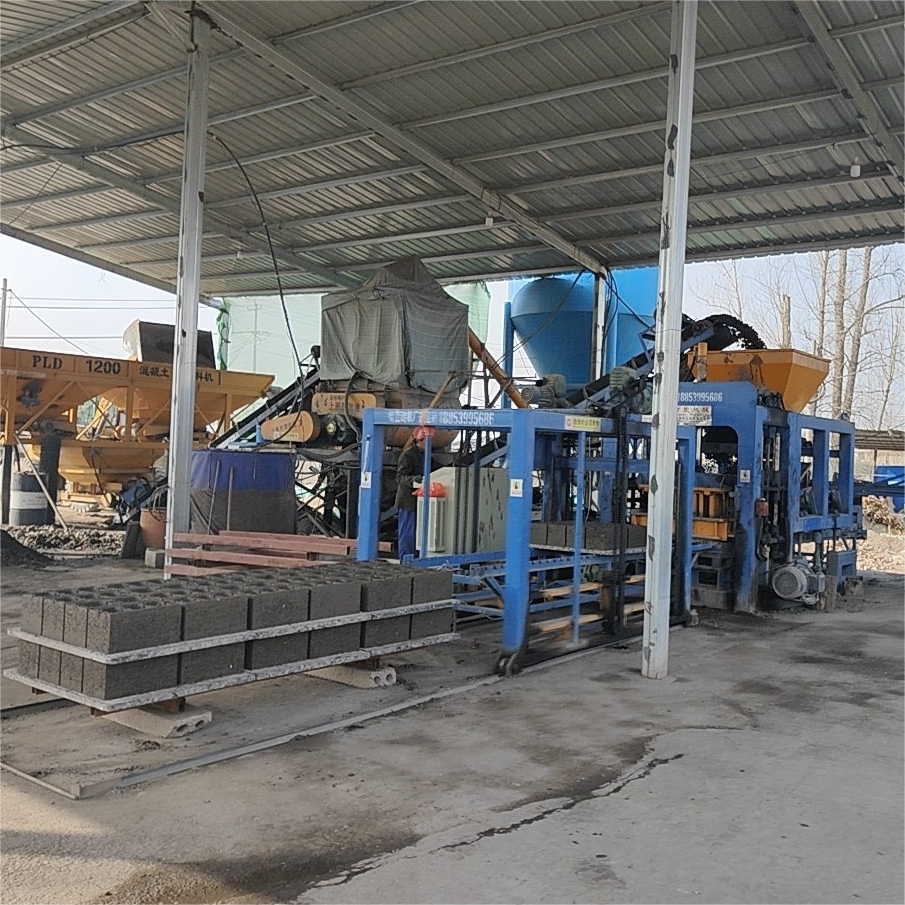
Foundational Design and Manufacturing Precision
Quality assurance begins long before the first batch of concrete is mixed. It is rooted in the machine’s fundamental design and construction.
A. Robust Structural Integrity
A high-quality block machine features a heavy-duty, vibration-damped frame, typically constructed from high-grade steel. This rigidity is non-negotiable, as it must withstand immense and cyclical pressure—often exceeding 100 tons—without flexing. Any deformation in the frame would directly cause variance in block height and density. Precision-machined guide columns and platens ensure that the mold box and press head move in perfect alignment, cycle after cycle.
B. Precision Engineered Molds and Pallets
The mold system is the heart of dimensional accuracy. Superior machines utilize:
- Hardened Steel Liners: Wear-resistant steel alloys for mold cavities and cores ensure longevity and maintain precise internal dimensions, preventing taper or wear-related defects.
- Optimized Feed System: An efficient and consistent feed system, often with adjustable gates, ensures the mold cavity is filled uniformly and completely, eliminating short fills or uneven density.
- Consistent Pallet Quality: The pallets (base plates) must be perfectly flat, durable, and of uniform thickness. They provide the bottom surface of the block; any warping or variation leads to an uneven product.
II. The Core Process: Vibration, Compaction, and Control
The transformation of raw material into a dense, strong block hinges on the precise control of compaction energy.
A. Synchronized Vibration and Pressure
- High-Frequency, Multi-Directional Vibration: Effective machines employ powerful, vertically mounted vibrators under the pallet, often supplemented by lateral or horizontal vibration. This strategic agitation forces the concrete mix to flow into every corner of the mold, releasing entrapped air and initiating particle consolidation.
- Controlled Hydraulic Pressing: Following vibration, a high-pressure hydraulic ram applies precise and adjustable force to the block. The synergy between optimal vibration frequency/amplitude and the correct pressurization profile (pressure level and duration) is critical. This combination achieves the necessary compaction ratio, resulting in high compressive strength, low water absorption, and a smooth, dense surface finish.
B. Programmable Logic Controller (PLC) Automation
The consistency of this process is governed by an advanced PLC system. It acts as the machine’s brain, ensuring repeatability by:
- Precisely controlling the timing and intensity of vibration cycles.
- Managing hydraulic pressure curves for each production cycle.
- Monitoring critical parameters like oil temperature and pressure, providing alerts for preventive maintenance.
III. Integrated Quality Assurance Systems
Beyond the core forming process, auxiliary systems play a vital role in final product quality.
A. Automated Curing Management
The curing process solidifies the block’s strength. Integrated curing systems, whether rack or chamber-based, maintain precisely controlled temperature and humidity profiles. Steady, gradual curing prevents cracking, ensures uniform strength development, and optimizes energy efficiency.
B. In-Line Inspection and Handling
- Automatic Stripping and Handling: Gentle, robotic handling systems de-mold and transfer green blocks to curing areas without subjecting them to impact or distortion.
- Pallet Return and Cleaning: An automated pallet return system includes cleaning and oiling stations. This ensures every new block is formed on a clean, properly treated surface, preventing sticking and surface blemishes.
IV. Data-Driven Monitoring and Maintenance
Proactive quality management is enabled by digital tools.
- Human-Machine Interface (HMI): An intuitive touchscreen allows operators to input mix designs, select product types, and monitor real-time production data, including cycle counts and fault diagnostics.
- Predictive Maintenance Alerts: The system tracks component performance, alerting technicians to service needs (e.g., hydraulic filter changes, vibrator inspection) before a failure can cause quality deviations or unplanned downtime.
Conclusion
For the distribution and procurement professional, the quality of blocks is a direct reflection of the technological sophistication and robust engineering of the production machine. It is a holistic outcome achieved through unwavering structural integrity, precisely synchronized compaction dynamics, intelligent automation, and systematic process control. Investing in machinery that excels in these areas minimizes product rejections, ensures consistent compliance with national and international standards, and builds a reputation for reliability in the market. Ultimately, a quality-ensuring block machine is not merely a piece of production equipment; it is the foundational asset for a sustainable and profitable supply chain in the construction materials industry.
FAQ
Q1: How does the machine ensure consistent block strength (compressive strength) from the first to the last block in a shift?
ก Consistency is achieved through the PLC’s precise control over the vibration and compaction parameters for every single cycle. The machine applies the exact same energy input—vibration duration, frequency, and hydraulic pressure—to each block, regardless of production run length, ensuring uniform density and strength.
Q2: What features minimize waste and rejected blocks due to dimensional flaws?
ก Key features include wear-resistant, precision molds; a perfectly rigid machine frame; automated, uniform mold filling; and flat, well-maintained pallets. Together, these elements maintain tight dimensional tolerances throughout the production run, drastically reducing waste from size or shape defects.
Q3: How important is the control system for an operator, and can production recipes be saved?
ก The control system is crucial for operational efficiency and quality consistency. A user-friendly HMI allows for easy operation and changeovers. Crucially, proven production “recipes” for different block types and mix designs can be stored and recalled instantly, ensuring repeatable quality and eliminating setup errors.
Q4: Can the machine adapt to different raw material mixes, like using fly ash or recycled aggregates?
ก High-quality machines are designed with adaptability in mind. The vibration system and hydraulic pressure are adjustable. This allows operators to fine-tune compaction parameters to optimally process a wide range of mix designs, ensuring quality output even with varying sustainable or locally sourced materials.
Q5: What should we look for to ensure the machine is built for durable, long-term performance with minimal downtime?
ก Focus on construction: a heavy-duty, welded frame; high-quality, name-brand hydraulic and vibration components; and easy access for service. Additionally, a machine with comprehensive predictive maintenance alerts and strong technical support availability will maximize uptime and protect your investment.
