
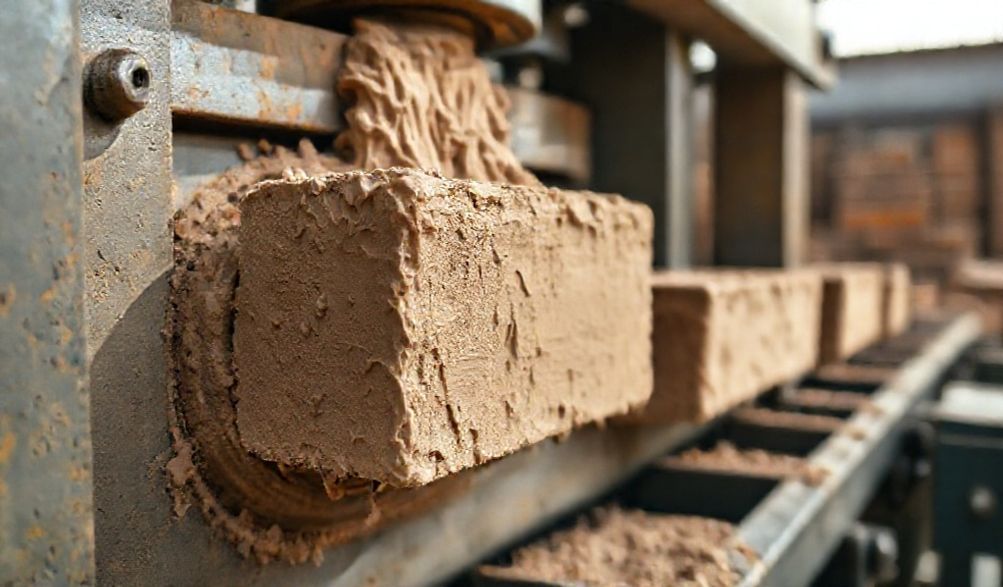
The Complete Guide to Clay Brick Making Equipment: Types, Costs & How to Choose
For millennia, clay bricks have formed the literal bedrock of human civilization. Today, they remain a cornerstone of sustainable construction, prized for their durability, thermal mass, and natural aesthetic. However, behind every sturdy wall lies a critical decision: the choice of production machinery. Selecting the right clay brick making equipment is the single most important factor determining your productivity, product quality, and long-term business profitability. The array of options—from simple hand tools to sprawling automated plants—can be overwhelming.
This comprehensive guide is designed to cut through the confusion. Drawing on decades of combined industry experience, manufacturer specifications, and practical production-floor knowledge, we will demystify the entire equipment landscape. Whether you are a small-scale entrepreneur, a construction company looking to produce in-house, or an investor exploring the manufacturing sector, this resource will provide the foundational knowledge to make a confident, informed investment.
Understanding Clay Brick Production: The Core Process
Before evaluating machinery, it’s essential to understand the journey from raw earth to finished brick. Each stage has specific requirements that directly influence equipment choice.
From Clay to Brick: Key Stages Explained
The transformation of clay into a building unit follows a tried-and-true sequence:
- Clay Winning and Preparation: It all starts with the raw material. Clay is excavated (won), then often weathered to improve plasticity. It is then crushed and screened to achieve a uniform, fine particle size, free of stones and debris.
- Tempering and Mixing: The prepared clay is mixed with water in precise proportions to achieve optimal plasticity for molding. This is typically done in a pug mill or pan mixer, which homogenizes the mixture.
- Molding/Forming: This is the heart of the operation, where the plastic clay is shaped into a green (unfired) brick. The method—pressing, extrusion, or hand molding—is defined by the core brick making machine.
- Drying: The green bricks must be dried slowly and evenly to remove moisture. This can be done naturally in the sun or artificially in chamber or tunnel dryers to prevent cracking and prepare them for firing.
- Firing/Burning: The dried bricks are fired in a kiln (e.g., Hoffman, Tunnel) at temperatures between 900°C and 1200°C. This process vitrifies the clay, giving the brick its final strength, hardness, and color.
How Equipment Fits into Each Stage
A seamless production line integrates equipment for each phase. Think of it as a pipeline:
* Start: Clay Preparation Equipment (Crushers, Screens, Mixers).
* กระบวนการหลัก Brick Forming Machine (Manual, Semi-Auto, or Fully Automatic).
* Supporting Processes: Material Handling (Conveyors, Carts), Drying Systems, Kilns.
* Finish: Handling & Packaging (Stackers, Palletizers).
Investing heavily in a high-speed forming machine while neglecting proper clay preparation or drying is a common and costly mistake. The entire system must be balanced.
Types of Clay Brick Making Equipment: From Manual to Fully Automated
The forming machine is the centerpiece of your operation. Your choice here dictates your scale, labor needs, and capital outlay.
เครื่องทำอิฐแบบมือและกึ่งอัตโนมัติ
These are the entry point into brick manufacturing.
- คำอธิบาย: This category includes hand-operated wooden or steel molds, single-brick static presses, and small “egg-laying” machines. Semi-automatic versions use a motor to power the press or mixer but require manual handling of raw material and finished bricks.
- เหมาะที่สุดสำหรับ: Very small-scale production (up to 1,000 bricks per day), start-ups with minimal capital, community projects, or producing artisanal or specialty bricks where a handmade look is desired.
- ข้อดี:
- ต้นทุนการลงทุนเริ่มต้นต่ำมาก
- Minimal power requirements.
- Simple to operate, repair, and maintain.
- High flexibility for custom shapes with simple mold changes.
- ข้อเสีย
- Very low output compared to automated systems.
- High labor intensity and physical demand.
- Inconsistent brick dimensions and density if operator skill varies.
- Not suitable for meeting large, consistent order volumes.
เครื่องทำอิฐอัตโนมัติเต็มรูปแบบ
These are integrated production systems designed for commercial output.
- คำอธิบาย: These are complete stations, often featuring automatic clay feeders, high-pressure hydraulic presses or extruders, and brick stackers or palletizers. They are controlled via panels and often use Programmable Logic Controllers (PLCs) for consistent operation.
- เหมาะที่สุดสำหรับ: Medium to large-scale commercial production plants aiming for output from 10,000 to over 100,000 bricks per day.
- ข้อดี:
- Very high, consistent output.
- Excellent uniformity in brick size, shape, and compressive strength.
- Dramatically reduced direct labor requirements per brick.
- Programmable for different production cycles and often compatible with various molds.
- ข้อเสีย
- การลงทุนที่มีต้นทุนสูง
- Requires a stable, high-capacity power supply (three-phase electricity).
- Complex maintenance requiring skilled technicians.
- Significant space and foundation requirements.
Key Supporting Equipment
Your forming machine doesn’t work in isolation. A successful plant requires robust support systems.
- Clay Preparation: Jaw CrushersและRoll Crushers break down raw clay. Pan MixersและPug Mills are critical for achieving a perfectly tempered, homogeneous clay body.
- การจัดการวัสดุ Belt Conveyors, wheel loadersและforklifts are essential for moving raw materials, green bricks, and fired products efficiently, reducing labor and breakage.
- Drying & Firing: Chamber DryersและTunnel Dryers provide controlled, weather-independent drying. Hoffman Kilns (continuous) and Tunnel Kilns (highly automated) are standard for firing.
- Finishing & Packaging: Brick Cutting Machines (for pavers, veneers) and automatic Palletizers or strapping machines prepare finished goods for shipment.
Critical Factors for Choosing Your Equipment
Making the right choice requires a clear-eyed assessment of your specific situation. The most expensive machine is not always the best, and the cheapest often becomes the most costly in the long run.
Assessing Your Production Scale & Goals
Begin with a detailed business plan.
* Calculate your required daily output based on confirmed orders or market demand. Don’t guess—use realistic figures.
* Project future growth. Is it wiser to buy a machine that meets current demand or one with 30-50% extra capacity to accommodate near-term growth without another major purchase?
* In practice, operators often report that underestimating scale is a more common failure point than overestimating it.
Raw Material (Clay) Analysis
Your clay deposit is not just dirt; its composition dictates your technology path.
* Test your clay. A simple geological or laboratory analysis will determine its composition (e.g., high-sand, shale, fire clay) and plasticity.
* The result guides your machine choice: Stiff, short-clay mixes often work best with high-pressure hydraulic presses. More plastic clays are suitable for extrusion machines. Choosing the wrong forming method for your clay type leads to constant production problems like cracking or jamming.
Budget & Cost Analysis
Look beyond the sticker price of the main machine.
* ต้นทุนรวมในการเป็นเจ้าของ (TCO) includes: Machine purchase, shipping, installation & foundation, power connection, auxiliary equipment (mixer, crusher, conveyor), labor for operation/maintenance, spare parts inventory, and energy consumption.
* A robust, slightly more expensive machine from a reputable supplier with good service support will almost always have a lower TCO than a cheap, unreliable unit that suffers frequent breakdowns and lacks spare parts.
Power, Space, and Labor Requirements
- อำนาจ Fully automatic lines require robust, three-phase power. In areas with unreliable grids, a diesel-powered machine or a substantial generator backup is a mandatory consideration.
- อวกาศ Map your entire workflow. You need ample space not just for the machine, but for raw material storage, clay weathering, green brick drying yards, kiln placement, and finished goods storage.
- แรงงาน While automatic machines reduce manual labor, they require skilled operators and electricians/mechanics for maintenance. Factor in the cost and availability of this skilled labor.
Maximizing Efficiency and Ensuring Quality
Investing in equipment is just the beginning. Proper operation and maintenance are what deliver a return on that investment.
Optimal Equipment Maintenance Schedules
Preventive maintenance is non-negotiable. Downtime is lost revenue.
* Daily: Lubricate all moving parts (grease nipples, gearboxes), check hydraulic oil levels and for leaks, clean excess clay from molds, rollers, and conveyors.
* Weekly: Inspect and tighten bolts and fasteners, check wear parts like extrusion augers, mixer blades, and mold liners for significant wear.
* Monthly: Perform more thorough inspections of electrical connections, hydraulic hoses, and pressure settings. Keep a critical spare parts inventory based on the manufacturer’s recommendations (e.g., common seals, wear plates, relays).
Troubleshooting Common Brick Making Problems
Many quality issues trace back to equipment or process settings:
* Cracking: Often caused by improper clay tempering (mixer issue), too-fast drying, or excessive pressure/vibration during forming.
* Warping: Can result from uneven clay consistency in the mixer or uneven pressure across the mold in a press.
* Poor Strength: Usually linked to insufficient forming pressure, incorrect firing temperature in the kiln, or poor clay composition.
The Role of Technology and Automation
Automation is a spectrum, not a binary choice.
* PLCs ensure a machine repeats the exact same pressing force, cycle time, and mix ratios, eliminating human variability.
* IoT sensors can monitor machine health (vibration, temperature), predict maintenance needs, and track production data in real-time.
* The ROI of automation comes from reduced waste (consistent quality), lower labor costs per brick, and the ability to run extended shifts with minimal supervision.
Navigating the Market: Suppliers and Investment
How to Vet Equipment Manufacturers and Suppliers
Your relationship with the supplier lasts long after the sale. Due diligence is critical.
* Ask for customer references in a similar climate and production scale, and contact them.
* Visit a working installation if possible, to see the machine in action and speak directly to the operators.
* Key questions: What is included in the warranty? What is your after-sales service structure? How available are spare parts, and what is the typical delivery time? Do you provide installation supervision and operator training?
New vs. Used Equipment: A Balanced View
Used equipment can offer significant savings but carries risk.
* ข้อดี: Lower upfront cost, potentially faster availability.
* ข้อเสีย Unknown maintenance history, possible hidden wear, outdated technology, and often little to no warranty or support.
* Critical Inspection: If considering used machinery, hire an independent engineer to inspect it. Focus on the condition of the frame (for cracks), hydraulic cylinders, major motors, electrical panels, and the wear state of all working components like molds and augers.
Safety Standards and Compliance
Never compromise on safety.
* Ensure machinery has proper guards on all moving parts, emergency stop buttons, and lock-out/tag-out capabilities.
* Be aware of environmental regulations, particularly concerning emissions from kilns (particulates, fluorides) and dust control in crushing/mixing areas. Modern kilns and dust collection systems are designed to meet these standards.
Frequently Asked Questions (FAQ) About Clay Brick Making Equipment
Q1: What is the approximate cost range for a small-scale clay brick making machine?
ก Costs vary dramatically by region, automation, and capacity. A basic manual or small semi-automatic machine can range from approximately $2,000 to $15,000. A entry-level fully automatic line, often excluding heavy auxiliary equipment like crushers and kilns, can start from around $50,000 and go into the hundreds of thousands.
Q2: What is the production capacity of a standard automatic brick making machine?
ก Capacity is typically measured in bricks per hour. A standard medium-capacity hydraulic press might produce between 800 to 2,500 bricks per hour (or 6,400 to 20,000 per 8-hour shift), depending on brick size and cycle time. Always verify output based on the specific brick type you intend to produce.
Q3: Can one machine produce different types and sizes of bricks?
ก Yes, most presses and extruders are designed with this in mind. Hydraulic presses use interchangeable molds to produce different shapes (solid, hollow, pavers). Extruders can use different dies and cutting systems. However, changing over requires time and skill, so it’s most efficient for batch production of one product type.
Q4: How important is after-sales service when purchasing equipment?
ก It is critically important—often as important as the machine itself. When a key machine is down, production halts. A supplier with a responsive service team, available spare parts, and the ability to provide remote or on-site technical support is a key partner for your business’s continuity.
Q5: What are the most common reasons for brick making business failure related to equipment?
ก The top reasons include: 1) Buying undersized or underpowered equipment that cannot meet demand or handle the local clay, 2) Neglecting the investment in proper clay preparation equipment, leading to poor quality, 3) Failing to perform routine maintenance, causing catastrophic breakdowns, and 4) Choosing equipment based on lowest price alone, resulting in unreliable machinery with no service support.
Conclusion
Choosing the right clay brick making equipment is a complex but manageable decision that hinges on balancing your production goals, raw material properties, financial constraints, and the long-term support available. It is an investment in the foundation of your business.
This guide, built on industry best practices and operational realities, underscores that success lies in thorough planning. Start with a clear business plan, conduct definitive clay testing, and prioritize suppliers who demonstrate not just good machinery, but a commitment to your operational success through training and service.
We strongly advise consulting with local industry associations, connecting with existing brick manufacturers, and obtaining detailed, site-specific quotations from multiple reputable suppliers. If the opportunity arises, visiting a working brick plant remains one of the most valuable steps you can take before making your final investment.
<