
The Complete Guide to Small Clay Brick Extruder Machines: Selection, Operation & Benefits
บทนำ
In an era defined by a push for sustainability and local resilience, the construction industry is witnessing a quiet revolution. From eco-conscious builders and homesteaders to entrepreneurs in developing regions, there’s a growing demand for affordable, durable, and low-impact building materials. This demand brings us back to one of humanity’s oldest and most reliable construction elements: the clay brick. However, the traditional methods of hand-molding bricks are laborious and inconsistent, while large industrial plants are financially out of reach for small-scale projects.
This gap between aspiration and practicality is where the small clay brick extruder machine shines. It represents a pivotal piece of technology that democratizes brick production, transforming locally sourced clay into precise, high-quality building blocks with remarkable efficiency. Drawing from decades of engineering and field experience in soil-based construction machinery, we’ve seen firsthand how this single tool can empower small businesses, reduce building costs, and promote sustainable practices.
This comprehensive guide is designed to be your definitive resource. We’ll move beyond sales brochures to provide a clear, expert-backed understanding of how these machines work, their tangible benefits, and the critical factors for choosing and operating one successfully. Whether you’re a budding entrepreneur, a self-builder, or a development officer, this knowledge will equip you to make an informed decision and embark on a successful brick-making journey.
What is a Small Clay Brick Extruder Machine? Core Principles Explained
At its core, a small clay brick extruder is a mechanized device designed to automate and perfect the process of forming solid, consistent bricks from a prepared clay mixture. It replaces the slow, variable process of hand-filling molds with a continuous, high-output system.
Basic Function and Output
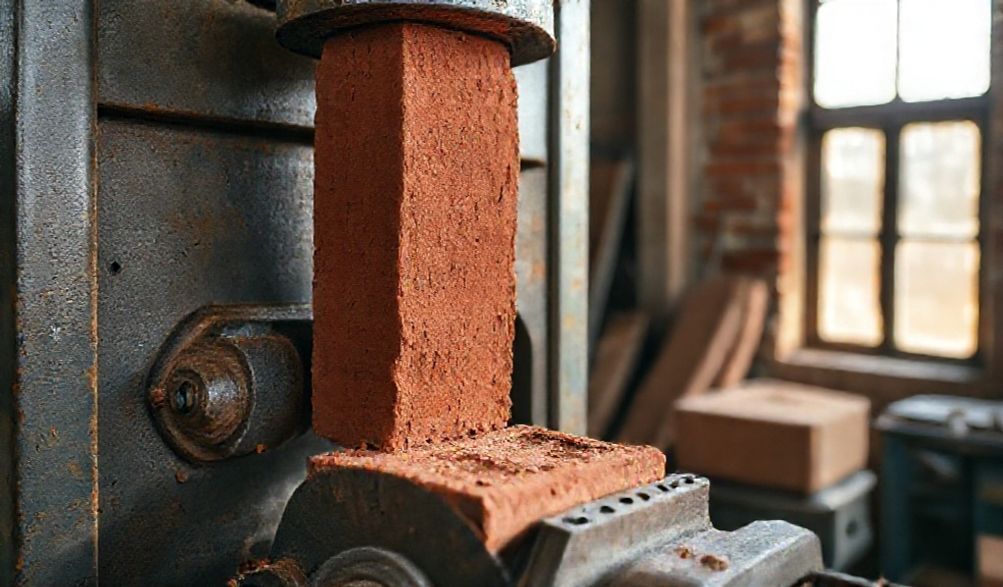
The machine’s primary function is simple yet ingenious: it takes a semi-wet, plastic clay mix, compresses it with immense force, and pushes it through a shaped opening (a die) to form a continuous, solid column. This column is then cleanly sliced by wires into individual bricks of identical dimensions. The output is known as an unfiredหรือcompressed earth brick, which gains strength through drying, not firing in a kiln.
The Extrusion Process Step-by-Step
Understanding the sequence demystifies the machine’s operation:
- Hopper Feeding: The prepared clay mixture is loaded into the hopper, a large opening at the top of the machine. Consistent feeding here is key to smooth operation.
- Auger Compression and De-airing: A powerful, rotating auger (like a large screw) draws the clay down into a compression chamber. Here, the clay is compacted, and often, a vacuum system removes trapped air pockets. De-airing is crucial as it prevents bricks from cracking or laminating later.
- Die Shaping: The intensely compressed clay is then forced through a precision-engineered steel die. This die defines the final brick’s shape—whether it’s a standard rectangle, interlocking, hollow, or a custom profile.
- Extrusion and Wire Cutting: The shaped clay column emerges from the die. As it extrudes, an automatic wire-cutting mechanism or a manual cutter slices it at precise intervals to form individual bricks, which are then carried off for drying.
องค์ประกอบหลักและบทบาทของพวกเขา
- ฮอปเปอร์ The clay entry point; its size dictates how often you need to refill.
- Auger & Compression Chamber: The heart of the machine. The auger moves and compacts the clay, while the chamber’s design affects brick density.
- Die/Mold: The defining component that shapes the brick. Interchangeable dies allow for product versatility.
- Motor & Gearbox: Provide the power. Electric motors are common for fixed sites, while diesel engines or PTO drives offer mobility for field use.
- กรอบและโครงสร้าง Heavy-duty steel construction is essential to withstand the constant high pressure and vibration during operation.
Key Benefits of Using a Small-Scale Brick Extruder
Investing in a small extruder isn’t just about buying a machine; it’s about acquiring a capability. The advantages span economic, operational, and environmental domains.
Economic Advantages for Small Businesses & Builders
- Low Capital Investment: Compared to a full-scale brick factory, a small extruder is a fraction of the cost, making entry into brick production feasible.
- Dramatically Reduced Labor Costs: One machine operated by 2-3 people can outproduce a dozen skilled hand-molders, slashing labor expenses and physical strain.
- On-Site Production Savings: Produce bricks directly at your construction site or from a local clay pit. This eliminates transport costs for finished bricks and cuts out middlemen, putting more profit in your pocket.
Operational Efficiency and Consistency
- High, Predictable Output: A reliable small extruder can produce between 1,500 to 5,000+ bricks in an 8-hour day, depending on the model and workflow. This allows for accurate project planning.
- Unmatched Uniformity: Every brick is identical in size, density, and weight. This consistency speeds up construction, reduces mortar use, and results in stronger, better-looking walls.
- ลดการสูญเสียวัสดุเหลือใช้ The controlled extrusion process ensures nearly all the prepared clay mix is converted into usable bricks, unlike manual molding which often has higher spoilage rates.
Versatility and Sustainability
- Utilizes Local Resources: The machine can be adapted to work with a wide range of local subsoils and clay mixes, turning a readily available, low-cost material into a valuable commodity.
- ความยืดหยุ่นของผลิตภัณฑ์ By simply changing the die, you can switch from producing standard bricks to interlocking bricks (which require less or no mortar), perforated bricks, or even custom shapes for landscaping.
- Eco-Friendly Credentials: Bricks made this way have very low embodied energy (especially if sun-dried), are fully natural and non-toxic, and have excellent thermal mass properties for energy-efficient buildings.
Critical Factors for Choosing the Right Machine
Selecting the wrong extruder can lead to frustration and financial loss. This decision should be guided by a careful assessment of your needs and a critical eye for machine quality.
ประเมินความต้องการในการผลิตของคุณ
Start by defining your project clearly:
* ผลลัพธ์ที่คาดการณ์ไว้ Be realistic. How many bricks do you need per day or week? Don’t just go for the highest number; match it to your team size and drying space.
* ประเภทอิฐ Will you primarily make solid bricks for general construction, or are interlocking bricks for low-cost housing your goal? Your desired product dictates the die type.
* แหล่งพลังงาน Do you have reliable grid electricity (favoring an electric motor), or do you need the remote operation capability of a diesel engine or a tractor’s Power Take-Off (PTO)?
Machine Specifications to Scrutinize
Look beyond the marketing claims and examine the hard specs:
* Motor Power & Type: Power (in HP or KW) correlates with capability. A 7.5HP electric motor is a common starting point for serious small-scale production. A robust gearbox is also vital to handle the constant torque.
* ความสามารถในการส่งออก Treat claimed “maximum” outputs with caution. Ask for realistic, sustained production rates under normal working conditions.
* Brick Size & Die Compatibility: Ensure the machine can produce the standard brick size for your region (e.g., 230x110x75mm). Check if the supplier offers a variety of standard and custom dies.
* คุณภาพการก่อสร้าง The machine should feel substantial. Inspect the thickness of the steel frame, the quality of welds, and the durability of components. A flimsy machine will not withstand the pressures of daily use.
Supplier Evaluation for Trustworthiness
The supplier is as important as the machine itself.
* การสนับสนุนหลังการขาย: Does the supplier offer a clear warranty, provide detailed manuals, and have readily available spare parts (augers, dies, liners)?
* Proof of Performance: Seek out genuine customer testimonials, case study videos, or, ideally, the opportunity to see a machine running. A reputable supplier will be transparent.
* ความเชี่ยวชาญทางเทคนิค Can they advise you on clay preparation for your specific soil? This guidance is invaluable for getting started successfully.
Operating Your Extruder: A Practical Guide
A well-made machine is only half the equation. Success lies in proper preparation, operation, and care.
Clay Preparation is 80% of Success
The extruder needs the right “dough.” Poor clay prep is the root of most operational problems.
* Ideal Composition: The soil should typically contain 20-30% clay for binding, with the rest being silt and sand for strength and reduced shrinkage. Simple field tests like the “ribbon test” or “jar sedimentation test” can give you a good estimate.
* Moisture Content: This is critical. The clay must be in a “plastic” state—wet enough to bind and extrude smoothly, but dry enough to hold its shape after cutting. It should feel like stiff putty. Too wet causes deformation; too dry causes jamming.
* Tempering & Mixing: After screening to remove stones and debris, the soil must be thoroughly mixed with water and allowed to “temper” for 24-48 hours. This ensures even moisture distribution and optimal plasticity.
Machine Setup, Operation & Safety Protocol
- การตั้งค่า Place the machine on a firm, level base. Connect to power, ensuring all guards are in place. Lubricate all points as per the manual.
- Startup & Operation: Start the machine empty to ensure it runs smoothly. Begin feeding clay steadily into the hopper—avoid dumping large amounts at once. Adjust the feed rate to maintain a smooth, continuous extrusion.
- Essential Safety Rules:
- Lock-Out/Tag-Out: Always disconnect power before performing any cleaning, maintenance, or unjamming.
- No Loose Clothing: Keep sleeves, gloves, and hair secured away from any moving parts, especially the auger shaft.
- Use Proper Tools: Never use your hands to push clay into the hopper near the auger; use a wooden paddle.
Routine Maintenance for Longevity
A little daily care prevents major downtime.
* Daily Cleaning: At the end of each shift, thoroughly clean out all clay from the hopper, auger, and die before it hardens. Hardened clay is extremely difficult to remove and can damage the machine.
* Scheduled Lubrication: Follow the manual’s schedule for greasing bearings and gearboxes. This is the lifeblood of the machine’s mechanics.
* Wear Part Inspection: Regularly check the auger flights and the die liner for wear. Worn parts will lead to a drop in brick quality and machine efficiency. Replace them promptly.
Troubleshooting Common Extruder Issues
Even with the best preparation, issues can arise. Here’s how to diagnose and solve common problems.
Problem: Bricks Cracking or Laminating (Splitting into layers)
- Causes: The most common culprit is air trapped in the clay (insufficient de-airing). It can also be caused by a clay mix that is too sandy, uneven moisture, or over-compaction.
- Solutions: Ensure your clay is properly tempered. Check that the vacuum pump (if equipped) is working. Adjust the clay mix to include more plastic material. Ensure a steady, non-violent feed rate.
Problem: Machine Jamming or Motor Overloading
- Causes: Foreign objects (stones, roots) in the clay, a clay mix that is too dry, or feeding clay too fast, causing a blockage in the compression chamber.
- Solutions: Always screen your soil. Check moisture content—the clay should be plastic. Feed the clay at a consistent, manageable rate. If a jam occurs, POWER DOWN COMPLETELY before attempting to clear it.
Problem: Uneven Brick Density or Distorted Shape
- Causes: A worn or damaged die, uneven wear on the auger flights, or an inconsistent feed causing “starving” and then over-filling of the die.
- Solutions: Inspect the die interior for grooves or damage. Check the auger for uniform wear. Focus on maintaining a consistent level of clay in the hopper for a steady feed pressure.
คำถามที่พบบ่อย (FAQ)
Q1: How many bricks can a small extruder make per day?
ก A realistic range for a well-operated small machine is between 1,500 to 5,000+ bricks in an 8-hour day. The upper end depends on model power, a well-organized crew for material handling and brick stacking, and an efficient workflow. The machine’s cycle time is just one part of the equation.
Q2: What type of clay or soil is best?
ก You don’t need pure clay. A loamy soil mix with about 20-30% clay content, balanced with silt and sand, is often ideal. Perform simple tests: the “ribbon test” (if a moist soil ribbon can hang 2-3 inches without breaking, it has enough clay) and the “jar test” (to see the soil layer proportions) are excellent starting points.
Q3: Do the bricks need to be fired in a kiln?
ก No, not for typical extruder output. These machines produce unfired bricks—also called Compressed Earth Blocks (CEBs) or Adobe bricks. They gain structural strength through air drying (usually for 2-4 weeks). If you require fired (ceramic) bricks, you would need a separate kiln, which is a much larger and more complex operation.
Q4: What is the investment cost and ROI for a small operation?
ก A reliable, durable small-scale extruder from a reputable manufacturer can range from approximately $3,000 to $10,000 USD. ROI depends entirely on your local brick market price, production volume, and overhead costs. A small operation supplying a local community can often see a payback period within the first 1-2 years. Creating a simple business plan is highly recommended.
Q5: Can one person operate this machine?
ก Technically, yes, one person can feed and operate the machine. However, it is highly inefficient. A small team of 2-4 people is ideal: one feeding the machine, one handling/cutting/stacking the extruded bricks, and others preparing and transporting the clay mix. This teamwork maximizes output and safety.
สรุป
The small clay brick extruder machine is more than a piece of equipment; it’s a catalyst for empowerment, sustainability, and smart construction. It bridges the gap between artisanal effort and industrial efficiency, enabling individuals and small businesses to transform the very ground beneath their feet into durable, cost-effective building materials.
By understanding the core principles, carefully selecting the right machine for your needs, and mastering the crucial processes of clay preparation and operation, you unlock a world of potential. You gain control over your supply chain, reduce construction costs, and contribute to a building philosophy that is both ancient and urgently modern.
พร้อมที่จะก้าวไปสู่ขั้นต่อไปหรือยัง? We invite you to leverage our expertise. Contact our technical team today for a personalized consultation. We can help you analyze your local soil samples, define your production goals, and identify the specific extruder model that will form the solid foundation of your brick-making success. Let’s build a more sustainable and self-sufficient future, one precisely formed brick at a time.
<