
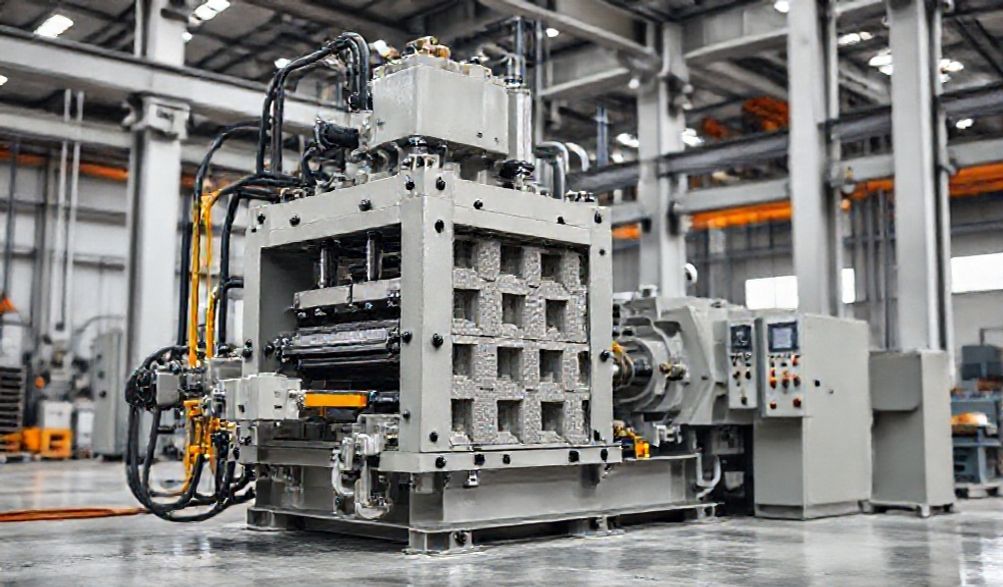
Your Trusted Partner in Construction: A Guide to Block Making Machine Equipment Suppliers
In the competitive world of construction and prefabrication, the quality of your concrete blocks is foundational to your project’s success. This quality is directly tied to the reliability and performance of your block making machine.
Choosing the right equipment supplier isn’t just a purchase; it’s a long-term partnership that impacts your productivity, product quality, and bottom line. This guide, drawing on decades of industry experience, will help you navigate the critical factors in selecting a reputable supplier, ensuring you invest in machinery that builds a stronger future for your business.
We’ll focus on the hallmarks of expertise, authoritativeness, and trustworthiness in a supplier, providing you with the knowledge to make an informed, strategic decision.
Understanding Block Making Machine Technology
Before evaluating suppliers, you must understand the machinery itself. A supplier’s expertise is reflected in their mastery of this technology and their ability to match it to your specific needs.
Core Machine Types and Their Applications
Not all block machines are created equal. The right type depends entirely on your production goals, scale, and location.
- เครื่องทำบล็อกแบบอยู่กับที่ These are the powerhouses for high-volume production. Installed in a fixed location, often within a dedicated factory, they offer superior speed, automation, and consistency. Ideal for large-scale block yards and suppliers serving regional construction markets.
- เครื่องทำบล็อกแบบเคลื่อนที่: Built for versatility and on-site production. Mounted on a trailer or wheels, these machines can be transported directly to a construction site. This eliminates transport costs for blocks and is perfect for remote projects or producing blocks exactly where they are needed.
- Automatic vs. Semi-Automatic Systems: This choice balances output with capital investment.
- อัตโนมัติเต็มรูปแบบ: Entire process—from feeding raw material to stacking finished blocks—is automated. Maximizes output and minimizes labor but requires a higher initial investment.
- กึ่งอัตโนมัติ: Core compaction is machine-powered, but tasks like feeding materials or removing blocks may be manual. Offers a lower entry cost and is excellent for medium-scale operations.
Key Components of a Reliable Block Machine
The durability and output quality of a machine hinge on its core components. A knowledgeable supplier will proudly detail these engineering aspects.
- The Vibrating System: This is the heart of the machine. A powerful, well-distributed vibration system is non-negotiable for achieving high-density, strong blocks with sharp edges and a smooth finish. Look for systems with multiple vibration motors and adjustable frequency/amplitude.
- Hydraulic System & PLC Control: The muscle and brain of modern machines. A robust hydraulic system ensures consistent pressure for compaction and smooth movement. A Programmable Logic Controller (PLC) automates cycles, ensures precision, and allows for easy operation and troubleshooting via a user-friendly control panel.
- Mold Quality and Versatility: The mold defines your product. High-quality, hardened steel molds with precise machining are essential for block accuracy and long life. A supplier’s ability to offer a wide range of standard and custom molds (for interlocking blocks, pavers, curbstones, etc.) indicates true versatility.
Innovations in Block Production
The industry is evolving. Leading factories invest in R&D to offer more efficient and sustainable solutions.
- Eco-Friendly Machines: Advanced machines are designed to optimally use industrial by-products like fly ash, slag, or recycled aggregates, supporting greener construction practices.
- การออกแบบที่ประหยัดพลังงาน Innovations include variable-speed drives, energy-recovery systems in hydraulics, and optimized cycle times to reduce overall power consumption.
- Smart Control Panels & Quick Mold Change: Modern touchscreen panels with fault diagnostics improve usability. Quick-change mold systems dramatically reduce downtime when switching between block products, boosting operational flexibility.
The Hallmarks of an Expert Block Machine Factory
An expert supplier is typically a direct manufacturer (Original Equipment Manufacturer or OEM). This direct control over the production process is a critical differentiator.
Proven Manufacturing Experience & In-House Expertise
Experience is the best teacher, especially in heavy machinery.
- Direct OEM Manufacturing: A factory that designs, engineers, and assembles its own machines has complete control over quality, sourcing, and innovation. They are accountable directly to you.
- History and R&D: Evaluate the company’s track record. A long-standing presence often indicates resilience and accumulated knowledge. A dedicated Research and Development department is a sign of a forward-thinking partner committed to innovation.
- แฟ้มสะสมผลงาน Request case studies or a project gallery. Seeing their machines installed and operating in real-world factories, especially in environments similar to yours, provides tangible proof of capability.
ผลิตภัณฑ์ครบวงจรและปรับแต่งตามความต้องการ
No two projects are identical. An expert supplier offers solutions, not just a single product.
- Full Spectrum of Equipment: They should cater to all market segments, from small start-ups with manual machines to large corporations needing fully automated production lines.
- ความสามารถในการปรับแต่ง True expertise is shown in the ability to adapt. This includes creating custom mold designs for unique block specifications or modifying machine parameters for specific raw materials.
- Complete Plant Solutions: The best partners can supply the entire production ecosystem: concrete mixers, batching plants, block handling systems, and curing equipment. This ensures all components work in harmony.
Technical Mastery and Support
The sale is only the beginning. The supplier’s depth of technical knowledge defines the long-term partnership.
- Concrete Mix Design Knowledge: A great supplier understands that machine performance is linked to input materials. They should advise on optimal mix designs (cement-sand-aggregate ratios, water content) for your local materials to achieve the best block quality.
- Comprehensive Documentation: Expect detailed technical drawings, electrical schematics, and clear, multi-language operation & maintenance manuals. This reflects organizational professionalism.
- การติดตั้งและการทดสอบระบบ While remote guidance is standard, the availability of experienced engineers for on-site installation supervision, machine calibration, and operator training is a hallmark of premium service.
Establishing Authoritativeness and Trustworthiness
Credentials and a transparent operational ethos separate market leaders from the rest. Trust is built on verifiable evidence and clear commitments.
Certifications and Industry Recognition
These are objective benchmarks of quality and professionalism.
- Essential Certifications: Look for เครื่องหมายซีอี (mandatory for machinery sold in Europe, indicating safety compliance), ISO 9001 (Quality Management Systems), and other relevant international or local standards. These require rigorous audits.
- Industry Affiliations: Membership in national or international construction, building material, or machinery manufacturing associations shows active participation in the industry community.
- Awards and Recognition: Any accolades from industry bodies or positive features in trade publications serve as third-party validation of their standing.
Transparent Client Validation and After-Sales Service
A supplier’s past clients and future service promises are your best indicators of reliability.
- Verifiable Testimonials and References: Request contact information for clients in your region or with similar production needs. Speaking directly to an existing user provides invaluable, unbiased insight.
- Robust After-Sales Policy: Scrutinize their service policy. It should clearly outline response times, communication channels for support, and the terms of the warranty. A 12-24 month warranty on core components is standard for quality machinery.
- Global Parts Supply: Ensure they have a systematic, efficient spare parts supply chain. Quick access to genuine parts is crucial for minimizing costly downtime.
Factory Integrity and Communication
How a supplier communicates before the sale is a strong predictor of how they will support you after it.
- Factory Transparency: A confident supplier will offer virtual live video tours of their production floor, welding workshops, and assembly lines. This allows you to assess their manufacturing hygiene and technological capability firsthand.
- Clear, Upfront Pricing: Quotations should be detailed and transparent, breaking down machine cost, optional accessories, packaging, and shipping terms (like FOB or CIF). There should be no hidden fees.
- Responsive Communication: Note their response time and the technical depth of their answers. Sales personnel should be able to connect you with engineering teams for complex queries.
A Practical Checklist for Evaluating Your Supplier
Turn these hallmarks into actionable steps during your selection process.
Pre-Purchase Due Diligence
Do your homework before signing any contract.
- Verify Credentials: Request copies of business licenses, factory registration, and audit reports related to their quality management system (ISO).
- Check References: Ask for and actually contact a list of 2-3 recent clients. Ask about machine performance, reliability, and the quality of after-sales support.
- Scrutinize the Contract: Carefully review the sales contract. Pay special attention to clauses covering warranty scope, exclusions, payment terms (e.g., 30% deposit, 70% before shipment), delivery schedule, and liability.
Key Questions to Ask Any Block Machine Supplier
Prepare a list of specific questions. The answers will be very revealing.
- “What is your lead time from confirmed order to shipment?” (This tests their production planning and honesty).
- “Can you provide a detailed factory layout and foundation drawing for our proposed production line?” (This tests their technical support capability).
- “What is your standard protocol for technical troubleshooting? What is the average shipping time for critical spare parts to [Your Country]?” (This directly probes their after-sales service structure).
FAQ: Choosing a Block Making Machine Equipment Supplier
Q1: What is the most important factor when choosing a block machine supplier?
ก While price is a consideration, the supplier’s after-sales service and technical support capability are paramount. A reliable partner ensures your machine runs smoothly for years, minimizing costly downtime. The cheapest machine can become the most expensive if support is lacking.
Q2: How can I verify the quality of a block machine factory remotely?
ก Request a live video tour of the factory floor and assembly process. Ask for high-resolution photos/videos of the machine’s internal components (hydraulic system, welding points). Insist on seeing verifiable third-party certification documents (CE, ISO) via video call.
Q3: What’s the difference between a trading company and a direct factory like FUDA?
ก A trading company acts as a middleman, often with limited technical knowledge and slower support. A direct factory (OEM) offers deeper engineering expertise, better pricing control, direct accountability for quality, and typically a more efficient and affordable spare parts supply chain.
Q4: Are installation and training included?
ก This varies. Reputable suppliers usually include detailed installation manuals and remote guidance via video call. Comprehensive on-site installation supervision and hands-on operator training are often available as a separate, valuable service package—clarify this and its cost upfront.
Q5: What should I do if I need a custom block design?
ก A true expert supplier will have an in-house mold design and manufacturing department. They should be able to discuss your design, advise on feasibility from a production and demolding perspective, and provide a clear timeline and cost for custom mold creation.
Conclusion: Building Your Success on a Foundation of Trust
Selecting your block making machine equipment supplier is a strategic decision that extends far beyond the initial invoice. It is an investment in a partnership that will define your production capabilities for years to come.
By prioritizing suppliers who demonstrate tangible ประสบการณ์ through a proven track record, deep ความเชี่ยวชาญ in engineering and application support, ความน่าเชื่อถือ through certifications and industry standing, and ความน่าเชื่อถือ in transparent communication and robust, long-term service, you secure more than a machine.
You secure the operational reliability, consistent product quality, and long-term profitability of your business. Let this guide serve as your blueprint for finding a partner who doesn’t just sell you equipment, but helps build the unshakeable foundation of your success.
Call to Action: Ready to discuss your specific block production needs with a trusted expert? Contact our engineering team today for a confidential consultation and a detailed project proposal.
<