
The Ultimate Guide to Single Block Making Machines: Types, Prices & How to Choose
บทนำ
Struggling with the high cost, logistical headaches, and inconsistent supply of concrete blocks for your construction project or business venture? You’re not alone. For small-scale builders, contractors, and entrepreneurs, sourcing quality blocks can be a major bottleneck, eating into budgets and timelines.
This is where the single block making machine emerges as a silent hero in the construction world. More than just a tool, it represents a shift towards self-sufficiency, cost control, and opportunity. Whether you’re building a few homes, starting a local block supply business, or managing a large DIY project, this machine can be a game-changer.
This guide is designed to be your definitive, unbiased resource. We’ve compiled information from industry specifications, manufacturer data, and practical operational insights to cut through the marketing noise. Our goal is to arm you with the expertise needed to make a confident, informed decision.
คู่มือเล่มนี้เหมาะสำหรับใคร?
* Small to medium construction firms and independent contractors.
* Startup entrepreneurs exploring the construction materials sector.
* Property developers and self-builders.
* DIY enthusiasts undertaking large-scale projects like fencing, landscaping, or outbuildings.
What you will learn:
* The core function and tangible benefits of these machines.
* A detailed breakdown of the different types available.
* The critical features that separate a good investment from a poor one.
* Transparent price ranges and a realistic look at return on investment.
* A step-by-step guide to choosing the perfect machine for your needs.
* Essential operating and maintenance tips for long-term success.
What is a Single Block Making Machine? Core Function & Benefits
Before diving into specifications and prices, let’s establish a clear understanding of what a single block making machine is and why it’s so valuable.
Basic Definition and Working Principle
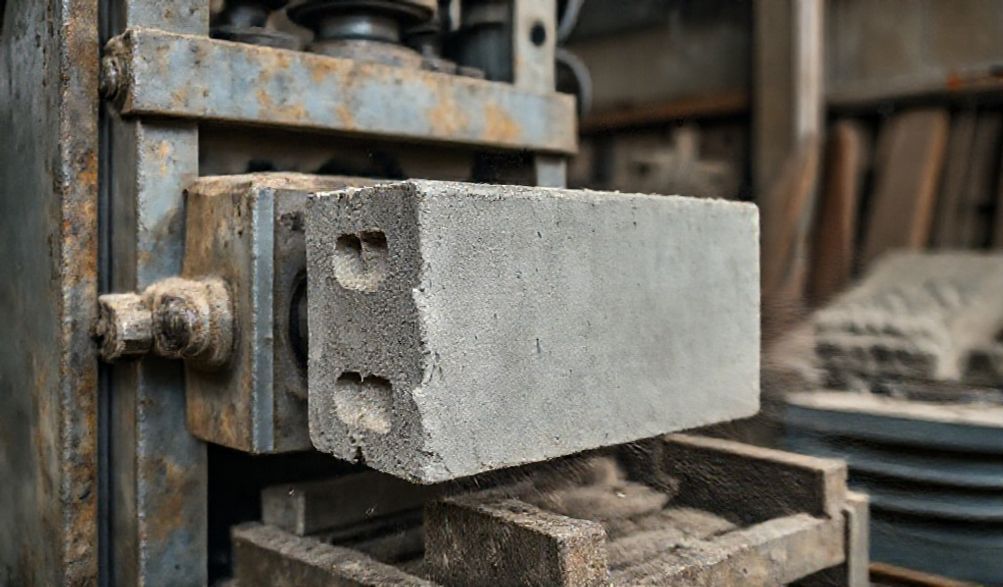
A single block making machine is a compact, purpose-built device designed to produce one concrete block (or brick) per operational cycle. It bridges the gap between purely manual, labor-intensive methods and large, fully automatic industrial plants.
The working principle is elegantly simple and consistent across most models:
1. ไส้ The operator places a mold (often removable) on the machine’s table and fills it with a semi-dry concrete mix.
2. การบดอัด: This is the crucial step. Through a lever system (manual) or an electric-powered vibration motor (semi-automatic), the mix is subjected to intense vibration and/or pressure. This removes air pockets and compresses the material, ensuring a dense, strong block.
3. การถอดแบบ After a short compaction period, the mold is lifted away, leaving a freshly formed, solid block on the pallet or production surface. The block is then moved to a curing area.
Key Advantages Over Manual Molding & Large Plants
Why choose a single block machine? The advantages are compelling for the target user:
- ความคุ้มค่า The most significant benefit. The initial investment is a fraction of the cost of a fully automatic block plant, making it accessible for small businesses and individual projects.
- Unmatched Flexibility: Produce blocks precisely when and where you need them. This eliminates transport costs for purchased blocks and allows for on-site production in remote locations. You can also easily switch block types by changing the mold.
- ความเรียบง่ายในการดำเนินงาน These machines are designed for ease of use. They require minimal specialized training to operate and maintain, relying on robust mechanical principles rather than complex electronics.
- Low Operational Cost: Manual models consume no power. Even semi-automatic versions use a single, small electric motor, resulting in negligible energy bills compared to industrial machinery.
- Superior Quality Consistency: While not matching the output of a full plant, it produces vastly more uniform, high-density, and professional-looking blocks than traditional hand-packing or slop molding methods. This consistency improves structural integrity and aesthetics.
Types of Single Block Making Machines: A Detailed Breakdown
The market offers several variants of single block machines, each tailored to different production scales, budgets, and mobility needs.
เครื่องทำบล็อกคอนกรีตแบบแมนนวล
- คำอธิบาย: These are entirely human-powered. The operator uses a mechanical lever system to compress the concrete mix within the mold. They are the most basic, rugged, and affordable type.
- ผลลัพธ์ทั่วไป: 200-500 blocks per 8-hour day, heavily dependent on operator skill and stamina.
- เหมาะที่สุดสำหรับ: Extremely tight budgets, very low-volume or intermittent production (e.g., a personal homestead project), and areas with unreliable or no electricity.
Semi-Automatic/Electric Block Making Machines
- คำอธิบาย: This is the most popular category for small businesses. An electric motor drives a vibration system that compact the mix efficiently. The operator still handles mold filling, placement, and demolding, but the machine does the heavy work of compaction.
- ผลลัพธ์ทั่วไป: 80-150 blocks per hour, allowing for production of 600-1000+ blocks in a standard workday.
- เหมาะที่สุดสำหรับ: Small to medium block-making businesses, contractors building multiple houses, and any scenario requiring regular, reliable production with consistent quality.
เครื่องผลิตบล็อกแบบเคลื่อนที่
- คำอธิบาย: These are typically semi-automatic machines mounted on a robust trailer frame with wheels. This design prioritizes portability.
- ประโยชน์หลัก Ultimate job-site flexibility for construction contractors. You can drive the machine to a project location, produce the exact number of blocks needed, and then move to the next site, eliminating all block transportation costs.
By Block Type Produced
Machines are often categorized by their standard mold or their ability to produce specific blocks via interchangeable molds:
* บล็อกคอนกรีตมวลเบา: The most common type for wall construction, offering good strength with reduced weight and material use.
* บล็อกแข็งใช้สำหรับฐานราก ผนังรับน้ำหนัก และที่ต้องการความแข็งแรงสูงสุด
* บล็อกปูพื้น: For landscaping, driveways, walkways, and patios. These often require molds with textured surfaces.
* บล็อคต่อเชื่อม: Designed to fit together without mortar, popular for retaining walls, sheds, and some housing systems.
Critical Features to Consider Before You Buy
Choosing a machine isn’t just about price and type. These core features determine performance, versatility, and lifespan.
กำลังการผลิต (บล็อกต่อชั่วโมง/วัน)
Don’t just look at the “maximum” theoretical output. Consider sustainable, real-world output.
* Match to Need: Are you supplying blocks for one house? Or do you plan to sell to the market? Calculate your average daily/weekly block requirement and choose a machine that can meet it comfortably without being overworked.
Block Size and Mold Versatility
- แม่พิมพ์ที่สามารถเปลี่ยนได้ This is a critical feature. A machine that allows you to swap molds (e.g., from a 4″ hollow block to a 6″ solid block or a paver) dramatically increases its utility and business potential.
- Common Sizes: Ensure the machine or available molds cover standard sizes in your region (e.g., 4″, 6″, 8″ thicknesses).
Power Source and Consumption
- Manual vs. Electric: The fundamental choice. Electric models are less labor-intensive and faster.
- Motor Specifications: For electric models, check voltage (110V/220V) and phase (single-phase or three-phase). Ensure your worksite has the correct power supply. Motor power (in HP or kW) indicates the strength of the vibration.
คุณภาพการประกอบและความทนทาน
This is where cheap and quality machines diverge dramatically.
* วัตถุดิบ: Look for machines made from thick, high-grade steel (not light-gauge sheet metal). Critical components like the vibration table and frame should be heavily reinforced.
* Welding & Finish: Inspect the quality of welds—they should be clean, continuous, and robust. A good powder-coated or painted finish resists rust.
* Vibration Motor Brand: A reputable, branded vibration motor (even if it’s a standard industrial type) is more reliable than an unbranded, generic one.
ระบบการสั่นสะเทือน
The heart of the machine. Effective vibration is non-negotiable for producing strong, dense blocks.
* System Type: Most use an external mounted motor with eccentric weights. The key is sufficient vibration frequency and amplitude to properly consolidate the stiff concrete mix.
* Isolation: Good machines have rubber buffers or springs to isolate vibration from the main frame, improving operator comfort and machine longevity.
Single Block Making Machine Price Range & Investment Analysis
Let’s talk numbers. Pricing is variable, but understanding the brackets helps set realistic expectations.
Factors Influencing Price
- ประเภท Manual is cheapest, semi-automatic commands a higher price.
- Brand & Origin: Established brands or machines from certain manufacturing regions may cost more.
- คุณภาพการก่อสร้าง As discussed, heavier steel and better components increase price.
- คุณสมบัติ: Mobility (trailer mount), multiple standard molds, and motor power add cost.
- Shipping & Import Duties: For international purchases, these can significantly impact the final landed cost.
Estimated Price Brackets (Global Market)
- Basic Manual Machines: $500 – $2,000. Suitable for very low-volume use.
- Standard Semi-Automatic Machines: $1,500 – $5,000+. This is the sweet spot for small businesses. More robust models with higher output and better construction sit in the $3,000-$5,000+ range.
- Crucial Note: Prices vary widely by region, supplier, and local market conditions. Always get multiple local quotes.
Understanding the Total Cost of Ownership
The machine’s sticker price is just the beginning. Your full investment includes:
* Initial Machine Cost
* Additional Molds ($100 – $300 each, typically)
* Raw Materials (Cement, sand, aggregate)
* Basic Maintenance (Grease, spare parts like springs or bolts)
* Labor (Your time or an operator’s wages)
* Space (Cost of workshop or production yard)
ROI Considerations for Small Businesses
A simple model can clarify the business potential:
1. Calculate your cost per block: (Cost of raw materials for one block) + (Amortized machine/mold cost per block) + (Labor cost per block).
2. Research the local selling price for a similar quality block.
3. Your gross profit per block = Selling Price – Cost Per Block.
4. Project your volume: How many blocks can you realistically produce and sell per month?
Example: If your cost per block is $0.50, you sell it for $1.00, and you produce/sell 3,000 blocks a month, your monthly gross profit from block sales would be $1,500. This helps you see how long it would take to recoup your machine investment.
How to Choose the Right Machine: A Step-by-Step Guide
Follow this practical, experience-based process to narrow down your options and make a smart purchase.
- Conduct a Thorough Needs Assessment: Be brutally honest. What is your primary goal? What is your average weekly block volume? What block types/sizes are essential? Do you need to move the machine between sites?
- Set a Comprehensive Budget: Factor in the ต้นทุนรวมในการเป็นเจ้าของ outlined above, not just the machine price. How much can you invest without straining your finances?
- Research Reputable Suppliers: Look for manufacturers or dealers with a physical address, clear contact information, and a track record. After-sales service, warranty (at least 1 year), and spare parts availability are more important than a slightly lower price.
- Request and Compare Detailed Specifications: Contact 3-4 shortlisted suppliers. Ask for datasheets that include motor power, production capacity, machine weight (indicator of steel quality), and standard mold sizes. Compare them side-by-side.
- Seek Proof of Performance: Ask for video demonstrations or, if possible, visit a working machine. Read customer reviews and testimonials, focusing on comments about durability and supplier support.
- Evaluate Local Support: Is there a technician or agent nearby if you need help? Can you easily get a replacement mold or motor?
Operating Tips and Maintenance for Longevity
Your machine is a long-term asset. Proper care ensures it remains productive for years.
Proper Setup and Foundation
- Operate the machine on a perfectly level, solid, and stable concrete base. An uneven base causes uneven vibration, leading to poorly formed blocks and excessive wear on the machine.
Optimal Concrete Mix Design
- A semi-dry, “no-slump” mix is crucial. A common starting ratio is 1 part cement : 3 parts sand : 4 parts coarse aggregate (stone chips) by volume. Water should be just enough to bind the mix when squeezed in your hand—it should hold its shape without dripping.
- Experiment to find the perfect mix for your local materials and machine.
Daily Operation Best Practices
- Fill molds consistently and evenly to avoid lopsided blocks.
- Adhere to the recommended vibration time (usually 10-30 seconds). Under-vibration causes weak blocks; over-vibration can cause the mix to “segregate.”
- Demold carefully using a steady, vertical lift to avoid damaging the green (uncured) block.
Essential Maintenance Checklist
- Daily:
- Clean all concrete residue from the mold, table, and machine body with a brush and water.
- Lubricate all moving parts (pivots, lever joints) as per the manual.
- Weekly/Monthly:
- Check and tighten all bolts, nuts, and fasteners. Vibration can loosen them.
- Inspect the vibration motor mounts and springs/buffers for wear.
- Look for any hairline cracks in welds, especially on the frame and table.
FAQ Section
Q: What is the average production output of a single block making machine?
ก It varies drastically. A manual machine might produce 30-60 blocks per hour based on operator effort. A standard semi-automatic electric machine can reliably produce 80-150 blocks per hour in a steady workflow.
Q: Can I use a single block machine to start a business?
A: Absolutely. It is one of the most common and accessible entry points into the construction materials manufacturing sector. Success depends on thorough market research (local demand for blocks), a solid business plan, a focus on producing consistent quality, and effective marketing to builders and contractors.
Q: What raw materials are needed?
ก The primary materials are Portland cement, clean sharp sand, gravel or crushed stone (aggregate), and water. For enhanced properties or cost-saving, industrial by-products like fly ash can sometimes replace a portion of the cement.
Q: How much space is required to operate the machine?
ก You need space for three areas: the machine itself (~10’x10′), raw material storage (sand, stone piles), and a covered curing area for the freshly made blocks. A minimum of 500 to 1,000 square feet is a practical starting point for a small operation.
Q: Is technical training required to operate it?
ก For basic manual and semi-automatic models, the learning curve is shallow. A competent individual can learn the operation in a day. However, a reputable supplier should always provide basic operational guidance and a manual. Understanding the concrete mix is the more technical aspect.
สรุป
A single block making machine is far more than a piece of equipment; it’s a tool for empowerment in construction. It offers a tangible path to reducing project costs, gaining control over your supply chain, and building a foundation for a small-scale manufacturing business. The key to success lies in aligning the machine’s capabilities with your specific needs and constraints.
As this guide has outlined, making the right choice requires careful consideration of type, features, build quality, and the reputation of your supplier. Use the information here as a practical checklist during your evaluation process.
Your logical next step is to move from research to action. Start by requesting detailed specifications and quotes from 3-4 reputable local or regional suppliers. Compare them against the criteria we’ve discussed. With due diligence, you’ll find the machine that turns the challenge of block supply into a reliable, profitable part of your operation.
<