
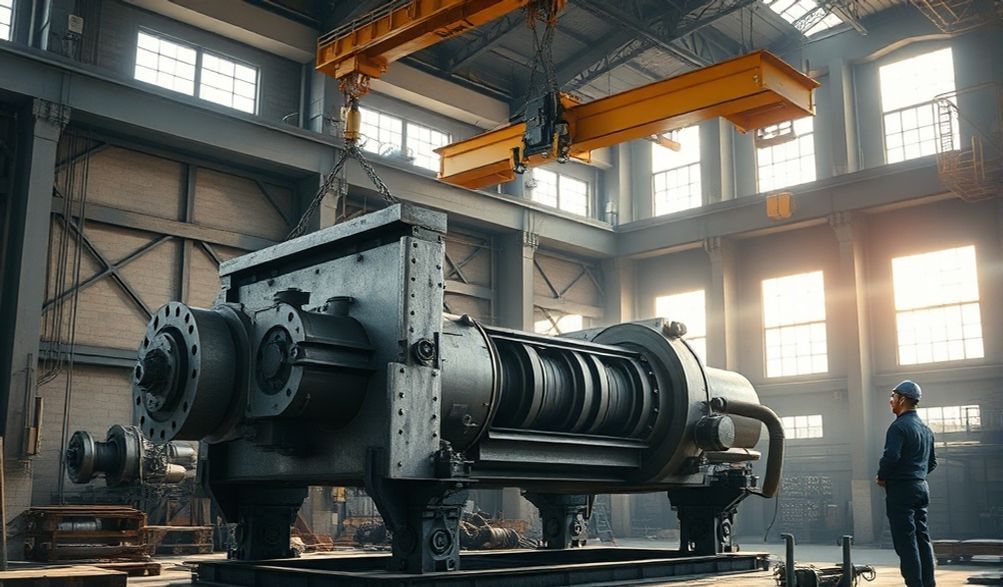
The Ultimate Guide to Safe and Efficient Brick Machine Moving
บทนำ
Imagine standing in your factory, looking at the colossal brick-making machine that has been the backbone of your production for years. Now, you need to move it. A wave of anxiety hits as you consider its sheer weight, its intricate electrical systems, its delicate hydraulic components, and the sheer logistical nightmare of getting it from Point A to Point B without turning a valuable asset into a scrap metal nightmare. This scenario is a high-stakes reality for manufacturers, construction companies, and plant managers worldwide.
The risks are not hypothetical. A single misstep during a brick machine move can lead to catastrophic machine damage, costing hundreds of thousands in repairs and recalibration. More importantly, it poses severe risks of personal injury or worse. The resulting production downtime can cripple project timelines and erode customer trust. This isn’t a job for a few strong hands and a rented trailer; it’s a complex industrial project.
This guide serves as your comprehensive manual for navigating this daunting task. We will walk you through every critical phase, from initial planning to final calibration. The insights and procedures outlined here are not just theoretical; they synthesize decades of industry best practices, original equipment manufacturer (OEM) guidelines, and the hard-won expertise of seasoned rigging and industrial moving professionals. Our goal is to equip you with the knowledge to ensure your move is executed with maximum safety and efficiency.
Why Professional Brick Machine Moving is Non-Negotiable
Attempting to move heavy industrial machinery without the proper expertise is one of the most costly gambles a business can take. The “we can handle it ourselves” mentality often overlooks the immense, specialized challenges involved.
The Immense Risks of DIY or Unqualified Moves
- Personal Injury: Brick machines weigh several tons. A shifting load or a failed rigging point can cause crushing injuries, severe strains, or falls from height in an instant. The force involved is unforgiving.
- Machine Damage: These are precision instruments. Improper lifting can twist the frame, leading to permanent misalignment. Vibrations during transport can loosen critical bolts and damage internal components. A dropped machine is often a total loss.
- Financial Loss: The domino effect is brutal. The costs cascade from immediate repairs and parts replacement to weeks of halted production, missed deadlines, and potential voiding of the manufacturer’s warranty. The “savings” from a DIY move evaporate instantly after one mistake.
The Value of Expertise: What Professionals Bring
Professional industrial movers are not just strong laborers; they are applied engineers and risk managers.
- Specialized Equipment: They possess and know how to use equipment you cannot rent off the shelf: hydraulic gantry systems, multi-ton capacity forklifts, machinery skates, and lowboy trailers designed for extreme, over-dimensional loads.
- Engineering Knowledge: They understand load distribution, center of gravity calculations, and structural integrity. They know อย่างไร to lift a machine without bending it and ที่ไหน to secure it on a trailer.
- Risk Mitigation: Reputable firms operate with comprehensive insurance (liability, cargo, workers’ comp), detailed lift plans, and ingrained safety protocols that protect your people, their crew, and your invaluable equipment.
Pre-Move Planning: The Blueprint for Success
The physical move is the final act. Success is determined in the planning stage. Rushing this phase is the root cause of nearly all moving failures.
Conducting a Detailed Machine Assessment
Before anything is touched, you must become intimately familiar with the machine.
- Document Everything: Record the exact weight, dimensions, and center of gravity. Locate and note all manufacturer-designated lifting points and tie-down lugs. Ignoring these can invalidate warranties and cause structural failure.
- Identify Fragile Components: Flag vulnerable parts like precision molds, exposed hydraulic manifolds, electrical control panels, and PLCs. These will need special protection.
- Consult the Manual: The OEM manual is your bible. It contains specific instructions for partial disassembly, transport orientation, and securing methods. If it’s lost, contact the manufacturer directly.
Route and Site Analysis
A machine that can’t fit through a door is a major, expensive problem.
- Current Location: Measure all exit paths. Check door widths, heights, and floor load capacity. Note any overhead obstructions like lights, pipes, or ductwork.
- Destination Site: Ensure the new foundation is level, cured, and rated for the machine’s dynamic load. Verify that all necessary utilities (3-phase power, compressed air, water lines) are stubbed in and ready for connection.
- Transport Route: For the trucking portion, a detailed route survey is critical. This identifies low bridges, weight-restricted roads, tight turns, and any need for police escorts or road closures. Permits are based on this survey.
Essential Equipment for Moving Heavy Brick Machinery
The right tool for the job isn’t a suggestion; it’s a requirement. Here’s the arsenal professionals use.
Lifting and Hoisting Solutions
- Hydraulic Gantry Systems vs. Forklifts: Gantry cranes are ideal for indoor lifts where overhead cranes aren’t available. They provide stable, controlled lifting. Rough-terrain forklifts are used for outdoor loading/unloading but require perfectly level, stable ground. The choice depends on the environment and machine configuration.
- Rigging Hardware: This includes rated alloy steel chains, wire rope slings, synthetic roundslings, shackles, and spreader bars. Using the correct rigging geometry is essential to prevent damaging the machine during the lift.
Transport and Translation Equipment
- Machinery Skates & Dollies: For precise indoor movement across a factory floor, skates (manual or powered) allow for micro-adjustments in positioning. They distribute weight evenly to protect concrete floors.
- Trailer Selection:
- Flatbeds: For standard, within-dimension loads.
- Step-Decks & Extendable Lowboys: For taller machines that exceed standard height limits. These trailers have a lower deck height to navigate under bridges.
- Air Casters: For moving sensitive machinery over finished floors (e.g., new epoxy) without risk of damage, air casters create a frictionless air film, allowing massive loads to be moved with minimal force.
The Step-by-Step Moving Process
With planning complete and equipment ready, the move proceeds in disciplined phases.
Phase 1: Preparation and Disassembly (As Needed)
- Secure the Work Area: Clear all non-essential personnel and create a clean, organized staging zone.
- Lockout/Tagout (LOTO): This is a non-negotiable safety and procedural step. All energy sources (electrical, hydraulic, pneumatic) must be isolated, locked, and tagged to prevent accidental startup.
- Detach and Secure: Following the manual, safely disconnect peripherals like conveyors, hoppers, or water lines. Remove loose parts (molds, tooling) and pack them separately. Bolt down any internal components that could shift.
Phase 2: Lifting and Loading
- The Lift: Using the pre-planned rigging setup, the machine is lifted slowly and evenly. Cribbing (stacked hardwood blocks) is often used to create a stable, temporary support during the lift process.
- Loading: The machine is carefully translated onto the trailer. The load must be centered side-to-side and positioned to achieve the correct axle weight distribution for the truck.
- การรักษาความปลอดภัย: This is an art form. The machine is secured using grade-70 or higher transport chains, load binders, and wooden blocking/bracing to prevent any movement in any direction during transit. This is checked and re-tightened periodically.
Phase 3: Transportation and Unloading
- Transport: Drivers of oversized loads are specialists. They drive cautiously, plan for wide turns, and monitor their load constantly.
- Unloading: The securing process is reversed with extreme care. The unloading site is often more challenging than the origin, requiring meticulous spotting and communication.
- Final Positioning: Using skates or dollies, the machine is moved to its exact final position, often within millimeters of the planned location.
Post-Move: Installation, Calibration, and Testing
The move is not complete when the machine is on the floor. It’s complete when it produces perfect bricks again.
Reassembly and Reconnection
- Methodical Reassembly: Follow the OEM’s reverse sequence for any disassembly. Use new seals or gaskets as recommended.
- Utility Reconnection: Connect power, hydraulics, and pneumatics to the exact specifications. This is a job for qualified technicians, not general movers. Incorrect connections can cause immediate and catastrophic failure.
Alignment, Calibration, and Test Run
- Precision Alignment: The machine must be leveled and squared. Misalignment here causes uneven wear, poor product quality, and premature failure.
- System Calibration: Hydraulic pressures, sensor positions, and PLC settings must be verified and calibrated according to the manual.
- The Test Run: Begin with a no-load test to check all motions and safety interlocks. Then, conduct a full production test run with material. The first bricks off the line should be inspected for dimensional accuracy and consistency. Document this entire process.
FAQ: Your Brick Machine Moving Questions Answered
Q: How much does it typically cost to move a brick machine?
ก There is no standard price. Cost is a function of machine size/weight, travel distance, complexity of site access, and required disassembly. A small, simple machine moved locally may cost a few thousand dollars. Moving a large, automated plant across the country can cost tens of thousands. Always invest in a detailed, on-site professional quote. The cheapest bid often reflects inexperience and hidden risk.
Q: How long does the entire moving process take?
ก A realistic timeline spans weeks, not days. Planning and permitting can take 1-2 weeks. The physical loading, transport, and unloading may take 1-3 days. Reassembly, reconnection, and calibration can take another 1-5 days, depending on complexity. Rushing any phase invites disaster.
Q: Do I need any permits to move a brick machine?
ก Almost certainly. If the machine or its trailer configuration exceeds standard road dimensions (typically 8.5′ wide, 13.5′ high, or requires more than a standard trailer length), you will need state and local oversize/overweight transportation permits. A professional moving company manages this entire process, including route surveys and escort coordination.
Q: What should I look for when hiring a brick machine moving company?
ก Use this checklist:
* Proven Experience: Ask for case studies or references specifically related to brick, block, or heavy industrial machinery.
* Licensing & Insurance: Verify they have active DOT licensing and ample insurance (general liability, cargo, workers’ compensation).
* Detailed Plan: They should provide a written method statement or lift plan, not just a price quote.
* Safety Record: Inquire about their safety program and EMR (Experience Modification Rate).
สรุป
Moving a brick machine is a high-stakes endeavor that blends heavy logistics with precision engineering. It is definitively not a task for improvisation or unqualified crews. The core takeaway is clear: the upfront investment in professional, experienced movers is a strategic cost that safeguards your far greater investments in equipment, productivity, and human safety.
Use the knowledge in this guide as your foundation. It empowers you to ask the right questions, evaluate potential partners critically, and understand the process your valuable asset will undergo. By prioritizing meticulous planning and partnering with qualified specialists, you transform a risky challenge into a smooth, successful transition. Remember, these guidelines are built on established industry standards and real-world professional experience—the only reliable blueprint for getting your brick production back online, safely and efficiently.
<