
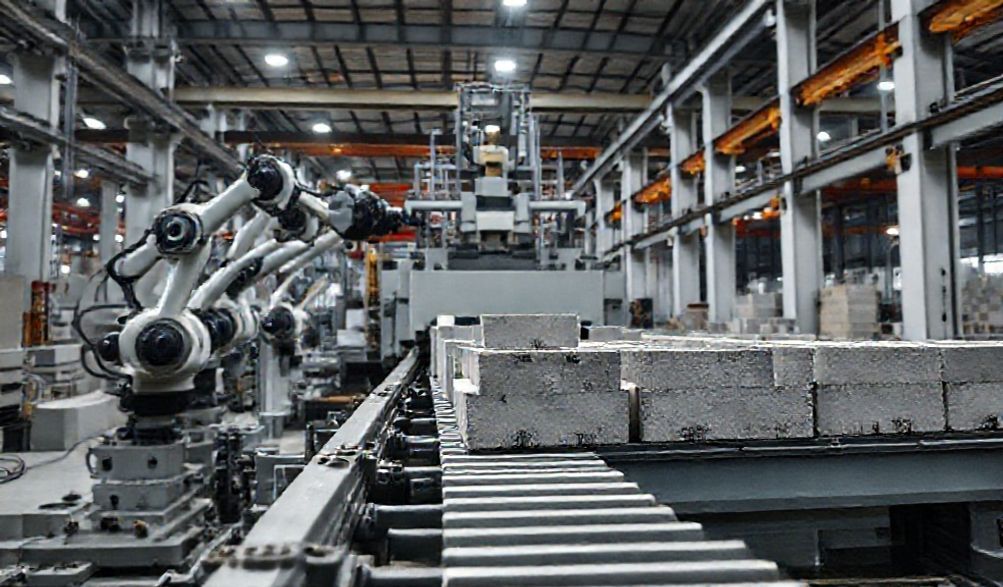
Your Ultimate Guide to Finding a Reliable China Concrete Block Making Machine Supplier
บทนำ
The global construction industry runs on concrete. From affordable housing projects to massive infrastructure developments, the demand for reliable, high-quality building materials is insatiable. At the heart of producing these materials—hollow blocks, paving stones, curbs, and more—lies the concrete block making machine. For entrepreneurs, construction companies, and investors worldwide, sourcing this pivotal equipment is a critical business decision.
The world’s manufacturing hub, China, presents a compelling solution, offering an overwhelming array of suppliers. Yet, this abundance is a double-edged sword. The core challenge isn’t finding aซัพพลายเออร์; มันกำลังระบุreliable partner among thousands who can deliver on promises of quality, durability, and service. The stakes are high: a poor choice can lead to crippling downtime, substandard products, and a significant financial loss.
This guide is designed to cut through the noise. We will move beyond simple directories and price comparisons to provide you with a professional, trustworthy framework for evaluation. Drawing from established industry standards, technical procurement practices, and real-world sourcing experience, this post will equip you with the knowledge to build a successful, long-term partnership with a Chinese concrete block making machine supplier. Let’s transform a daunting process into a strategic advantage.
Why Source Concrete Block Making Machines from China?
Choosing to source from China is a strategic decision made by countless successful businesses globally. It’s not merely about cost; it’s about accessing a mature, competitive, and innovative industrial ecosystem. Understanding these advantages provides the context for a smart sourcing strategy.
ประสิทธิภาพด้านต้นทุนและการกำหนดราคาที่แข่งขันได้
The most cited advantage remains cost. China’s unparalleled economies of scale, integrated supply chains, and manufacturing efficiencies translate into significant price competitiveness. You can often acquire a robust machine at a fraction of the cost of comparable equipment from other regions. This lower capital expenditure improves your return on investment (ROI) and shortens your payback period, a crucial factor for any business.
Extensive Manufacturing Ecosystem and Variety
China’s manufacturing landscape for block making machines is incredibly diverse. Whether you need a small, manual machine for a community project or a fully automated production line capable of producing thousands of blocks per hour, you will find specialized suppliers. This ecosystem includes:
* ประเภทของเครื่องจักร: Manual, semi-automatic, fully automatic, stationary, and mobile (egg-layer) machines.
* Output Capacities: From a few hundred to over 30,000 blocks per 8-hour shift.
* ช่วงผลิตภัณฑ์: Machines that produce a vast array of products, including solid, hollow, interlocking, and paving blocks.
การรับเอาเทคโนโลยีและการนวัตกรรม
Contrary to outdated stereotypes, leading Chinese manufacturers are at the forefront of adopting industrial technology. Many now produce machines featuring:
* Advanced PLC Control Systems for precise, repeatable operation.
* User-Friendly HMI Touchscreen Panels for easy monitoring and adjustment.
* Energy-Efficient Designs with variable frequency drives (VFDs) on motors.
* IoT Readiness for potential future integration into smart factory setups.
Scalability for Growing Businesses
As your block production business grows, your supplier should be able to grow with you. Chinese suppliers are accustomed to dealing with clients at every stage—from startups purchasing their first machine to large corporations setting up turnkey plants. This scalability ensures you can source additional equipment or upgrade your line without starting your supplier search from scratch.
Key Factors to Evaluate a Chinese Supplier (Beyond Price)
Fixing your gaze solely on the bottom-line price is the fastest route to a failed investment. True value lies in the total cost of ownership, which includes machine longevity, output quality, and operational support. Here is your expert checklist for evaluation.
ความเชี่ยวชาญทางเทคนิคและความสามารถในการผลิต
A supplier’s technical depth is paramount. You need a partner, not just a seller.
* In-House Production vs. Trading Company: Prioritize factories with in-house design, casting, machining, and assembly capabilities. Trading companies can add markup and obscure the true manufacturer, complicating after-sales support. Ask for evidence: videos of their production floor, their CNC machinery, and their welding processes.
* R&D and Customization: Can they modify a standard machine to suit your local raw materials (e.g., different aggregate sizes) or produce a unique block design? An engaged engineering team is a strong positive indicator.
Quality Control and Certifications (The Trust Cornerstone)
Certifications are your first line of defense. They signal a commitment to systematic quality management.
* Critical Certifications:
* ISO 9001: Demonstrates an implemented Quality Management System.
* เครื่องหมายซีอี: Indicates the machine meets EU health, safety, and environmental standards. While crucial for the European market, it is a globally recognized benchmark for safety.
* SGS/BV Inspection Reports: Third-party inspection certificates for specific shipments or factory audits provide objective verification of quality.
* Material and Components: Inquire about the grade of steel used in the frame and molds. Ask which brands supply the core components:
* ระบบไฮดรอลิก Rexroth, Yuken, or reputable Chinese brands.
* ส่วนประกอบทางไฟฟ้า Siemens, Schneider, Omron, or Mitsubishi.
* PLC and Sensors: Brands like Siemens or Mitsubishi are preferred.
* QC Procedures: A professional factory will have staged quality checks—for raw materials, during welding/machining, pre-assembly testing, and a final run-off test before disassembly for shipping.
Production Capacity and Lead Times
A supplier’s stated capacity must align with reality to set correct expectations.
* Gauging Real Capacity: Ask for their current order book and the typical lead time for a machine like yours. If they promise delivery in 15 days for a complex automatic line, be skeptical. Realistic lead times can range from 30 to 90 days depending on complexity and their workload.
* Shipping Timelines: Factor in sea freight times (4-6 weeks to most global ports), customs clearance, and inland transportation. A reliable supplier will help coordinate this.
After-Sales Service and Support
This is where partnerships are made or broken. The service begins หลังจาก the machine arrives at your site.
* การรับประกัน: A standard warranty is 12 months for core parts (hydraulic system, PLC, mainframe). Some offer 18-24 months. Crucially, get the full warranty terms in writing.
* ฝ่ายสนับสนุนทางเทคนิค Is 24/7 English-speaking support available via WhatsApp or email? Do they provide comprehensive installation manuals, electrical diagrams, and high-quality video guides?
* Spare Parts Policy: How quickly can they ship common wear parts (mold liners, seal kits, sensors)? Are parts reasonably priced? A good practice is to order a critical spare parts kit with your initial machine purchase.
A Step-by-Step Supplier Vetting Process
A structured approach removes emotion and reduces risk. Follow this phased process to methodically narrow your search.
Phase 1: Online Research and Shortlisting
- แพลตฟอร์ม B2B Use Alibaba, Made-in-China, and Global Sources as discovery tools, not decision-makers. Look for suppliers labeled “Verified Supplier” or “Gold Supplier,” but dig deeper.
- Red Flags: Beware of suppliers with prices drastically lower than the market average, stock photos only, vague company addresses, or poor English communication on their main page.
- Website Analysis: Visit the supplier’s independent website. A professional site with detailed technical specifications, clear company history, and genuine factory/workshop photos is a positive sign.
Phase 2: Direct Communication and Inquiry
Initiate contact with your shortlisted suppliers (3-5 is ideal).
* Key Technical Questions to Ask:
* What is the cycle time (seconds per cycle)?
* What is the practical output per 8-hour shift under standard conditions?
* What is the power requirement (kW)?
* What is the standard pallet size? Can you customize it?
* Can you provide the full technical drawing and parts list?
* Request a Detailed Quotation: A professional quote should clearly state:
* Price Terms: FOB (you handle shipping) or CIF (they handle to your port).
* Machine Specifications: As discussed.
* Packing Details: Wooden crate size and protection.
* Payment Terms: e.g., 30% deposit, 70% before shipment.
* Delivery Time.
* Warranty Details.
Phase 3: Due Diligence and Verification
This phase separates serious buyers from window shoppers.
* Virtual Factory Tour: Insist on a live video call (via Zoom, WhatsApp) to tour the factory floor. Ask to see the assembly area, the painting booth, and their testing procedures.
* Customer References: Request contact information for 2-3 customers in a region similar to yours. Follow up and ask about machine performance, reliability, and after-sales support.
* Third-Party Inspection: For large orders, hiring a third-party inspection company (like SGS, BV, or Intertek) to conduct a pre-shipment inspection (PSI) is a wise investment. They will check the machine against your order specifications before it leaves the factory.
Understanding Machine Types and Your Project Needs
Matching the right machine type to your specific business model is fundamental to profitability.
เครื่องจักรแบบแมนนวลและกึ่งอัตโนมัติ
- เหมาะสำหรับ: Startups, small-scale projects, markets with low labor costs, or producing specialty, low-volume products.
- ข้อดี: Lowest capital cost, simple operation and maintenance.
- ข้อเสีย High labor requirement, lower and less consistent output, higher physical demand on operators.
เครื่องทำบล็อกแบบอยู่กับที่อัตโนมัติเต็มรูปแบบ
- เหมาะสำหรับ: Medium to large-scale, fixed-location production plants focused on high, consistent output.
- ข้อดี: High output with minimal labor (2-3 operators), consistent product quality, can be integrated with automated mixers, conveyors, and stackers.
- ข้อเสีย Higher initial investment, requires stable power supply, more complex maintenance.
Mobile Block Making Machines (Egg-Layer)
- เหมาะสำหรับ: On-site production for large construction projects (e.g., building a housing estate), eliminating block transportation costs.
- ข้อดี: Produce blocks directly where they are needed, no need for a permanent foundation, often simpler in design.
- ข้อเสีย Generally lower output than stationary automatics, product curing must be managed on-site.
ข้อกำหนดหลักที่ต้องนำมาเปรียบเทียบ
When comparing quotes, ensure you are comparing apples to apples. Focus on:
* เอาท์พุต Blocks per shift (define shift hours).
* ความต้องการพลังงาน Total connected load in kW.
* ระดับการทำงานอัตโนมัติ Degree of manual intervention required.
* Pallet Size & Type: Standard steel pallets are more durable than wooden ones.
* Mold Options: What molds are included in the base price?
Navigating Logistics, Payment, and After-Sales
The final hurdles are practical but critical. Proper handling here protects your investment.
Incoterms and Shipping Logistics
- เอฟโอบี (ฟรีออนบอร์ด): You pay for the machine loaded on the ship at the Chinese port. You control and pay for the main sea freight and insurance. Recommended for buyers who want more control or have a trusted freight forwarder.
- ซีไอเอฟ (ต้นทุน ประกันภัย และค่าระวาง) The supplier arranges and pays for sea freight and insurance to your destination port. It’s simpler but often includes a margin for the supplier. You handle customs clearance at your port.
- Freight Forwarder: Using a China-based freight forwarder recommended by your business network can simplify logistics and provide local oversight.
Secure Payment Methods
- T/T (Bank Transfer): The most common method. A 30% deposit to start production and 70% balance against copy of shipping documents is standard. Only transfer to the supplier’s company bank account, not personal accounts.
- L/C (Letter of Credit): More secure but complex and costly. A bank guarantees payment upon presentation of shipping documents. Suitable for very large orders.
- Escrow Services (Alibaba Trade Assurance): Offers a good balance. Your payment is held by the platform and released only after you confirm satisfactory receipt of the goods. Highly recommended for first-time buyers.
Protecting Your Investment
- The Contract: Have a simple, clear sales contract that includes all agreed-upon specifications, payment terms, delivery date, warranty terms, and responsibilities. Both parties should sign it.
- Spare Parts Inventory: From day one, plan for maintenance. Order a starter kit of critical spare parts (seals, filters, commonly worn sensors) with your machine to avoid weeks of downtime waiting for a single, small part to be shipped.
คำถามที่พบบ่อย (FAQ)
Q1: What is the typical price range for a concrete block making machine from China?
ก Prices vary dramatically based on automation and output. A small manual machine may start around $5,000 – $10,000. A robust semi-automatic system can be $25,000 – $50,000. High-capacity, fully automatic production lines range from $70,000 to over $200,000. Remember, the lowest quote often signals compromised quality or hidden costs.
Q2: How can I verify if a supplier is a real factory and not a trading company?
ก Demand a live video factory tour. Ask to see specific processes like welding, machining, and assembly of a machine similar to yours. Request raw footage of their workshop and ask detailed questions about their manufacturing flow that only a factory owner would know.
Q3: What are the most important certifications to look for?
ก CE certification is critical for electrical and mechanical safety compliance in many markets. ISO 9001 indicates a systematic approach to quality management. While not a certification, a recent third-party inspection report (SGS/BV) is one of the strongest trust signals you can obtain.
Q4: Do Chinese suppliers provide installation and training?
ก Most provide detailed installation manuals, electrical diagrams, and video guides. On-site installation and training by an engineer are usually available as a paid service. This cost and duration (typically 1-2 weeks) should be negotiated and confirmed in your contract.
Q5: How long is the standard warranty, and what does it cover?
ก A 12-month warranty for core parts (hydraulic system, frame, PLC) is standard, with some offering 18-24 months. It is vital to get the warranty terms in writing, explicitly listing covered and excluded parts, and the process for making a claim.
สรุป
Finding a reliable China concrete block making machine supplier is a journey defined by diligent research, not a quick transaction. Success hinges on looking beyond the price tag to evaluate the supplier’s technical capability, unwavering commitment to quality, and robust after-sales support framework.
The most crucial investment you can make is the time spent in the due diligence process. By following the structured vetting process and evaluation criteria outlined in this guide, you empower yourself with the knowledge to make an informed decision. This approach transforms you from a mere buyer into a knowledgeable partner, paving the way for a transparent, trustworthy, and profitable long-term relationship.
Your next step is to apply this framework. Create a shortlist of 3-5 potential suppliers who meet these criteria and begin your detailed, technical inquiries. Your future successful block manufacturing business starts with this informed first move.
<