
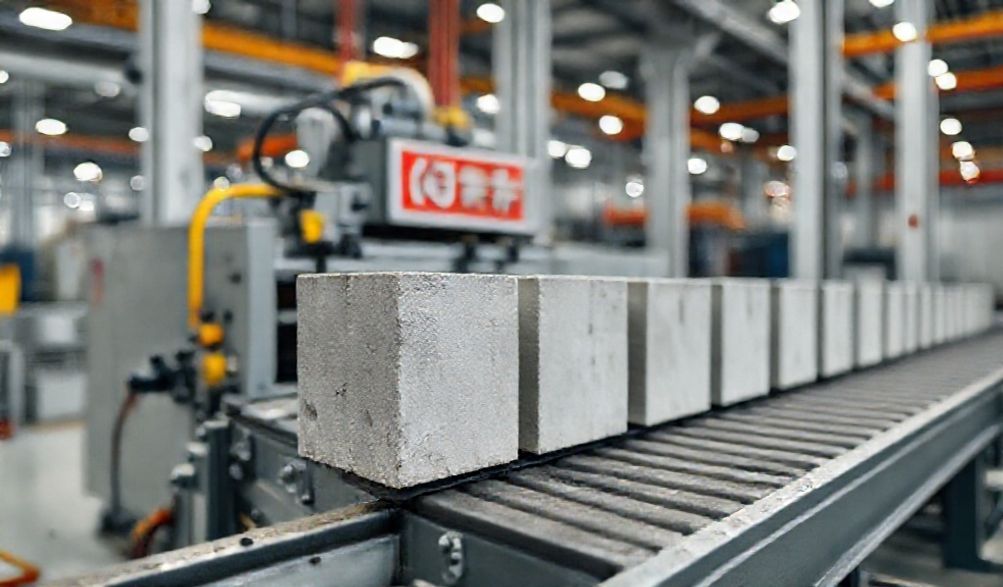
Your Ultimate Guide to Block Moulding Machines in China: Spotlight on FUDA Factory
For construction businesses and entrepreneurs worldwide, sourcing reliable, efficient, and cost-effective block moulding machinery is a critical decision. China has emerged as the global epicenter for manufacturing these machines, offering a blend of advanced technology and competitive pricing. However, navigating the vast market to find a trustworthy supplier requires expert insight.
This comprehensive guide, drawing on over a decade of industry experience in construction equipment evaluation, focuses on one of the prominent names: the โรงงานเครื่องทำอิฐ ฟูด้า. We will dissect what makes a quality block moulding machine, analyze FUDA’s offerings against industry benchmarks, and provide you with the authoritative knowledge needed to make an informed procurement decision, ensuring your investment builds a solid foundation for success.
ทำความเข้าใจเครื่องอัดบล็อก: ประเภทและการใช้งาน
Before evaluating any supplier, a firm grasp of the equipment itself is essential. Block moulding machines are the workhorses of modern construction material production.
What is a Block Moulding Machine?
At its core, a block moulding machine is a device that compacts raw materials—primarily concrete—into precise, uniform shapes. These shapes include:
- บล็อกคอนกรีตแบบทึบและแบบกลวง
- Pavers and kerbstones.
- Interlocking bricks for landscaping.
- Fly ash or cement bricks.
The importance of these machines cannot be overstated. They replace slow, inconsistent manual labor with mechanized efficiency, ensuring structural integrity through product uniformity and significantly accelerating project timelines.
Key Types of Machines
The market offers a spectrum of machines categorized by operation and function.
By Level of Automation:
* เครื่องจักรที่ใช้แรงคน Operated primarily by hand lever. Lowest cost, suitable for very small-scale or startup projects with low daily output requirements.
* เครื่องจักรกึ่งอัตโนมัติ: Combine manual feeding of raw material with automated compression, vibration, and ejection. Offer a excellent balance of productivity and cost for small to medium enterprises.
* เครื่องจักรอัตโนมัติสมบูรณ์แบบ: Feature automated material feeding, mixing, molding, stacking, and pallet return. Controlled by PLC systems, they are designed for high-volume, continuous production with minimal labor.
By Design & Function:
* เครื่องอัดบล็อกแบบอยู่กับที่ High-output machines fixed in a production line, often with block curing areas.
* เครื่องอัดบล็อกเคลื่อนที่: Portable units that can be moved around a site, ideal for producing blocks directly where they are needed.
* เครื่องจักรเฉพาะทาง: Such as concrete hollow block machines, paver making machines, and interlocking brick machines, each designed for specific product types.
การใช้งานหลักในอุตสาหกรรมก่อสร้าง
The blocks produced are fundamental to:
* อาคารพักอาศัย For walls, partitions, and foundations.
* Infrastructure & Commercial Projects: Large-scale construction of schools, factories, and warehouses.
* Landscaping & Urban Development: Creating durable pavements, walkways, and retaining walls.
เหตุใดจึงควรเลือกเครื่องปั้นบล็อกจากจีน?
China’s dominance in machinery manufacturing is not accidental. It’s the result of decades of strategic industrial development.
The Chinese Manufacturing Landscape
China benefits from unparalleled scale and a deeply integrated supply chain. Industrial zones, like those in Shandong, Fujian, and Guangdong provinces, are hubs for construction machinery. This concentration fosters competition, innovation, and easy access to raw materials and component suppliers, driving both efficiency and technological advancement.
Cost-Benefit Analysis: Price vs. Value
The most apparent advantage is cost. Chinese block machines can cost 30% to 60% less than comparable European or American models. This isn’t solely due to lower labor costs. It’s also attributable to economies of scale and streamlined production processes.
The key for buyers is to evaluate long-term value, not just the price tag. A cheaper machine with poor durability offers a false economy. The goal is to find a supplier that provides robust engineering at a competitive price point, maximizing your Return on Investment (ROI).
Quality Evolution: From Copycats to Innovators
The outdated stereotype of Chinese manufacturers as mere copycats is just that—outdated. Leading factories, including FUDA, have heavily invested in Research and Development (R&D), in-house engineering teams, and advanced CNC machining centers. Many now hold their own patents and design innovations.
A critical trust signal is the pursuit of international certifications. Look for CE marking (indicating conformity with EU health and safety standards) and ไอเอสโอ certifications (like ISO 9001 for quality management systems). These demonstrate a commitment to standardized, reliable manufacturing processes.
Deep Dive: FUDA Brick Making Machine Factory
Let’s apply the above framework to a specific supplier. FUDA Brick Making Machine Factory presents itself as a established player. Here’s a detailed, transparent evaluation based on industry benchmarks.
Company Profile and History
FUDA is typically presented as a manufacturer with over a decade of experience, located in one of China’s key industrial machinery regions. Their stated mission often revolves around providing “cost-effective and durable” brick making solutions. Prospective buyers should verify:
* Business License: Request a copy.
* Factory Size & Capacity: Evidence of their production scale.
* การรับรอง: Physical proof of any claimed ISO or CE certificates.
Analyzing FUDA’s Block Moulding Machine Product Range
A review of their catalog typically shows a comprehensive range:
* เครื่องอัดแบบมือและกึ่งอัตโนมัติ For entry-level markets.
* สายการผลิตบล็อกอัตโนมัติเต็มรูปแบบ: Featuring PLC control panels, automatic pallet feeders, and stackers.
* ข้อมูลจำเพาะหลัก: Outputs can range from 1,000 to over 10,000 blocks per 8-hour shift, depending on the model and block size. Power requirements will vary from basic electrical to full three-phase systems.
* Highlighted Features: These may include “high-frequency vibration systems” for better block density, “double-cylinder hydraulic pressure” for stronger compression, and “energy-saving” designs.
Materials and Build Quality: An Expert Assessment
This is the most critical evaluation area. Inquire deeply about:
* โครงสร้างเฟรม What grade of steel is used (e.g., Q235)? Is it reinforced? How is it welded (robot welding is superior for consistency)?
* องค์ประกอบหลัก The brand and origin of key parts matter.
* ระบบไฮดรอลิก Are pumps and valves from reputable brands?
* มอเตอร์สั่นสะเทือน: These are the heart of block density. Premium brands ensure longevity and consistent performance.
* PLC & ระบบไฟฟ้า: Siemens, Mitsubishi, or Schneider components indicate higher quality control.
* Expected Lifespan: A well-built machine from a reputable factory, with proper maintenance, should have a service life of 10+ years. Ask for case studies or references of older machines still in operation.
Critical Factors When Evaluating a Chinese Supplier Like FUDA
Your due diligence process must extend beyond the sales brochure.
Beyond the Brochure: Verifying Claims
- Request Real Data: Ask for videos of the exact machine model running in their factory, not just promotional clips. Request test report data on block compression strength from their quality control.
- การตรวจสอบโรงงาน An in-person visit is ideal. If not possible, insist on a live video tour of the production workshop, not just the showroom. This allows you to see the build process, inventory, and quality control in action.
Communication, Customization, and Technical Support
- การตอบสนอง Gauge their communication speed and English proficiency during the inquiry process. Slow, unclear responses now may foreshadow poor after-sales support.
- การปรับแต่ง Can they provide a custom mould for your unique block design? What is the cost and lead time? A capable factory has an in-house mould design team.
- บริการหลังการขาย: What is included?
- Detailed installation manuals and video guides?
- Online troubleshooting support?
- Availability and cost of spare parts?
- Option for paid on-site technician deployment?
Logistics, Shipping, and Incoterms
Understand the full cost.
* Incoterms: Know what you are paying for.
* EXW: You own the goods at their factory door. You arrange and pay for all shipping, insurance, and customs.
* FOB: They deliver the machine to the Chinese port and load it on your chosen vessel. You pay for main shipping and destination costs.
* CIF: They pay for shipping and insurance to your nearest port. You handle customs clearance and inland delivery.
* Total Landed Cost: Always calculate: Machine Cost + Shipping + Insurance + Import Duties/Taxes + Inland Haulage. A CIF price might seem simpler, but FOB often offers more control and can be cheaper.
Comparative Analysis: How Does FUDA Stack Up?
FUDA vs. Other Well-Known Chinese Factories
It’s wise to get quotes from 3-5 suppliers. In a broad comparison:
* Price Bracket: FUDA often positions itself in the mid-range market—more affordable than top-tier brands known for premium components but above the lowest-cost, basic manufacturers.
* Market Focus: They typically cater strongly to small and medium-sized businesses (SMBs) and export markets in Africa, Southeast Asia, and the Middle East.
* Automation Offering: They usually provide the full spectrum from manual to full auto, whereas some factories specialize only in high-end automated lines.
Identifying the Ideal Customer for FUDA Machines
FUDA’s offerings appear most aligned with:
* Growing Construction Companies: Those needing to upgrade from manual labor to mechanized production.
* Entrepreneurs Starting a Block Supply Business: Looking for a balance of affordability and capability.
* Medium-Scale Contractors: With defined projects that require a reliable on-site production capability.
* Buyers with Moderate Budgets: Who prioritize essential functionality and durability over cutting-edge automation features.
FAQ: Your Questions on Block Moulding Machines & FUDA Factory Answered
Q1: What is the average price range for a FUDA block making machine?
ก Prices vary dramatically based on automation and capacity. A simple manual machine may start around $3,000 – $7,000, a robust semi-automatic model between $15,000 – $35,000, and a fully automatic production line can range from $50,000 to over $150,000. Always request a formal, detailed quotation specifying all components.
Q2: Does FUDA provide installation and on-site training?
ก Most Chinese factories, including FUDA, typically provide comprehensive installation manuals, electrical diagrams, and video guides. On-site installation and training are usually offered as a paid service. This cost and its scope must be explicitly negotiated and included in your contract.
Q3: What are the payment terms usually offered?
ก Standard terms in the industry are 30% deposit via T/T (bank transfer) to confirm the order, with the 70% balance paid before shipment. Always use secure, traceable payment methods. Never use non-reversible methods like Western Union for large deposits.
Q4: How long is the warranty period, and what does it cover?
ก A standard warranty is often 12 months for the whole machine, with certain core parts (like hydraulic cylinders) possibly covered for 18-24 months. The critical step is to get the detailed warranty terms in writing, specifying exactly which parts are covered, what constitutes warranty vs. misuse, and the process for claims.
Q5: Can FUDA customize a machine for producing a specific block design?
ก Yes, most reputable factories offer mould customization. You would need to provide detailed drawings or a sample of the block. They will then design and manufacture a custom mould, which adds to the cost (typically $1,000 – $5,000+) and extends the production lead time by several weeks.
สรุป
Choosing the right block moulding machine from China is a significant investment that hinges on thorough research and verified information. The โรงงานเครื่องทำอิฐ ฟูด้า represents one of many capable suppliers in the market, offering a range of solutions that may align with specific project needs and budgets.
This guide has equipped you with the framework to evaluate not just FUDA, but any supplier, against the critical pillars of ประสบการณ์ (their operational history), ความเชี่ยวชาญ (their technical knowledge and innovation), ความน่าเชื่อถือ (their industry standing and certifications), and ความน่าเชื่อถือ (their transparency and customer support).
Always remember to request customer references from similar regions, verify certifications physically, and clearly define all terms—payment, warranty, shipping, and support—in a formal contract. By applying this diligent approach, you can confidently partner with a manufacturer that will provide a reliable machine, forming the bedrock of your construction productivity for years to come.
<