
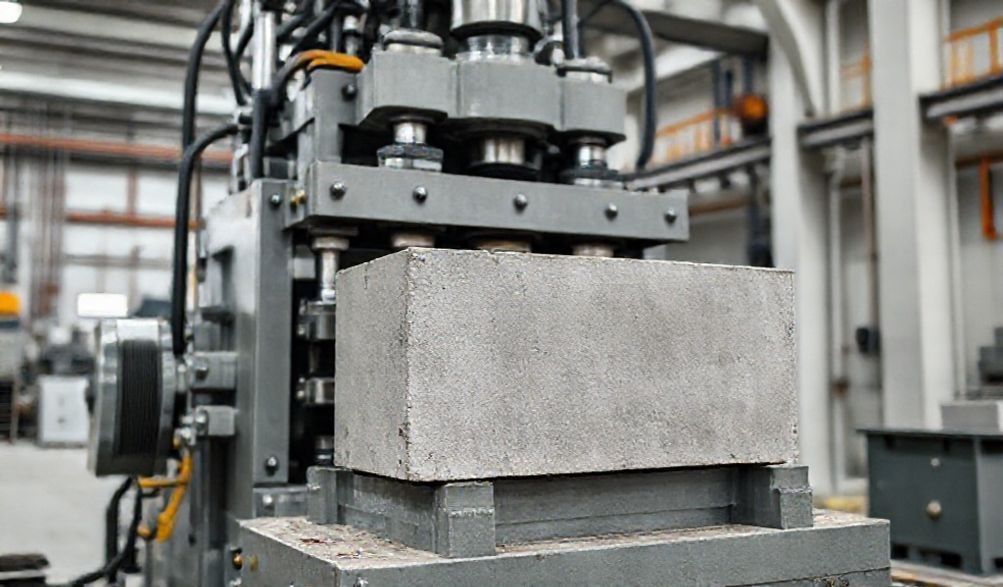
คู่มือขั้นสุดยอดสำหรับเครื่องผลิตบล็อกที่ไม่ต้องเผา และการเลือกผู้ผลิตอย่าง FUDA
บทนำ
อุตสาหกรรมการก่อสร้างกำลังอยู่ที่ทางแยก ในขณะที่ความต้องการที่อยู่อาศัยราคาไม่แพงและโครงสร้างพื้นฐานเติบโตขึ้นทั่วโลก แรงกดดันในการลดต้นทุน เร่งระยะเวลาการดำเนินโครงการ และลดผลกระทบต่อสิ่งแวดล้อมก็เพิ่มขึ้นตามไปด้วย สำหรับผู้สร้าง ผู้รับเหมา และผู้ผลิตวัสดุ สิ่งท้าทายหลักตลอดมามักอยู่ที่การผลิตวัสดุก่อสร้างพื้นฐานที่เชื่อถือได้ ซึ่งเป็นกระบวนการที่โดยดั้งเดิมแล้วมีความหมายเหมือนกันกับการใช้พลังงานสูง การลงทุนจำนวนมาก และระยะเวลาบ่มที่ยาวนาน
เข้าสู่โซลูชันปฏิวัติวงการ: เทคโนโลยีการผลิตบล็อกแบบไม่ต้องเผา หรือที่รู้จักกันในชื่อการผลิตบล็อกแบบไม่ต้องบ่มหรือไม่ผ่านการเผา วิธีการใหม่ล่าสุดนี้ขจัดความจำเป็นในการเผาด้วยเตาเผาที่ใช้พลังงานสูงโดยสิ้นเชิง มันแสดงถึงการเปลี่ยนกระบวนทัศน์ใหม่ โดยเปิดทางสู่การผลิตวัสดุก่อสร้างที่มีประสิทธิภาพ คุ้มค่า และเป็นมิตรต่อสิ่งแวดล้อม สำหรับทั้งผู้ประกอบการและธุรกิจที่ตั้งตัวแล้ว นี่ไม่ใช่แค่เครื่องจักรใหม่ แต่เป็นกุญแจสำคัญที่จะปลดล็อกระดับใหม่ของประสิทธิภาพการผลิตและความยั่งยืน
ในภูมิทัศน์เช่นนี้ การเลือกพันธมิตรด้านเทคโนโลยีที่เหมาะสมมีความสำคัญไม่แพ้ตัวเทคโนโลยีเอง ผู้ผลิตอย่างโรงงานเครื่องผลิตบล็อกฟูดาได้ก้าวขึ้นมาเป็นผู้เล่นที่แข็งแกร่งในวงการ โดยมีความเชี่ยวชาญเฉพาะด้านในอุปกรณ์ขั้นสูงนี้ คู่มือนี้ทำหน้าที่เป็นแหล่งข้อมูลที่เชื่อถือได้สำหรับคุณ เราจะไขความลับของเทคโนโลยีที่อยู่เบื้องหลังเครื่องผลิตบล็อกไม่ต้องเผา อธิบายข้อได้เปรียบที่สำคัญของมัน และที่สำคัญที่สุดคือ มอบโครงสร้างการประเมินผู้ผลิตอย่างเป็นระบบให้กับคุณ เป้าหมายของเราคือการมอบความรู้ที่จำเป็นให้คุณ เพื่อให้คุณสามารถตัดสินใจลงทุนได้อย่างรอบคอบและมั่นใจ ซึ่งจะช่วยขับเคลื่อนโครงการของคุณให้ก้าวหน้าต่อไปได้อีกหลายปี
เครื่องจักรผลิตบล็อกที่ไม่ต้องเผาคืออะไร? อธิบายเทคโนโลยี
At its core, a baking-free block making machine is a sophisticated piece of industrial equipment designed to produce high-strength construction blocks without the traditional, fuel-burning kiln curing process. It replaces thermal energy with mechanical force and chemical bonding.
หลักการพื้นฐาน: การเผาโดยไม่ต้องใช้เตาเผา
The science behind this technology is both elegant and efficient. Traditional bricks gain strength through a vitrification process in a kiln, where extreme heat (often above 1000°C) fuses the clay particles. Baking-free technology takes a different route:
- การอัดขึ้นรูปภายใต้ความกดดันสูง The machine exerts immense hydraulic pressure (typically ranging from 15 to 30 MPa or more) on a specially formulated raw material mix. This pressure densely compacts the particles, drastically reducing voids and creating immediate “green strength.”
- พันธะเคมี: The raw material mix includes binding agents, most commonly Portland cement, lime, or other chemical stabilizers. When combined with moisture and under high pressure, a hydration and pozzolanic reaction begins. This reaction forms stable crystalline structures (like calcium silicate hydrate) that bind the aggregate particles together permanently.
- การบ่ม After compaction, the blocks are stacked and left to cure naturally for a period (e.g., 7-28 days). During this time, the chemical bonds gain full strength, resulting in a product that can meet or exceed the performance of fired clay bricks, all without a single match being lit.
Key Components of a Modern Machine
Understanding the machine’s anatomy helps in assessing quality:
* ระบบผสม A robust pan or twin-shaft mixer ensures a homogeneous, consistent blend of aggregates, binder, and water—the critical first step for quality blocks.
* High-Pressure Hydraulic Compression Unit: The heart of the machine. It consists of heavy-duty hydraulic cylinders, pumps, and valves that deliver the consistent, high tonnage required for proper compaction.
* Mould and Pallet System: Precision-engineered steel moulds define the block’s shape (hollow, solid, interlocking). Pallets carry the freshly pressed block for transfer to the curing area. Durability here is non-negotiable.
* Control Panel (Semi-Automatic vs. Fully Automatic): This is the brain. Semi-automatic models require an operator to initiate each cycle, ideal for lower output. Fully automatic systems, controlled by PLC (Programmable Logic Controller), manage the entire production cycle—feeding, pressing, and block ejection—maximizing output and consistency.
ประเภทของบล็อกที่ผลิต
The versatility is a major selling point. By simply changing the mould, one machine can produce:
* แผ่นปูพื้นแบบประสาน For driveways, walkways, and parking areas.
* บล็อกคอนกรีตมวลเบา: The standard for load-bearing and non-load-bearing walls in construction.
* อิฐทึบ: For applications requiring high density and strength.
* Curbstones and Landscape Products: For road edging, gardens, and decorative purposes.
Top 5 Advantages of Using Baking-Free Block Technology
Adopting this technology isn’t just a minor upgrade; it’s a strategic business decision with tangible benefits.
1. Significant Energy Savings and Lower Carbon Footprint
This is the most compelling advantage. By completely eliminating the fossil fuels (coal, natural gas) or biomass required for kiln firing, energy consumption plummets. Industry analyses suggest that non-fired block production can use ใช้พลังงานน้อยลงได้ถึง 90% than traditional fired brick manufacturing. This directly translates to a drastically reduced carbon footprint, aligning your operation with global green building standards like LEED and BREEAM, and appealing to an increasingly eco-conscious market.
2. Cost-Effectiveness from Raw Material to Operation
The savings are multi-layered:
* ค่าใช้จ่ายพลังงาน The removal of fuel costs is a permanent operational saving.
* วัตถุดิบ: You can often utilize low-cost, locally available materials such as sand, quarry dust, crushed stone, and industrial by-products like fly ash or slag.
* Labor & Speed: Faster production cycles and simpler operation can optimize labor requirements.
3. Speed and Operational Efficiency
Time is money. Baking-free blocks gain handling strength immediately after pressing. While they require a curing period for full strength, they do not occupy a kiln for days. This means:
* Faster production cycles.
* Quicker inventory turnover.
* Accelerated project timelines, as blocks can be produced on or near the construction site.
4. Flexibility in Raw Materials and Product Design
The technology is inherently adaptable. You are not limited to specific clay deposits. You can experiment with mix designs incorporating recycled aggregates (like crushed concrete), tailoring the block for specific strength, weight, or insulation properties. Furthermore, switching moulds allows you to respond to market demand for different block types with minimal downtime.
5. Durability and Strength of the Final Product
Do not mistake “non-fired” for “weak.” When produced with the correct mix design and adequate pressure, baking-free blocks achieve excellent mechanical properties. They can reliably meet international standards for compressive strength, water absorption, and durability. For instance, they commonly satisfy standards such as ASTM C90 (Concrete Masonry Units)หรือIS 2185 (Concrete Masonry Units), making them perfectly suitable for a wide range of residential, commercial, and industrial construction.
How to Choose a Reliable Baking-Free Block Machine Manufacturer
Your choice of manufacturer will determine your long-term success. This decision should be based on a thorough evaluation, not just a brochure price. Here is your essential checklist.
Evaluating Manufacturer Experience and Track Record
- ปีที่ดำเนินกิจการ: Longevity often correlates with stability and accumulated knowledge. Look for a manufacturer with a proven history in block making machinery.
- Portfolio & Testimonials: Ask for case studies, photos, and videos of installed machines in operation. Direct client testimonials or references are invaluable for verifying performance claims.
- Innovation History: Do they have a record of improving their designs? Are they adapting to new technologies (e.g., more efficient hydraulics, smarter controls)?
Assessing Technical Expertise and Support
- R&D Capabilities: A manufacturer with a dedicated R&D team is more likely to produce robust, modern machines and can provide expert mix design support.
- Training & Documentation: Comprehensive, clear operation and maintenance manuals—and better yet, on-site training for your team—are crucial for smooth startup and operation.
- After-Sales Service Network: What is their policy? Is there a dedicated service team? How quickly can they ship spare parts? This support is your safety net.
Verifying Machine Quality and Performance
- คุณภาพการก่อสร้าง Inspect the materials. The frame should be heavy-duty steel, hydraulics from reputable brands (e.g., Bosch Rexroth, Yuken), and electrical components from known suppliers (e.g., Siemens, Schneider).
- Key Performance Indicators (KPIs): Get clear, written specifications on:
- Production Output (blocks per hour, per 8-hour shift).
- Maximum Compression Pressure (in tons or MPa).
- Power Consumption (in kW).
- Cycle Time.
- การปฏิบัติตามกฎระเบียบ Ensure the machine is built to relevant international machinery safety standards (e.g., CE marking indicates conformity with health, safety, and environmental protection standards for products sold in the EEA).
Understanding Pricing and Value Proposition
- Beware of Low-Ball Offers: An unusually low price often indicates compromised quality in components, steel thickness, or engineering, leading to higher downtime and costs later.
- ต้นทุนรวมในการเป็นเจ้าของ (TCO) Consider the full picture: purchase price, expected maintenance costs, energy efficiency, and production output over the machine’s lifespan.
- Warranty Clarity: A strong, transparent warranty (e.g., 12-24 months on core components) is a sign of confidence. Understand exactly what is and isn’t covered.
Spotlight on Manufacturing Processes: What to Look For
The quality of the machine is a direct reflection of the manufacturer’s own processes. When evaluating a company like FUDA or any other, inquire about their production philosophy.
The Importance of In-House R&D and Testing
A manufacturer that invests in its own R&D is committed to the technology. They should have testing facilities for new mix designs, pressure applications, and mould geometries. This capability allows them to solve client-specific problems and continuously improve their product line.
Quality Control Measures at Every Stage
Quality cannot be inspected into a product; it must be built in. The best manufacturers have stringent QC protocols:
* การตรวจสอบวัสดุขาเข้า Verification of steel grades, hydraulic component certifications.
* การตรวจสอบในกระบวนการ Precision machining of parts, dimensional accuracy of weldments, assembly tolerances.
* การทดสอบประสิทธิภาพขั้นสุดท้าย Every machine should undergo a rigorous factory acceptance test (FAT) where it runs under load to verify performance metrics before shipment.
Customization Capabilities for Specific Needs
Your project is unique. Can the manufacturer adapt their standard model? This might involve:
* Modifying the output capacity.
* Creating a custom mould for a special block design.
* Adjusting the level of automation to fit your budget and labor scenario.
A manufacturer’s willingness and ability to customize is a strong indicator of technical depth and customer-centric approach.
Frequently Asked Questions (FAQ) About Baking-Free Block Machines
Q1: Are baking-free blocks as strong as traditional fired bricks?
ก Absolutely. When produced with the correct raw material mix and sufficient compaction pressure, baking-free blocks can meet and often exceed the compressive strength requirements for most construction applications. They are engineered to comply with recognized international standards for concrete masonry units.
Q2: What is the typical payback period for investing in this machinery?
ก The payback period is highly variable, depending on factors like machine scale, local market price for blocks, material costs, and production volume. However, due to the dramatic savings on fuel and the potential for using low-cost materials, many operations report a payback period in the range of 1 to 3 years for actively running plants.
Q3: Can I use local soil or waste materials in the mix?
ก In many cases, yes. The flexibility with raw materials is a key advantage. Local soils, sands, and industrial by-products like fly ash or stone dust can often be incorporated. A reputable manufacturer should provide basic mix design guidelines and may offer laboratory testing services to optimize a mix for your specific local materials.
Q4: What kind of maintenance do these machines require?
ก Maintenance is straightforward but essential. It focuses on:
* ระบบไฮดรอลิก Regular checking and changing of hydraulic oil and filters.
* แม่พิมพ์และชิ้นส่วนสึกหรอ: Daily cleaning of moulds and periodic inspection/replacement of wear parts like liners and pressure heads.
* Mechanical Components: Lubrication of bearings and guides.
A good manufacturer provides a detailed preventive maintenance schedule.
Q5: Does a manufacturer like FUDA offer installation and training?
ก Comprehensive manufacturers understand that their responsibility extends beyond the factory gate. Reputable providers typically offer support packages that include detailed installation manuals, optional on-site installation supervision by an engineer, and hands-on operational training for your staff. Always explicitly confirm the scope, duration, and any associated costs of this support before finalizing a purchase.
สรุป
Baking-free block making technology stands as a powerful testament to innovation in the construction sector. It offers a clear path to more sustainable, profitable, and efficient production of building materials, directly addressing the economic and environmental challenges of our time. The potential for energy savings, cost reduction, and operational flexibility is undeniable.
However, realizing this potential hinges on one critical factor: your choice of manufacturing partner. The success of your investment is inextricably linked to the ประสบการณ์ ความเชี่ยวชาญ ความน่าเชื่อถือ และความน่าไว้วางใจ (อี-อี-เอ-ที) of the company behind the machine. This guide has provided you with the criteria to assess these qualities thoroughly—from technical depth and manufacturing rigor to after-sales support and a proven track record.
As you move forward, use this information as your checklist. Ask the detailed questions, request the evidence, and prioritize long-term value over short-term price. By doing so, you position yourself not just as a buyer of equipment, but as a savvy investor in the future of green, efficient construction.
<