โครงสร้างของตลาดเครื่องจักรก่ออิฐในสหรัฐอเมริกา
ลักษณะเด่นของภูมิทัศน์ภายในประเทศ
ตลาดเครื่องจักรผลิตอิฐบล็อกในสหรัฐอเมริกาถูกกำหนดด้วยปัจจัยเฉพาะหลายประการที่มักไม่พบในภูมิภาคอื่นของโลก ประการแรก ขนาดของการดำเนินงานมีความหลากหลายอย่างมาก ตั้งแต่โรงงานขนาดเล็กในครอบครัวที่ส่งมอบให้ผู้รับเหมาท้องถิ่น ไปจนถึงโรงงานอัตโนมัติขนาดใหญ่ที่รองรับบริษัทก่อสร้างข้ามชาติและโครงการโครงสร้างพื้นฐานของรัฐ ความหลากหลายนี้ทำให้ต้องมีกลุ่มเครื่องจักรที่ตอบโจทย์ได้อย่างกว้างขวาง ประการที่สอง แนวโน้ม "ซื้อของอเมริกัน" ที่เข้มแข็ง ซึ่งมักได้รับการส่งเสริมจากนโยบายจัดซื้อจัดจ้างของรัฐบาลกลางและรัฐสำหรับงานสาธารณะ มีอิทธิพลต่อการตัดสินใจซื้อ แม้จะไม่ใช่ข้อบังคับเสมอไป แต่การแสดงความมุ่งมั่นต่อการผลิต การประกอบ หรือการสนับสนุนอะไหล่และบริการภายในประเทศอย่างชัดเจน ก่อให้เกิดความได้เปรียบทางการแข่งขันอย่างสำคัญ นอกจากนี้ ความกว้างใหญ่ทางภูมิศาสตร์ของประเทศสร้างความต้องการเฉพาะภูมิภาค เครื่องจักรสำหรับโครงการพัฒนาที่อยู่อาศัยขนาดใหญ่และรวดเร็วในเขตซันเบลต์ต้องมีความทนทานและความจุสูง ในขณะที่อุปกรณ์สำหรับโครงการเฉพาะทางที่มีมูลค่าเพิ่มในภาคตะวันออกเฉียงเหนือ อาจให้ความสำคัญกับความหลากหลายสำหรับผลิตภัณฑ์เชิงสถาปัตยกรรมมากกว่า
ปัจจัยขับเคลื่อนความต้องการหลักและตัวชี้วัดทางเศรษฐกิจ
การเข้าใจสิ่งที่ขับเคลื่อนตลาดสหรัฐฯ เป็นสิ่งสำคัญอย่างยิ่งสำหรับการกำหนดเวลาในการลงทุนและการปรับกลยุทธ์การขายให้สอดคล้องกัน โดยปัจจัยขับเคลื่อนหลักนั้นเชื่อมโยงอย่างลึกซึ้งกับเศรษฐกิจของประเทศ
- กฎหมายโครงสร้างพื้นฐานของรัฐบาลกลาง:การใช้งบประมาณของรัฐบาลกลางจำนวนมหาศาลเพื่อสร้างถนน สะพาน และสิ่งอำนวยความสะดวกสาธารณะ สร้างความต้องการโดยตรงและต่อเนื่องสำหรับบล็อกคอนกรีตมวลเบา (CMU) ซึ่งส่งผลกระทบเป็นทอดๆ ไปยังผู้ผลิตและผู้จัดจำหน่ายเครื่องจักร เนื่องจากผู้ผลิตบล็อกต่างมุ่งเพิ่มขีดความสามารถและประสิทธิภาพเพื่อให้ได้มาซึ่งสัญญาที่มีมูลค่าสูงเหล่านี้
- แนวโน้มตลาดอสังหาริมทรัพย์:การก่อสร้างที่อยู่อาศัยเป็นฐานความต้องการที่สำคัญสำหรับเครื่องจักรผลิตอิฐและบล็อก การเริ่มก่อสร้างบ้านเดี่ยวและบ้านหลายครอบครัวมีความสัมพันธ์โดยตรงกับการสั่งซื้อบล็อกโครงสร้างมาตรฐานและผลิตภัณฑ์หุ้มผนัง การติดตามใบอนุญาตก่อสร้างที่อยู่อาศัยและอัตราดอกเบี้ยสินเชื่อที่อยู่อาศัยให้ตัวชี้วัดนำที่เชื่อถือได้สำหรับยอดขายเครื่องจักร
- การก่อสร้างเชิงพาณิชย์และอุตสาหกรรมสุขภาพของภาคอสังหาริมทรัพย์เชิงพาณิชย์ ซึ่งรวมถึงอาคารสำนักงาน คลังสินค้า และพื้นที่ค้าปลีก มีผลกระทบอย่างมีนัยสำคัญต่อตลาด การขยายตัวในปัจจุบันของการก่อสร้างศูนย์โลจิสติกส์และการกระจายสินค้า เป็นตัวอย่างสำคัญของการบริโภคบล็อกคอนกรีตประเภทเฉพาะ
- ภาคการปรับปรุงและต่อเติมอาคารตลาดการซ่อมแซมและปรับปรุงโครงสร้างพื้นฐานและอาคารที่มีอยู่ ซึ่งมักถูกมองข้ามนั้น ให้กระแสความต้องการที่มั่นคงและสวนทางกับวัฏจักรเศรษฐกิจ ส่วนนี้มักต้องการเครื่องจักรขนาดเล็กและหลากหลายหน้าที่มากขึ้น ที่สามารถผลิตชิ้นส่วนที่กำหนดเองหรือชิ้นส่วนที่เข้ากันได้สำหรับการอนุรักษ์ทางประวัติศาสตร์
อนุกรมวิธานโดยละเอียดของเครื่องจักรสำหรับผู้ปฏิบัติงานชาวอเมริกัน
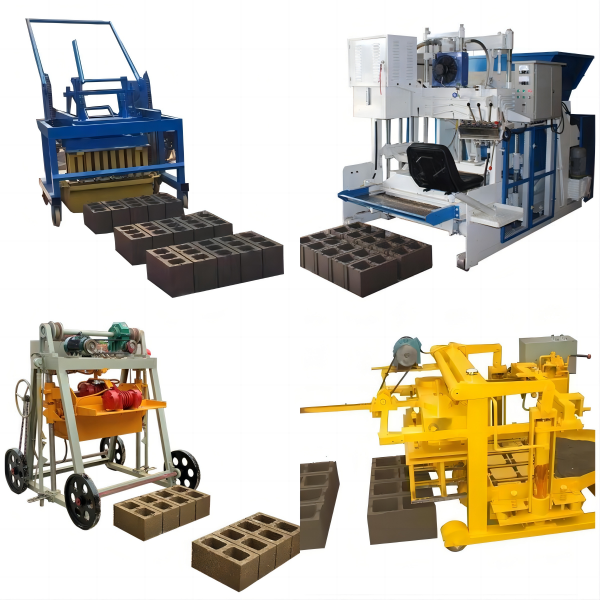
เครื่องจักรผลิตบล็อกแบบสแตนด์อโลน: เทคโนโลยีหลัก
หัวใจของการดำเนินงานก่ออิฐถือคือเครื่องทำบล็อกเอง ในบริบทของสหรัฐอเมริกา เครื่องเหล่านี้ถูกจำแนกตามวิธีการทำงานและศักยภาพในการผลิต
- เครื่องอัดแบบมือและกึ่งอัตโนมัติ These machines require significant operator involvement for feeding raw materials (concrete, sand, pigment) and removing finished products. They are characterized by a lower initial investment and are suitable for small businesses, specialty product manufacturers, or for on-site production for very large projects. Their output is measured in hundreds of blocks per day.
- Fully Automatic Static Machines: These are the backbone of many small to mid-sized U.S. plants. They integrate material feeding, mixing, high-pressure compaction (vibration and hydraulics), and curing into a single, stationary system. While one or two operators are still needed, the process is largely automated, with outputs ranging from 1,000 to 5,000 blocks per 8-hour shift, depending on model and block size.
- Mobile Block Machines for On-Site Production: A niche but growing segment, these self-contained units can be transported to a large construction site to produce blocks directly where they are needed. This eliminates transportation costs for finished goods, reduces product damage, and provides unparalleled flexibility. They are ideal for remote locations or projects where a consistent supply chain from a fixed plant is logistically challenging.
Integrated Production Systems and Auxiliary Equipment
To achieve the high-volume outputs required by the broader market, standalone machines are just one component. A complete turnkey solution involves a synchronized ecosystem of equipment.
- Material Handling and Batching Systems: These automated systems receive, store, and precisely weigh raw aggregates, cement, and water. They ensure a consistent and correct mix design, which is the absolute foundation of product quality and strength. For U.S. producers, consistency is key to meeting ASTM standards.
- Curing and Drying Solutions: The strength of concrete block is developed through controlled curing. Advanced systems use automated racks and climate-controlled chambers (often called “curing kilns”) that regulate temperature and humidity to accelerate the curing process, freeing up pallets for reuse and dramatically increasing overall plant throughput.
- Palletizing and Packaging Systems: Once cured, blocks must be stacked, banded, and wrapped for storage and shipment. Automated palletizers and robotic arm systems can handle this task with minimal human intervention, reducing labor costs and preventing damage to the finished product. For distributors, offering these ancillary systems can significantly increase the value of a sale.
Navigating the U.S. Regulatory and Compliance Environment
Adherence to ASTM and OSHA Standards
Compliance is not optional in the U.S. market. Machinery must be designed to produce blocks that meet the relevant American Society for Testing and Materials (ASTM) standards, such as ASTM C90 for load-bearing concrete masonry units. This influences machine design, particularly the pressure and vibration systems that determine block density and strength. Furthermore, the machinery itself must comply with stringent safety regulations set forth by the Occupational Safety and Health Administration (OSHA). This includes mandatory safety guards, emergency stop systems, lockout/tagout procedures, and noise level controls. Distributors must verify that their suppliers provide comprehensive documentation proving compliance to avoid liability and facilitate smooth market entry.
Emissions and Environmental Considerations
Environmental regulations, enforced by the Environmental Protection Agency (EPA) and state-level bodies, are increasingly influential. While primarily affecting the block producers themselves, this trickles down to machinery. Plants are seeking equipment that minimizes waste, optimizes energy consumption, and supports the use of recycled materials like fly ash or slag in the concrete mix. Machinery that is demonstrably “greener” through lower energy consumption or water recycling features is becoming a more attractive selling point.
Strategic Sourcing and Procurement for the B2B Sector
Evaluating the Total Cost of Ownership (TCO) in a Competitive Landscape
The initial purchase price is merely one component of the financial calculation. A sophisticated TCO analysis is essential for justifying investment to American clients who are increasingly focused on long-term value.
- Initial Capital Outlay: Includes the machine cost, shipping, import duties (if applicable), and installation/commissioning.
- Operational Costs: Encompasses energy consumption (a major factor with high-horsepower machines), routine wear parts (molds, mixer blades, hydraulic seals), and labor.
- Maintenance and Downtime: The single largest hidden cost. A reliable machine with excellent domestic service support and readily available spare parts will have a far lower TCO than a cheaper machine prone to unscheduled downtime, which can halt an entire production line.
- Resale Value: Equipment from manufacturers with a strong reputation for durability and support will retain a higher residual value in the robust U.S. secondary market.
Building a Resilient Supply Chain and Support Network
For a distributor, the relationship with the machinery supplier is paramount. Key considerations include:
- Domestic Presence and Support: Does the manufacturer have a warehouse, spare parts depot, or technical support team within the United States? The ability to provide on-the-ground service within 24-48 hours is a critical differentiator.
- Training and Documentation: Comprehensive training for both the distributor’s service technicians and the end-client’s operators is non-negotiable. Documentation must be clear, in English, and cover operation, maintenance, and troubleshooting in detail.
- Financial Stability of the Supplier: The construction equipment industry is cyclical. Partnering with a financially stable manufacturer ensures they will be available to honor warranties and provide support for the lifespan of the machine, which can be a decade or more.
Conclusion
The U.S. market for block brick machinery is a complex but highly rewarding arena for knowledgeable distributors and procurement professionals. Success hinges on a deep, multi-faceted strategy that goes beyond simply offering a machine for sale. It requires an understanding of the macroeconomic drivers, a comprehensive product portfolio that can serve diverse client needs, and an unwavering commitment to the regulatory and compliance standards that define American industry. The most successful players will be those who act as consultants and partners to their clients, offering not just equipment, but complete production solutions backed by robust local support. By focusing on the total cost of ownership, the integrity of the supply chain, and the unique dynamics of the domestic construction sector, B2B stakeholders can position themselves for sustained growth and leadership in this vital and ever-evolving market.
Frequently Asked Questions (FAQ)
Q1: What are the typical power requirements for a mid-range automatic block making machine in the U.S.?
A: A typical fully automatic stationary machine with a production capacity of around 2,000 blocks per 8-hour shift will generally require a robust 3-phase electrical supply, often in the range of 50 to 100 horsepower (approx. 37-75 kW) for the entire system, including the mixer, conveyor, and main press. It is crucial to verify the specific voltage (e.g., 480V) and amperage requirements with the manufacturer prior to installation.
Q2: How critical is local parts inventory for distributors in this market?
A: Extremely critical. Downtime is the enemy of profitability for your clients. Maintaining a local inventory of high-wear parts—such as mold liners, mixer blades, hydraulic hoses, and specific sensors—is a major competitive advantage. It allows for rapid response and repair, often within a single day, which builds immense customer loyalty and justifies premium service contracts.
Q3: Can machinery be customized to produce the specific block sizes and styles popular in different U.S. regions?
A: Absolutely. The ability to customize is a key selling feature. Manufacturers should offer a wide range of standard mold sizes for common U.S. units (e.g., 8x8x16 inch) but also have the engineering capability to produce custom molds for regional specialties, architectural shapes, split-face blocks, or landscaper units. The flexibility to quickly change molds for short production runs is highly valued.
Q4: What is the average lead time from order to delivery for a new machine?
A: Lead times can vary significantly. For a standard model from a supplier with U.S. inventory, delivery might be 4-6 weeks. For a custom-configured machine or a large turnkey plant shipped from overseas, lead times can range from 4 to 8 months, factoring in manufacturing, ocean freight, and customs clearance. Clear communication and a detailed delivery schedule from the supplier are essential.
Q5: Are there financing or leasing options commonly available for this type of equipment in the U.S.?
A: Yes, financing is very common. Many equipment suppliers partner with third-party financial institutions that specialize in commercial and industrial equipment loans and leases. Offering these options to your clients can make a significant capital investment more accessible, especially for small and medium-sized businesses looking to expand. Lease-to-own agreements can be a particularly attractive option.