
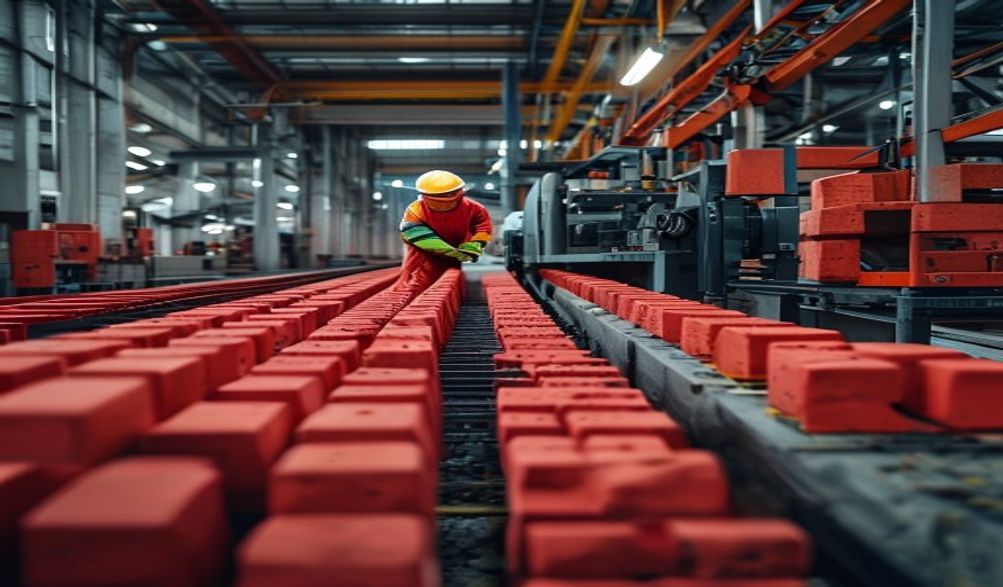
How to Choose an Industrial Brick Making Machine: The Ultimate Buyer’s Guide
บทนำ
Selecting the right industrial brick making machine is one of the most consequential decisions you will make for your manufacturing business. It’s a significant capital investment where the wrong choice doesn’t just lead to minor inconvenience—it can result in crippling production bottlenecks, inconsistent product quality, and a direct hit to your profitability. In an industry where margins are built on volume and efficiency, your machine is the very heart of your operation.
This guide is designed to cut through the overwhelming noise of sales brochures and technical jargon. It synthesizes decades of collective industry experience, engineering principles, and practical market knowledge into a single, trustworthy framework. Our goal is not to sell you a specific machine, but to empower you with the actionable insights needed to become an expert buyer.
We will walk you through a logical, step-by-step process: from the foundational analysis of your own production needs, to decoding the complex world of machine specifications and technologies, and finally, to the critical task of vetting manufacturers and negotiating a deal that ensures long-term value.
1. Foundational Steps: Analyzing Your Production Needs
Before you look at a single machine catalog or request a quote, you must look inward. This internal audit is the non-negotiable bedrock of your purchasing decision. A machine that’s perfect for one operation can be a disaster for another. Start here.
Defining Your Brick Output Goals (Volume & Timeline)
Your production targets dictate everything. Vague goals lead to poor choices.
- Calculate Real Capacity: Don’t just think in annual tons. Calculate your required daily output in bricks. Is it 10,000, 50,000, or 200,000? Remember, you must account for curing/drying time, maintenance windows, and shift patterns.
- Project for Growth: Are you scaling in 2-3 years? Buying a machine that operates at 100% capacity from day one leaves no room for expansion. Consider a model that can be upgraded or has a higher-capacity sibling in the manufacturer’s lineup.
- ทฤษฎีกับปฏิบัติ ความแตกต่าง A spec sheet may claim “5,000 bricks per hour.” This is often a theoretical maximum under ideal conditions. Deduct 15-25% for a realistic, sustainable practical output that factors in material loading, mold changes, and minor stoppages.
Identifying Your Raw Materials
The machine must be a perfect partner for your raw material. Compatibility is not optional.
- Primary Material: Is it clay, fly ash, cement-stabilized soil, or concrete (with varying aggregate sizes)? This choice fundamentally directs you toward a specific machine technology.
- The Criticality of Testing: Never assume compatibility. Work with your material supplier and potential machine manufacturers to conduct material tests. The moisture content, plasticity, and particle size distribution will determine the required pressure, mixing process, and even the wear on your machine.
- Material Dictates Technology: As a rule, fine, plastic materials like clay suit การอัดรีด. Granular or semi-dry mixes like fly ash and concrete require the high static pressure of a hydraulic press.
Specifying Your Final Product Portfolio
What are you selling? Your product catalog defines your machine’s required capabilities.
- ประเภทของอิฐ Solid, hollow (with varying cavity percentages), paving, interlocking, or specialty shapes? Each type has different structural and market demands.
- Dimensions & Tolerances: Precise dimensions are critical for construction. What are the acceptable tolerances for length, width, and height? A hydraulic press typically offers superior dimensional accuracy.
- Multi-Purpose vs. Dedicated: Will you change products daily or run one type for months? Quick-change mold systems offer flexibility but add complexity and cost. For single-product, high-volume runs, a dedicated machine is often more efficient.
2. Understanding Core Machine Types & Technologies
With your needs defined, you can now navigate the technical landscape. Understanding these core technologies demonstrates your expertise to suppliers and ensures you’re comparing apples to apples.
Hydraulic Press Machines: Precision for High-Quality Bricks
These machines use a hydraulic system to compress material into a mold under extremely high pressure.
- พวกมันทำงานอย่างไร: Material is fed into a mold box. A hydraulic ram then applies immense, controlled pressure (measured in tons or MPa) to compact the material, forming a dense, uniform brick.
- เหมาะที่สุดสำหรับ: Producing high-strength, consistent bricks from fly ash, concrete, cement, and other semi-dry mixes. Ideal for paving bricks, hollow blocks, and interlocking blocks where precision is key.
- ข้อดี: Excellent surface finish, very consistent dimensions and density, lower operating noise, generally more energy-efficient per brick.
- ข้อเสีย Higher initial investment, cycle time can be slower than extrusion, more complex maintenance of hydraulic systems.
Extrusion Machines: Speed for Clay Bricks
This is the classic technology for traditional clay brick production, forming a continuous column of material that is then cut to size.
- พวกมันทำงานอย่างไร: Plastic clay is fed into a hopper, pushed through a die by an auger to form a continuous column (the “extrudate”), which is then cut into individual bricks by wires.
- เหมาะที่สุดสำหรับ: High-volume production of solid or perforated clay bricks. It’s the technology of choice for large-scale clay brick plants.
- ข้อดี: Very high output rates, continuous operation is efficient for mass production, well-suited for plastic clay.
- ข้อเสีย Less precise dimensional control compared to presses, higher energy consumption to drive the auger through stiff material, not suitable for dry or semi-dry mixes.
Mobile vs. Stationary Plants: Evaluating Your Setup
This decision is about your operational footprint.
- เครื่องจักรเคลื่อนที่: Mounted on a trailer, these are excellent for on-site production (e.g., for large construction projects using local soil). They reduce brick transportation costs and require minimal permanent foundation.
- พืชที่อยู่กับที่ These are fixed installations designed for a factory setting. They allow for higher levels of automation, integrated material handling systems (conveyors, feeders, stackers), and optimized workflow for maximum output.
3. Key Specifications You Must Compare
Armed with quotes and brochures, use this checklist to make objective, technical comparisons between shortlisted models.
Power & Performance Metrics
Look beyond the headline “bricks per hour” figure.
- Motor Power (kW/HP): Indicates the machine’s “muscle.” A higher-power motor can handle denser materials and higher pressures, but also consumes more energy. Match it to your material’s requirements.
- เวลาในรอบการผลิต The time to complete one press/extrusion and ejection cycle (measured in seconds). This is the true determinant of hourly output.
- Operating Pressure (for Hydraulic): Measured in tons or MPa. This directly correlates to the final brick’s compressive strength. For structural bricks, ensure the machine can achieve the pressure required by your local building codes.
Automation Level: From Manual to Fully Automatic
Automation is the primary driver of labor costs and output consistency.
- คู่มือ/กึ่งอัตโนมัติ The operator manually feeds material, initiates the cycle, and removes finished bricks. Lower capex, higher labor cost and variability. Suitable for startups or low-volume, customized production.
- อัตโนมัติเต็มรูปแบบ: Integrated with Programmable Logic Controller (PLC) systems, automatic pallet feeders, conveyors, and brick stackers/robots. Higher investment, but delivers higher, more consistent output with minimal labor. The choice for serious volume production.
- คุณสมบัติหลัก: Look for PLC touchscreen controls, fault diagnosis systems, automatic lubrication, and compatibility with upstream/downstream automation.
Durability & Construction Quality
This determines your machine’s lifespan and total cost of ownership.
- Frame & Welding: The frame should be heavy-duty steel with clean, robust welds. Inspect photos or, better yet, the physical machine. A shaky frame leads to vibration, misalignment, and premature failure.
- ส่วนประกอบไฮดรอลิก Brand names matter. Reputable hydraulic pumps, valves, and cylinders from known manufacturers (e.g., Bosch Rexroth, Parker, Yuken) offer greater reliability and easier servicing.
- ชิ้นส่วนที่สึกหรอ The mold is the soul of your brick. It should be made from high-chromium, hardened tool steel. Ask about the expected life (in cycles) of molds, pistons, and liners, and the cost/availability of replacements.
4. The Manufacturer Vetting Process (The Trust Factor)
The best specifications are worthless if the company behind them fails you. This step is where E-E-A-T (Experience, Expertise, Authoritativeness, Trustworthiness) becomes real.
Researching Manufacturer Reputation & History
- อายุยืนและความเชี่ยวชาญเฉพาะทาง How long have they been building this type of machine? A company with 20 years in hydraulic press design is more trustworthy than a general machinery supplier.
- Deep-Dive Research: Go beyond their website. Search for “[Manufacturer Name] reviews,” “[Manufacturer Name] spare parts complaint.” Look for case studies with client details. Check for participation in industry trade shows.
- The Golden Standard: A Site Visit: If geographically and financially feasible, visit the manufacturer’s factory. See their production process, quality control, and inventory. Even more powerful: request to visit an existing client’s plant running the same machine. See it in action and talk to the operators.
Evaluating After-Sales Support & Service
This is often the most overlooked and critical factor.
- การรับประกัน: What is covered (parts, labor, shipping)? For how long? A strong warranty (e.g., 12-24 months on core components) reflects confidence in product quality.
- Spare Parts & Service Network: Are spare parts readily available? Is there a local or regional service agent? What is the typical response time for technical support? Ask for a sample spare parts price list.
- Knowledge Transfer: Do they provide comprehensive installation supervision, operator training, and detailed manuals in your language? This dramatically reduces your startup risks.
Requesting and Analyzing Quotations
A professional quote reflects a professional company.
- Demand Detail: The quote must be itemized: machine price, standard accessories, optional accessories (e.g., extra molds), shipping (FOB/ CIF?), installation, training, and estimated duties.
- Beware Hidden Costs: The “cheapest” quote often excludes essential items: a starter kit of spare parts, specialized tools, or proper training. Always compare total delivered and commissioned cost.
- The Cost of Cheap: Remember, a low-quality machine will cost you more in downtime, poor brick quality (and rejected batches), high energy consumption, and expensive, hard-to-find spare parts.
5. Financial Considerations & Final Decision
Now, synthesize all the technical and qualitative data into a sound business decision.
Total Cost of Ownership (TCO) Analysis
Move beyond the purchase price (Capex) to the lifetime operating cost (Opex).
- TCO Components: Include purchase price, shipping/installation, energy consumption per brick, labor costs (based on automation level), routine maintenance, and estimated cost of wear parts/spare parts over 5 years.
- The Ultimate Metric: Cost Per Brick: Divide your estimated 5-year TCO by the number of bricks you expect to produce. This single figure allows you to compare a cheap, inefficient manual machine with an expensive, high-output automatic plant on a level playing field.
Safety, Compliance & Environmental Standards
- ความปลอดภัยของเครื่องจักร Ensure the machine has proper guarding, emergency stop buttons, and safety interlocks. This protects your workforce and reduces liability.
- การปฏิบัติตามกฎระเบียบ: Does the machine meet your local industrial safety and electrical standards? For emissions (from burners in clay plants) or noise, are there regulations you must adhere to?
- ประสิทธิภาพการใช้พลังงาน An energy-efficient motor or well-designed hydraulic system might have a higher price tag but significantly lower your operating expenses, improving your TCO.
Making the Final Choice: A Summary Checklist
Use this to score your top 2-3 options.
- [ ] Needs Match: Does it meet my required output, material type, and product specifications?
- [ ] Technology Fit: Is the machine type (hydraulic/extrusion, automation level) optimal for my business model?
- [ ] Quality Verified: Is construction durability and component quality confirmed (via visit or trusted references)?
- [ ] Manufacturer Trust: Does the company have a strong reputation and proven after-sales support?
- [ ] Financial Sense: Does the TCO and cost-per-brick analysis make it the most economical long-term choice?
- [ ] Future-Proof: Can it scale or adapt to my potential future needs?
คำถามที่พบบ่อย (FAQ)
Q1: What is the average price range for an industrial brick making machine?
ก Prices vary astronomically based on capability. A semi-automatic hydraulic machine may start around $25,000 – $50,000. A mid-range fully automatic plant can be $80,000 – $150,000. Large, fully integrated automated production lines can exceed $300,000. Focus on your required output and the Total Cost of Ownership, not just the sticker price.
Q2: How much space do I need for an industrial brick making machine setup?
ก Think beyond the machine footprint. You need space for: 1) The machine and its operator zone, 2) Raw material storage and mixing area, 3) Curing/drying racks or chambers, 4) Finished product storage. A modest operation often requires a minimum of 10,000 square feet (approx. 1,000 sq. meters) of combined covered and open space.
Q3: What is the most important factor in ensuring brick quality?
ก It’s a partnership. Consistent, well-prepared raw material is 50% of the battle. The other 50% is the machine’s ability to apply uniform and sufficient compaction or extrusion force. You cannot have quality bricks without both. The machine’s precision (in pressure control and mold alignment) is the mechanical guarantor of quality.
Q4: Can one machine produce multiple brick types and sizes?
ก Yes, through mold changes. However, the ease and speed of this process vary. High-end machines offer “quick-change” mold systems that can swap molds in minutes. Others may require an hour or more of skilled labor. Ensure your chosen manufacturer supplies or can source all the molds you need, and factor in the cost of each additional mold.
Q5: How do I handle maintenance and find spare parts?
ก Before purchase, get a preventive maintenance schedule and a list of critical spare parts from the manufacturer. Confirm the availability and lead time for these parts. The best manufacturers offer online parts catalogs and have a reliable logistics network. Building a small inventory of common wear parts (seals, filters, specific bolts) is highly recommended.
สรุป
Choosing the right industrial brick making machine is a systematic, strategic process, not a gamble on an unfamiliar piece of hardware. It begins with a rigorous internal analysis of your production blueprint and proceeds through a disciplined evaluation of technology, specifications, and—most crucially—manufacturer credibility.
By following the expert-guided framework in this guide, you transform from a passive buyer into an informed, confident decision-maker. You are not just purchasing a machine; you are investing in a long-term production partner that will form the foundation of your profitability for years to come. In this high-stakes investment, prioritize total value—encompassing engineering quality, unwavering support, and operational reliability—over the seductive but often misleading allure of the lowest initial price.
Your Next Step: Use the summary checklist in Section 5 to conduct a final audit of your needs and shortlisted options. Then, contact your top 2-3 manufacturers with your detailed specifications and explicitly request references for factory visits to existing customer sites. Your ideal machine is the one that aligns perfectly with your production blueprint and is backed by a partner you can trust.
<