
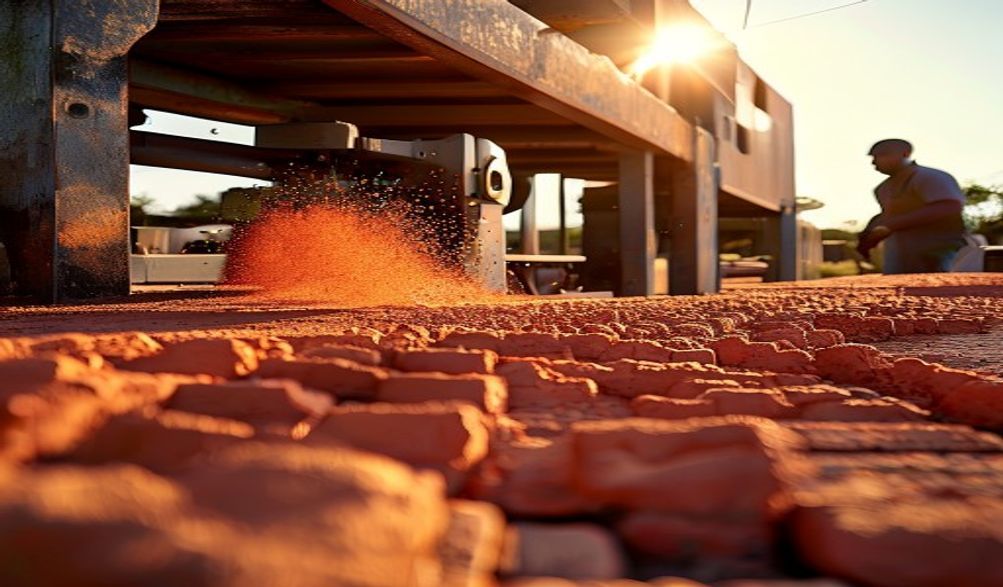
คู่มือการเลือกเครื่องจักรทำอิฐที่เหมาะสมสำหรับขายในซิมบับเว: คู่มือผู้ซื้อปี 2026
บทนำ
ในแวดวงการก่อสร้างของซิมบับเวกำลังก้าวเข้าสู่เส้นทางแห่งการเติบโตและการฟื้นฟูอย่างมั่นคง ตั้งแต่โครงการที่อยู่อาศัยในเมืองในฮาราเร ไปจนถึงการพัฒนาโครงสร้างพื้นฐานและบ้านเรือนในชนบท ความต้องการวัสดุก่อสร้างที่มีคุณภาพและราคาย่อมเยานั้นสูงเป็นประวัติการณ์ หัวใจสำคัญของความเฟื่องฟูในการก่อสร้างนี้คือส่วนประกอบพื้นฐาน นั่นคืออิฐ สำหรับผู้ประกอบการและธุรกิจที่ต้องการใช้ประโยชน์จากความต้องการนี้ การลงทุนในเครื่องจักรทำอิฐจึงเป็นการตัดสินใจที่สำคัญยิ่ง อย่างไรก็ตาม การสำรวจทางเลือกมากมายของเครื่องจักรทำอิฐที่วางจำหน่ายในซิมบับเวอาจเป็นความท้าทายที่น่ากลัว ซึ่งการเลือกที่ผิดพลาดอาจนำไปสู่ความสูญเสียทางการเงินอย่างมากและปัญหาด้านการดำเนินงาน
คู่มือฉบับสมบูรณ์นี้รังสรรค์ขึ้นจากประสบการณ์ในอุตสาหกรรมเชิงลึก ความเชี่ยวชาญทางเทคนิค และความเข้าใจอย่างถ่องแท้ในบริบทเฉพาะของซิมบับเว เราได้รวบรวมความรู้เกี่ยวกับประเภทดินในท้องถิ่น ความท้าทายด้านพลังงานที่ชุกชม สภาพเศรษฐกิจ และความต้องการของตลาด เพื่อช่วยลดความซับซ้อน เป้าหมายคือการเสริมพลังให้คุณมีกรอบการทำงานที่ชัดเจนและเป็นขั้นเป็นตอนสำหรับการลงทุนที่รอบคอบ เมื่อสิ้นสุดคู่มือผู้ซื้อปี 2026 นี้เกี่ยวกับวิธีการเลือกเครื่องจักรทำอิฐขายในซิมบับเว คุณจะพร้อมหลีกเลี่ยงข้อผิดพลาดทั่วไป จับคู่การซื้อของคุณกับเป้าหมายเฉพาะ และวางรากฐานที่มั่นคงสำหรับธุรกิจที่ทำกำไรได้
ทำความเข้าใจความต้องการในการผลิตอิฐในซิมบับเวของคุณ
ก่อนที่จะเปรียบเทียบรุ่นหรือราคา ขั้นตอนที่สำคัญที่สุดคือการประเมินภายในอย่างละเอียด บริบทเฉพาะของคุณในซิมบับเวจะเป็นตัวกำหนดทุกทางเลือกถัดไป ผู้ปฏิบัติงานในฮาราเร บูลาวาโย และมูตาเร รายงานอย่างสม่ำเสมอว่าธุรกิจที่ข้ามขั้นตอนการวิเคราะห์ความต้องการนี้ มักจะเผชิญกับอุปกรณ์ที่ไม่ตรงความต้องการและโครงการที่หยุดชะงัก
ขนาดของโครงการ: คุณเป็นผู้ประกอบการรายย่อย ธุรกิจขนาดกลาง หรือผู้รับเหมารายใหญ่?
ขนาดการดำเนินงานของคุณเป็นตัวกรองหลัก
* Small Entrepreneur/Startup: You may be focusing on a local community, supplying a few housing projects, or starting a side business. Your budget is likely limited, and you may begin with manual labor assistance.
* Medium-Sized Business: You have a steady clientele, perhaps supplying several construction sites or retailers. You need reliable, daily output to meet contracts and are ready to invest in efficiency.
* Large Contractor/Commercial Plant: Your goal is high-volume production for major developments or to become a regional supplier. Your investment is significant, and you prioritize maximum automation, consistent quality, and lowest cost per unit.
Brick Type & Quality: Common Bricks, Pavers, Interlocks, or Hollow Blocks?
The brick type determines the machine’s mold and pressure requirements.
* Common Solid Bricks: The staple for most general construction in Zimbabwe. The machine must produce bricks that meet standard size (e.g., 215mm x 102.5mm x 65mm) and compressive strength requirements.
* Paving Bricks & Interlocks: Popular for driveways, walkways, and commercial spaces. These require precise molds and high surface finish quality.
* บล็อกคอนกรีตมวลเบา: Used for cost-effective and insulated walls. The machine must be capable of forming the intricate hollow core design consistently.
* Quality Standard: Always reference the Standards Association of Zimbabwe (SAZ) guidelines. Your machine must be capable of producing bricks that can meet these recognized benchmarks for durability and safety.
Daily/Weekly Production Targets: Matching Output to Your Market Demand
Be ruthlessly realistic. It’s better to consistently exceed a modest target than to underutilize an expensive, high-capacity machine.
* Calculate your current and projected 12-month demand.
* Consider seasonality in Zimbabwean construction.
* Match the machine’s bricks-per-hour capacity to your realistic working hours, accounting for loading, curing, and maintenance downtime.
Raw Material Analysis: Understanding Your Local Soil/Clay Composition
This is a non-negotiable, locally-specific factor. Zimbabwean red clay is common, but its composition varies.
* Conduct a simple soil test to understand the clay, silt, sand, and gravel content.
* High clay content may require more water and higher compression.
* Sandy soil might need a stabilizer like cement.
* Crucial Advice: The best machine is useless if it cannot effectively compact คุณ available raw material. Some suppliers can adjust machine settings or recommend mix ratios based on a soil sample.
Key Types of Brick Making Machines Available in Zimbabwe
Understanding the core technology categories is essential. Each represents a different balance of capital investment, labor requirement, and output.
Manual Brick Making Machines: Cost, Pros, Cons, and Ideal Use Cases
These are lever-operated or simple mechanical presses.
* ค่าใช้จ่าย Very low initial investment. Often the most affordable entry point.
* ข้อดี: Low cost, simple to operate and maintain, no power needed, portable.
* ข้อเสีย Very labor-intensive, low production output (300-500 bricks/day), inconsistent quality if not carefully operated.
* เหมาะสำหรับ: Micro-enterprises, very small-scale projects, or as a secondary, on-site production tool for a contractor.
Semi-Automatic Machines: The Balance of Affordability and Efficiency
These machines mechanize the pressing and ejection process, often using an electric motor or diesel engine, but require manual feeding of raw material and removal of finished bricks.
* ค่าใช้จ่าย Moderate investment. The most popular choice for growing businesses in Zimbabwe.
* ข้อดี: Significantly higher output (1,500 – 5,000 bricks/day), more consistent brick quality and density, good balance of cost and productivity.
* ข้อเสีย Requires a steady power source (or diesel) and a small team for operation.
* เหมาะสำหรับ: Small to medium-sized businesses, entrepreneurs with a steady market, and cooperative ventures.
Fully Automatic Brick Making Plants: For High-Volume, Commercial Production
These are integrated systems with automated material feeding, pressing, curing, and stacking. They often include conveyor belts and palletizers.
* ค่าใช้จ่ายการลงทุนที่มีต้นทุนสูง
* ข้อดี: Very high, consistent output (10,000+ bricks/day), minimal manual labor, superior and uniform brick quality, highest efficiency.
* ข้อเสีย High cost, complex installation, requires reliable three-phase power and skilled maintenance, significant space needed.
* เหมาะสำหรับ: Large commercial plants, major contractors, and investors aiming for industrial-scale production to supply cities or export.
Mobile vs. Static Machines: Considering Flexibility and Site Requirements
- เครื่องจักรเคลื่อนที่: Mounted on a trailer. Perfect for producing bricks directly on a construction site, eliminating transport costs for the final product. Great for contractors moving between projects.
- เครื่องจักรสถิตย์: Fixed in a production yard. Typically more robust and powerful for a given price. Suits a business supplying from a central location to multiple clients.
Critical Technical Specifications to Evaluate
Now, drill down into the numbers. These specs separate marketing talk from real capability.
Cycle Time and Production Capacity (Bricks Per Hour/Day)
- Don’t just look at the theoretical maximum. Ask for the practical, sustainable output under normal working conditions.
- เวลารอบการผลิต is the time to produce one brick or one mold of bricks. A faster cycle means higher capacity.
- Cross-reference this with your needs assessment. A machine boasting 5,000 bricks/day is only valuable if you can sell and handle 5,000 bricks daily.
Power Requirements: Electricity, Diesel, or Hybrid Models for Zimbabwe’s Infrastructure
This is a critical local consideration.
* ไฟฟ้า Cleaner and cheaper to run, but vulnerable to load-shedding. A semi-automatic may run on single-phase, but most automatics require stable three-phase power.
* ดีเซล Independent of the grid, offering reliability crucial for many Zimbabwean operations. Higher fuel and maintenance costs.
* Hybrid (Electric/Diesel): Offers flexibility. Can run on grid power when available and switch to a diesel engine during outages. A prudent choice for mitigating infrastructure risk.
Pressure Force (Tonnage): Why It Matters for Brick Density and Strength
Pressure is key to a strong, durable, low-absorption brick.
* Measured in tons (e.g., 15-ton, 30-ton, 100-ton press).
* Higher tonnage compacts the raw material more densely, resulting in bricks with higher compressive strength, better weather resistance, and a more professional finish.
* For durable common bricks in Zimbabwe, a minimum of a 20-ton press is often recommended. Pavers and interlockers may require even higher pressure for superior wear resistance.
Mold Types and Customization: Getting the Right Brick Size and Shape
- Ensure the supplier offers the standard mold for the brick type you want.
- Ask about mold customization costs and lead times if you plan to produce a unique design later.
- Check the mold material (hardened steel lasts longer) and the ease of changing molds on the machine.
The Zimbabwe Market: Practical Considerations for Buyers
Local market intelligence is as important as technical knowledge.
Local Supplier vs. Direct Import: Weighing Costs, Warranty, and Support
- Local Dealer/Supplier: Higher upfront price, but includes import duty, delivery, and most critically, local after-sales support, warranty handling, and spare parts inventory. This is often worth the premium.
- Direct Import: May seem cheaper online, but hidden costs include shipping, insurance, duty (ZIMRA clearance), and local installation. You become your own technical support. Warranty claims can be nearly impossible.
Total Cost of Ownership: Beyond the Purchase Price
The machine’s price tag is just the beginning. Factor in:
* การติดตั้งและการทดสอบระบบ Does the quote include setup?
* Regular Maintenance: Cost of grease, filters, wear parts.
* อะไหล่: Availability and local pricing for common wear items like springs, seals, and mold liners.
* ค่าใช้จ่ายในการดำเนินงาน Power/fuel consumption, labor, raw material (including potential stabilizers like cement).
Navigating Logistics: Delivery, Installation, and Operator Training
- Get a clear, written quote that specifies delivery terms (ex-works, CIF, DDP) to your site.
- Confirm that installation and basic operator training are included. Never accept a machine without proper training for your team.
- Plan your site: ensure you have a level, solid foundation, necessary power connections, and space for raw material and brick curing.
Compliance and Standards: Meeting Local Zimbabwean Regulations
- Your business may need relevant licenses from local authorities.
- Emphasize that your production process aims to meet SAZ standards for bricks. This is a powerful marketing tool and a duty to your customers’ safety.
- Consider environmental regulations regarding quarrying or using local soil.
Vetting Suppliers and Ensuring a Smart Purchase
Protect your investment by thoroughly vetting who you buy from.
Checklist for Evaluating a Machine Supplier/Dealer
- Physical Presence: Do they have a showroom or workshop in Zimbabwe?
- ประวัติการติดตาม How long have they been operating? Can they provide references from past clients (preferably you can visit)?
- Brand Portfolio: Do they represent reputable, known manufacturers with a history of reliable machinery?
- Transparency: Are they open about specifications, limitations, and full costs?
The Importance of After-Sales Service, Technical Support, and Spare Parts
This is the most critical differentiator between suppliers.
* Ask: “Do you have a local technician?” and “What is your typical response time for a breakdown?”
* Visit their workshop to see if they stock common spare parts. A warehouse full of parts is a good sign.
* Inquire about preventative maintenance schedules and if they offer service contracts.
Requesting and Interpreting Site Visits or Machine Demonstrations
- Always insist on seeing a machine in operation. If not the exact model, then a similar one.
- During a demo, ask to use the client’s own soil mix to see real performance.
- Observe the noise, vibration, and build quality. Speak to the current operator about their experience.
Understanding Warranty Terms and Payment Structures
- Read the warranty document. What is covered (parts, labor)? What voids the warranty?
- Typical warranty periods are 6-12 months for the core machine.
- Favor secure payment structures. A large deposit upfront carries risk. Staged payments linked to delivery and commissioning are safer.
Frequently Asked Questions (FAQ) About Brick Making Machines in Zimbabwe
Q: What is the price range for a brick making machine in Zimbabwe?
A: Prices vary dramatically. Manual machines can start from a few hundred USD. Reliable semi-automatic machines typically range from $5,000 to $25,000. Fully automatic plants can start from $40,000 and go into the hundreds of thousands. Always correlate price with production capacity, after-sales support, and total cost of ownership.
Q: Can I use Zimbabwean red clay in all types of brick machines?
A: Generally, yes, but it must be properly prepared. The clay may need to be screened to remove stones and debris, and its moisture content must be carefully controlled. Some very sandy soils may require stabilization. A good supplier will advise on optimal mix ratios for their machine.
Q: How much space do I need to operate a semi-automatic brick machine?
A: As a rule of thumb, you need a production shed of at least 100-150 sqm for the machine, raw material storage, and fresh brick stacking. You will also need a large, secure, and level outdoor area (several hundred square meters) for brick curing and drying.
Q: What are the most common maintenance issues for brick machines in our climate?
A: Dust ingress is a major challenge. Regular cleaning and lubrication are vital. Hydraulic seals can wear. In diesel models, fuel filter clogging can occur. Using clean, properly graded raw material is the first step in reducing machine wear.
Q: Are there financing options or government initiatives for this equipment in Zimbabwe?
A: Some local suppliers may offer in-house payment plans. It’s advisable to inquire with local banks about asset financing for small-to-medium enterprises (SMEs). Stay informed through the Ministry of Industry and Commerce or SME associations for any active development or empowerment funding schemes related to manufacturing and construction materials.
สรุป
Choosing the right brick making machine for sale in Zimbabwe is a multi-faceted decision that blends technical understanding with sharp business acumen and local market savvy. We have walked through the essential pillars: starting with a clear assessment of your production needs, understanding the types of machines available, scrutinizing critical technical specifications, applying practical Zimbabwean market considerations, and finally, vetting suppliers with due diligence.
Remember, this machine is not just a purchase; it is a strategic investment in your business and, by extension, in the infrastructure future of Zimbabwe. A careful, informed choice will pay dividends through reliable product quality, sustained business growth, and operational peace of mind. Let this guide serve as your checklist.
Your Next Step: Use this framework to shortlist 3-4 reputable local suppliers. Contact them with your specific production targets and soil details. Request detailed quotations that include all costs, and insist on visiting a working machine. Ask the hard questions about support and spare parts. By taking these steps, you move from being a hopeful buyer to an empowered investor, ready to build something lasting.
<