
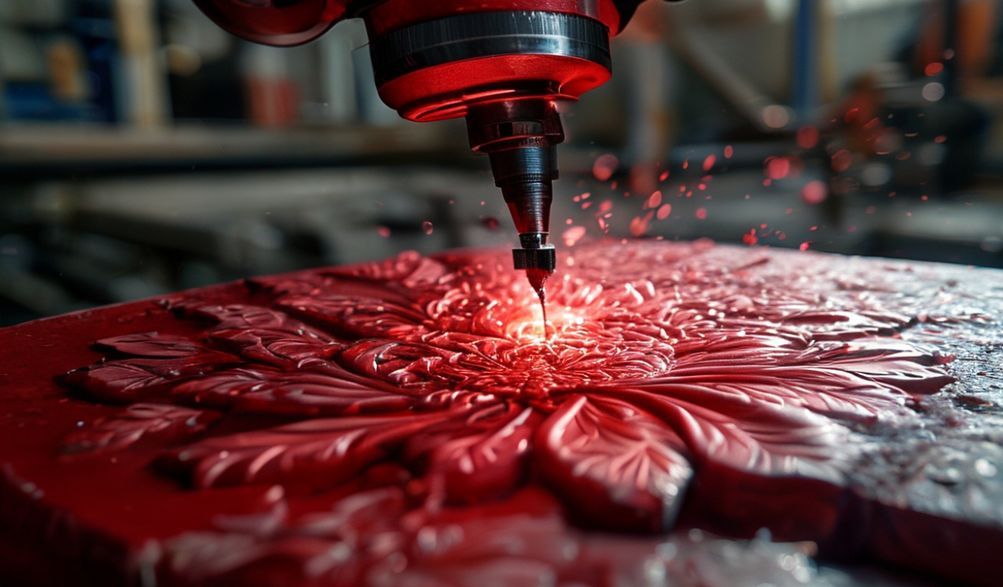
Precision & Artistry: The Complete Guide to Brick Engraving Machines at FUDA Brick Making Factory
บทนำ
For decades, the hallmark of fine brickwork was the mason’s skilled hand. Today, a new paradigm exists where timeless craftsmanship converges with digital precision. This guide is written from the perspective of industry professionals with decades of experience in brick manufacturing and surface processing technology. We have witnessed firsthand the evolution from manual chiseling to the integration of sophisticated computer-controlled systems on the factory floor.
We will provide a comprehensive, authoritative look at how modern brick engraving machines are integrated into a production facility like FUDA, transforming standard brick into architectural art. This is not a hypothetical overview; it’s an expert analysis grounded in the realities of high-volume manufacturing, material science, and project specification. Whether you are a builder sourcing materials, an architect designing a landmark feature, or a manufacturer evaluating capabilities, this deep dive will detail the technology, applications, and critical factors for achieving flawless, durable engraved brickwork. Our goal is to equip you with the knowledge to make informed, confident decisions for your projects.
What is a Brick Engraving Machine? Core Technology Explained
At its core, a brick engraving machine is a specialized CNC (Computer Numerical Control) milling system engineered to handle the abrasive, rigid nature of fired clay. It is a far cry from a simple etcher; it is a robust industrial tool designed for precision, repeatability, and integration into a continuous production workflow.
The Mechanics of Precision Engraving
The magic lies in the seamless interplay of hardware and software.
- The CNC Brain: The machine operates on CNC principles, where a computer converts a digital design into numerical coordinates (G-code). This code dictates the exact movement of the tool along the X, Y, and Z axes with tolerances often within a fraction of a millimeter. This eliminates human error and ensures absolute consistency from the first brick to the thousandth.
- The Cutting Tools: The “business end” of the machine typically involves diamond-tipped router bits. Diamond, being one of the hardest materials, is essential for cleanly cutting through the abrasive ceramic surface of a brick without excessive wear. For certain applications, particularly very fine detail or surface marking (rather than deep carving), high-power laser engraving heads may be used to fuse or ablate the surface.
- The Software Pipeline: The process begins with CAD (Computer-Aided Design) software, where the logo, pattern, or text is created or imported as a vector file (e.g., SVG, DXF). This file is then processed by CAM (Computer-Aided Manufacturing) software, which generates the specific toolpaths, determines cutting depth, speed, and feed rates, and outputs the final machine code. This digital workflow allows for infinite design flexibility and easy archiving for future re-orders.
From FUDA’s Factory Floor: Integration with Brick Production
A brick engraving machine isn’t an island; it’s a station within a larger ecosystem. From our observations on production floors, successful integration follows a logical, post-production sequence.
- Curing & Drying First: Engraving is always performed on fully cured, dried bricks. Attempting to machine a green or semi-dried brick would result in crumbling and imprecise edges.
- การจัดการวัสดุ Efficient factories employ automated or semi-automated conveying systems to transport bricks from their pallets onto the engraving machine’s bed. This minimizes manual handling, reduces labor costs, and prevents pre-machining damage.
- Critical Support Systems: Two non-negotiable components are industrial dust extractionและworkplace safety protocols. Engraving brick produces a significant amount of fine silica dust, which requires powerful HEPA-filtered extraction systems to protect worker health and keep the machine’s mechanics clean. Safety guarding and operator training are paramount in this industrial setting.
Key Applications for Engraved Brick from a Factory like FUDA
The applications for machine-engraved brick extend far beyond simple novelty. They solve real-world design and branding challenges with permanent, elegant solutions.
Architectural Branding and Signage
For corporate campuses, universities, or civic buildings, engraved brick offers the ultimate in integrated branding. Instead of adding a plaque, the building itself bears the identity.
* Permanent Logos & Names: Company logos, building names, and founding dates are engraved directly into the façade, creating a weather-resistant, vandal-proof feature that ages gracefully with the structure.
* Institutional Legacy: University crests or hospital donor recognition become a permanent part of the architecture, not an afterthought.
Decorative Facades and Feature Walls
This is where artistry meets scale. Engraving machines can produce intricate patterns, textures, or murals across hundreds of bricks, which are then installed like a giant puzzle.
* Patterned Cladding: Create custom geometric, floral, or abstract patterns for exterior rain screens or interior accent walls.
* Textural Artwork: Produce low-relief artistic scenes or motifs, adding a layer of sophistication and custom detail impossible to achieve with standard brick alone.
Historical Restoration and Custom Replication
Industry practice shows this to be a growing and critical application. When restoring a historic building, matching original decorative brickwork can be cost-prohibitive or impossible by hand.
* Precise Replication: Using 3D scans or photographs of original details, a CNC machine can replicate damaged or missing ornamental bricks with perfect accuracy, preserving historical integrity.
* Custom Heritage Designs: For new constructions in historic districts, engraving can create bricks that complement the surrounding architectural language.
Wayfinding and Memorials
Engraved brick provides a dignified, durable medium for guidance and remembrance.
* Integrated Wayfinding: Directional arrows, floor numbers, or room identifiers can be engraved into brick piers or walls, blending seamlessly with the architecture.
* Commemorative Bricks & Plaques: Donor walls, memorial gardens, and building cornerstones utilize engraved bricks for personalized messages, names, and dates, ensuring longevity for generations.
Advantages of Using a Dedicated Brick Engraving Machine at Scale
The decision to use factory-based engraving over manual or alternative methods is driven by tangible industrial and project benefits.
Unmatched Consistency and Repeatability
This is the paramount advantage. For a large façade featuring a repeated pattern or a long line of signage text, every brick must be identical. CNC technology guarantees that the tenth brick matches the first and the thousandth perfectly. Human carvers, no matter how skilled, introduce natural variations.
Speed and Efficiency for Large Projects
While setting up the machine and first article approval takes time, the actual machining process is rapid. A complex design that might take a craftsman an hour to carve can be executed by a CNC machine in minutes. This linear scaling makes large orders not only feasible but economically viable.
Complexity Made Simple
Machines excel at executing designs that would be prohibitively difficult or expensive by hand. This includes:
* Intricate Fonts: Delicate serif or script typefaces remain crisp and clear.
* Fine Details: Complex logos with small elements or tight curves are reproduced faithfully.
* Perfect Symmetry: Geometrically precise patterns are maintained across an entire batch.
Material Integrity and Reduced Waste
Precision tooling, with controlled depth and optimized feed rates, minimizes stress on the brick. This results in significantly lower breakage and chipping rates compared to the impact forces of manual hammer and chisel work. Reduced waste translates directly to lower material costs and more predictable project budgets.
Critical Considerations for Factory-Based Brick Engraving
To ensure project success, several material and planning factors must be addressed. Trustworthy guidance requires transparency about these practicalities.
Brick Composition and Hardness
Not all bricks are created equal for engraving. The material science matters.
* Optimal Bricks: Dense, uniformly textured facing bricks or high-quality engineering bricks are ideal. Their consistent composition and high firing temperature provide a hard, smooth canvas that engraves cleanly with sharp edges.
* Challenging Bricks: Softer, highly porous bricks (like some common bricks) can chip or crumble at the edges of the engraving. A reputable factory like FUDA will always recommend and perform a test engraving on a sample brick from the intended production run to verify results.
Design File Preparation Best Practices
The old adage “garbage in, garbage out” holds true. Proper file preparation is the foundation of a quality outcome.
* Use Vector Files: Always provide the design in a vector format such as SVG, DXF, or AI. These formats define shapes by mathematical paths, allowing for infinite scaling without quality loss. Raster files (JPEG, PNG) made of pixels are unsuitable for toolpath generation.
* Simplify Complex Designs: Overly intricate details with lines thinner than the cutting tool’s diameter (typically 1-3mm) may not engrave correctly. Discuss design limitations with the factory’s technical team early in the process.
Depth, Finish, and Long-Term Durability
Engraving parameters directly impact aesthetics and performance.
* Depth: Typical engraving depths range from 1mm to 5mm. Shallower engraving is suitable for subtle textures or logos, while deeper cuts enhance shadow lines and legibility for signage. Deeper engraving is also more resistant to dirt accumulation and weathering effects.
* ความทนทาน A professionally engraved brick’s longevity is that of the brick itself. The engraving is a physical removal of material, not an applied coating. It will not peel, fade, or delaminate. Over decades, it may naturally accumulate patina or moss in the recesses, which can add to its character, but the form remains permanent.
Cost-Benefit Analysis for Project Planning
Understanding cost drivers helps in accurate budgeting.
* Primary Cost Factors:
* Setup/Programming Fee: A one-time cost for creating the machine toolpaths from your design file.
* Quantity: Unit cost typically decreases with higher volumes due to amortized setup.
* ประเภทอิฐ Harder, more premium bricks may incur slightly higher machining costs due to tool wear.
* Design Complexity: More intricate designs with longer machining times per brick will increase cost.
* เสร็จแล้ว A secondary process like hand-cleaning or applying a sealant adds cost.
FAQ: Expert Answers on Brick Engraving Machines
Q: Can any type of brick be engraved?
ก While most fired clay bricks are technically engraveable, optimal results come from dense, uniformly textured facing bricks or engineering bricks. Soft or highly porous bricks may chip or produce ragged edges. A reputable factory like FUDA will always insist on testing a sample brick from your specified batch first to ensure quality.
Q: How durable is engraved brick compared to standard brick?
ก Professionally engraved brick is extremely durable. The engraving is a physical removal of material, becoming an integral part of the brick’s surface. Its resistance to weathering, UV radiation, and physical wear is identical to the surrounding brick face, often lasting for centuries with proper installation and mortar selection.
Q: What is the typical lead time for an order of engraved brick?
ก Lead time depends on the factory’s production schedule, brick availability (whether from stock or a new kiln run), and design complexity. As a general rule, for an approved design, engraving typically adds 2 to 4 weeks to the standard brick manufacturing and delivery timeline to account for digital setup, sample approval, and the machining process itself.
Q: Can you engrave bricks that are already installed on a wall?
ก No. Brick engraving machines are industrial, fixed equipment that requires individual bricks to be securely fixtured on a stable, level bed. The process involves significant force and dust generation. Engraving must be completed in the controlled factory environment before the bricks are shipped and installed.
Q: How do I maintain and clean engraved brickwork?
ก Maintenance is straightforward. Periodically clean with low-pressure water and a soft-bristle brush to remove dirt or organic growth from the recessed areas. Avoid using high-pressure washers at close range, as the intense jet can over time erode mortar joints and, with persistent direct blasting, damage the brick surface itself.
สรุป
Integrating a brick engraving machine into a modern manufacturing operation, such as the FUDA brick making factory, represents the confluence of traditional masonry and digital precision. This technology unlocks vast potential for customization, allowing architects and builders to embed permanent artistry, branding, and narrative detail into the very fabric of a structure. It moves customization from a costly, one-off artisan endeavor to a scalable, consistent, and reliable industrial process.
By understanding the core technology, diverse applications, and practical considerations outlined in this guide—from brick selection to file preparation—you can confidently specify and utilize engraved brick to elevate your next project from ordinary to extraordinary. For precise specifications, design consultations, and accurate quotes, engaging directly with an experienced factory equipped with this advanced technology is the essential and recommended next step.
<