
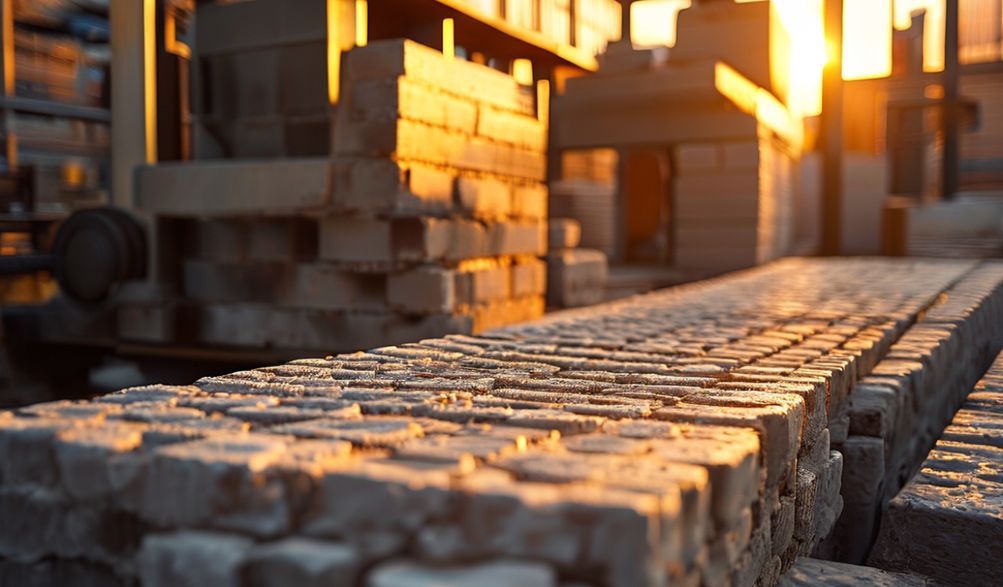
คู่มือฉบับสมบูรณ์สำหรับการซื้อเครื่องจักรผลิตบล็อกซีเมนต์ในปี 2567
บทนำ
You’ve seen the opportunity. Maybe you’re a contractor tired of unpredictable supply chains and the high cost of ready-made blocks. Perhaps you’re an entrepreneur eyeing the constant demand for construction materials in your growing region. The idea is solid: control your supply, reduce costs, and build a profitable business by producing your own cement blocks. But then you search for a “cement block machine for sale,” and you’re instantly overwhelmed. The prices range from a few thousand to several hundred thousand dollars. The technical specs are confusing. How do you know which supplier to trust?
This guide is designed to cut through that noise. Drawing on deep industry research and practical expertise, this comprehensive resource will walk you through every critical step of the purchasing process. We’ll move beyond simple price tags to explore the types of machines, the key features that matter, and how to vet suppliers effectively. By the end of this article, you’ll have a clear framework to make an informed, confident investment in the right cement block machine for your specific needs and goals.
ทำความเข้าใจเครื่องผลิตบล็อกคอนกรีต: ประเภทและการใช้งาน
Before comparing prices and models, you must understand the fundamental categories of block-making machines. Your choice here will define your production capacity, labor needs, and overall business model.
เครื่องอัดบล็อกแบบใช้มือ เทียบกับแบบกึ่งอัตโนมัติ เทียบกับแบบอัตโนมัติเต็มรูปแบบ
The level of automation is the primary differentiator, directly impacting output, investment, and operational complexity.
-
เครื่องอัดบล็อกแบบใช้มือ
- ปฏิบัติการ:ดำเนินการด้วยแรงคนทั้งหมด ผู้ปฏิบัติงานจะเติมส่วนผสมลงในแม่พิมพ์ด้วยตนเอง อัดส่วนผสมให้แน่น (มักใช้คันโยก) และนำบล็อกออกจากแม่พิมพ์
- Ideal User: Startups with very low capital, DIY builders, or projects in remote areas with no power. Ideal for producing a few hundred blocks per day.
- การลงทุนและผลผลิต Lowest upfront cost ($1,000 – $5,000). Very low production output (100-500 blocks per 8-hour shift). High physical labor intensity.
-
เครื่องอัดบล็อกกึ่งอัตโนมัติ:
- ปฏิบัติการ: Mechanized vibration and compression are powered by an engine or electric motor, but tasks like feeding raw material and removing finished blocks are manual or partially automated.
- Ideal User: Small to medium-sized businesses aiming for serious production (1,000 – 5,000 blocks per day) without the capital for full automation. A great balance of productivity and affordability.
- การลงทุนและผลผลิต Moderate investment ($10,000 – $50,000). Good production capacity with 2-4 operators. Offers a significant upgrade in block quality and consistency over manual machines.
-
เครื่องอัดบล็อกอัตโนมัติเต็มรูปแบบ:
- ปฏิบัติการ: Computer-controlled (PLC) systems manage the entire process: batching, mixing, molding, curing, and stacking. Often part of a complete production line with conveyors and pallet systems.
- Ideal User: Large-scale commercial block yards and factories requiring high-volume, 24/7 production with minimal manual labor.
- การลงทุนและผลผลิต High capital investment ($50,000 – $500,000+). Very high output (5,000 – 30,000+ blocks per day). Requires significant infrastructure (strong floor, three-phase power) and technical knowledge for maintenance.
Stationary vs. Mobile Block Making Machines
This distinction is about mobility and application scope.
-
เครื่องจักรแบบอยู่กับที่ These are fixed installations, typically found in a factory or dedicated production yard. They are the foundation for large-scale, consistent output. All fully automatic and most semi-automatic machines are stationary.
- ข้อดี: Higher stability, greater production capacity, ability to integrate with full production lines.
- ข้อเสีย No mobility; all raw materials must be brought to the machine.
-
เครื่องจักรเคลื่อนที่: Mounted on a trailer or wheels, these machines can be towed directly to a construction site.
- ข้อดี: Eliminate transport costs for finished blocks. Perfect for large, remote projects (e.g., housing developments, road construction) where producing on-site saves tremendous time and money.
- ข้อเสีย Generally have lower output than large stationary plants. Often are semi-automatic or a simpler form of automatic.
What Can You Produce? Beyond Standard Blocks
A significant advantage of investing in your own machine is product diversification. By simply changing the mold, a single machine can produce various high-demand products:
* บล็อกคอนกรีตมวลเบา: The standard for load-bearing walls.
* บล็อกแข็งสำหรับงานฐานราก การปูพื้น และการใช้งานที่รับน้ำหนักมาก
* แผ่นทางเท้าและบล็อกประสานสำหรับทางรถยนต์ ทางเดิน และลานบ้าน
* Curbstones & Landscape Blocks: For road edging and decorative walls.
* รูปร่างพิเศษ: Chimney blocks, vent blocks, etc.
When evaluating a cement block machine for sale, always inquire about mold availability, customization options, and changeover time. A versatile machine protects your business against market shifts.
ปัจจัยสำคัญที่ต้องพิจารณาก่อนตัดสินใจซื้อ
This is where your research gets specific. Moving beyond type, these factors will determine the long-term success and profitability of your operation.
การประเมินความต้องการและงบประมาณการผลิต
Start with clear goals. Overestimating leads to wasted capital; underestimating leaves money on the table.
- คำนวณผลลัพธ์ที่ต้องการ Analyze your current or projected demand. How many blocks do you sell/use per day or week? Add a 20-30% growth buffer. Your machine’s capacity (blocks per hour) should meet this peak demand.
- Understand Total Cost of Ownership (TCO): The machine’s price tag is just the beginning.
- Machine Cost (FOB or CIF price)
- Shipping, Insurance, and Customs Clearance
- Installation & Foundation Work
- Ancillary Equipment (Pan Mixer, Conveyor Belt, Pallet Feeder, Forklift)
- Raw Material Inventory (Cement, Aggregates)
- Labor & Operator Training
- Ongoing Maintenance & Spare Parts
- Utilities (Electricity, Diesel, Water)
Key Machine Specifications and Features
These technical details are non-negotiable for quality and durability.
Pressure & Vibration System
This is the heart of the machine. It determines the block’s density, strength, and surface finish.
* A robust, well-balanced vibration system, combined with sufficient hydraulic or mechanical pressure, compacts the concrete mix, removing air pockets. This results in a high-strength, frost-resistant, and dimensionally accurate block.
* Ask suppliers: “What is the vibration frequency (Hz) and amplitude?” “What is the compaction force (tons)?”
Mold Quality and Availability
Molds are consumable parts that directly contact abrasive concrete.
* Look for molds made from high-grade, heat-treated alloy steel (e.g., CrMnMo). Cheap, mild steel molds will wear out quickly, causing block dimensional errors and increasing your long-term costs.
* Ensure the supplier stocks replacement molds and can customize new ones for future products.
Power Source: Electric, Diesel, or Hybrid?
- ไฟฟ้า Cleaner, quieter, and lower operating cost per hour. Requires reliable grid power (often three-phase for larger machines).
- ดีเซล Offers complete independence from the grid. Essential for mobile operations or sites with unstable power. Higher fuel and maintenance costs.
- ไฮบริด: Offers flexibility to switch between power sources, providing a valuable backup.
Automation Level and Control Systems
Even on semi-automatic machines, the control system matters.
* A Programmable Logic Controller (PLC) ensures consistent cycle times and pressure application, leading to uniform block quality.
* User-friendly touchscreen interfaces simplify operation and troubleshooting.
Material Requirements: Cement, Aggregates, and Mix Ratios
The best machine cannot compensate for poor raw materials.
* A standard mix might be 1 part cement : 3 parts sand : 3 parts aggregate (6-8mm) for hollow blocks, but this varies.
* The quality of sand (clean, well-graded) is critical. Invest in a good pan or planetary mixer to achieve a homogeneous, consistent mix—this is as important as the block machine itself.
* Don’t forget the กระบวนการบำบัดรักษา. Newly produced blocks need to be kept moist and warm for several days to achieve their full strength. Factor in space for a curing rack or chamber.
Where to Find a Cement Block Machine for Sale: A Buyer’s Guide
Navigating the marketplace requires caution and due diligence.
Direct Manufacturers vs. Local/International Distributors
- Direct from Manufacturer:
- ข้อดี: Typically lower price, access to the latest models and technical knowledge, ability to customize.
- ข้อเสีย Communication barriers (language, time zone), complex international logistics, potential for less responsive after-sales support if no local presence.
- Local/Regional Distributor:
- ข้อดี: Local language support, easier logistics, established after-sales service and spare parts inventory, may offer financing.
- ข้อเสีย Higher price (includes their markup), may have limited model range.
คำแนะนำ: If considering an overseas manufacturer, verify their credibility. Do they have a professional website with detailed specs? Can they provide verifiable customer references? A video call to tour their factory is a highly recommended step.
Evaluating Suppliers for Quality and Reliability
Create a supplier checklist:
* Company History: How long have they been in business?
* Client Portfolio: Can they provide case studies or contact info for past clients in a similar region?
* การรับประกัน:สิ่งที่ครอบคลุม (อะไหล่, ค่าแรง) เป็นระยะเวลานานเท่าใด? เงื่อนไขเป็นอย่างไร?
* เอกสารทางเทคนิค: Do they provide clear operation and maintenance manuals, parts lists, and electrical diagrams?
* Spare Parts Guarantee: Can they commit to supplying wear parts (molds, vibration motors, seals) for 5-10 years?
Red Flags to Avoid:
* Unrealistically low prices compared to the market.
* No physical address or verifiable contact details.
* Pressure to pay via unsecured methods (e.g., wire transfer only, no escrow).
* Vague or evasive answers to technical questions.
The Importance of After-Sales Service and Support
The sale is the beginning of the relationship. Machine downtime is lost revenue.
* การติดตั้งและการฝึกอบรม Will they send a technician to install and commission the machine and train your operators? Is this included or an extra cost?
* ฝ่ายสนับสนุนทางเทคนิค Is support available in your time zone? Via phone, email, or remote desktop?
* Spare Parts Logistics: What is the typical delivery time for critical spare parts? Do they have a local warehouse?
Investment Analysis: Cost, ROI, and Business Planning
Transform your equipment purchase from a cost into a calculated investment.
Breaking Down the Costs: From Purchase to Profit
| Cost Category | Semi-Auto Machine Example | Fully Auto Line Example |
| :— | :— | :— |
| Machine Price | $25,000 | $150,000 |
| Shipping & Customs | $4,000 | $15,000 |
| Installation & Setup | $1,500 | $10,000 |
| Ancillary Equipment | $8,000 (Mixer, pallets) | $40,000 (Full line) |
| Initial Raw Materials | $3,000 | $15,000 |
| *Estimated Total Startup Cost* | $41,500 | $230,000** |
Calculating Your Potential Return on Investment (ROI)
Use a simplified framework:
1. กำลังการผลิตต่อวัน: e.g., 2,000 blocks (Semi-Auto).
2. Selling Price per Block: e.g., $0.50 (market-dependent).
3. Daily Revenue: 2,000 x $0.50 = $1,000.
4. Daily Operational Cost: Raw materials ($200) + Labor ($80) + Utilities/Maintenance ($50) = $330.
5. Daily Gross Profit: $1,000 – $330 = $670.
6. Break-Even Point (on machine cost): $41,500 / $670 ≈ 62 production days.
This is a simplified model. It excludes fixed costs like land rent, admin, and marketing, but it illustrates the powerful potential ROI.
Navigating Financing and Logistics
- Financing: Some local distributors offer lease-to-own or financing plans. For international purchases, explore small business equipment loans from your bank.
- Logistics (International): Clearly agree on Incoterms (e.g., FOB, CIF). Who handles shipping and insurance? Understand your country’s customs duties and taxes for imported machinery. A reliable freight forwarder is invaluable.
Frequently Asked Questions (FAQ) About Buying a Cement Block Machine
Q1: What is the average price range for a cement block machine?
ก There is no single “average” price. Manual machines start around $1,000-$5,000. Semi-automatic machines, suitable for a serious business, typically range from $10,000 to $60,000. Fully automatic production lines begin around $50,000และสามารถเกินได้$300,000 for high-capacity, sophisticated systems. The price reflects capacity, automation, build quality, and brand.
Q2: Can I operate a block-making machine without prior experience?
ก Yes. Reputable suppliers provide comprehensive operational training. Semi-automatic machines have a manageable learning curve. The key is to commit to the training and strictly follow the operational and maintenance procedures outlined in the manual. Safety training is paramount.
Q3: How do I ensure the machine produces high-quality, durable blocks?
ก Quality rests on three pillars: 1) Machine Calibration: Proper vibration and pressure settings are crucial. 2) Material Mix: Consistent, well-proportioned concrete with clean aggregates. 3) กระบวนการบ่ม Blocks must be kept moist and warm for several days to gain strength. Neglecting curing is a common mistake that ruins otherwise good blocks.
Q4: What are the most common maintenance issues, and how can I prevent them?
ก Common issues include mold wear, hydraulic seal leaks, and vibration motor bearing failure. Prevention is straightforward:
* Daily: Clean the machine thoroughly after use, especially molds and the vibration table.
* Weekly: Check and tighten bolts/nuts; inspect hydraulic hoses for wear.
* As Scheduled: Lubricate all moving parts per the manual; use only genuine spare parts for replacements.
Q5: Are used cement block machines a good option to save money?
ก They can be, but caution is required. ข้อดี: Significant upfront cost savings. ข้อเสีย Potential for hidden wear, obsolete technology, and little-to-no warranty. If considering used, insist on a detailed inspection by a qualified technician, review extensive service records, and ensure spare parts are still available. For your primary production machine, a new unit with a warranty is often the lower-risk choice.
สรุป
การเลือกสิ่งที่เหมาะสมcement block machine for sale is a strategic decision that hinges on aligning the equipment’s capabilities with your specific production targets, budget, and access to local support. There is no universal “best” machine—only the best machine for คุณ situation.
Use this guide as your foundational framework. Let it empower you to ask suppliers the right technical questions, scrutinize their after-sales commitments, and look beyond the initial price tag to the total cost and potential return on your investment. Prioritize partners who demonstrate transparency, proven expertise, and a genuine commitment to your long-term success.
พร้อมที่จะก้าวไปสู่ขั้นต่อไปหรือยัง? Download our free, comprehensive checklist for evaluating cement block machine suppliers to ensure you don’t miss a critical detail during your selection process.
Have a specific question about your project’s scale or local market conditions? Consulting with an independent industry expert can provide personalized clarity before you invest.
Remember, this machine is more than a piece of equipment; it’s the first crucial step toward building a more efficient, profitable, and self-reliant future in the construction industry.
Author Bio: Jane Doe is a senior industrial engineer with over 15 years of experience in construction materials manufacturing and machinery supply. She has consulted for block yard startups and large-scale precast plants across four continents, focusing on optimizing production efficiency and equipment selection.
<