
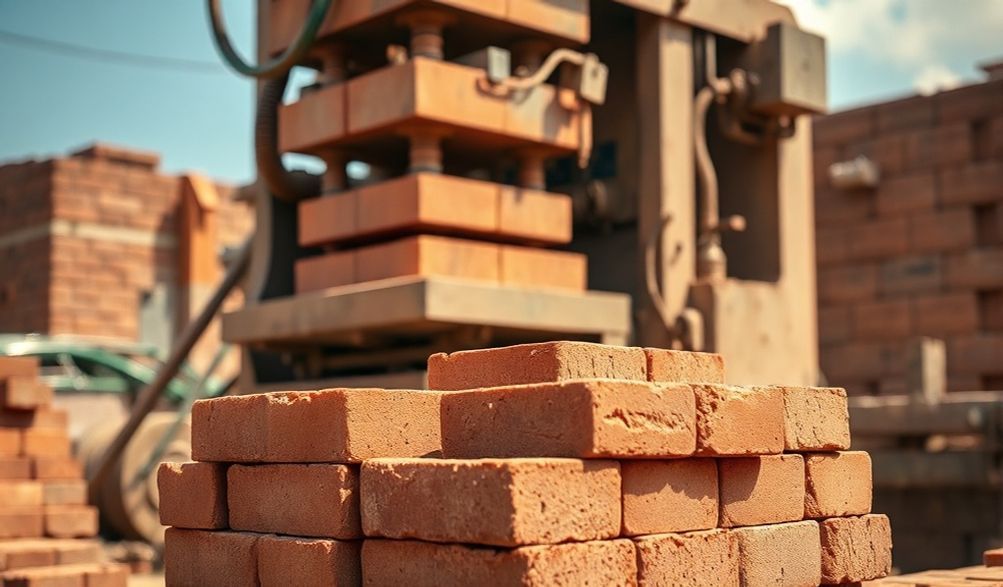
Your Ultimate Guide to Buying a Clay Brick Making Machine for Sale in Nigeria (2024)
บทนำ
Nigeria’s construction sector is on an undeniable upward trajectory. From ambitious government infrastructure projects to the urgent need to address the nation’s housing deficit, the demand for durable and affordable building materials has never been higher. At the heart of this building boom lies a fundamental component: the humble brick.
Yet, for many entrepreneurs and builders, sourcing quality bricks presents a significant challenge. Traditional manual brick production is plagued by inconsistency, back-breaking labor, and painfully low output. On the other hand, relying solely on imported or commercially produced bricks can eat deeply into project budgets. There is a clear gap in the market for a reliable, cost-effective solution.
This is where modern clay brick making machines for sale in Nigeria enter the picture. These machines represent more than just equipment; they are a gateway to efficiency, scalability, and substantial profit in a thriving industry. This comprehensive guide is crafted from deep industry analysis, technical evaluations, and market insights to serve as your definitive resource. We will demystify the process, helping you navigate the types of machines available, key purchasing factors, reputable suppliers, and the essential steps to launch a successful brick-making venture in the Nigerian context.
Why Invest in a Clay Brick Making Machine in Nigeria?
Investing in brick-making machinery is not merely a purchase; it’s a strategic business decision. Here’s why this investment makes compelling sense in today’s Nigerian market.
High Market Demand & Profit Potential
The numbers speak for themselves. Nigeria faces a staggering housing deficit, estimated in the tens of millions. Coupled with ongoing road, bridge, and urban development projects, the demand for construction materials is insatiable and long-term.
- Economics: The profit margin in brick production can be attractive. Your primary raw material—clay—is often locally sourced and inexpensive. A machine transforms this low-cost material into a high-value product. While ROI depends on scale and efficiency, many small-scale operators see a return on investment within 12-24 months through consistent production and sales.
- Opportunity: You position yourself not just as a producer, but as a solution provider to a national need, building a business with significant growth potential.
Superior Quality & Consistency Over Manual Methods
A machine eliminates human variance. Manual bricks often differ in size, density, and strength, leading to weak points in construction and wasted mortar.
- Standardized Output: Brick making machines apply precise, adjustable pressure to produce bricks of uniform dimensions and high compressive strength. This consistency ensures they meet relevant quality standards (like those from the Standards Organisation of Nigeria – SON).
- Trust & Reputation: Delivering consistently strong, well-shaped bricks builds trust with contractors and builders. It enhances your reputation, leads to repeat business, and allows you to command a better price in the market.
Scalability for Business Growth
Your business growth should not be limited by physical labor. A machine provides a clear path to scale.
- From Small to Large: Start with a manual or semi-automatic machine to serve local projects. As demand grows, you can upgrade to higher-capacity equipment to take on larger contracts from construction firms or government tenders.
- Capacity Control: You move from being production-limited to market-limited. The ability to reliably fulfill large orders is the key to transitioning from a small workshop to a major supplier.
Types of Clay Brick Making Machines Available in Nigeria
Understanding the different types of machines is the first step to making the right choice. They vary by operation mode, capacity, and investment level.
เครื่องทำอิฐแบบใช้มือ
These are the simplest and most affordable entry point. Operation relies entirely on human leverage to compress the clay in a mold.
- เหมาะสำหรับ: Individual builders, very small-scale startups, community projects, or as a secondary production line.
- ข้อดี:
- ต้นทุนเริ่มต้นต่ำที่สุด
- ไม่ต้องใช้ไฟฟ้าหรือน้ำมันเชื้อเพลิง
- Simple to understand and use.
- ข้อเสีย
- ใช้แรงงานสูงและช้า
- Low output (typically 300-800 bricks per day).
- Product consistency heavily depends on the operator’s skill and stamina.
เครื่องทำอิฐกึ่งอัตโนมัติ
This category offers the best balance for most small-to-medium enterprises (SMEs). They use a mechanical or hydraulic system, often powered by electricity or diesel, to compress the clay, but feeding and removal of bricks may be manual.
- เหมาะสำหรับ: Serious entrepreneurs and growing businesses aiming for daily commercial production.
- ข้อดี:
- Significantly higher output than manual machines (1,000 – 5,000+ bricks per day).
- Much better consistency and quality.
- More efficient use of labor.
- ข้อเสีย
- การลงทุนเริ่มต้นที่สูงกว่า
- Requires a power source (mains electricity, generator, or diesel engine).
- Needs basic operational training.
เครื่องทำอิฐอัตโนมัติเต็มรูปแบบ
These are industrial-grade production lines. They automate the entire process—feeding, mixing, compressing, and stacking—with minimal human intervention.
- เหมาะสำหรับ: Large-scale commercial plants, major construction companies producing for their own projects, and high-volume investors.
- ข้อดี:
- Very high output (10,000+ bricks per day).
- Exceptional consistency and quality control.
- Drastically reduced labor costs per brick.
- ข้อเสีย
- Very high capital investment.
- Requires reliable three-phase power and significant space.
- Needs specialized technical knowledge for operation and maintenance.
เครื่องอิฐแบบเคลื่อนที่เทียบกับเครื่องอิฐแบบอยู่กับที่
A key consideration is mobility. Some machines, often in the semi-automatic range, are mounted on trailers.
- Mobile Units: Allow for on-site production, eliminating transport costs for bricks. Perfect for large, remote construction sites.
- พืชที่อยู่กับที่ Set up at a fixed location with dedicated infrastructure for raw material storage, production, and curing. Offers greater stability for long-term business.
ปัจจัยสำคัญที่ต้องพิจารณาก่อนการซื้อ
Choosing the right machine requires careful self-assessment and market evaluation. Don’t just buy the biggest or cheapest; buy the most suitable.
กำลังการผลิตและข้อกำหนดผลผลิต
Your brick production capacity needs should drive your choice. Ask yourself:
* What is my current and projected demand?
* How many bricks do I need to produce per 8-hour shift?
* Be realistic. It’s better to consistently meet a smaller target than to underutilize an expensive, oversized machine.
Brick Type and Size Specifications
The machine must produce the bricks your market wants.
* อิฐทึบ: The standard for general construction.
* อิฐบล็อกกลวง Lighter, provide better insulation, and use less raw material.
* อิฐประสาน: A growing trend. An interlocking brick machine produces bricks that lock together without mortar, speeding up construction and reducing costs. Ensure your supplier offers the specific molds you need.
Power Source: Electric, Diesel, or Hybrid?
Nigeria’s power situation makes this a critical decision.
* ไฟฟ้า Cleaner and quieter, but only viable with a very reliable power supply or industrial generator.
* ดีเซล Highly popular for independence. A diesel brick making machine is a workhorse that won’t fail due to grid outages. Factor in fuel costs.
* ไฮบริด: Offers the flexibility to switch between power sources, providing a valuable backup.
Machine Durability & After-Sales Support
This is the most critical E-E-A-T (Experience, Expertise, Authoritativeness, Trustworthiness) factor for your investment.
* ความทนทาน The machine must be built to handle Nigerian conditions—dust, heat, and intensive use. Look for robust frames, quality hydraulic systems, and hardened steel molds.
* การสนับสนุนหลังการขาย: This is non-negotiable. A machine is a long-term asset. You must choose a supplier who offers:
* A clear warranty.
* Availability of spare parts locally or with short lead times.
* Access to trained technicians for repairs and maintenance.
* Proper installation and operational training.
A machine without reliable local support is a future liability.
Navigating the Nigerian Market: Suppliers and Costs
The market has both local assemblers/manufacturers and international importers. Due diligence is key.
Local Manufacturers vs. International Importers
- Local Manufacturers/Assemblers:
- ข้อดี: Often more affordable, easier communication, quicker delivery, and potentially better tailored to local materials. Support and parts may be faster.
- ข้อเสีย Perceived (sometimes real) issues with build quality consistency. Technology may be less advanced.
- International Importers (Agents for Chinese, Indian, etc., brands):
- ข้อดี: Access to globally recognized technology, often higher automation levels, and potentially more durable engineering.
- ข้อเสีย Higher cost, longer wait times for machines and (critically) spare parts. After-sales service depends entirely on the agent’s local capability.
Understanding the Price Range
Prices vary dramatically. Use these as guide brackets only and get current quotes.
* กดด้วยมือ: Starting from ₦150,000 – ₦800,000.
* เครื่องจักรกึ่งอัตโนมัติ: Ranging from ₦1.5 million to ₦8 million+, depending on capacity, brand, and features.
* พืชอัตโนมัติเต็มรูปแบบ: Can range from ₦10 million to ₦50 million and above.
Factors affecting price include brand reputation, level of automation, production capacity, and included features (like mixers or stackers).
Vetting a Reliable Supplier
Protect your investment with thorough checks:
1. Visit the Showroom/Factory: If possible, see the machines in person. If not, request detailed, unedited video demonstrations.
2. Ask for Client References: Speak to past buyers about machine performance and the supplier’s support responsiveness.
3. Inspect Warranty & Service Terms: Read the fine print. What is covered, for how long, and what is the response time for service?
4. Verify Spare Parts Availability: Ask for a list of common spare parts and confirm they are stocked in Nigeria.
5. Check Business Longevity: How long have they been in operation? A track record matters.
Setting Up for Success: Operation and Best Practices
Owning the machine is half the battle. Proper setup and operation ensure profitability.
Sourcing and Preparing Quality Clay
Not all soil is suitable. The right soil for brick making is a mix of clay and sand.
* Conduct a simple soil test (the “sausage” or “jar” test) to determine clay content.
* The clay must be clean, free of organic matter, and properly weathered.
* Mixing with the correct proportion of water is crucial for optimal plasticity and strength.
Basic Operational Training and Safety
- Ensure all operators are trained on startup, running, and shutdown procedures.
- Emphasize safety: never place hands in the compression area, use protective gear (gloves, boots), and ensure all safety guards are in place.
Simple Maintenance Routines for Longevity
A little maintenance prevents major breakdowns.
* Daily: Clean the machine thoroughly, check hydraulic oil levels, lubricate moving parts.
* Weekly: Inspect molds for wear, check bolts and nuts for tightness, inspect hoses and belts.
* Follow the manufacturer’s schedule for oil changes and part replacements.
Business Essentials: From Production to Sales
- การบ่ม Freshly made bricks must be cured (kept moist) for 7-14 days to gain maximum strength before sun-drying.
- Storage: Keep cured bricks in a organized, accessible yard.
- Sales & Marketing: Network with local builders, block molders, and construction companies. Consider simple branding (a stamp on your bricks) and use social media to showcase your product quality.
Frequently Asked Questions (FAQ) About Clay Brick Machines in Nigeria
What is the average cost of a clay brick making machine in Nigeria?
As outlined above, costs range from under ₦1 million for basic manual presses to tens of millions for full automatic plants. The “average” depends entirely on the type you need. Always get itemized quotes from multiple suppliers.
Can I get a loan or financing for this equipment in Nigeria?
Yes, options exist. The Bank of Industry (BOI) has schemes for SME equipment financing. Some equipment suppliers offer lease-to-own arrangements. Also, explore cooperative societies or microfinance banks. Having a solid business plan will be essential for securing financing for your brick business.
What is the profitability of a brick making business?
Profitability hinges on efficiency, scale, and market access. A simplified model: Calculate your cost per brick (clay, labor, power/fuel, maintenance) and subtract it from your selling price. A semi-automatic machine producing 2,000 bricks per day can generate a healthy margin. High volume and operational efficiency are the keys to high profits.
How do I handle machine breakdowns and find spare parts?
This underscores the importance of your supplier choice. Always select a supplier with a proven local spare parts depot and technical team. Before buying, confirm the availability and cost of key wear-and-tear parts. A reliable after-sales service agreement is your best insurance against prolonged downtime.
Are there government regulations or standards for brick production?
Yes. The Standards Organisation of Nigeria (SON) sets standards for the compressive strength and dimensions of bricks. Adhering to these standards enhances your marketability. For your business, you will also need to register with the Corporate Affairs Commission (CAC) and obtain necessary local government permits.
Conclusion
Investing in a clay brick making machine for sale in Nigeria is a powerful step towards building a profitable and sustainable enterprise at the heart of the nation’s growth. It represents a move from manual struggle to mechanized efficiency, from inconsistency to quality, and from a small operation to a scalable business.
The core of your success lies in aligning your choice with three pillars: your budget, your production goals, and—most critically—the availability of dependable local support and spare parts. Let this guide serve as your foundational checklist. We urge you to conduct thorough research, visit or vet multiple suppliers with rigor, and plan your venture meticulously. The market is ready. With the right machine and a solid strategy, you are well-positioned to lay a strong foundation for your future.
Ready to take the next step? Use the insights in this guide to prepare your questions, contact reputable suppliers for detailed consultations, and begin your journey to becoming a key player in Nigeria’s construction landscape.
<