
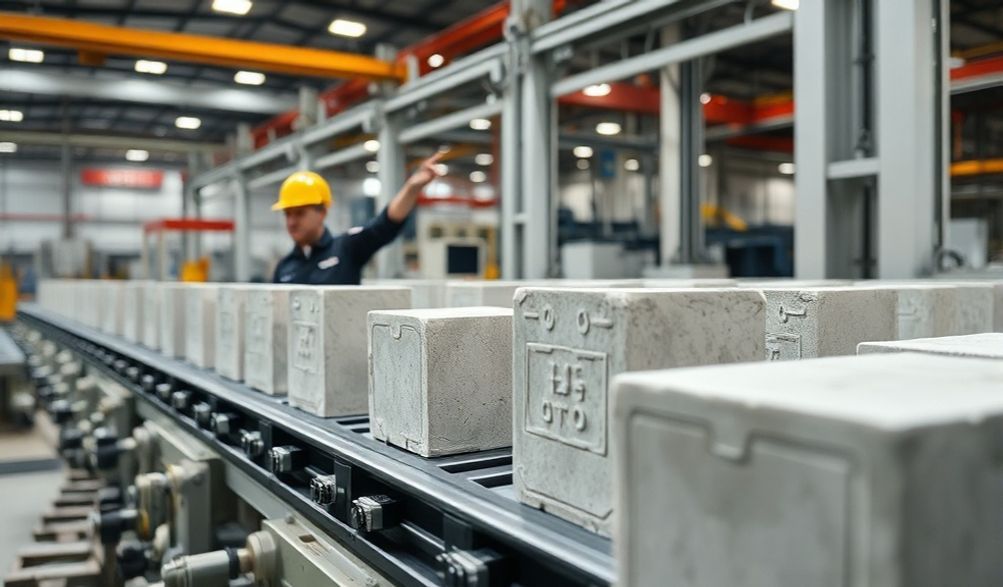
คู่มือขั้นสุดยอดสำหรับเครื่องทำบล็อกปูนซีเมนต์จากโรงงาน FUDA ประเทศจีน
บทนำ
The global construction industry is a relentless engine of progress, demanding ever-more efficient, sustainable, and high-quality building materials. At the heart of this demand lies a critical piece of equipment: the cement block making machine. For contractors, project managers, and entrepreneurs, choosing the right machine isn’t just a purchase—it’s a strategic investment in productivity, quality, and business growth.
China has solidified its position as the world’s premier manufacturing hub for construction machinery, offering an unparalleled combination of scale, technology, and value. Within this competitive landscape, specialized factories like the โรงงานเครื่องผลิตบล็อกฟูดา have emerged as key players, catering to a global clientele. But navigating this market requires more than just a price list; it requires insight, expertise, and a trustworthy partner.
This comprehensive guide is designed to be your definitive resource. Built on deep industry analysis and an understanding of the international procurement process, we will dissect the advantages of sourcing from China, provide a detailed profile of what a factory like FUDA offers, and walk you through the critical steps of selection and purchase. Our goal is to arm you with the knowledge needed to make an informed, confident, and successful investment in your construction capabilities.
Why Source a Cement Block Making Machine from China?
Sourcing heavy machinery from overseas is a significant decision. Understanding the fundamental advantages of the Chinese market is the first step in justifying that decision and setting the stage for a successful procurement.
ข้อได้เปเปรียบด้านการผลิตระดับโลก
China’s dominance in manufacturing isn’t accidental. It’s the result of decades of development into a complete industrial ecosystem.
* ห่วงโซ่อุปทานแบบบูรณาการ Everything from high-grade steel and hydraulic components to advanced PLC systems is available within a dense network of suppliers, reducing production delays and costs.
* ประหยัดจากขนาด The sheer volume of production allows manufacturers to source materials at lower costs and optimize production lines, savings that are often passed on to the buyer.
* Mature Industrial Clusters: Factories like FUDA are often part of specialized industrial zones dedicated to construction equipment, fostering innovation and a deep pool of skilled labor and engineering talent.
Cost-Effectiveness Without Compromising Quality
The narrative of “cheap vs. quality” is outdated. Reputable Chinese factories now compete on มูลค่า.
* ราคาที่แข่งขันได้ You can expect a significantly lower capital outlay compared to equivalent machines from Western Europe or North America, without necessarily sacrificing core functionality.
* Advanced Standards: Leading manufacturers adhere to international quality standards (like ISO) and utilize CNC machining, robotic welding, and modern assembly techniques to ensure build integrity.
* Tiered Options: The market offers a spectrum, from robust, value-oriented models to premium, fully automated lines, allowing you to match your investment precisely to your performance needs.
Technological Innovation and Adaptability
Chinese manufacturers are no longer just imitators; they are rapid innovators, highly responsive to global market trends.
* การรับเทคโนโลยีอย่างรวดเร็ว: Integration of IoT for machine monitoring, energy-efficient variable frequency drives (VFDs), and user-friendly touch-screen PLC controls are now common in mid-to-high-range models.
* ความสามารถในการปรับแต่ง Factories are typically agile, able to modify machine dimensions, pressure settings, and mold configurations to produce blocks that meet specific regional standards (e.g., ASTM, EN) or unique project requirements.
* Focus on Automation: From fully automatic pallet circulation systems to robotic stackers, the push towards reducing labor intensity and increasing output consistency is a key design driver.
Deep Dive: FUDA Block Making Machine Factory Profile
When considering a specific supplier, due diligence is paramount. Here’s what you should look for and expect from an established factory like FUDA.
Company Legacy and Industry Standing
While specific, non-public details of FUDA’s history would require direct inquiry, a trustworthy factory will transparently share its background. You should seek:
* ปีที่ดำเนินการ: A long-standing presence (e.g., 10+ years) generally indicates stability and accumulated experience.
* Core Mission: Look for a stated focus, such as “providing durable, high-output machinery for growing businesses” or “innovating in eco-friendly block production.”
* Market Reputation: Evidence can be found in verifiable client testimonials, case studies, and its presence at international trade fairs like the Bauma China.
Manufacturing Expertise and Quality Control
The production philosophy separates adequate factories from exceptional ones.
* Structured QC Protocols: Inquire about in-process quality checks. A reliable factory will have staged inspections for raw materials, welding, hydraulic assembly, and final performance testing.
* การรับรอง: Request copies of relevant certifications. ISO 9001 for quality management systems is a strong, verifiable indicator of a structured operation.
* Component Sourcing: Ask about key parts. The use of recognized brand-name hydraulic pumps (like Yuken or Rexroth), Siemens or Schneider electrics, and hardened steel for molds speaks volumes about a commitment to longevity.
Core Product Philosophy
Understanding a factory’s driving principle helps you see if your priorities align. FUDA’s approach likely emphasizes:
* Durability & Uptime: Designing machines with robust frames and easy-access maintenance points to maximize operational hours.
* Output Optimization: Engineering for fast cycle times and efficient material use to boost your return on investment.
* ความหลากหลายในการใช้งาน: Offering a wide range of compatible molds and machine adjustments to let a single unit produce multiple block types, protecting your business against market shifts.
Exploring FUDA’s Cement Block Making Machine Range
A versatile factory will cater to different business scales and needs. Here’s a breakdown of a typical product portfolio.
Automatic Block Making Machines
Ideal for large-scale commercial block yards, infrastructure projects, or high-volume precast plants.
* คุณสมบัติ: Fully integrated systems with automatic material feeding, mixing, pressing, curing, and pallet return. Often feature touch-screen PLC control.
* เอาท์พุตสามารถผลิตได้จาก8,000 to over 30,000 blocks per 8-hour shift, depending on model and block size.
* ประโยชน์: Maximum output with minimal manual labor, superior consistency in block density and dimensions, and the best long-term cost-per-block efficiency.
เครื่องจักรกึ่งอัตโนมัติและเครื่องจักรแบบแมนนวล
The perfect entry point for startups, small construction firms, or for producing blocks on-site for specific projects.
* การใช้งาน: Small to medium block yards, rural construction, entrepreneurial block-making businesses.
* ข้อดี: Significantly lower initial investment, simpler operation and maintenance, and greater flexibility for low-volume, multi-product runs.
* Cost-Benefit: Higher labor requirement but excellent ROI for businesses where capital is a greater constraint than manpower.
Specialized Machines for Diverse Blocks
Modern construction requires a variety of blocks. A good factory’s machines should be adaptable.
* บล็อกคอนกรีตมวลเบา: For load-bearing walls, offering strength with reduced weight and material cost.
* บล็อกทึบและแผ่นปูพื้น For foundations, pavements, and landscaping.
* บล็อคต่อเชื่อม: For retaining walls and construction requiring dry-stacking (no mortar).
* รูปร่างพิเศษ: Curbs, grass pavers, and insulation blocks, often requiring custom molds.
Key Technical Specifications to Compare
When evaluating models, compare this core data:
| Specification | What It Means | Why It Matters |
| :— | :— | :— |
| พลัง | Total installed motor power (kW). | Determines energy costs and the machine’s force capability. |
| เวลาในรอบการผลิต | Time to complete one press cycle (seconds). | Direct driver of hourly output. Faster = more blocks. |
| Block Output/Day | Theoretical production based on an 8-hour shift. | Measures overall productivity capacity. |
| Mold Compatibility | Size and type of molds the machine accepts. | Defines your product flexibility. |
| ขนาดเครื่องจักร | Footprint (L x W x H). | Crucial for planning your factory or yard layout. |
| แรงสั่นสะเทือน | Measured in kN (Kilo Newtons). | Impacts block density and strength; higher is generally better for solid blocks. |
Critical Factors for Choosing the Right Machine
Selecting a machine is a strategic exercise. Follow this framework to align your choice with your business goals.
Assessing Your Project Requirements
Begin with an internal audit:
* Block Type & Mix: What products will you sell? (e.g., 60% hollow blocks, 40% pavers).
* Daily Volume Target: Calculate based on current orders or market demand. Add a 20-30% buffer for growth.
* ข้อจำกัดของไซต์ Measure available space, including room for raw material storage, curing, and block stacking. Verify your electrical supply (voltage, phase).
* วัตถุดิบ Consider the properties of your local sand, aggregate, and cement, as these can affect machine settings.
การวิเคราะห์ต้นทุนรวมในการเป็นเจ้าของ
Look beyond the invoice price to the true cost of operation over 5-10 years.
* ค่าใช้จ่ายในการดำเนินงาน Factor in energy consumption, labor costs per block produced, and routine consumables (like hydraulic oil and filter changes).
* Maintenance & Parts: Investigate the cost and local availability of wear parts (e.g., mold liners, hydraulic seals). A machine with globally available standard components is often cheaper to maintain long-term.
* การใช้พลังงาน Machines with VFDs and efficient hydraulic systems may have a higher upfront cost but significantly lower running costs.
The Importance of After-Sales Support
This is the most critical trust factor in international trade. Reliable support mitigates the risk of distance.
* ฝ่ายสนับสนุนทางเทคนิค Does the factory offer 24/7 remote support via phone or video? What is the typical response time?
* การฝึกอบรม Is comprehensive training (via detailed manuals, video tutorials, or on-site engineer dispatch) included?
* การรับประกัน: What is covered (parts, labor)? What is the duration (e.g., 12 months for parts, excluding wear items)?
* การจัดหาอะไหล่ How quickly can they ship common spare parts? Do they provide a recommended spare parts list for initial purchase?
The Procurement Process: From Inquiry to Delivery
A transparent, step-by-step process minimizes confusion and risk. Here’s what a typical journey looks like.
Step 1: Initial Consultation and Specification Review
- Action: Contact FUDA with a detailed project summary. Be prepared to share your block types, target output, site conditions, and budget range.
- Outcome: A knowledgeable sales engineer should recommend 1-2 suitable models and clarify any technical questions. Request a product catalog and technical drawings.
Step 2: Quotation, Negotiation, and Contract Clarity
- The Proforma Invoice (PI): This is your formal quotation. Scrutinize it for:
- Ex-works (EXW), FOB, or CIF? This defines who handles and pays for shipping.
- Detailed Specifications: Ensure the PI lists every item, including the machine, standard molds, spare parts kit, and tools.
- Payment Terms: Typically 30-50% deposit, balance before shipment or against copy of shipping documents.
- Delivery Timeline: A clear estimated lead time from order confirmation to readiness for shipment.
Step 3: Production, Inspection, and Quality Checks
- Factory Audit/PSI: For significant orders, hiring a third-party inspection company to conduct a Pre-Shipment Inspection (PSI) is highly advisable. They will check build quality, material compliance, and perform a test run with your chosen molds.
- Communication: Request regular updates, such as photos or videos from the assembly floor.
Step 4: Shipping, Logistics, and Customs Clearance
- Incoterms: เอฟโอบี (ฟรีออนบอร์ด) is common. You pay the machine cost and domestic delivery to the Chinese port. You then appoint your own freight forwarder to handle sea freight, insurance, and import clearance in your country.
- Documentation: The factory must provide a clean set of shipping documents: Commercial Invoice, Packing List, Bill of Lading, and Certificate of Origin.
- Your Local Agent: Work with a reliable customs broker in your country to handle port clearance, duties, and taxes, and final trucking to your site.
คำถามที่พบบ่อย (FAQ)
Q1: What is the typical lead time for a FUDA block making machine?
ก Lead times vary. Standard semi-automatic models may be ready in 15-30 days. Larger, fully automatic lines or machines with heavy customization can take 45-90 days. Always confirm the timeline in your sales contract.
Q2: Does FUDA provide installation guidance and operational training?
ก Reputable factories do. Standard packages usually include detailed English operation & maintenance manuals, electrical diagrams, and video guides. For automatic lines, on-site installation and training by a factory engineer can often be arranged for an additional fee and is highly recommended.
Q3: How can I verify the quality and legitimacy of the FUDA factory?
ก Take these steps:
1. Request their Business LicenseและISO Certification copies.
2. Ask for a list of recent export customers (with country) and request to contact 1-2 for a reference.
3. Insist on a live video tour of the factory floor and a video call with their engineering team.
4. Use platforms like Alibaba.com’s verified supplier system (if applicable) to check their transaction history.
Q4: What are the payment terms usually offered?
ก Secure, bank-mediated terms are standard. T/T (Bank Transfer) is most common: e.g., 30% deposit, 70% balance against copy of shipping documents. For larger orders, L/C (Letter of Credit) provides security for both parties but involves more bank fees.
Q5: Are molds for different block designs included, or are they purchased separately?
ก This is a crucial point to clarify. Quotations typically include 1-2 sets of standard molds (e.g., for 4″ and 6″ hollow blocks). Molds for paving stones, interlocking blocks, or custom designs are almost always extra cost items. Always confirm which molds are included in the base price.
สรุป
Sourcing a cement block making machine from a specialized Chinese manufacturer like the FUDA Block Making Machine Factory represents a strategic opportunity to access advanced technology, robust engineering, and compelling value. It allows businesses of all sizes to scale their production capabilities and compete more effectively.
The key to success lies in informed due diligence. By thoroughly understanding your own requirements, critically evaluating the factory’s credentials and after-sales commitment, and meticulously managing the procurement process, you transform a complex international transaction into a straightforward and rewarding investment.
Let this guide be your starting point. Use the insights and checklists provided to engage with suppliers confidently. Your next step is to initiate a detailed, specification-driven conversation.
Ready to translate this knowledge into action? For a precise quotation and technical consultation, prepare your project details and reach out to the FUDA export sales team. A clear, comprehensive inquiry is the first step toward securing the ideal machine for your block-making success.
<