
The Complete Guide to Hollow Brick Making Machines: Selection, Operation & Benefits
Introduction
In today’s fast-paced construction landscape, contractors, builders, and entrepreneurs face a constant challenge: balancing speed, cost, quality, and sustainability. If you’re exploring ways to streamline your operations, gain control over your material supply, and improve your project’s bottom line, you’ve likely considered investing in a hollow brick making machine. This isn’t just about buying a piece of equipment; it’s about making a strategic decision that will impact your workflow, your costs, and the quality of your builds for years to come.
Based on extensive industry experience, technical analysis, and a deep understanding of modern manufacturing principles, this comprehensive guide is designed to be your authoritative resource. We move beyond sales brochures to deliver practical, data-driven advice. Our goal is to empower you with the knowledge needed to make an informed, confident, and profitable investment in a hollow brick making machine, ensuring your choice aligns with industry best practices and your specific operational goals.
What is a Hollow Brick Making Machine? Core Technology Explained
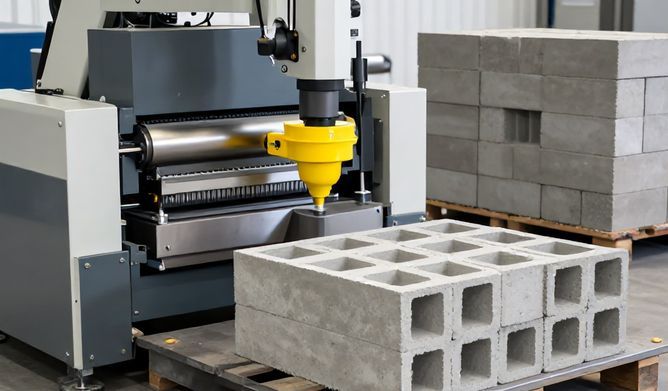
At its heart, a hollow brick making machine is a sophisticated piece of manufacturing equipment designed to automate and standardize the production of hollow concrete blocks (or bricks). It transforms raw, loose materials into precise, high-strength building components through a process of compaction and molding.
Defining the Product and Its Output
Hollow bricks, often called hollow blocks or concrete masonry units (CMUs), are building blocks characterized by one or more hollow cavities within their structure.
- Key Characteristics: These cavities reduce the block’s overall weight and volume of material used while creating air pockets that provide superior thermal and acoustic insulation compared to solid blocks.
- Contrast with Solid Bricks: While solid bricks are dense and heavy, hollow bricks offer a smarter, more efficient alternative. The primary advantages are significant material savings (up to 30-50% less concrete), reduced structural load on buildings, easier on-site handling, and enhanced energy efficiency for the finished structure. The cavities also allow for the running of electrical conduits and plumbing, and can be filled with rebar and grout for added structural strength.
The Basic Working Principle
While models vary in automation, the core production principle remains consistent across most machines. The process is a cycle of feeding, compacting, molding, and ejecting.
- Feeding & Mixing: Pre-mixed raw materials (typically a blend of cement, sand, fly ash, and aggregates like crushed stone) are fed into the machine’s hopper. Consistency in the mix’s moisture content (“slump”) is critical for quality output.
- Compaction & Molding: The mix is dispensed into a mold box on a steel pallet. Here, the defining action occurs:
- Vibration: High-frequency vibrations are applied to remove air pockets and ensure the mix flows into every corner of the mold.
- Hydraulic Pressure: A hydraulic ram applies substantial pressure (measured in tons or MPa) from the top, densely compacting the material. This combination of vibration and pressure is what gives the blocks their high compressive strength.
- Ejection & Curing: The mold box lifts, and the newly formed, green block is pushed out onto the pallet. The pallet, carrying the block, is then transferred to a curing area. The blocks must cure, often in a controlled steam chamber (kiln) for rapid strength gain or under plastic sheets for ambient curing, for a specified period before they are ready for use or sale.
Key Benefits of Using a Hollow Brick Making Machine
Investing in an in-house block production capability isn’t just about making bricks; it’s about unlocking a cascade of operational and strategic advantages.
Economic and Operational Advantages
- Significant Reduction in Material Costs: By producing blocks with hollow cores, you inherently use less raw material per unit compared to a solid block of the same dimensions. This direct saving on cement, sand, and aggregates dramatically lowers your cost of goods sold.
- High Production Efficiency and Consistency: A single automatic machine can produce hundreds, even thousands, of perfectly identical blocks per shift. This eliminates reliance on external suppliers, ensures a steady, on-demand supply for your projects, and guarantees uniform block dimensions that speed up masonry work.
- Lower Labor Dependency: Automated machines streamline the most labor-intensive parts of block making. While manual machines require a crew, a fully automatic system might need only 2-3 operators to manage the entire production line, controlling costs and reducing variability.
Construction and Environmental Benefits
- Superior Insulation Properties: The air trapped in the hollow cavities acts as a natural insulator. Buildings constructed with hollow blocks typically have better thermal performance, leading to lower energy costs for heating and cooling—a major selling point for modern, eco-conscious projects.
- Lightweight for Easier Handling: The reduced weight makes transportation from the production point to the laying site cheaper and safer. It also lessens mason fatigue, potentially increasing laying speed and reducing on-site injury risk.
- Eco-Friendly Material Potential: These machines excel at incorporating industrial by-products like fly ash (from coal plants) or slag. This not only reduces the cement content (the most carbon-intensive ingredient) but also provides a productive use for waste materials, contributing to greener construction practices.
Types of Hollow Brick Making Machines: A Detailed Comparison
Choosing the right type of machine is the most critical step. The market offers a spectrum from basic to highly advanced systems, each suited to different scales and business models.
Manual, Semi-Automatic, and Fully Automatic Machines
- Manual Machines: Operated entirely by hand levers and human labor for feeding, compacting, and ejection. They have the lowest output (100-500 blocks per day) and lowest upfront cost. Best for: Very small-scale projects, startups with minimal capital, or locations with unreliable power.
- Semi-Automatic Machines: The core compaction cycle (vibration and hydraulic pressure) is powered electrically/hydraulically, but block ejection and pallet movement are manual or require operator initiation. They offer a good balance, with outputs ranging from 800 to 2,500 blocks per 8-hour shift. Best for: Small to medium-sized businesses, contractors looking to supply their own projects with some surplus for sale.
- Fully Automatic Machines: The entire process from feeding to pallet return is automated via a programmable logic controller (PLC). They feature high-speed production (2,500 to 10,000+ blocks per shift), exceptional consistency, and minimal manual intervention. Best for: Large-scale commercial plants, entrepreneurs focusing solely on block manufacturing as a business, or major construction firms with continuous demand.
Stationary vs. Mobile Block Making Machines
- Stationary Plants: These are fixed installations, often comprising the block machine, a mixer, conveyor systems, and a curing rack or kiln. They are designed for maximum output and efficiency in a dedicated location.
- Mobile Machines: Mounted on a trailer, these units can be towed directly to a large construction site. The primary benefit is the elimination of block transportation costs for that project. Production happens on-site, and blocks are used almost immediately after curing.
Machine Specifications: What to Look For
When comparing models, go beyond the price tag and scrutinize these key metrics:
- Cycle Time & Blocks Per Cycle (BPM): How many seconds for one complete press cycle? How many blocks (e.g., 4″, 6″, 8″) does it produce per cycle? This defines your theoretical maximum output.
- Pallet Size: Determines the footprint of the block you can produce. A larger pallet allows for producing larger blocks or multiple smaller blocks per cycle.
- Motor Power & Hydraulic Pressure: Indicates the machine’s capability and durability. Higher hydraulic pressure (e.g., 150-300 tons) ensures stronger compaction for higher-strength blocks.
- Compression System: A combination of synchronized vibration and hydraulic pressure is industry-standard for optimal density and strength. Ask about the vibration motor’s frequency and power.
How to Choose the Right Machine for Your Project
This decision should be driven by a clear analysis of your needs, not just the machine’s features.
Assessing Your Requirements
Start with a self-audit:
* Required Output: Calculate your average daily or monthly block consumption. Add a 20-30% buffer for growth. This number will immediately point you towards manual, semi-auto, or automatic categories.
* Available Space: Do you have space for just the machine, or for a full production line including raw material storage, mixing area, block stacking, and curing?
* Budget & Power: Be realistic about your total investment capacity, including installation, foundation, and initial raw material stock. Check your available power supply (3-phase is typically required for automatic machines).
Critical Selection Criteria
- Build Quality & Durability: Inspect the frame (reinforced steel is best), the thickness of the mold walls and head, and the brands of key components like hydraulic pumps, PLCs, and vibrator motors. A heavier machine is often a more stable, durable one.
- After-Sales Service & Parts Availability: This is non-negotiable. A reputable supplier should offer comprehensive installation guidance, operator training, a clear warranty, and—most importantly—readily available spare parts. Downtime is lost revenue.
- Supplier Reputation: Conduct due diligence. Ask for client references, visit existing installations if possible, and search for independent reviews. A supplier with a long track record is generally a safer bet.
Cost Analysis: Investment vs. Return (ROI)
Think beyond purchase price. A simple ROI framework can guide you:
1. Total Investment: Machine cost + installation + foundation + initial material stock.
2. Operating Costs Per Block: (Cost of raw materials + labor + electricity + maintenance) / number of blocks produced.
3. Revenue Per Block: Market selling price of the hollow block in your area.
4. Gross Profit Per Block: Revenue – Operating Cost.
5. ROI Timeline: Total Investment / (Gross Profit Per Block * Monthly Production). This gives you the number of months to break even.
A slightly more expensive, reliable machine with strong support will often yield a faster and more sustainable ROI than a cheap, problematic one.
Operational Best Practices and Maintenance
Your machine’s performance and lifespan depend heavily on how you operate and care for it.
Setting Up for Optimal Production
- Foundation is Key: Pour a strong, level concrete foundation as per the manufacturer’s specifications. An unstable base causes misalignment, wear, and poor block quality.
- Raw Material Consistency: The #1 cause of production issues is inconsistent raw material mix. Use a mechanical mixer for a homogenous blend. Strictly control the water content; too wet leads to deformation, too dry leads to poor compaction and weak blocks.
Routine Operation and Safety Protocols
- Standard Operating Procedure (SOP): Establish and follow clear SOPs for startup, running, and shutdown. This includes warming up the hydraulic system, checking oil levels, and ensuring all safety guards are in place.
- Safety First: Operators must wear safety glasses, hearing protection (due to vibration noise), and steel-toe boots. Never clear jams or perform adjustments while the machine is in cycle. Lock-out/tag-out procedures should be mandatory.
Essential Maintenance Schedule
Preventive maintenance prevents costly breakdowns.
- Daily: Clean the machine thoroughly at the end of each shift, especially the mold box and pallets. Check for loose bolts or nuts. Inspect hydraulic hoses for leaks.
- Weekly: Grease all lubrication points. Check hydraulic oil level and condition. Inspect vibrator motors for secure mounting.
- Monthly: Tighten all major structural bolts. Check the alignment of the mold box and press head. Replace worn pallets or mold liners.
Common Troubleshooting:
* Blocks breaking or weak: Likely incorrect raw material mix (check moisture/cement ratio) or insufficient compaction pressure/vibration time.
* Blocks sticking in mold: Worn or damaged mold liners, insufficient release agent application, or a mix that is too wet.
FAQ: Your Questions on Hollow Brick Machines Answered
Q1: What is the average production capacity of a standard automatic machine?
Capacity varies widely. A standard single-hopper automatic machine typically produces between 2,500 to 5,000 blocks (of standard 8″ size) in an 8-hour shift, depending on cycle time and model efficiency.
Q2: What raw materials can be used besides cement?
Machines are versatile. Common mixes include Portland cement, sand, gravel/crushed stone, and fly ash (which can replace 20-30% of cement). Some systems can also utilize slag, volcanic pumice, or even certain types of recycled construction aggregate.
Q3: How long does it take for bricks to cure properly after production?
For full design strength (usually 28-day strength), blocks need to cure for 28 days. However, with proper steam curing in a kiln (at 60-80°C), blocks can achieve over 70% of their strength in 24 hours, allowing for faster stacking and transportation.
Q4: What is the typical lifespan of a well-maintained machine?
With rigorous preventive maintenance and proper operation, the core structure of a quality machine can last 15-20 years. Wear parts like mold liners, pallets, and hydraulic seals will need periodic replacement.
Q5: Can one machine produce different sizes and shapes of hollow blocks?
Yes, by changing the mold box. Reputable suppliers offer a range of interchangeable molds for different block sizes (4″, 6″, 8″) and shapes (solid, hollow, paving, interlocking). Changeover time can range from 30 minutes to a few hours.
Q6: What are the most common operational challenges and how to solve them?
The most frequent issues are poor block strength (fix: optimize raw material mix and compaction) and machine jams or misalignment (fix: implement strict daily cleaning and weekly bolt-tightening routines). Consistent, disciplined operation is the best preventative measure.
Conclusion
Selecting a hollow brick making machine is a pivotal decision that directly influences your construction efficiency, cost structure, and end-product quality. As we’ve explored, success lies in carefully aligning the machine type—be it manual, semi-automatic, or fully automatic—with your specific output needs, budget, and long-term business goals. Remember, prioritizing build quality, supplier reputation, and after-sales support will almost always yield a better return on investment than opting for the lowest initial price.
Use this guide as a foundational toolkit for your evaluation. Let it inform the detailed questions you ask suppliers. We encourage you to take the next step: consult with multiple reputable manufacturers, request live demonstrations, and discuss your specific project plans with their technical teams. By making an educated choice, you’re not just purchasing equipment; you’re investing in a more resilient, profitable, and sustainable future for your construction endeavors.