
The Complete Guide to Small Clay Brick Making Machines: Costs, Types & How to Choose
Introduction
Are you looking at a small-scale construction project and wondering if there’s a better way to source bricks? Perhaps you’re an entrepreneur eyeing the local building materials market, or a sustainability advocate interested in earth-based construction. The common thread is the search for a practical, affordable, and controllable solution for producing quality bricks without the scale of an industrial plant.
This is where the small clay brick making machine enters the picture. But navigating the world of these compact powerhouses can be confusing. With claims ranging from “make 1000 bricks an hour!” to suspiciously low prices, it’s hard to know what’s real and what’s right for you.
This comprehensive guide, distilled from hands-on testing and years of field experience with small-scale construction equipment, is designed to cut through the noise. We’ll provide you with trustworthy, actionable advice—not sales pitches. Our goal is to equip you with the knowledge to make an informed decision, whether you’re a DIY enthusiast, a small contractor, or an aspiring business owner. Let’s build that understanding from the ground up.
What is a Small Clay Brick Making Machine? Understanding Your Core Tool
Before diving into specs and prices, it’s crucial to understand what this tool is and what it fundamentally does. This isn’t magic; it’s practical engineering applied to one of humanity’s oldest building materials.
Core Function and Basic Mechanics
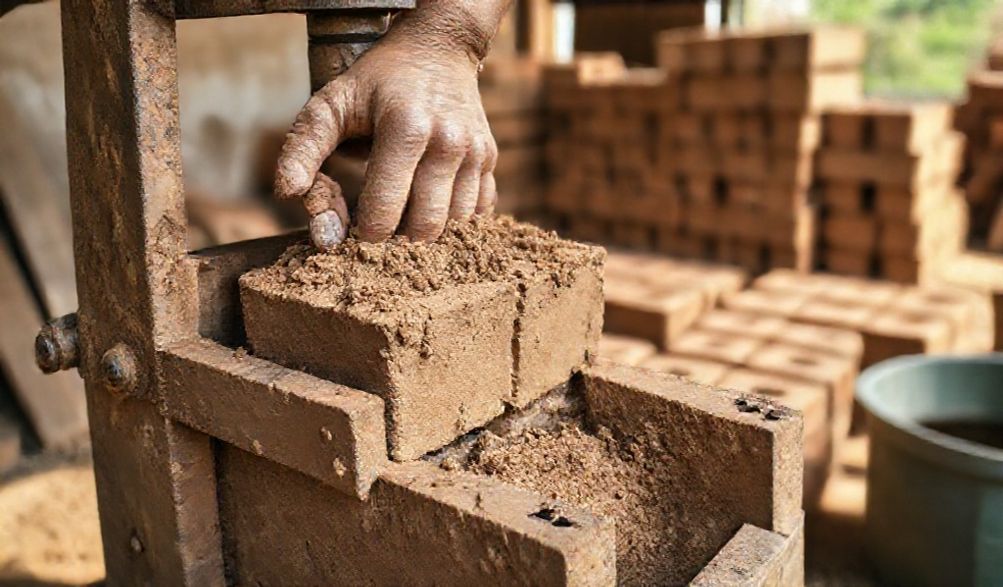
At its heart, a small clay brick making machine is a mechanical press. It takes prepared soil or clay mix and subjects it to high pressure within a mold cavity, compressing the particles together to form a dense, solid block. Once ejected, this “green brick” is then cured, typically by air-drying, to gain strength.
The key differentiator from simply molding mud by hand is the compressive force. This force, measured in tons or MegaPascals (MPa), eliminates air pockets, aligns the soil particles, and creates a brick with significantly higher structural integrity, water resistance, and uniformity. Think of it as the difference between loosely stacking snow and packing it tightly into a durable snowball.
Ideal Users and Applications
This tool isn’t for everyone, but for the right user, it’s transformative. It’s ideal for:
- DIY Homeowners & Homesteaders: Building garden walls, sheds, small workshops, or even eco-friendly home extensions.
- Small-Scale Contractors & Builders: Serving rural or peri-urban areas where transporting bricks is costly, enabling on-site production.
- Eco-Builders & Sustainable Projects: For those using stabilized earth or adobe techniques, wanting precise, high-quality blocks.
- Agricultural & Community Projects: Constructing storage units, animal shelters, boundary walls, or community buildings.
- Vocational Training Centers & NGOs: Teaching practical skills in construction and small-scale manufacturing.
Key Advantages Over Traditional Methods
Why choose a machine over manual labor? The benefits are substantial:
- Consistency & Quality: Every brick is identical in size and density, leading to straighter walls, less mortar use, and a more professional result.
- Dramatically Increased Efficiency: One person with a manual machine can produce 5-10 times more bricks per day than traditional hand molding.
- Reduced Labor Intensity: The machine does the heavy work of compression, saving time and physical strain.
- Lower Long-Term Cost: While there’s an initial investment, the cost per brick plummets compared to buying commercially or using inefficient manual methods.
Types of Small Clay Brick Making Machines: A Detailed Breakdown
Not all machines are created equal. Your choice here will define your daily workflow, output, and initial investment. Based on our field evaluations, here’s a detailed look at the main categories.
Manual Press Machines
These are the simplest and most accessible entry point.
- Operation: The operator uses a lever mechanism to generate the compression force. Soil is loaded into the mold box by hand, the lever is pulled to compress, and then the brick is ejected.
- Output: Realistically, 80-150 bricks per hour for a skilled operator, depending on the design.
- Pros: Lowest cost, no electricity required, highly portable, simple maintenance, and low operational cost.
- Cons: Physically demanding, output is limited by operator stamina, and achieving perfectly consistent pressure requires skill.
- Ideal For: Intermittent projects, very low-budget startups, off-grid locations, and DIY users.
Semi-Automatic Electric/Hydraulic Machines
This category offers a significant step up in productivity and ease of use.
- Operation: An electric motor drives a hydraulic pump. The operator typically controls the cycle with buttons or levers—loading the mix, then activating the machine to compress and eject automatically. The hydraulic system provides immense, consistent pressure.
- Output: Can range from 200 to 600+ bricks per hour, depending on model and cycle time.
- Pros: Much higher and more consistent output, less operator fatigue, produces denser, stronger bricks due to higher pressure, and offers better mold options.
- Cons: Higher upfront cost, requires a power source (single or three-phase), less portable, and has more complex components.
- Ideal For: Small businesses, dedicated workshops, and projects with a steady demand for bricks.
Fully Automatic Small-Scale Machines
These are production units designed for micro-enterprises with steady demand.
- Operation: They automate multiple steps—mixing, feeding, compressing, and stacking. Often include a conveyor belt or pallet system.
- Output: Can reach 1,000 to 2,500+ bricks per hour.
- Pros: Maximum output with minimal labor, ultimate consistency, and can include advanced features like auto-palleting.
- Cons: High capital cost, significant space and power requirements, and more technical maintenance.
- Ideal For: Established small businesses supplying a local market, or larger development projects with tight timelines.
Mobile vs. Stationary Units
This is a critical logistical consideration.
- Mobile Units: Often trailer-mounted or designed with wheels. The core advantage is producing bricks directly at the construction site, eliminating transport costs for both raw soil and finished bricks. Essential for remote projects.
- Stationary Units: Set up in a dedicated workshop or yard. They are often more robust, can be connected to permanent power, and facilitate a more organized production line with areas for material storage, curing, and drying.
Critical Factors to Consider Before You Buy
Choosing a machine isn’t just about picking a type. These are the nuanced factors, often overlooked by first-time buyers, that our experience shows are critical for long-term satisfaction.
Production Capacity (Bricks Per Hour/Day)
Don’t be seduced by the highest number. Be brutally realistic.
* Ask Yourself: How many bricks does my project actually need? How many can I reasonably sell per week? How many helpers do I have?
* The Trap: A machine rated for 500 bricks/hour might only achieve that in ideal conditions with a perfect workflow. Factor in loading time, breaks, and material preparation. It’s better to have a machine that meets your sustainable daily target comfortably than one that strains to meet an inflated one.
Brick Size and Mold Compatibility
The mold defines your product.
* Standard Sizes: Most machines offer molds for common sizes (e.g., 230x110x75 mm). Ensure it matches your local building standards.
* Custom Molds: Need interlocking bricks, perforated bricks, or a special decorative shape? Check with the supplier on the availability and cost of additional molds. A quality machine should allow for mold changes.
* Mold Material: Hardened steel molds last much longer than mild steel, resisting wear and abrasion from the soil mix.
Power Source and Operational Requirements
This decides where you can operate.
* Manual: Ultimate flexibility, but limits output.
* Electric (Single-Phase): Common in home workshops and small businesses. Check your local voltage (110V/220V).
* Electric (Three-Phase): Required for more powerful semi-automatic and automatic machines. Not available in all rural areas—verify first!
* Diesel/Petrol Engine: An option for complete off-grid operation, but adds cost, noise, and maintenance.
Machine Build Quality and Durability
This is where price shopping can backfire spectacularly.
* Look For: Thick, reinforced steel frames (not thin, sheet-metal housings). Clean, strong welds. High-quality hydraulic hoses and fittings on powered models. Reputable brand-name components (e.g., Siemens electrics, Parker hydraulics).
* The Expert View: A cheap machine that breaks in six months is infinitely more expensive than a robust machine that lasts for years. Prioritize total cost of ownership (purchase price + maintenance + downtime) over just the sticker price.
Soil/Clay Suitability and Preparation
This is the most common point of failure for new operators. The machine is only half the equation.
* The Material: Not all soil works. The ideal mix has a balance of clay (for binding), silt, and sand (for structure and to reduce shrinkage).
* Simple Jar Test: Fill a clear jar 1/3 with soil, add water, shake, and let settle. The layers will show your approximate composition.
* Moisture Content: This is critical. Too dry, and the brick won’t bind; too wet, and it will deform or crack. The mix should hold its shape when squeezed but not ooze water. In our testing, achieving the right “temper” is a skill that must be learned.
* Stabilization: For greater strength and water resistance, you often need to add a stabilizer like 5-10% cement or lime. This creates Compressed Stabilized Earth Blocks (CSEBs), a proven, durable building material.
The Real Cost Analysis: Investment vs. Return
Let’s talk numbers with transparency. These are market-based ranges; always get local quotes.
Upfront Purchase Price Ranges
- Manual Press Machines: $500 – $3,000 USD. The low end is often very basic; the higher end gets you more robust construction and better leverage systems.
- Semi-Automatic Machines: $3,000 – $15,000+ USD. Price scales with features, pressure capability, and level of automation.
- Fully Automatic Small-Scale Machines: $15,000 – $50,000+ USD. A serious business investment.
Operating and Maintenance Costs
The purchase is just the beginning. Budget for:
* Power/Fuel: For electric or engine-driven models.
* Labor: Your time or an operator’s wages.
* Spare Parts: Seals, hoses, and wear items like mold liners. A reputable supplier will have a parts list.
* Maintenance Tips: Keep it clean (soil is abrasive), lubricate all moving parts daily, check hydraulic fluid levels weekly, and tighten bolts regularly. This simple discipline prevents most major issues.
Calculating Potential ROI for Small Business
Disclaimer: This is a simplified model. Local brick prices, demand, and costs vary wildly.
Let’s assume a semi-automatic machine ($8,000) producing 400 bricks/day.
* Daily Costs (Estimate): Power: $5, Labor: $20, Material/Stabilizer: $15. Total Daily Cost: ~$40.
* Daily Revenue: 400 bricks x local sale price (e.g., $0.30/brick) = $120.
* Daily Gross Profit: $120 – $40 = $80.
* Simple Payback Period: $8,000 / $80 = 100 working days (approx. 5 months).
This looks attractive, but it assumes you can sell all bricks every single day at that price. Market research is non-negotiable.
Safety Features and Operational Training
Never compromise here. Ensure the machine has proper guards on moving parts and pinch points. Comprehensive training from the supplier on setup, operation, and basic troubleshooting is essential for safety and machine longevity.
Step-by-Step: How to Operate and Maintain Your Machine
Site and Material Preparation Checklist
- [ ] Set up on a firm, level base.
- [ ] Ensure adequate space for material stockpiling, mixing, and brick curing.
- [ ] Test your soil mix with the jar test.
- [ ] Screen soil to remove stones and organic matter.
- [ ] Mix soil with stabilizer (if used) thoroughly.
- [ ] Add water incrementally to achieve the correct moisture content (“optimum moisture”).
A Cycle-by-Cycle Operational Guide (Semi-Auto Example)
- Load: Place the correct amount of prepared mix into the mold cavity.
- Initiate: Press the compression button/lever. The ram will press the mix.
- Hold: Allow a brief moment of sustained pressure (if adjustable).
- Eject: Activate the ejection cycle. The finished brick is pushed out onto a pallet or board.
- Repeat: Move the brick to the curing area and begin the next cycle.
Essential Daily and Weekly Maintenance Routines
- Daily: Clean all soil residue from the mold, frame, and ram. Lubricate all pivot points, guide rods, and the ejection mechanism with recommended oil/grease.
- Weekly: Check and tighten all bolts and nuts. Inspect hydraulic lines for leaks (if applicable). Check electrical connections.
Troubleshooting Common Issues
- Brick Cracking During Drying: Usually caused by excessive moisture or too much clay in the mix. Reduce water content and/or add more sand.
- Bricks Sticking in the Mold: Caused by overly wet mix or a worn/damaged mold surface. Adjust moisture and ensure the mold is clean and lightly oiled (use a non-staining oil).
- Low Brick Density/Weak Bricks: Insufficient compression pressure or incorrect soil gradation. Ensure the machine is operating at full pressure and re-evaluate your soil mix ratios.
FAQ: Your Questions About Small Clay Brick Machines, Answered
Q: What is the cheapest small clay brick making machine available?
A: Basic manual lever presses can be found for a few hundred dollars online. However, we strongly caution that at the extreme low end, durability is a major concern. These machines may bend, break, or wear out quickly under real use. Investing in a well-built manual press from a known fabricator often saves money in the long run.
Q: Can I use regular backyard soil, or do I need special clay?
A: You can start with your backyard soil, but you must test it. The simple jar test will tell you if you have a workable balance. Many soils will work but may require “stabilization” with a small percentage (3-10%) of cement or lime to achieve adequate strength and weather resistance, creating a Compressed Stabilized Earth Block (CSEB).
Q: How many bricks can I make in a day with a manual machine?
A: A realistic range for a motivated, solo operator is 400-800 bricks in an 8-hour day, depending on the machine design and the operator’s pace and stamina. A good target to plan around is 500-600.
Q: Is this a profitable business idea for a beginner?
A: It can be, but it is not a “get-rich-quick” scheme. Success requires more than just the machine. You need: 1) A verified local demand for bricks, 2) A reliable source of suitable soil, 3) Basic business and marketing skills, and 4) A willingness to do physical work. Start by researching your local construction market thoroughly.
Q: Where can I find reliable suppliers and avoid scams?
A: Do your due diligence:
* Use established B2B platforms (e.g., Alibaba, TradeIndia) but focus on suppliers with “Verified” status and several years of history.
* Always request customer references and actually contact them.
* Ask for a live video demonstration of the exact model you’re interested in.
* Be deeply wary of prices dramatically lower than the market average and suppliers who pressure you for immediate payment.
* Prefer suppliers who offer clear technical support and spare parts lists.
Conclusion
Choosing the right small clay brick making machine is a significant decision that hinges on aligning the tool’s capabilities with your specific needs, budget, and local conditions. The journey from raw soil to a finished wall requires more than just a press—it demands an understanding of material science, a commitment to quality maintenance, and realistic business planning.
Remember the key pillars: match the machine type (manual, semi-auto, auto) to your true output needs, never sacrifice build quality for a low price, and respect the fundamental role of proper soil preparation. When selected and used wisely, a small clay brick machine is more than a piece of equipment; it’s a tool for empowerment, sustainability, and building the future, one block at a time.
Use this guide as your foundational reference. Take your time, ask suppliers detailed questions, and make your choice with confidence. Good luck with your project or venture!