
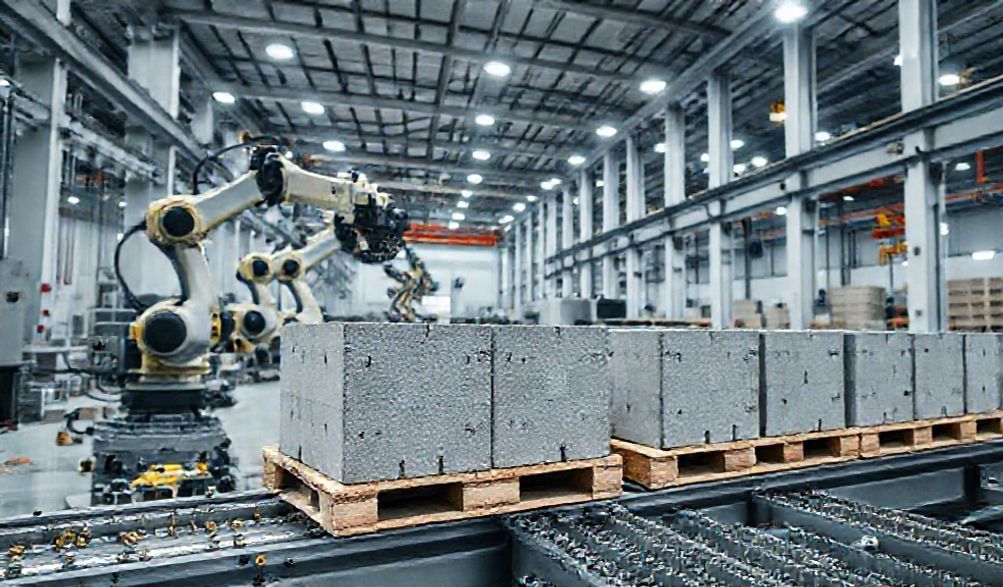
The Fully Automatic Block Machine: Revolutionizing Construction Efficiency
The modern construction industry operates on a relentless triad: speed, consistency, and cost-effectiveness. In an era of ambitious infrastructure projects and urgent housing needs, the pressure to deliver more, faster, and better has never been greater. At the heart of this productivity challenge lies a fundamental component: the humble concrete block. For decades, its production was a bottleneck—labor-intensive, variable in quality, and difficult to scale. Enter the technological linchpin transforming this landscape: the fully automatic block machine.
Traditional methods, whether manual or semi-automatic, are fraught with limitations. They are heavily dependent on skilled labor, a resource increasingly scarce and costly. Inconsistency in mixing and compaction leads to variable block strength and size, causing waste on the production line and complications on the job site. Scaling production often means multiplying problems, not solutions.
This guide presents the fully automatic block machine as the comprehensive answer. It is not merely a machine but a computer-controlled, integrated production line that autonomously manages the entire process—from raw material feeding to cured block stacking—with precision and minimal human intervention. Our analysis is grounded in industry engineering principles, operational data, and proven best practices, designed to equip business owners, project managers, and investors with authoritative knowledge.
By the end of this post, you will have a complete understanding of the machine’s operational genius, its undeniable return on investment, the critical factors for selecting the right model, and its pivotal role in building a more efficient and sustainable future. Let’s delve into the engine of modern construction.
How a Fully Automatic Block Machine Works: A Step-by-Step Breakdown
To truly appreciate the value of a fully automatic block machine, one must understand the seamless symphony of its automated process. Imagine a meticulously choreographed production line where raw materials enter at one end and finished, palletized blocks exit at the other. This continuous, closed-loop system is the hallmark of full automation. Here’s a detailed breakdown of each stage.
The Integrated Production Line: From Raw Material to Finished Block
1. Automated Batching & Mixing
The foundation of quality block production is precise batching. This process eliminates guesswork.
* Silos & Conveyors: Raw materials like cement, fly ash, and aggregates are stored in dedicated silos. Automated conveyor belts or screw feeders transport them to the mixing station.
* Computerized Weigh-Batching: A central Programmable Logic Controller (PLC) commands precise measurements. Each material is weighed electronically to adhere to the exact mix design formula, ensuring optimal strength and consistency batch after batch.
* Mixing: Water and any admixtures are added automatically. The mixer, often a high-efficiency pan or planetary type, blends everything into a homogeneous, ready-to-compact concrete mix.
2. Molding & High-Pressure Compaction
This is where the block takes shape. The mixed concrete is fed into the machine’s mold box.
* Hydraulic/Vibration Press: A combination of high-frequency vibration and immense hydraulic pressure (ranging from 100 to over 400 tons) compacts the concrete. This dual action removes air pockets and densely packs the material.
* PLC-Controlled Consistency: The pressure, vibration frequency, and duration are pre-programmed into the PLC. This guarantees every single block has identical density, dimensional accuracy, and green strength (initial strength out of the mold).
3. Curing: The Key to Strength
Freshly molded blocks are too fragile for handling. Curing is the controlled process that develops their final strength.
* Automated Curing Chambers: Blocks are transferred via conveyor into specialized curing chambers. These are a far cry from natural sun-curing.
* Controlled Environment: The chamber creates an optimized environment of heat and humidity, often using low-pressure steam. This accelerates the chemical hydration process of the cement.
* Result: Blocks achieve their target compressive strength (e.g., meeting ASTM C90 standards) in 18-24 hours instead of 28 days, dramatically speeding up production cycles and reducing space needed for storage.
4. Palletizing & Robotic Handling
Once cured, blocks are ready for dispatch.
* Automated Depalletizing: The blocks, which were formed on pallets, are automatically separated from them. Pallets are cleaned and recycled back to the molding station.
* Robotic Organization: Robotic arms or automatic stackers lift and arrange blocks into precise, stable cubes on wooden pallets or steel stillages, ready for forklift transport. This eliminates back-breaking manual labor and prevents damage.
5. The Central Nervous System: PLC Control Panel
Orchestrating this entire ballet is the PLC-based control panel.
* Touch-Screen Interface: Operators interact with the machine through a user-friendly touchscreen. They can monitor production rates, adjust mix parameters, change block designs, and view real-time diagnostics.
* Diagnostics & Safety: The system provides alerts for any issues, from a low material level in a silo to a hydraulic pressure fault, enabling proactive maintenance and minimizing downtime.
Top 5 Advantages of Investing in a Fully Automatic System
The decision to invest in full automation is significant. The justification, however, is clear and compelling, offering a transformative return on investment that extends far beyond simple output.
Unmatched Production Capacity & Consistency
- Quantifiable Output: While semi-automatic machines may produce 1,000-2,000 blocks per 8-hour shift, a fully automatic line can produce 8,000 to 20,000+ blocks in the same timeframe, depending on the model and block type.
- Zero Human Error: Every action is programmed. This means every block in a production run has the same dimensions, weight, and—most importantly—compressive strength. This uniformity is impossible to achieve with manual labor and is critical for structural integrity and efficient bricklaying.
Dramatic Reduction in Labor Costs & Dependence
- Shift in Labor Profile: A traditional yard might require 15-20 workers for mixing, feeding, handling, and curing. A fully automatic system typically needs only 2-3 skilled operators to monitor the PLC, perform quality checks, and manage logistics.
- Long-Term Savings: This drastically reduces recurring payroll expenses, management overhead, and vulnerability to labor shortages or skill gaps. The investment shifts from variable labor costs to fixed, depreciable capital.
Superior Product Quality & Material Efficiency
- Higher Compressive Strength: The high-pressure compaction creates a denser block microstructure. It’s common for automatically produced blocks to exhibit 15-25% higher compressive strength than manually produced equivalents from the same mix.
- Minimized Waste: Precise computerized batching ensures no excess raw materials are used. Consistent quality also means a near-zero rejection rate, eliminating the waste of faulty blocks.
Enhanced Workplace Safety
Automation fundamentally redesigns workplace safety.
* It removes personnel from repetitive, strenuous tasks like shoveling mix, lifting heavy molds, and handling wet blocks.
* It reduces exposure to vibration, dust, and the risk of crush injuries.
* This leads to a safer work environment, lower insurance premiums, and improved employee morale.
Long-Term Operational Data & Traceability
The digital core of these machines provides a powerful management tool.
* Every production batch can be logged with data: mix ratios, compaction pressure, curing temperature, and final output count.
* This enables unparalleled quality control, simplifies inventory management, and provides data for continuous process optimization. You can trace any block back to its production parameters.
Choosing the Right Fully Automatic Block Machine: A Buyer’s Guide
The “best” machine is not the most expensive or the largest; it is the one that aligns perfectly with your specific business needs, raw materials, and growth trajectory. Here is a framework for making an informed decision.
Critical Specifications to Evaluate
- Output Capacity: Don’t just look at “blocks per hour.” Understand the capacity for the specific block type and size you need (e.g., 6-inch hollow blocks vs. solid pavers).
- Versatility: Can it produce multiple products? Check the mold-changing mechanism—is it manual, semi-automatic, or fully automatic? Quick mold changeovers maximize uptime.
- Power & Footprint: Verify the total electrical power (in kW) required and the physical space needed for the entire line, including curing and storage. Ensure your site can accommodate it.
Key Manufacturer Selection Criteria
Your relationship with the manufacturer is as important as the machine itself.
* Reputation & Track Record: Research their history, client testimonials, and presence in projects similar to yours.
* Support Ecosystem: Confirm the availability of local technical support, a reliable spare parts supply chain, and comprehensive operator/maintenance training programs. A machine is useless if it sits idle waiting for a specialist or a part.
Cost Analysis: Beyond the Initial Purchase Price
Adopt a Total Cost of Ownership (TCO) perspective.
1. Capital Expenditure (CapEx): Purchase price, shipping, installation, and commissioning.
2. Operational Expenditure (OpEx): Energy consumption, routine maintenance, spare parts, and any service contracts.
3. Soft Costs: Operator training and potential production ramp-up time.
A machine with a slightly higher upfront cost but superior energy efficiency and a robust support package often has a lower TCO.
The Importance of Raw Material Compatibility
The machine must be calibrated for what you have.
* Consult with the manufacturer about your locally available aggregates (crushed stone, sand, quarry dust) and potential cement substitutes (fly ash, slag).
* A reputable supplier will often test your raw materials and recommend the optimal mix design and machine settings to ensure success from day one.
The Future is Automated & Sustainable
Fully automatic block machines are not the end point; they are the foundational platform for the next evolution of the construction materials industry.
Integration with Industry 4.0 and IoT
The next generation of machines are smart factories in miniature.
* Remote Monitoring: Managers can view real-time production data, machine health, and output counts from a smartphone or office computer.
* Predictive Maintenance: Sensors can predict component failure (e.g., a weakening hydraulic hose) before it causes downtime, scheduling maintenance proactively.
* Data Analytics: Cloud-based analysis of production data can suggest optimizations for yield, energy use, and material efficiency.
Pioneering Green Construction
Automation is a key driver of sustainability.
* Efficient Use of By-Products: These machines excel at using industrial by-products like fly ash (from coal plants) or slag (from steel production) as primary raw materials, diverting waste from landfills.
* Producing Green Building Blocks: The resulting blocks are not only strong but often contribute to points for green building certifications like LEED or BREEAM due to their recycled content and energy-efficient production.
* Reduced On-Site Waste: Dimensionally accurate blocks require less mortar and generate less construction waste.
Meeting the Demands of Global Infrastructure
From mass affordable housing projects to large-scale commercial developments, the scalability, speed, and consistency of fully automatic production make it the only viable solution to meet the world’s growing infrastructure demands on time and on budget.
Frequently Asked Questions (FAQ) About Fully Automatic Block Machines
What is the typical payback period for a fully automatic block machine?
While it varies based on scale, local labor costs, and market demand, most medium to large-scale operations report a return on investment within 1.5 to 3 years. The primary drivers are the dramatic reduction in direct labor costs and the increased revenue from higher, consistent output. A detailed financial projection based on your specific numbers is essential.
What level of technical skill is required to operate and maintain one?
- Operation: The PLC interface is designed for user-friendliness. With the manufacturer’s training (typically 1-2 weeks), a person with basic mechanical aptitude can learn to operate the system, change parameters, and perform routine monitoring.
- Maintenance: Daily and weekly checks (lubrication, cleaning) are straightforward. More complex maintenance requires electromechanical skills. This is why choosing a manufacturer with strong local support is critical—they become your partner in maintenance.
Can these machines produce different block types and sizes?
Yes, versatility is a major advantage. Most advanced models can produce a wide range of products: hollow blocks, solid blocks, paving stones, interlocking bricks, and curb stones. By changing the mold and adjusting the PLC program for that mold’s parameters, you can switch between products. The speed and ease of this changeover is a key differentiator between models.
How does the block quality compare to traditionally made blocks?
Quality is typically superior and far more consistent. Automated high-pressure compaction creates a denser, stronger block with excellent dimensional tolerance. This leads to faster, cleaner construction with less mortar usage, reduced skilled labor time on-site, and inherently more stable structures.
Are fully automatic machines suitable for small-scale businesses?
The significant capital investment makes them most suitable for medium to large-scale production or small businesses with a confirmed, rapid growth trajectory. Small operations should conduct rigorous demand forecasting. A strategic approach is to consider manufacturers offering modular systems that allow you to start with a semi-automatic core and upgrade to full automation later.
Conclusion
The fully automatic block machine represents a paradigm shift in construction materials manufacturing. It is a solution that directly addresses the core challenges of the industry: the need for speed, unwavering quality, cost control, and safer working conditions. We have explored its intricate, automated workflow, the compelling financial and operational advantages it delivers, and the careful considerations required for a successful investment.
Ultimately, this investment transcends the purchase of equipment. It is an investment in a strategic business asset that future-proofs your operation. It builds resilience against labor market fluctuations, empowers you to meet the highest quality standards consistently, and positions you competitively in a market that increasingly values efficiency and sustainability.
Ready to Calculate Your ROI? Contact us for a personalized consultation and a detailed production analysis tailored to your specific project goals and local market conditions.
Want to See It in Action? Request access to our comprehensive case studies and video demonstrations of our fully automatic lines operating in projects similar to yours.
We are committed to providing the expert, transparent information and support needed to drive growth and innovation in the construction industry, one precise block at a time.