
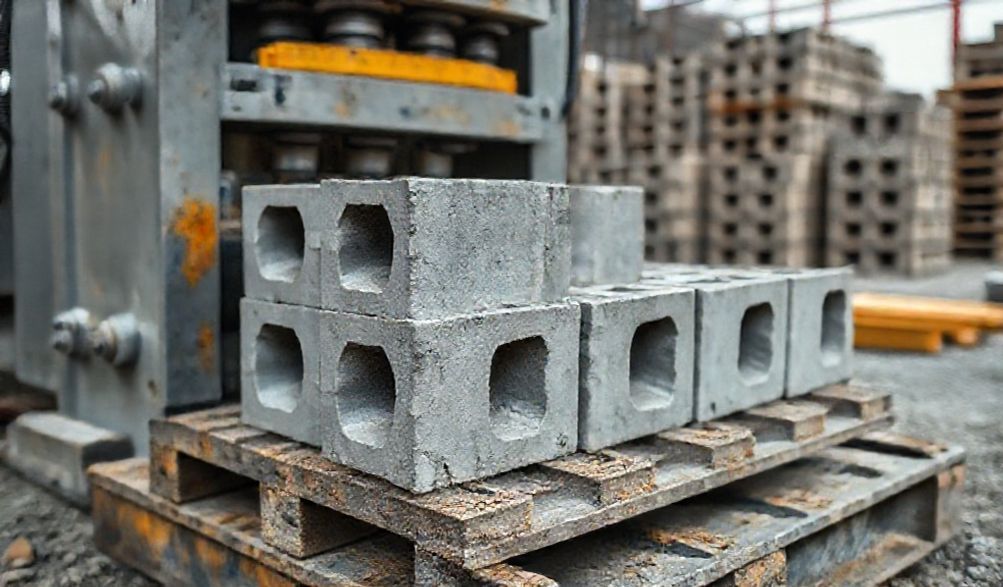
The QT4-24 Concrete Block Machine: A Complete Guide to Semi-Automatic Brick Production
Introduction
You’re looking at the foundation of a business—literally. Whether you’re a contractor aiming to control material costs, an entrepreneur eyeing the booming construction market, or a project manager sourcing materials for a community development, the challenge is the same: finding reliable, affordable brick and block production. The solution often lies not in outsourcing, but in bringing production in-house. But with so many machines on the market, how do you choose the right one without over-investing or under-delivering?
This guide cuts through the noise. We provide a comprehensive, unbiased, and practical analysis of the QT4-24 concrete block machine. Our insights are compiled from technical specifications, operator manuals, and real-world production data to give you a clear picture of what this machine can—and cannot—do.
We understand that investing in machinery is a significant decision with real financial implications. Our goal is to equip you with a thorough breakdown of capabilities, costs, and critical considerations, helping you move forward with confidence.
So, what is the QT4-24? In essence, it’s a robust, cost-effective, and highly popular semi-automatic concrete block making machine. It’s engineered to deliver steady, profitable production for small to medium-scale operations, offering a perfect balance between manual effort and mechanical efficiency. Let’s dive into the details.
Understanding the QT4-24: Core Specifications and Design
To truly evaluate the QT4-24, you need to start with its core engineering. This isn’t just a piece of equipment; it’s a production system with specific requirements and outputs.
Key Technical Specifications at a Glance
The QT4-24 is built with a clear set of parameters that define its operation. Here are the critical numbers:
- Power Requirement: Typically operates on a 13.2 kW, 3-phase electric motor. This is a crucial consideration for your workshop or yard setup.
- Production Output: Its theoretical capacity is impressive, often cited as 4,000 to 5,000 pieces of standard hollow blocks (400x200x200mm) per 8-hour shift. (We’ll discuss realistic outputs later).
- Machine Dimensions & Weight: It boasts a compact but solid footprint, usually around ~3.5m (L) x 1.8m (W) x 2.8m (H) and weighs several tons, indicating a sturdy, vibration-resistant build.
- Pallet Size & Cycle Time: It uses a standard 850mm x 450mm pallet. The molding cycle—including feeding, vibration, and pressing—is remarkably fast, often between 15-20 seconds.
The “Semi-Automatic” Operation Explained
The term “semi-automatic” is key to understanding the QT4-24’s place in the market.
- What’s Automated: The core block-forming process is fully mechanized. Once the operator initiates the cycle, the machine automatically performs high-frequency vibration to compact the concrete, applies hydraulic pressure to shape the block, and lifts the mold to reveal the finished product on the pallet.
- What’s Manual: The human input involves two main tasks:
- Feeding: Workers manually load the prepared concrete mix into the mold hopper.
- Block Removal: After the cycle, workers manually remove the pallet carrying the fresh, wet block and transport it to the curing area.
- Crew Size: This operational model typically requires a crew of 3 to 5 people for smooth, efficient workflow: one feeding, one operating controls, and one or two others handling block removal, pallet return, and material preparation.
What Can You Produce with a QT4-24 Machine?
The versatility of the QT4-24 is one of its strongest selling points. By simply changing the mold, you can create a diverse product catalog to meet various market demands.
Standard Block Types and Sizes
This machine is not limited to standard hollow blocks. With the appropriate molds, you can produce:
- Hollow Blocks: The most common product, in various thicknesses (100mm, 150mm, 200mm).
- Solid Blocks: For higher strength requirements in foundations and heavy-duty walls.
- Interlocking Paving Stones: For driveways, walkways, and patios.
- Curb Stones & Garden Edging: For landscaping and road projects.
| Product Type | Common Size (mm) | Typical Use Case |
| :— | :— | :— |
| Hollow Block | 400x200x200 | Main structural walls |
| Hollow Block | 400x150x200 | Partition walls |
| Solid Block | 400x200x200 | Foundations, pillars |
| Paving Stone | 200x100x60 | Patios, pedestrian paths |
Ideal Applications and Project Scale
The QT4-24 excels in specific scenarios:
- Small to Medium Construction Firms: Produce blocks on-demand for your own housing or building projects, slashing material costs and lead times.
- Start-up Block Yards: An affordable entry point for entrepreneurs to establish a local block supply business.
- Community & Infrastructure Projects: Ideal for producing materials locally for schools, clinics, or road developments, especially in areas with limited supply chains.
- Important Note: The QT4-24 is a productivity workhorse, but it is not designed for massive, 24/7 fully automated industrial production. It fills the vital niche between manual machines and expensive, high-speed automatic lines.
Analyzing the Pros and Cons of the QT4-24
A balanced view is essential for making a smart investment. Let’s weigh the advantages against the limitations.
Advantages: Why It’s a Popular Choice
- Lower Initial Investment: This is the primary advantage. The QT4-24 costs a fraction of a fully automatic production line, making it accessible for startups and small businesses.
- Ease of Operation & Maintenance: Its mechanical system is simpler. Training staff is straightforward, and common spare parts (bearings, springs) are widely available and inexpensive.
- Operational Flexibility: Changing molds to switch product types can be done relatively quickly, allowing you to respond to custom orders or market trends without major downtime.
- Proven Durability: Built with heavy-duty steel and robust components, it is designed to withstand the rigors of daily production in a dusty, outdoor environment for years.
Limitations and Considerations
- Labor Intensive: Compared to an automatic machine that integrates block removal and stacking, the QT4-24 requires consistent manual labor. Your profitability is tied to labor costs and management.
- Lower Output Ceiling: While its output is substantial, it has a physical limit based on the manual cycle. It cannot match the 10,000+ blocks/day output of a fully automated pallet-cycling system.
- Consistency Relies on Skill: The final block quality—density, strength, finish—is more dependent on the operator’s skill in preparing the perfect mix and managing the process than on a fully computerized system.
The Real Cost of Ownership: Beyond the Sticker Price
The purchase price is just the first line item. A successful operation requires a clear understanding of the total investment.
Initial Purchase and Setup Costs
- Machine Price: The QT4-24 price varies significantly by region, supplier, and configuration. As a rough guide, expect a range. Always get multiple, detailed quotes.
- Setup Costs: Don’t overlook:
- Foundation: A level, reinforced concrete slab is mandatory.
- Power Connection: Ensuring proper 3-phase power to your site.
- Initial Molds: Your first set of 2-3 molds (e.g., hollow block, paving stone) is an additional cost.
Operational and Hidden Costs
- Raw Materials: This is your largest recurring cost. You must calculate the cost of cement, sand, and aggregate per block. Efficiency in mix design directly impacts profit margins.
- Labor: Budget for a full crew’s wages. Efficient workflow management is key to controlling this cost.
- Maintenance & Parts: While low, budget for:
- Regular lubrication and cleaning supplies.
- Wear parts: Pallets eventually wear out, vibration motor springs need replacement, and bolts may loosen.
- Crucial Trust Element: When speaking with suppliers, don’t just negotiate price. Ask pointed questions: What is your after-sales service structure? How quickly can you ship spare parts? Is technical support available? A slightly higher price from a supplier with excellent support is often a wiser long-term investment.
Setting Up for Success: Installation, Operation, and Maintenance
Proper setup and routine care are what separate a profitable, long-lasting operation from a problematic one.
Site Requirements and Installation Guide
- Space Planning: You need space for more than just the machine.
- Machine area (with clearance for operation).
- Raw material storage (sand, aggregate bays).
- Mixing station (concrete mixer).
- Curing Area: This is critical. You need a large, shaded, and damp area to store fresh blocks for 7-14 days for proper strength development.
- Block stacking yard for finished inventory.
- Foundation: The machine must be bolted onto a perfectly level, high-strength concrete slab (often >20cm thick). An uneven foundation causes misalignment, wear, and poor block quality.
Best Practices for Efficient Operation
- The Concrete Mix: A well-graded mix with the right water-cement ratio is vital. A common starting mix is 1 part cement, 3 parts sand, and 5 parts aggregate (1:3:5), but this must be optimized for your local materials.
- The Production Cycle:
- Feeding: Fill the mold cavity evenly with the semi-dry concrete mix.
- Vibration & Pressing: Start the cycle. The mold vibrates intensely to remove air pockets, followed by a hydraulic press applying top pressure.
- Mold Lifting: The mold head lifts vertically, leaving the perfectly formed block on the pallet below.
- Block Removal: Workers carefully move the pallet to a curing cart or rack.
- Quality Tip: Consistent feeding amount and mix consistency are the secrets to producing blocks with uniform density and strength.
Essential Routine Maintenance Checklist
- Daily:
- Clean the machine thoroughly at the end of the shift, removing all concrete residue.
- Check and lubricate all guide rods and moving parts as per the manual.
- Inspect and tighten any loose bolts or nuts.
- Weekly/Monthly:
- Inspect vibration motors for secure mounting and wear.
- Check the hydraulic system for leaks and ensure oil levels are correct.
- Examine wear parts like mold liners, pallets, and springs for excessive wear.
Making the Decision: Is the QT4-24 Right for You?
Ask yourself these key questions to determine if the QT4-24 aligns with your goals:
- Volume: What is my target daily/weekly production? Is 2,500-3,500 blocks per day sufficient for my business plan or project needs?
- Budget: Do I have capital for the machine, setup, and at least 3-6 months of operational costs (materials, labor)?
- Resources: Do I have reliable 3-phase power and access to a trainable workforce I can manage effectively?
- Market: What block types are in demand locally? Does the QT4-24’s product range cover them?
Alternative Scenarios:
* Consider a smaller, manual press if your daily need is under 1,000 blocks and capital is extremely limited.
* Look into a fully automatic block-making line only if you have confirmed contracts requiring 8,000+ blocks daily, a larger budget, and technical capacity.
FAQ Section
Q: What is the actual, realistic production output per day for a QT4-24?
A: The theoretical 4,000-5,000 blocks is under ideal, non-stop conditions. In practice, factoring in mold changes, breaks, and workflow efficiency, a well-run operation can realistically produce 2,500 to 3,500 quality blocks in an 8-hour shift.
Q: Can one person operate the QT4-24 machine?
A: No, it is not a one-person machine. It requires a team. One person feeds, another operates the controls and manages the cycle, and at least one more is needed to remove the heavy blocks and pallets and manage the curing area safely and efficiently.
Q: How long does it take to learn to operate this machine?
A: The basic controls and cycle can be learned by a competent operator in 2-3 days. However, mastering the precise concrete mix, achieving optimal vibration timing, and maximizing the workflow efficiency for top output and quality typically takes several weeks of hands-on practice.
Q: Where can I find molds for special block designs?
A: Most QT4-24 manufacturers offer a range of standard molds. For custom designs (special patterns, logos), you can order from them or from specialized mold factories. Always confirm the mold mounting system is compatible with your specific QT4-24 model.
Q: What is the expected lifespan of a QT4-24?
A: With diligent maintenance and operation within its design limits, the core machine frame and structure can last 10 years or more. Wear parts like pallets, springs, and mold liners are consumables and may need replacement every 1-3 years depending on production volume.
Conclusion
The QT4-24 concrete block machine stands as a testament to practical, accessible engineering. It is the definitive workhorse for the semi-automatic sector, offering a proven path to profitability for those entering block manufacturing or seeking to vertically integrate their construction business. Its strength lies in its balance: substantial capability without overwhelming complexity or cost.
Our final, most crucial piece of advice is this: see it in action. If possible, visit a supplier’s demonstration yard or, even better, an existing block yard using the QT4-24. There is no substitute for watching the cycle, hearing the machine, and speaking directly with an operator about their experiences.
Arm yourself with the specifications and considerations from this guide. Use them to build a detailed business plan and to ask informed, tough questions when you contact suppliers. Your focus should extend beyond the initial price tag to the total value offered—including training, warranty, and long-term parts and service support. Make your investment a foundation for growth.