
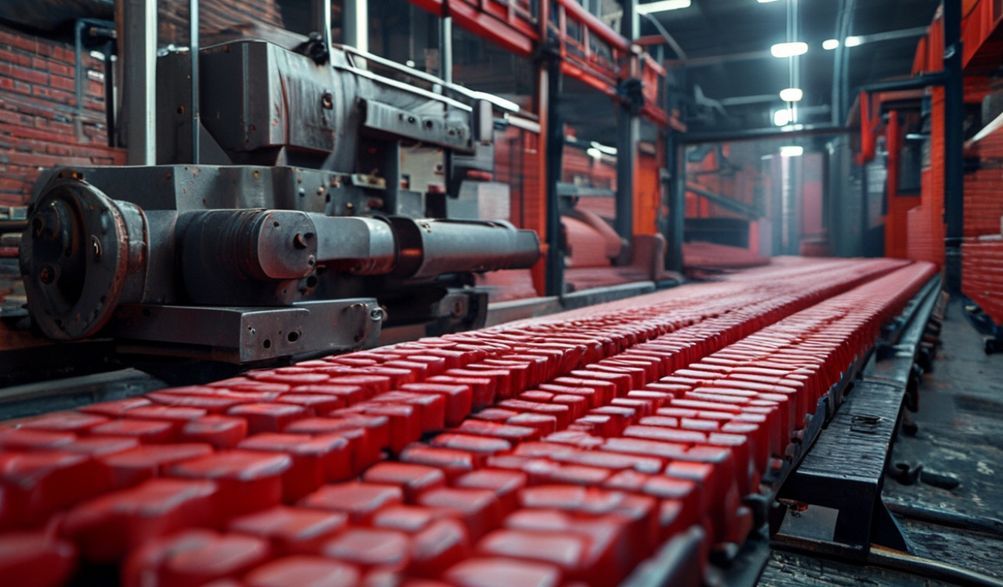
The Ultimate Guide to Brick Machine Equipment: Types, Uses, and How to Choose
Introduction
The global construction industry lays over 1.5 trillion bricks annually, a staggering figure that underscores the material’s enduring role in building our world. Yet, behind this number lies a quiet revolution: the shift from artisanal, labor-intensive production to precise, high-output manufacturing powered by advanced machinery. Choosing the right equipment is no longer a simple purchase; it’s a critical strategic decision that determines product quality, project viability, and business profitability.
With over two decades of experience in the construction machinery sector, we have guided countless businesses—from startups to industrial plants—through the complex landscape of brick production technology. This guide distills that hands-on expertise into a clear, actionable resource. We understand the challenges you face: navigating high capital costs, deciphering technical specifications, matching machinery to fluctuating production needs, and sifting through a global market of suppliers.
This comprehensive guide is designed to cut through the noise. We will provide you with unbiased, detailed information on every facet of brick machine equipment, empowering you to make a confident, informed decision that ensures a strong return on your investment. Let’s build a solid foundation for your success.
Understanding Brick Machine Equipment: Core Concepts and Benefits
Before diving into types and models, it’s essential to grasp what modern brick machinery is and why it has become indispensable.
What is Brick Machine Equipment? (A Clear Definition)
Brick machine equipment encompasses the spectrum of machinery used to manufacture bricks, blocks, and pavers from raw materials like clay, concrete, fly ash, or soil. It automates and mechanizes the core processes of mixing, molding, compacting, and sometimes curing, transforming raw feedstock into standardized, structural building units.
This stands in stark contrast to historical manual methods, which were defined by inconsistency, weather dependency, and high physical labor. Today’s machinery brings factory-like precision and repeatability to a process that has existed for millennia.
Key Advantages of Modern Brick Machinery
The adoption of specialized equipment offers transformative benefits:
- Unmatched Consistency & Quality: Machines produce bricks with uniform dimensions, density, and compressive strength. This precision is critical for structural integrity, simplifies bricklaying, and reduces material waste on-site.
- Massive Production Output: From thousands to tens of thousands of bricks per day, machinery meets the demands of large-scale housing projects, commercial developments, and infrastructure works that would be impossible manually.
- Significant Labor & Cost Efficiency: While the initial investment is notable, machinery drastically reduces long-term reliance on large manual crews. This lowers per-unit production costs, improves predictability, and mitigates labor shortage risks.
- Broad Material Versatility: Modern equipment can be configured to process a wide array of materials, from traditional clay and shale to cement-based concrete, stabilized soil, and industrial by-products like fly ash.
- Enhanced Sustainability Profile: Machinery enables the efficient use of recycled materials (e.g., fly ash, crushed construction waste). Precise material use reduces waste, and some processes, like producing compressed earth blocks, have a very low carbon footprint.
Types of Brick Machine Equipment: A Detailed Breakdown
The market offers a diverse range of machines. Categorizing them helps clarify their best applications.
By Operation Method
This classification is primarily about the level of human intervention required.
- Manual Brick Machines: These are simple, lever- or hand-operated presses. They are low-cost, portable, and require no power source, but output is very low (e.g., 100-500 bricks per day). Ideal for very small-scale, community-based projects or in regions with unreliable electricity.
- Semi-Automatic Brick Machines: This middle-ground category involves machines where the operator feeds materials and initiates cycles, but the molding and compaction are powered (electrically or hydraulically). They offer a good balance between affordability and improved output (e.g., 1,000-4,000 bricks per day), suitable for small to medium businesses.
- Fully Automatic Brick Plants: These are integrated production lines with automated material feeding, mixing, molding, curing, and palletizing. Controlled by PLC systems, they require minimal human oversight and achieve the highest outputs (10,000+ bricks per day). The investment is substantial but justified for large-scale industrial production.
By Brick Type Produced
The end product dictates the machine’s design and process.
- Clay Brick Making Machines: These typically involve an extruder. A pug mill mixes and conditions the clay, which is then forced through a die to form a continuous column of clay, which is then cut into individual bricks. They are the standard for traditional fired clay bricks.
- Concrete Brick/Block Machines: These use a combination of vibration and high pressure to compact damp concrete mix into molds. Key processes include immediate demolding and subsequent curing (often in steam chambers) to achieve full strength. They produce concrete hollow blocks, solid blocks, and pavers.
- Interlocking Brick Machines: Designed for soil-cement or compressed earth blocks (CEBs), these machines create bricks with interlocking profiles that can be dry-stacked without mortar. They are popular for sustainable, low-cost housing projects.
- Fly Ash Brick Machines: A subset of concrete machines optimized to use a high percentage of fly ash (a coal combustion by-product) with less cement. They represent a key eco-friendly production method, turning waste into valuable building material.
By Driving Force
This refers to the core compaction mechanism.
- Hydraulic Brick Machines: Utilize hydraulic cylinders to apply immense, controlled pressure (measured in tons). This results in bricks with very high density and strength. Hydraulic systems are common in high-quality block machines and interlocking presses, allowing for precise control over the pressing force.
- Mechanical/Vibration Brick Machines: Primarily used for concrete products, these machines use eccentric weights to create high-frequency vibration that settles the concrete mix tightly into the mold. They are often combined with a simultaneous pressing action.
Critical Factors for Choosing the Right Brick Machine
Selecting equipment is not about finding the “best” machine, but the right one for your specific context. Here’s a practical framework for your decision.
Assessing Your Production Needs
Start with a clear internal analysis:
- Bricks Per Hour/Day Requirement: Be realistic about your current and near-future (2-3 year) demand. Buying significantly under- or over-capacity is a common and costly mistake. Consider project pipelines and market sales.
- Brick Type & Specifications: Precisely define what you will produce: dimensions, hollow or solid, compressive strength class (e.g., 15MPa, 25MPa), and surface finish. This directly dictates the machine and mold type.
- Raw Material Availability: Audit local material sources. Is quality clay abundant? Is cement affordable and readily available? Can you source fly ash from a nearby power plant? The machine must be compatible with your most economical feedstock.
Machine Specifications and Features
With your needs defined, evaluate the technical offerings:
- Pressure Capacity: For hydraulic machines, this is paramount. Higher pressure (e.g., 150 tons vs. 50 tons) generally produces stronger, denser bricks suitable for load-bearing applications.
- Mold Versatility & Changeover Ease: If you plan to produce multiple brick types, investigate how quickly and easily molds can be swapped. Ask about the cost of additional molds.
- Automation Level & Control System: Match the technology to your operators’ skill level. A semi-automatic machine might be more manageable than a complex fully-automatic PLC system if technical support is limited.
- Power Requirements: Verify the electrical supply (voltage, phase) or diesel engine specifications. Factor in ongoing energy costs, which can be significant for high-vibration or hydraulic systems.
Supplier Evaluation for Trustworthiness
The manufacturer or dealer is as important as the machine itself.
- Manufacturer Reputation & History: Research how long they have been in business. Look for established companies with a track record. Are they known for a particular type of machine?
- After-Sales Service & Support: This is non-negotiable. Inquire explicitly about installation supervision, operator training programs, spare parts inventory, and technical support response times. A machine without support is a future liability.
- Warranty & Client Testimonials: Scrutinize the warranty terms—what is covered and for how long? Seek out and contact past clients, especially those in a similar region or business scale, for firsthand feedback on performance and supplier reliability.
Operational Best Practices and Maintenance
Your investment’s longevity and productivity depend on proper care from day one.
Essential Safety Protocols
- Ensure all operators complete thorough, manufacturer-approved training.
- Never disable or bypass machine guards and safety interlocks.
- Establish lockout/tagout procedures for maintenance.
- Mandate the use of personal protective equipment (PPE): safety glasses, hearing protection, and steel-toed boots.
Routine Maintenance Checklist
Preventive maintenance is far cheaper than emergency repairs.
- Daily: Clean the machine, especially molds and hoppers. Check hydraulic oil levels and for leaks. Inspect bolts and fittings for tightness.
- Weekly: Lubricate all moving parts as per the manual. Check wear parts like mixer blades or press heads. Clean or replace air filters.
- Monthly: Conduct a more thorough inspection of hydraulic hoses, electrical connections, and vibration mounts. Test safety devices.
Troubleshooting Common Issues
- Brick Cracking: Often caused by incorrect moisture content in the raw mix, excessive pressure, or improper curing (for concrete). Re-check your material recipe and process parameters.
- Poor Compaction/Weak Bricks: Likely insufficient pressure/vibration time, incorrect mix proportions, or worn compaction parts. Verify machine settings and mix design.
- Machine Jamming: Usually due to foreign objects in the material, over-filling the feed hopper, or a misaligned mold. Stop the machine immediately, lock out power, and clear the obstruction carefully.
The Future of Brick Manufacturing Technology
The industry continues to evolve towards greater efficiency and intelligence.
Trends Shaping the Industry
- IoT and Smart Machines: Sensors embedded in equipment will monitor performance, predict maintenance needs (preventing breakdowns), and optimize energy and material use through data analytics. Remote diagnostics will become standard.
- Enhanced Sustainability: The drive for circular economy principles will lead to machines designed for 100% recycled aggregate use, near-zero water consumption, and even carbon capture integration during curing processes.
- Advanced Robotics: Robots will take over more material handling, precise mold cleaning, and the stacking/packaging of finished bricks, further reducing labor requirements and improving workplace safety.
FAQ Section
Q1: What is the average cost range for a brick making machine?
A: Costs vary dramatically. A small manual press can start at a few thousand dollars. A robust semi-automatic machine may range from $15,000 to $50,000. Fully automatic production lines can cost from $100,000 to over $1 million. Always get detailed, itemized quotes based on your specifications.
Q2: Can one machine produce different types and sizes of bricks?
A: Many machines, particularly semi-automatic and automatic models, are designed with interchangeable molds. This allows production of different sizes and shapes (e.g., switching from a solid block to a hollow block mold). Crucially, you must confirm this capability and the associated cost of additional molds with your supplier before purchasing.
Q3: What is the typical payback period for an investment in brick machine equipment?
A: The payback period is highly variable, typically ranging from 1 to 4 years. It depends on the machine’s capacity and cost, local market demand and brick pricing, your operational efficiency, and how well you utilize the machine’s output. Creating a detailed business plan with realistic financial projections is essential.
Q4: How important is operator training?
A: It is critical. Proper training ensures operator safety, maximizes brick quality and consistency, extends the machine’s service life, and helps you achieve the rated production output. Prioritize suppliers who offer comprehensive, hands-on training as part of the purchase package.
Q5: Are there financing options available for this equipment?
A: Yes. Many reputable manufacturers have partnerships with financial institutions to offer equipment financing or leasing plans. Third-party commercial lenders also provide such services. Exploring financing options can improve cash flow and is a key point for discussion during procurement negotiations.
Conclusion
Selecting the ideal brick machine equipment is a multifaceted process that hinges on a clear understanding of your production goals, the technical nuances of different machinery types, and the reliability of the supplier behind it. From defining your needs for output and brick specifications to implementing rigorous operational and maintenance protocols, each step is crucial for long-term profitability and success.
The right machine is more than a piece of hardware; it’s the engine of your productivity and quality. It transforms raw materials into the very building blocks of infrastructure and community. Investing time in thorough research, as you have done by reading this guide, and deliberately partnering with a credible, supportive supplier is the foundational strategy for a thriving brick production venture.
Ready to move from planning to action? Download our comprehensive Brick Machine Buyer’s Checklist to systematically evaluate your options, or contact our team of machinery consultants for a personalized discussion tailored to your project’s unique blueprint.