
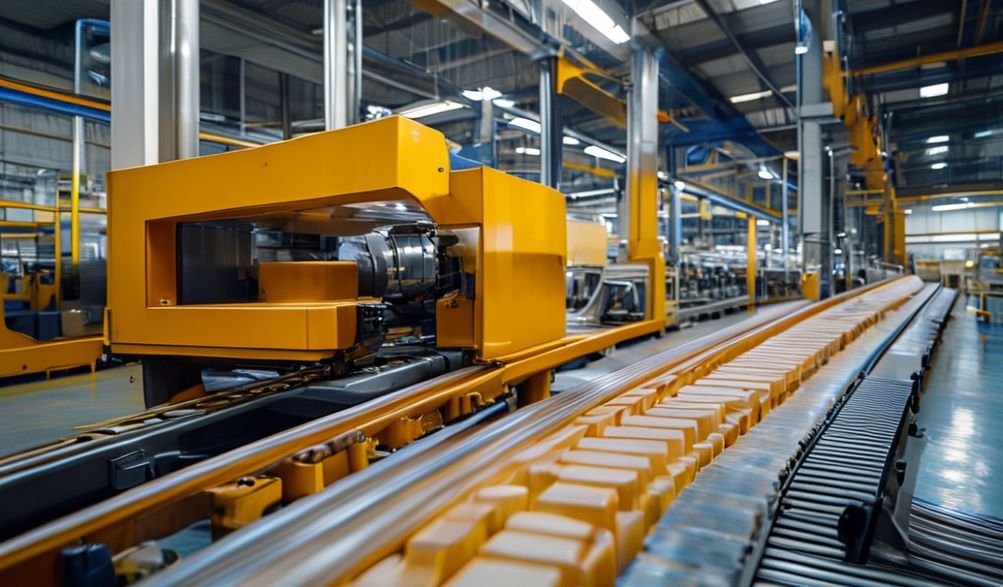
The Ultimate Guide to Bricks Block Making Machines: Inside the FUDA Brick Making Factory
Introduction
The global construction landscape is built on a foundation of innovation, demanding sustainable, high-quality materials produced efficiently. At the heart of this modern building revolution lies the automated brick and block making machine—a piece of technology that transforms raw materials into the very building blocks of our infrastructure. For businesses looking to capitalize on this demand, the choice of machinery and manufacturer is the single most critical decision.
Enter the FUDA Brick Making Factory. With decades of dedicated experience, FUDA has cemented its reputation as an industry leader in designing, engineering, and manufacturing robust, high-performance block making machinery. Their name is synonymous with innovation, reliability, and a deep understanding of the production challenges faced by businesses from small enterprises to large-scale industrial plants.
This guide is crafted from extensive industry knowledge, technical analysis, and insights into modern manufacturing principles. Our purpose is to serve as your comprehensive resource, demystifying the technology, detailing the tangible benefits, and illustrating why a partnership with an established factory like FUDA is a strategic move for long-term growth. Whether you are a construction business owner, a civil engineer, a project manager, or an entrepreneur eyeing the building materials sector, this post will equip you with the information needed to make a confident, informed investment.
Understanding Bricks Block Making Machines: Core Technology & Types
To appreciate the value a manufacturer like FUDA brings, one must first understand the core technology. A brick making machine is more than just a press; it’s a sophisticated system engineered for consistency, strength, and efficiency.
How Does an Automatic Brick Making Machine Work?
The process, while automated, follows a logical and powerful sequence:
- Mixing: Raw materials (cement, sand, aggregates, fly ash, water) are precisely measured and mixed in a pan or planetary mixer to achieve a homogeneous, semi-dry concrete mix.
- Feeding: The mixed material is conveyed via a belt feeder or bucket elevator into the machine’s hopper.
- Molding & Compacting: This is the heart of the operation. The mix is fed into a mold box. A combination of powerful hydraulic pressure and high-frequency vibration compacts the material, removing air pockets and ensuring extreme density and structural integrity.
- Ejection & Palletizing: The freshly formed, high-density block is ejected onto a steel or wooden pallet.
- Curing: The blocks on pallets are transferred to a curing rack or chamber. Here, they gain strength through controlled temperature and humidity, often via steam curing, before being ready for site use or sale.
This cycle repeats automatically, with precision timing controlled by a Programmable Logic Controller (PLC), ensuring every block meets the same high standard.
Key Types of Machines at a Factory Like FUDA
Not all production needs are the same. A premier factory offers a range of solutions:
- Fully Automatic Block Making Machine: The pinnacle of efficiency. These computer-controlled systems handle the entire process from feeding to stacking with minimal human intervention. Ideal for large-scale plants, they offer the highest output and consistency.
- Semi-Automatic Brick Machine: The perfect balance for medium-scale operations. Core processes like compaction and ejection are automated, but tasks like feeding raw materials or removing finished blocks may be manual. This offers a lower initial investment while significantly boosting production over manual methods.
- Mobile Brick Making Machine: A game-changer for on-site production. These compact, trailer-mounted units can be transported directly to construction sites, dramatically reducing logistics costs and material handling for large projects.
- Concrete Block Machine vs. Clay Brick Machine: This is a fundamental choice. FUDA specializes in concrete block machines, which use a cementitious mix to produce versatile, strong blocks like hollow blocks, solid blocks, and pavers. Clay brick machines, conversely, process natural clay and require kiln firing. Concrete block machines are generally more versatile, faster, and better suited to a wider range of raw materials, including eco-friendly industrial by-products.
Why Choose a FUDA Brick Making Machine? Features & Advantages
Choosing a machine is choosing a partner. Here’s how FUDA’s engineering philosophy translates into tangible advantages for your business.
Engineering Excellence and Durability
FUDA machines are built to last, engineered for the rigors of continuous industrial use.
- The frames are constructed from high-grade, reinforced steel, providing a vibration-resistant foundation.
- Critical components like hydraulic cylinders, vibration motors, and bearing assemblies are sourced from reputable suppliers and are built to withstand constant stress.
- This commitment to robust construction ensures a long operational lifespan, protecting your capital investment.
High Efficiency and Output Capacity
Time is money in production. FUDA machines are designed to maximize output.
- Models are available with outputs ranging from 8,000 to over 30,000 standard blocks per 8-hour shift.
- Features like multi-layer pallet circulation systems allow blocks to be moved to curing while the machine continues its cycle without pause.
- Rapid hydraulic cycles and optimized vibration tables minimize “downtime” between each block produced, squeezing the highest possible productivity from every hour of operation.
Versatility in Production
Market demands change. A FUDA machine gives you the agility to adapt.
- The core strength of a single machine lies in its mold system. By simply changing the mold, you can switch production between:
- Hollow Blocks (for load-bearing walls)
- Solid Blocks
- Paving Stones & Kerbstones
- Interlocking Bricks (for dry-stack construction)
- Specialized shapes for landscaping or decoration
- This flexibility allows you to cater to diverse projects and seize new market opportunities without investing in entirely new machinery.
Cost-Effectiveness and ROI
The investment pays for itself through operational savings and increased revenue.
- Labor Cost Reduction: Automation reduces dependency on large manual labor teams.
- Material Waste Minimization: Precise mixing and compaction ensure optimal use of raw materials.
- Consistent Quality: Producing uniformly high-quality blocks reduces rejection rates and builds your brand’s reputation for reliability.
- The Return on Investment (ROI) is realized through sustained, high-volume production of a market-ready product, giving you control over your supply chain and profit margins.
Inside the FUDA Brick Making Factory: A Commitment to Quality
Trust is earned through transparency and process. Here’s what sets the FUDA factory experience apart.
The Manufacturing Process: From Design to Dispatch
Quality is not an afterthought; it’s integrated into every step at the FUDA facility.
- R&D & Design: Engineers use CAD/CAM software to model machines for optimal performance and durability.
- Material Sourcing: Steel, hydraulics, and electrical components are procured against strict quality benchmarks.
- Precision Assembly: Skilled technicians assemble units in a structured workshop, following detailed protocols.
- Rigorous Testing: Every machine undergoes a comprehensive factory acceptance test (FAT). It runs for an extended period, producing sample blocks to verify performance, stability, and output quality before it is ever disassembled for shipping.
- Professional Packaging: Machines are carefully crated and protected for safe international shipping.
Research, Development, and Innovation
FUDA invests in the future. Their R&D focus includes:
- Improving energy efficiency of hydraulic and vibration systems.
- Exploring the integration of smart sensors and IoT connectivity for remote monitoring of production data and predictive maintenance alerts.
- Developing new mold designs and material recipes to meet evolving construction standards and green building trends.
Comprehensive Support and Service
Your relationship with FUDA begins long before the machine arrives and continues for its entire life.
- Pre-sales Consultation: Experts work with you to analyze your needs, raw material availability, and goals to recommend the perfect model.
- Professional Training: Comprehensive training is provided for your operators and maintenance team, either on-site at your location or via detailed video modules, ensuring you can run the machine safely and efficiently from day one.
- After-Sales Service: A reliable supply of genuine spare parts, accessible technical support via phone or video call, and available maintenance contracts ensure your production line keeps running smoothly, minimizing costly downtime.
Key Considerations Before Purchasing Your Machine
Informed buyers make the best decisions. Here is practical, experience-driven advice for your purchasing journey.
Assessing Your Production Needs and Scale
Ask yourself these key questions:
* What is my current and projected daily/weekly block requirement?
* What is my available factory floor space and ceiling height?
* What is my total investment budget, including machine, installation, and working capital?
* The answers will clearly point you toward a mobile, semi-automatic, or fully automatic solution.
Important Technical Specifications to Evaluate
Look beyond the brochure. Scrutinize these specs:
* Power Requirement: Voltage (e.g., 380V/50Hz) and total connected load in kW.
* Hydraulic System: Working pressure and the quality of pumps/valves.
* Vibration System: Frequency and amplitude, which directly affect block density.
* Automation Level: PLC brand and the extent of automation (auto-lubrication, fault diagnostics).
* Mold Compatibility: Standard mold sizes available and the lead time/cost for custom molds.
Site Preparation and Infrastructure
Prepare your site to ensure a smooth installation:
* Foundation: A level, reinforced concrete foundation is absolutely critical to absorb machine vibrations.
* Space: Allow ample space for the machine, raw material storage, block curing area, and finished product yard.
* Utilities: Ensure the correct electrical connection is ready. Plan for water supply for mixing and potential dust control.
The Total Cost of Ownership
The purchase price is just the beginning. Factor in:
* Installation & Commissioning fees.
* Operator and maintenance training.
* Ongoing energy consumption.
* A planned budget for routine maintenance and spare parts.
* A reputable factory like FUDA will help you model these costs transparently.
Frequently Asked Questions (FAQ)
What is the average production capacity of a FUDA automatic block making machine?
Capacity varies by model. A standard fully automatic line can produce between 10,000 to 30,000 pieces of standard hollow blocks (200x100x400mm) per 8-hour shift. Specific output for pavers or solid blocks differs. We recommend consulting the technical data sheet for your model of interest for precise figures.
Can the machine use different raw materials like fly ash or crushed aggregate?
Absolutely. Modern concrete block machines from FUDA are designed to work with a wide range of mixes. This includes traditional cement, sand, and gravel, as well as industrial by-products like fly ash, slag, or crushed construction waste. This not only reduces material costs but also promotes eco-friendly, sustainable manufacturing practices.
How long does it take to install and commission the machine?
With proper site preparation, the installation and commissioning process for a standard model, guided by FUDA’s technicians, typically takes between 7 to 15 working days. This timeframe includes assembly, electrical connection, calibration, and training your team to operate the machine safely.
What is the warranty period, and how is after-sales support handled?
FUDA typically offers a comprehensive 12 to 24-month warranty on core components and workmanship. After-sales support includes detailed operation manuals, video tutorials, and direct access to technical support engineers via email and phone. For critical issues, they can dispatch technicians or guide your local engineer through solutions to ensure minimal disruption.
How do I source the right molds for specialized block designs?
The FUDA factory itself is your primary source. They offer an extensive catalog of standard molds for hundreds of block types. Furthermore, they provide full custom mold design and manufacturing services. Simply provide a drawing or sample of your desired block design, and their engineering team can create a mold to produce it precisely.
Conclusion
Investing in a brick and block making machine is a significant step toward securing your business’s future in the construction industry. It represents a commitment to quality, efficiency, and growth. This guide has outlined the technology, the benefits, and the critical factors to consider, all pointing to the importance of partnering with a manufacturer that embodies reliability and expertise.
The FUDA Brick Making Factory stands out by combining decades of hands-on Experience with deep technical Expertise, earning its Authoritativeness through consistent performance and industry recognition. Most importantly, it builds Trustworthiness through transparent processes, robust support, and a proven track record of empowering businesses worldwide.
Ready to build your success on a solid foundation?
- Contact the FUDA Brick Making Factory team today for a personalized consultation and a quote tailored precisely to your production goals.
- Request a detailed catalog and technical specifications to compare their range of models.
- Ask about arranging a virtual factory tour or a live video demonstration to see their machines in action.
Take the next step with confidence.