
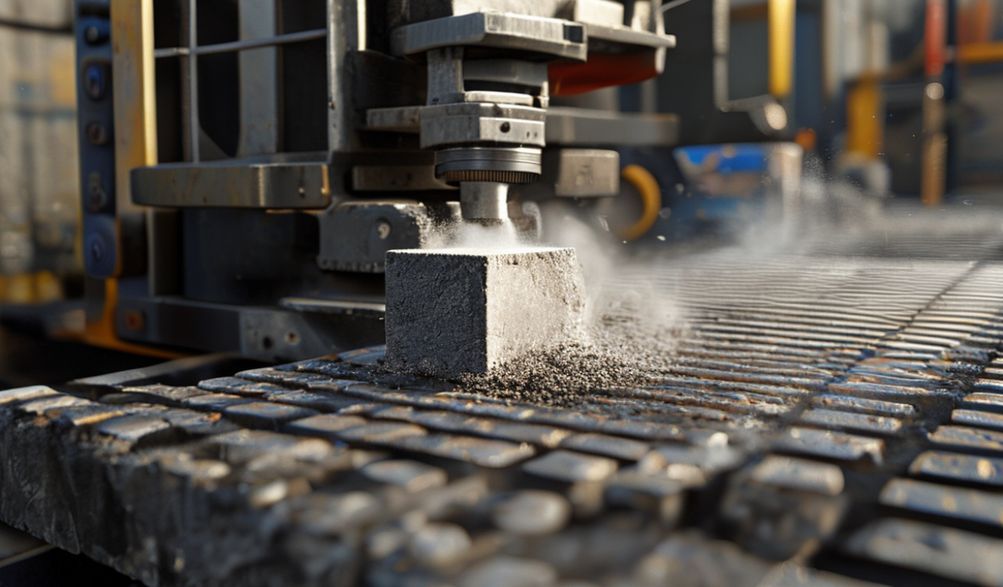
The Ultimate Guide to Choosing the Right Machine to Make Cement Blocks
Introduction
From towering urban developments to essential rural infrastructure, the demand for durable and affordable building materials is universal. At the heart of this global construction boom lies a humble yet indispensable component: the cement block. Its strength, versatility, and cost-effectiveness make it a cornerstone of modern building. However, the key to unlocking consistent quality and profitable production isn’t just in the raw materials—it’s in the technology that shapes them.
Choosing the right machine to make cement blocks is a critical decision that can define the success of a construction project or the viability of an entire manufacturing business. With options ranging from simple hand-operated units to fully automated production lines, navigating this landscape requires clear, expert guidance.
This comprehensive guide is designed to provide exactly that. Drawing from industry knowledge and practical insights, we will demystify the world of block-making machinery. Our purpose is to offer actionable advice to help you, whether you’re a contractor, an entrepreneur, or a project manager, make a confident and informed investment.
By the end of this article, you will have a clear understanding of:
* The different types of machines available and their ideal applications.
* The key factors to consider before purchasing.
* The complete production process from raw material to finished block.
* Realistic cost analysis and return on investment (ROI) expectations.
* Essential operation and maintenance practices for longevity.
Let’s build a solid foundation of knowledge.
Understanding Cement Block Making Machines: Types and Applications
Before investing, you must understand the machinery landscape. The right choice hinges on your production scale, budget, and labor availability. Here, we break down the primary categories of block-making machines.
Manual Block Making Machines
- Description: These are the most basic type of equipment. Operated entirely by human labor, they use a lever system to compress a cement-sand-aggregate mix into a mold. The operator fills the mold, engages the lever for compaction, and then manually removes the freshly formed block for curing.
- Best For: Extremely small-scale or personal projects (e.g., building a garden wall), entrepreneurs in remote locations with no power access, and startups testing the market with absolute minimal capital.
- Pros & Cons:
- Pros: Very low initial cost, zero power requirement, simple to understand and repair.
- Cons: Highly labor-intensive, very low output (typically 100-500 blocks per day), inconsistent block density and strength, physically demanding for operators.
Semi-Automatic Block Making Machines
- Description: This category strikes a balance between automation and cost. The core processes of vibration and compaction are mechanized, powered by an electric motor or diesel engine. This ensures consistent density. However, tasks like feeding raw material, moving pallets, and stacking finished blocks are typically done manually.
- Best For: Small to medium-sized block manufacturing businesses, growing block yards supplying local builders, and contractors undertaking projects with defined block needs.
- Pros & Cons:
- Pros: Significant improvement in output and consistency over manual machines, moderate investment cost, more energy-efficient than full automation for its scale, offers good quality control.
- Cons: Still requires a steady labor crew, output is limited by manual handling steps, not suitable for very high-volume production.
Fully Automatic Block Making Machines
- Description: These are complete production systems. Controlled by programmable logic controllers (PLCs), they automate the entire process: batching, mixing, conveying, molding, curing, and stacking. They often feature robotic pallet handlers and high-speed hydraulic systems.
- Best For: Large-scale commercial block manufacturing plants, suppliers to major construction firms and government projects, and businesses where high, consistent output is the primary goal.
- Pros & Cons:
- Pros: Maximum output (10,000+ blocks per day), minimal manual labor required, superior consistency and quality in every block, high efficiency and lower per-unit cost at scale.
- Cons: Very high initial capital investment, requires reliable three-phase power, complex maintenance needing specialized technicians, less flexibility for very short production runs.
Mobile vs. Stationary Block Plants
A further distinction lies in mobility.
* Mobile Block Plants: These are compact, often trailer-mounted machines designed for on-site production. They eliminate transport costs for finished blocks and are ideal for large, remote projects like dams, roads, or rural housing developments.
* Stationary Block Plants: These are fixed installations, typically the semi- and fully-automatic systems mentioned above. They are designed for centralized, high-volume production in a dedicated yard or factory setting.
Key Factors to Consider When Choosing Your Machine
Selecting a machine is more than just picking a type. It’s about matching specifications to your precise needs. Use these criteria as your decision-making framework.
Assessing Your Production Needs & Scale
Start by asking yourself these foundational questions:
* What is my target output? Be realistic. Is it 500 blocks per day for local sales or 10,000 blocks per day for a large contract?
* Is this for a specific project or an ongoing business? Project-based work might favor a mobile plant or rental, while a business requires a long-term reliability focus.
* What types of blocks do I need to produce? Standard hollow blocks, solid blocks, paving slabs, interlocking bricks? Ensure the machine supports interchangeable molds for your product range.
Machine Specifications Deep Dive
Once you know your needs, scrutinize the specs:
* Cycle Time & Output Capacity: Don’t just look at the “blocks per hour” claim. Understand the cycle time (e.g., 10-15 seconds per cycle) and how many blocks per cycle the mold produces. This gives you a realistic, calculable output.
* Block Size & Mold Versatility: Check the machine’s maximum mold dimensions. Can it produce the block sizes your market demands? Investing in a machine that allows for easy mold changes future-proofs your business.
* Power Requirements: Determine what’s available. Will you use a standard single/three-phase electrical connection, or do you need a diesel-powered option for areas with unreliable grid power? This is a critical operational constraint.
Quality, Durability, and Supplier Reputation
The machine’s build and its manufacturer are as important as its specs.
* Build Quality: Look for robust, welded steel frames, high-torque vibration motors, and quality hydraulic systems from known brands (e.g., Bosch, Rexroth). These components dictate longevity and uptime.
* Vetting the Supplier: Your relationship with the supplier is long-term. Establish their trustworthiness by:
* Checking their years in business and industry reputation.
* Requesting client testimonials and, if possible, visiting an existing installation.
* Verifying the details of their after-sales service and warranty.
* Ensuring the availability of spare parts locally or with short lead times.
The Cement Block Production Process: From Raw Material to Finished Block
A machine is just one part of a system. Understanding the full workflow is crucial for success.
Raw Material Preparation
The quality of the block is born here. A standard mix ratio is 1 part cement : 3 parts sand : 6 parts aggregate (by volume), but this can vary.
* Cement: Use fresh, high-quality Portland cement.
* Sand & Aggregate: Must be clean, sharp, and free of clay or organic material. Consistent grading is key for strength and workability.
* Water: Use clean water. The water-cement ratio is critical; too much water weakens the block, too little makes it crumble.
The Machine Operation Cycle
Here’s how the machine transforms the mix into a block:
1. Feeding: The prepared concrete mix is fed into the machine’s hopper.
2. Compaction & Vibration: The mix is dropped into the mold. Powerful vibrations remove air pockets and ensure dense, uniform compaction.
3. Molding: Hydraulic or mechanical pressure shapes the mix within the mold to the precise dimensions.
4. Ejection: The freshly formed block is pushed out onto a wooden or steel pallet.
In a semi-automatic machine, an operator will move this pallet. In a fully automatic system, a conveyor transfers it to the curing area.
Curing and Drying
This is where the block gains its strength. Curing is not merely “drying.”
* Curing Process: Blocks must be kept moist for a period (usually 7-28 days) to allow the cement to fully hydrate. Methods include:
* Water Curing: Spraying blocks with water and covering them with plastic sheeting.
* Steam Curing: Using a curing chamber with steam, which accelerates strength gain (common in automatic plants).
* Storage: After initial curing, blocks should be stored in a dry, covered area to prevent moisture absorption before use.
Cost Analysis: Investment vs. Return on Investment (ROI)
A clear financial picture separates a wise investment from an expensive mistake.
Breaking Down the Costs
- Machine Purchase Price: This is your capital expenditure (CAPEX).
- Manual: $1,000 – $5,000
- Semi-Automatic: $10,000 – $50,000
- Fully Automatic: $50,000 – $300,000+
- Auxiliary Equipment: Budget for a concrete pan mixer, conveyor belts, block pallets, and a forklift or trolley for handling.
- Operating Costs (OPEX): Your ongoing expenses include:
- Raw Materials (Cement, Sand, Aggregate)
- Power/Fuel
- Labor Wages
- Routine Maintenance and Spare Parts
- Land/Rental for your yard
Calculating Your Potential ROI
A simplified model: ROI = (Net Profit / Total Investment) x 100
* Net Profit = (Number of Blocks Sold * Selling Price) – Total Operating Costs.
* Total Investment = Machine Cost + Auxiliary Equipment + Setup Costs.
Key Influencers: Your local market’s block selling price, consistent demand, and your operational efficiency (minimizing waste and downtime) are the biggest factors in achieving a strong ROI.
Financing and Budgeting Tips
- Always budget 10-15% extra for unexpected costs (site preparation, extra tools, initial raw material stock).
- Explore financing options from equipment dealers, bank loans, or government grants for small industries.
- Start with a machine that meets your current verified needs, with room for modest growth. Avoid being over- or under-equipped.
Operation, Maintenance, and Safety Best Practices
Protect your investment and your people with disciplined operational protocols.
Essential Daily and Weekly Maintenance
Preventive maintenance is far cheaper than repairs and downtime.
* Daily: Clean the machine thoroughly at the end of each shift, especially the mold cavity and hopper. Check hydraulic fluid levels and for any leaks.
* Weekly: Lubricate all moving parts as per the manual. Inspect and tighten all bolts and nuts. Check the vibration motor mounts and electrical connections.
Common Troubleshooting Issues
- Poor Block Strength: Likely caused by an incorrect water-cement ratio, poor-quality raw materials, or insufficient vibration time.
- Surface Cracks: Often due to improper curing (drying too fast) or a poor mix design.
- Sticking in Mold: Can be caused by a damaged mold, lack of mold release agent, or overly wet concrete.
Non-Negotiable Safety Protocols
- Training: Never allow untrained personnel to operate the machine.
- Personal Protective Equipment (PPE): Operators must wear safety goggles, gloves, steel-toe boots, and hearing protection.
- Machine Guards: Ensure all moving parts, especially vibration units and hydraulic rams, have proper guards in place. Lock-out/tag-out procedures must be followed during maintenance.
Frequently Asked Questions (FAQ)
Q1: What is the average price range for a machine to make cement blocks?
A: Prices vary dramatically based on type and capacity. You can find basic manual machines for around $1,000, while robust semi-automatic models range from $10,000 to $50,000. High-capacity fully automatic production lines start at $50,000 and can exceed $300,000.
Q2: Can I start a block making business with a small budget?
A: Absolutely. Many successful businesses start with a single semi-automatic machine, focusing on a local market. The key is meticulous planning, understanding your local competition and demand, and being prepared to reinvest initial profits for growth.
Q3: How many blocks can a standard semi-automatic machine produce per day?
A: A typical semi-automatic machine with a 10-15 second cycle time, producing 3-4 blocks per cycle, can output approximately 2,000 to 4,000 standard hollow blocks in an 8-hour shift, depending on operator efficiency and workflow.
Q4: What is the most important factor for producing high-strength blocks?
A: While the machine provides vital compaction, the two most critical factors are using the correct raw material mix ratio and ensuring proper curing. No machine can compensate for poor-quality sand or inadequate curing time.
Q5: How do I find a reputable supplier for block making machines?
A: Look for manufacturers with a long track record. Request and check client references. Prioritize suppliers who offer comprehensive after-sales service, training, and a clear warranty. Attend industry trade shows and scrutinize online reviews and their professional presence.
Conclusion
Choosing the right machine to make cement blocks is a strategic decision that blends technical understanding with business acumen. We’ve explored the spectrum from manual to fully automatic systems, detailed the critical factors for selection, and walked through the entire production and financial landscape.
Remember, success lies not in buying the biggest machine, but in precisely matching the equipment to your specific production goals, budget, and operational capacity. Coupled with diligent maintenance, a quality raw material supply, and a sound business plan, the right machine becomes the engine of your growth.
Your journey in block manufacturing starts with a single step.
Ready to move from planning to action? Download our comprehensive machine specification checklist to compare models and features from different suppliers, ensuring you ask the right questions and make a confident choice for your business.