
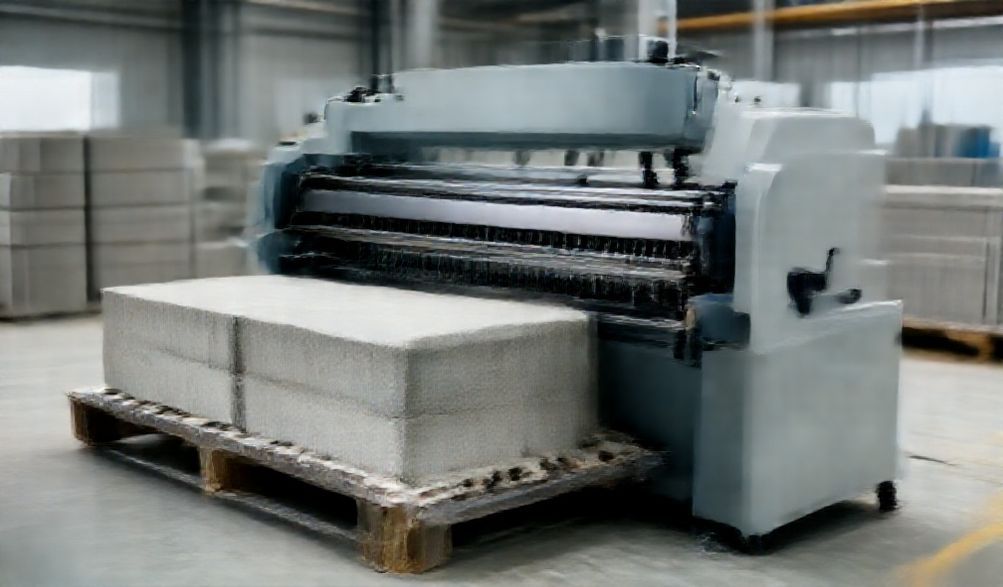
The Ultimate Guide to Cinder Brick Making Machines | Expertise from FUDA Block Making Factory
Introduction
In an era defined by rapid urbanization and a global push for sustainable development, the construction industry faces a constant challenge: sourcing durable, cost-effective, and environmentally conscious building materials. The demand is for solutions that are strong, affordable, and adaptable. For decades, the answer has been found in the humble cinder brick—a cornerstone of modern infrastructure. But behind every reliable block is a piece of technology that makes its mass production possible: the cinder brick making machine.
This guide isn’t just about machinery; it’s about unlocking potential. It’s about transforming raw, often locally sourced materials into the very building blocks of communities, businesses, and homes. At the heart of this transformation is the expertise required to choose, operate, and benefit from the right equipment.
This is where FUDA Block Making Factory brings over two decades of hands-on Experience to the table. We are not just manufacturers; we are partners in production. With a legacy of designing, building, and supporting block making machines for a global clientele across six continents, we have navigated every challenge imaginable. Our Expertise is forged on factory floors and construction sites worldwide.
The purpose of this comprehensive guide is to leverage that deep industry knowledge. Whether you are a contractor looking to streamline your supply chain, an entrepreneur entering the construction materials market, or a project manager aiming for self-sufficiency, we aim to provide trustworthy, actionable information. We will demystify machine types, clarify the buying process, and highlight the critical factors that separate a profitable investment from a costly mistake.
Let’s build a foundation of knowledge.
What is a Cinder Brick Making Machine? Core Principles Explained
To appreciate the machine, we must first understand its product. A cinder brick, more accurately termed a concrete masonry unit (CMU) or concrete block, is a precast building material. Unlike traditional clay bricks fired in kilns, cinder bricks are made by compacting a mixture of cement, aggregates (like sand or gravel), and often industrial by-products such as fly ash.
The advantages are significant:
* Higher Strength & Durability: Excellent compressive strength for load-bearing walls.
* Cost-Effectiveness: Raw materials are often cheaper and more abundant.
* Thermal & Acoustic Insulation: Hollow-core designs provide natural insulation.
* Fire Resistance: Inherently non-combustible.
* Sustainability: Can utilize recycled materials like fly ash, reducing environmental impact.
How It Works: The Production Process Simplified
A cinder brick making machine automates and perfects the process of creating these uniform blocks. While models vary, the core operational cycle follows these key stages:
- Feeding & Mixing: Pre-measured raw materials (cement, aggregate, water, additives) are fed into a mixer. A consistent, homogeneous mix is critical for block quality.
- Molding: The mixed concrete is transferred into a mold box on the machine’s vibrating table. Here, the magic happens.
- Compaction: High-frequency vibration, often combined with hydraulic pressure, compacts the concrete. This removes air pockets and ensures maximum density and strength.
- Demolding: The freshly formed, semi-solid block is ejected from the mold onto a pallet or steel plate. Its shape is now precise and intact.
- Curing: The blocks on their pallets are transferred to a curing area (often a steam chamber or a covered yard) where they gain strength over 24-48 hours before being air-cured for weeks.
- Palletizing/Stacking: Once sufficiently cured, blocks are stacked and prepared for transport to the construction site.
This mechanized cycle replaces inconsistent manual labor with repeatable, precision engineering.
Types of Cinder Brick Making Machines: Choosing the Right Technology
Selecting the correct machine type is your first and most crucial decision. The choice hinges on your required output, budget, labor availability, and project scale.
Manual, Semi-Automatic, and Fully Automatic Machines
-
Manual Machines: Operated entirely by hand, from feeding to demolding.
- Pros: Very low initial investment, simple mechanics.
- Cons: Extremely low output (200-500 blocks/day), high labor intensity, inconsistent quality.
- Best For: Tiny, hyper-local projects or proof-of-concept trials.
-
Semi-Automatic Machines: Core processes like vibration and compaction are powered, but block handling (feeding raw mix, removing pallets) requires manual intervention.
- Pros: Good balance of cost and output (1,000-5,000 blocks/8-hour shift). Improved quality consistency. Lower skill requirement for operators.
- Cons: Still requires a small crew. Output is limited by manual handling speed.
- Best For: Small to medium-sized businesses, contractors, and startups. This is a category where FUDA excels, providing robust, user-friendly models that form the backbone of countless successful operations worldwide.
-
Fully Automatic Machines: Computer-controlled systems handle the entire process from raw material batching to block stacking, often with robotic pallet changers.
- Pros: Very high, consistent output (10,000+ blocks/shift). Minimal labor required. Exceptional quality control.
- Cons: High capital investment. Requires more space, stable power, and technical knowledge for maintenance.
- Best For: Large-scale block production factories supplying regional markets.
Stationary vs. Mobile Block Making Machines
-
Stationary Machines: Installed in a fixed factory location.
- Pros: Typically higher capacity and more robust. Allows for integrated curing racks and streamlined workflow.
- Cons: Blocks must be transported from the factory to the construction site.
-
Mobile Machines: Mounted on a trailer or truck for on-site production.
- Pros: Eliminates transport costs for finished blocks. Ideal for large, remote projects (e.g., dams, rural housing).
- Cons: Generally lower output than large stationary models. Subject to site conditions.
Key Machine Models and Their Specifications
Transparency is key to trust. Below is a snapshot of two reliable FUDA workhorses:
| Model | Type | Approx. Output (Blocks/Hour) | Key Features | Ideal For |
| :— | :— | :— | :— | :— |
| FUDA QMJ4-45 | Semi-Automatic, Stationary | 800 – 1200 | Vibrated & pressurized, single hopper, versatile mold system. | Small factories, entrepreneurial startups, contractors. |
| FUDA QFT10-15* | Fully Automatic, Stationary | 4500 – 6000 | Programmable logic control (PLC), automatic pallet feeder, high-pressure hydraulic system. | Large-scale commercial block production plants. |
*Output varies based on block type, raw materials, and operator efficiency.
Key Benefits of Investing in a Modern Block Making Machine
Moving from manual methods or unreliable equipment to a modern machine is transformative. Here’s why.
Unmatched Efficiency and High Output Capacity
Automation turns hours of labor into minutes of machine cycles. What takes a manual crew a week to produce, a semi-automatic machine can achieve in a day. This scalability is essential for meeting project deadlines and growing a business.
Superior Brick Quality and Consistency
Human inconsistency is eliminated. Controlled vibration frequency, pressure, and cycle time ensure every single block has identical dimensions, density, and compressive strength. This leads to:
* Faster, easier construction (uniform blocks lay flat).
* Structurally sounder buildings.
* Reduced material waste on-site.
Significant Cost Reduction & Material Versatility
The long-term economics are compelling:
* Labor Savings: One machine and a small crew replace a large manual workforce.
* Material Savings: Precise mixing reduces cement waste. The ability to use fly ash (a low-cost or free industrial by-product) can cut material costs by up to 30%.
* Transport Savings: On-site mobile production or local factory setup slashes logistics expenses.
Durability and Low Maintenance of Quality Machines
Investing in a well-engineered machine from a reputable manufacturer like FUDA means investing in uptime. Features like hardened steel molds, heavy-duty frames, and quality hydraulic components are designed for years of service with minimal, predictable maintenance.
Critical Factors Before You Buy: A Buyer’s Checklist
This is where our Experience directly benefits you. Avoid common pitfalls by thoroughly evaluating these areas.
Assessing Your Production Needs: Volume, Block Type, and Space
- Volume: Calculate your average daily or monthly block requirement. Don’t buy a massive machine for sporadic use, or a tiny one that can’t meet demand.
- Block Type: What will you produce? Solid blocks, hollow blocks (in various sizes), paving slabs, interlocking bricks? Ensure the machine can accommodate the necessary molds.
- Space: A factory needs more than just machine footprint. Account for raw material storage, mixing area, curing space (the largest area), and finished block storage.
Machine Specifications You Must Scrutinize
Look beyond the sales brochure:
* Cycle Time: How many seconds for one complete block cycle? This dictates maximum output.
* Vibration Force/Pressure: Measured in kN or tons. Higher force generally means denser, stronger blocks.
* Mold Versatility: Can you easily change molds to produce different block types? Are molds standardized or proprietary?
* After-Sales Service: This is non-negotiable. What does the warranty cover? Is there local technical support?
The True Cost: Beyond the Initial Purchase Price
The machine’s price tag is just the entry fee. Factor in:
* Operational Costs: Electricity consumption, labor wages, raw material costs.
* Maintenance & Spares: Budget for routine maintenance and ask about the availability and cost of common spare parts (like mold liners, springs, hydraulic seals).
* Training & Support: The value of comprehensive operator training from the manufacturer cannot be overstated. It prevents costly mistakes and downtime.
Why Manufacturer Reputation and Support Matter Most
Your machine is a long-term asset. The manufacturer is your long-term partner. An established company with a proven track record offers:
* Quality Assurance: Adherence to international standards and robust testing.
* Reliable Support: Access to technical manuals, video guides, and a responsive support team.
* Parts Supply: A guaranteed supply chain for genuine spare parts for the lifespan of your machine.
Choosing FUDA means choosing a partner invested in your productivity from day one.
FUDA’s Expert Manufacturing and Support Process
Our Authoritativeness is built on a tangible process that ensures your success.
Our Engineering Philosophy: Durability and Innovation
Every FUDA machine is built with a simple principle: to withstand the rigors of continuous industrial use. We use high-grade steel in our frames, specially hardened alloys for our mold boxes, and source components from trusted, name-brand suppliers. Our R&D team continuously refines designs for better performance and easier maintenance.
Comprehensive Service: From Consultation to Installation
Your journey with us is collaborative:
1. Needs Assessment: Our experts discuss your project, budget, and goals.
2. Machine Recommendation: We propose the most suitable model and configuration—no overselling.
3. Factory Layout Planning: We can advise on optimal plant layout for efficient workflow.
4. Installation & Commissioning: We provide clear instructions and can dispatch engineers for on-site setup and calibration.
Training, Maintenance, and Long-Term Partnership
- Training: We provide detailed operational and safety training, ensuring your team is confident and competent.
- Maintenance Support: A full set of spare parts is recommended with each machine. Our global logistics network ensures parts reach you efficiently.
- Technical Hotline: Direct access to our engineering team for troubleshooting. As one of our clients in Kenya noted, “It was FUDA’s prompt technical support that kept our project on schedule when we had a minor issue. They guided us through a solution in real-time.”
Frequently Asked Questions (FAQ)
Q1: What is the average production capacity of a semi-automatic cinder brick machine?
A1: A standard semi-automatic machine like the FUDA QMJ4-45 can produce between 1,000 to 3,000 standard hollow blocks in an 8-hour shift. Capacity depends heavily on block size, mix design, and operator efficiency.
Q2: What raw materials can I use with these machines?
A2: These machines are highly versatile. Common materials include Portland cement, sand, gravel/crushed stone, and water. A key advantage is the ability to use industrial by-products like fly ash (up to 60-70% of the mix) or slag, which reduces cost and environmental footprint.
Q3: How much space is needed to set up a small block making factory?
A3: For a basic setup with a semi-automatic machine, mixing station, and curing area, you should plan for a minimum of 500 to 1,000 square meters. The curing area (where blocks gain strength) typically requires the most space.
Q4: What is the lead time for receiving a machine after ordering?
A4: For standard models in stock, lead time is typically 30-45 days, which includes preparation, testing, and sea freight. Customized configurations or complex orders may require 60 days. We provide clear timelines upon order confirmation.
Q5: Does FUDA provide assistance with mold customization for special block designs?
A5: Absolutely. Our in-house mold design and manufacturing workshop is a core part of our Expertise. We can create custom molds for unique block shapes, sizes, or surface textures (like split-face or rock-face), enabling you to produce specialized products for your market.
Conclusion
The cinder brick making machine is more than equipment; it’s a catalyst for growth, efficiency, and sustainability in the construction sector. It empowers businesses to control quality, reduce costs, and meet the rising demand for reliable building materials.
At FUDA Block Making Factory, we have dedicated over 20 years to perfecting this technology and, more importantly, to building lasting partnerships with our clients. Our value proposition is simple: robust machinery backed by unparalleled Experience, deep Expertise, and a Trustworthy support system that extends far beyond the sale.
If you are ready to explore how the right block making technology can transform your operations or launch your venture, the next step is a conversation. Contact the FUDA expert team today for a personalized consultation. Let us understand your specific needs and provide you with a detailed catalog and a transparent proposal. Request a factory layout plan tailored to your space.
Investing in the right foundation—both for your blocks and for your business—is the first step toward sustainable and profitable growth. Let’s build that future together.