
The Ultimate Guide to Clay Brick Making Machines in Uganda (2024)
Introduction
Uganda is building. From the rapid urban expansion of Kampala to the nationwide push for improved infrastructure and affordable housing, the demand for quality construction materials has never been higher. At the heart of this construction boom lies a humble, yet fundamental component: the brick. However, the traditional method of manual brick molding—back-breaking, slow, and yielding inconsistent results—is struggling to keep pace with modern demands for speed, standardization, and scale.
This gap between soaring demand and outdated production methods presents a significant challenge for builders and a remarkable opportunity for entrepreneurs. The solution? Modern clay brick making machines. These machines are revolutionizing local construction by offering a pathway to efficiency, profitability, and superior quality.
This guide is informed by local industry expertise and tailored specifically for Uganda’s economic, logistical, and operational landscape. By the end, you will have a comprehensive understanding of the types of machines available, their costs, the market potential, and the critical steps to making a smart, informed investment that can build not just structures, but a thriving business.
Understanding Clay Brick Making Machines
How Do Clay Brick Making Machines Work?
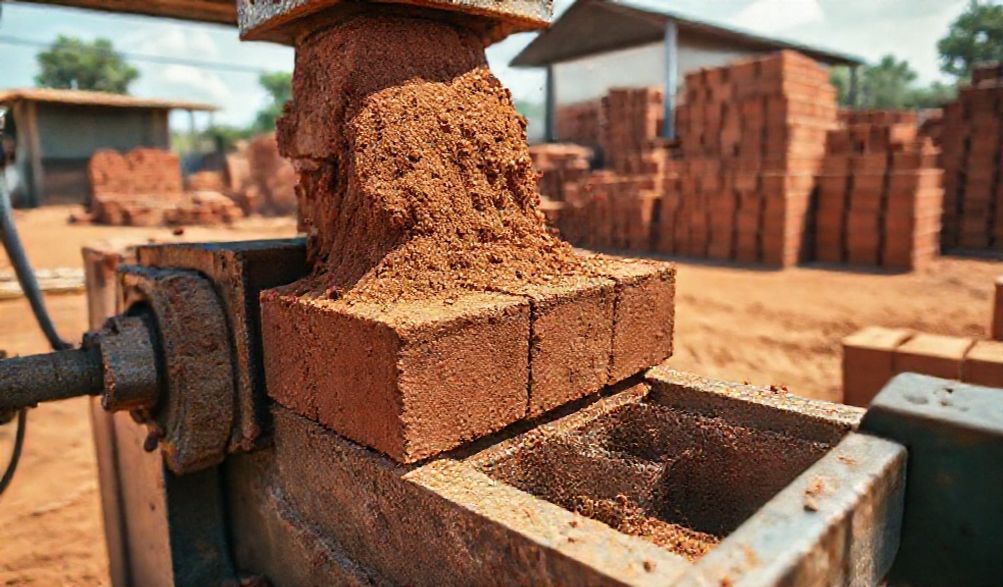
At its core, a brick making machine automates and enhances the age-old process of turning clay into sturdy building blocks. The mechanized process typically follows these key stages:
- Clay Preparation: Raw clay is crushed and mixed with a small amount of water (and sometimes stabilizers like cement for Interlocking Blocks) to achieve the perfect consistency for molding.
- Molding & Compaction: The prepared mixture is fed into a mold. The machine then applies intense hydraulic or mechanical pressure to compact the clay, eliminating air pockets and creating a dense, uniform block.
- Ejection & Curing: The freshly formed brick is ejected onto a pallet or the ground. It then undergoes a critical curing process, where it dries slowly and gains strength, often under shade to prevent cracking.
This stands in stark contrast to manual methods, which rely on variable human effort, leading to inconsistencies in size, density, and strength. The machine ensures every brick meets the same high standard.
Key Types of Machines Available in Uganda
The Ugandan market offers a range of machines to suit different scales of operation and investment levels:
-
Manual Brick Making Machines:
- Profile: Lowest cost, human-powered (lever-operated).
- Best For: Individual artisans, very small-scale startups, or community projects with minimal capital.
- Output: Low (e.g., 500-1,000 bricks per day).
-
Semi-Automatic Machines:
- Profile: The most popular choice for Ugandan SMEs. They use an engine (diesel or electric) to power the compaction, but brick handling and feeding are manual.
- Best For: Small to medium-sized businesses aiming for serious commercial production. They offer an excellent balance of affordability, output, and manageable labor needs.
- Output: Medium to High (e.g., 2,000 – 10,000 bricks per day).
-
Fully Automatic Brick Making Machines:
- Profile: High-speed, computer-controlled production lines with automatic feeding, molding, and stacking.
- Best For: Large-scale industrial operations supplying major construction projects or regional distributors.
- Output: Very High (e.g., 15,000+ bricks per day).
- Note: Requires significant capital, reliable power, and technical expertise.
-
Mobile Brick Making Machines:
- Profile: Mounted on a trailer for easy transport to a construction site.
- Best For: Contractors and builders who want to produce bricks directly on-site, drastically cutting transportation costs and logistics.
Common Brick Products You Can Produce
With the right machine and molds, you can diversify your product line:
- Solid Clay Bricks: The standard, versatile building block.
- Interlocking Stabilized Soil Blocks (ISSBs): Gaining massive popularity in Uganda. They use a small percentage of cement to stabilize the soil, lock together without mortar, and offer excellent thermal and structural properties. They are cost-effective and faster to build with.
- Perforated Bricks: Have holes, making them lighter and improving insulation.
- Paving Blocks (Pavers): For driveways, walkways, and commercial landscapes.
The Market for Brick Machines in Uganda: Opportunities & Analysis
Uganda’s Construction Industry & Demand for Bricks
The numbers speak for themselves. With one of the world’s fastest-growing urban populations and major government initiatives in road construction, schools, and healthcare facilities, the demand for building materials is structural and long-term. The National Development Plan III emphasizes infrastructure development, directly fueling the need for standardized, quality-assured bricks. There is a clear market shift away from haphazard, manually-made bricks towards reliable, machine-produced alternatives that meet engineer and architect specifications.
Benefits of Investing in a Brick Making Machine
Investing in a machine is not just about making bricks; it’s about building a competitive business.
- Profitability & Business Potential: You transition from a laborer to a manufacturer. The revenue model is clear: produce high-quality bricks at a controlled cost and sell them into a hungry market. The margins can be substantial when operations are efficient.
- Superior Quality & Consistency: Machines produce bricks of uniform size, shape, and compressive strength. This consistency is crucial for meeting building standards (like those from the Uganda National Bureau of Standards – UNBS) and winning contracts from serious builders.
- Speed & Increased Production Capacity: A semi-automatic machine can outperform a large team of manual laborers, allowing you to take on bigger orders and fulfill them reliably.
- Labor Optimization: You reduce the reliance on large numbers of highly strenuous manual laborers. The machine does the hardest work, allowing your team to focus on material handling and logistics.
- Utilization of Local Raw Materials: Uganda has abundant clay deposits. By investing in a brick machine, you build a business that is sustainable, locally sourced, and adds significant value to a readily available natural resource.
A Buyer’s Guide: How to Choose the Right Machine in Uganda
Assessing Your Needs & Capacity
Before looking at suppliers, ask yourself these key questions:
* What is my target daily or monthly production output?
* What is my total available investment budget (including setup costs)?
* Which type of brick (solid, ISSB, paving) is most in demand in my target market?
* Do I have reliable access to grid electricity, or will I need a diesel-powered machine?
* How much space do I have for the machine, clay storage, drying, and curing?
Key Machine Specifications to Consider
When comparing models, focus on these specs:
- Production Capacity: Don’t just look at “bricks per hour.” Consider realistic, sustained daily output, accounting for loading, maintenance, and curing time.
- Power Source: Electric motors are quieter and cheaper to run but require stable power. Diesel engines offer independence and are common in areas with unreliable electricity.
- Brick Size & Type Compatibility: Ensure the machine can produce the specific brick sizes (e.g., standard Ugandan brick size) and types you plan to sell. Can you easily change molds later?
- Build Quality & Durability: The machine must withstand Uganda’s conditions. Look for robust frames, high-quality hydraulic systems, and corrosion-resistant parts. A flimsy machine is a false economy.
Navigating Suppliers & Costs in Uganda
- Local Dealers/Distributors: This is often the best route for first-time buyers. A reputable local supplier provides crucial after-sales support, training, spare parts, and maintenance services. They understand local challenges.
- Direct Importing: While sometimes cheaper upfront, importing yourself involves navigating shipping, customs clearance, and taxes. You may also face significant delays and lack local technical support.
- Price Range Overview (Indicative Only):
- Manual Machines: Can start from UGX 5 – 10 million.
- Semi-Automatic Machines: The typical range for commercial models is UGX 15 – 80 million, depending on capacity, brand, and features.
- Fully Automatic Lines: Can easily exceed UGX 150 million+.
Crucial E-E-A-T Advice: Always verify supplier credentials. Ask for references from past clients in Uganda. If possible, insist on seeing a physical machine demonstration. A trustworthy supplier will be transparent and encourage this.
Key Considerations for Operation & Success
Sourcing and Preparing Raw Materials (Clay)
Not all clay is equal. Conduct simple tests: make a small brick sample and check for cracking as it dries. Good brick-making clay is moderately plastic. You will likely need ancillary equipment like a pan mixer or clay crusher to prepare a consistent, homogenous mixture.
Setting Up Your Brick Yard
Plan your layout efficiently. You need space for:
* Raw material (clay) storage.
* The machine shed.
* A large, level area for drying green bricks (under shade nets is ideal).
* A stacking area for cured bricks.
* Ensure access to water and appropriate power connections.
Operational Costs & Basic Maintenance
Factor in all variable costs:
* Raw clay (often a low cost if sourced locally).
* Labor for operation and handling.
* Fuel (diesel) or electricity.
* Water.
* Minor consumables (like lubricants).
Maintenance is non-negotiable. Follow the manufacturer’s schedule for greasing, checking hydraulic fluid, and tightening bolts. A well-maintained machine lasts for decades.
Understanding the Business & Regulatory Environment
- Licensing: Register your business with the Uganda Registration Services Bureau (URSB) and obtain any necessary local council trading licenses.
- Standards: Align your production with quality standards. While not always enforced for small-scale operations, producing bricks that meet UNBS guidelines will make your product more attractive to government tenders and quality-conscious private builders.
Frequently Asked Questions (FAQ)
Q1: What is the price range for a clay brick making machine in Uganda?
A: Prices vary widely. Basic manual machines can start from UGX 5 million, while semi-automatic models—the most common for businesses—typically range from UGX 15 to 80 million. Fully automatic lines are a major capital investment. The final cost depends entirely on capacity, brand, and specifications.
Q2: Can I get training on how to operate and maintain the machine?
A: Absolutely, and you should. Any reputable supplier must provide comprehensive basic training on operation, safety, and routine maintenance. This is a critical part of the purchase and a key question to ask before buying.
Q3: Are there financing options available for these machines?
A: Yes, possibilities exist. Some suppliers offer installment payment plans. You can also explore asset financing or equipment loans from Ugandan commercial banks, SACCOs, or microfinance institutions. Be prepared with a solid business plan when applying.
Q4: What is the profitability potential of a brick making business in Uganda?
A: It can be highly profitable, but it’s a function of management. As a simplified example, if your total cost to produce one brick is UGX 150 and you sell it for UGX 250, you have a UGX 100 margin. A machine producing 5,000 bricks a day creates significant gross profit. Success hinges on machine efficiency, consistent quality, and effective sales.
Q5: How do I ensure the bricks I produce are of good quality?
A: Control your process: use good quality clay, ensure a consistent mixture (not too wet, not too dry), achieve proper compaction in the machine, and follow correct curing procedures—slow drying under shade to prevent cracks.
Conclusion
Investing in the right clay brick making machine is a transformative decision for a Ugandan entrepreneur. It is a direct response to the nation’s construction needs, offering a path to build a sustainable, profitable business while contributing to the country’s physical development through quality materials.
The key to success lies in thorough research and planning. Start with a clear business model, assess your needs honestly, and engage proactively with suppliers. View this purchase as a long-term partnership; the machine is your primary business asset.
We strongly recommend visiting multiple suppliers, speaking to existing machine owners about their experiences, and prioritizing robust after-sales service above a marginally cheaper sticker price. By making an informed, careful decision, you ensure your venture into brick production is built on the most solid foundation possible.
Ready to take the next step? Contact reputable local equipment suppliers in Kampala and major towns for detailed quotations and live demonstrations. Consider also consulting with business development agencies like the Uganda Investment Authority (UIA) for broader guidance on establishing your manufacturing enterprise.