
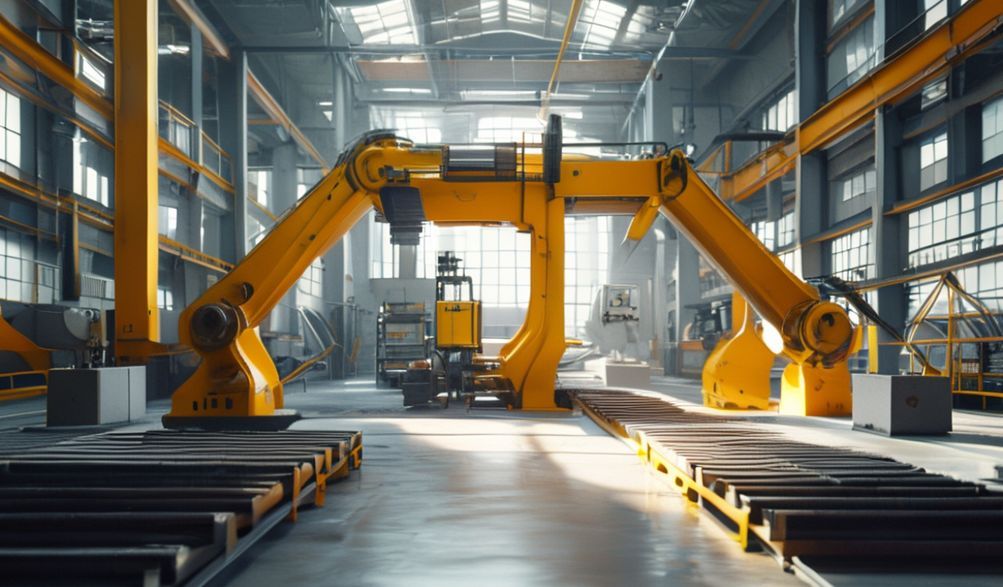
The Ultimate Guide to Hollow Block Maker Machines: Inside the FUDA Block Making Factory
Introduction
The global construction industry runs on a simple premise: the need for affordable, durable, and readily available building materials. At the heart of countless residential, commercial, and infrastructure projects lies a fundamental component—the humble hollow block. Its design offers an ideal balance of strength, weight reduction, and thermal insulation, making it a cornerstone of modern building. However, the journey from raw material to reliable building block is where the real challenge—and opportunity—lies.
For decades, manual and small-scale production methods have been plagued by inconsistency, high labor intensity, and painfully low output. These bottlenecks stifle growth and compromise quality. Today, entrepreneurs and construction firms face another hurdle: an overwhelming marketplace of machinery options, with varying claims of quality and performance. How do you cut through the noise to find a solution that delivers genuine return on investment?
The answer lies in industrial-grade automation: the hollow block maker machine. This isn’t just a piece of equipment; it’s a complete production system engineered to transform your operations. And when it comes to sourcing such critical machinery, the origin matters immensely. This guide takes you inside the FUDA block making factory, a leading authority in designing and manufacturing these precision machines.
Compiled from deep industry expertise, direct factory insights, and technical engineering knowledge, this resource is designed to do more than just explain a machine. It aims to provide a transparent look at the technology, the hallmarks of true quality, and what sets a professional, direct manufacturer like FUDA apart from the rest. Our goal is to empower you with the information needed to make a confident, informed investment that will form the foundation of your business growth for years to come.
What is a Hollow Block Maker Machine? Core Technology Explained
At its core, a hollow block maker machine is a marvel of industrial engineering that automates and perfects a traditionally manual process. It systematically converts a raw mix of cement, sand (or fly ash), aggregates, and water into perfectly formed, high-density hollow blocks through a combination of immense pressure and vibration.
Defining the Machine: From Raw Material to Finished Block
The process within an automatic machine is a synchronized ballet of components:
1. Mixing: Raw materials are blended into a homogeneous, semi-dry concrete mix in a pan or planetary mixer.
2. Feeding & Conveying: The mix is transferred via a belt conveyor or automated skip hoist to the machine’s main hopper.
3. Metering & Molding: The hopper feeds a precise amount of material into the mold box. Here, the critical phase begins:
* Hydraulic Pressure: In high-end machines, powerful hydraulic cylinders compress the material with tons of force.
* Vibration: Simultaneously, high-frequency vibration motors compact the mix, eliminating air pockets and ensuring maximum density.
4. Ejection & Palletizing: The newly formed block is ejected onto a pallet or steel plate. A stacker or robotic arm then transfers the palletized blocks to a curing area.
Key components that define performance include the robust machine frame, the precision-engineered mold, the hydraulic power pack or vibration system, the programmable logic controller (PLC), and the pallet handling system.
Types of Hollow Block Making Machines
Understanding the categories helps match the machine to your project scope and business goals.
-
Manual & Semi-Automatic Machines:
- Operation: Require significant manual labor for feeding, molding, and block removal.
- Output: Lower production (e.g., 500-2000 blocks per 8-hour shift).
- Best For: Very small-scale projects, startups with minimal capital, or markets with very low labor costs. They are a step above manual labor but lack the efficiency of full automation.
-
Fully Automatic Block Making Machines:
- Operation: Computer-controlled (PLC) systems that automate the entire cycle from feeding to pallet transfer. Labor is primarily for monitoring and maintenance.
- Output: High-volume production (e.g., 5,000 to 30,000+ blocks per 8-hour shift).
- Best For: Serious business ventures aiming for profitability, large-scale projects, and consistent, market-ready quality. This is the specialty of factories like FUDA.
-
Mobile vs. Stationary Block Machines:
- Mobile Block Machines: Mounted on a trailer, they can be moved between job sites. Ideal for producing blocks directly where they are needed, reducing transport costs for large, remote projects.
- Stationary Block Machines: Fixed installations in a factory setting. They are typically more robust, offer higher levels of automation, and are designed for continuous, long-term production runs.
Inside the FUDA Block Making Factory: A Benchmark in Manufacturing
Choosing a hollow block maker isn’t just about selecting a machine; it’s about choosing the partner behind it. The manufacturing philosophy, quality controls, and direct support of the factory are integral to your long-term success.
The FUDA Philosophy: Engineering & Reliability
The FUDA block making factory is built on a foundation of engineering precision and unwavering reliability. Their philosophy transcends simple assembly; it involves continuous research and development (R&D) to integrate the latest advancements in hydraulic systems, vibration technology, and control software. This commitment to innovation is paired with a rigorous quality control regimen that tests every component and subsystem. Adherence to international standards for safety and performance isn’t an afterthought—it’s a baseline requirement. This combination of expertise and decades of hands-on experience in the field ensures that every machine is built not just to work, but to endure.
A Tour of the Production Line (Building Authoritativeness)
A walk through the FUDA production line reveals why factory origin is critical:
1. Precision Machining: Critical parts like cylinder housings and mold frames are machined with CNC equipment for micron-level accuracy, ensuring perfect alignment and longevity.
2. Hydraulic Assembly: The heart of the machine—the hydraulic power pack—is assembled in a clean, controlled environment. Each pump, valve, and hose connection is pressure-tested beyond operational limits.
3. Electrical Integration: Control panels are wired by certified electricians. PLCs and touchscreen interfaces are programmed and subjected to simulation tests before installation.
4. Mold Fabrication: Molds are crafted from specially hardened, wear-resistant steel. They are precisely machined to produce blocks with consistent dimensions and smooth surfaces.
5. Final Integration & Trial Run: The fully assembled machine undergoes a comprehensive trial run with real materials. This final test checks vibration frequency, pressure levels, cycle time, and the performance of all automated sequences.
Why Factory Origin Matters: The Direct Manufacturer Advantage
Purchasing from a direct manufacturer like FUDA, rather than a third-party trader or reseller, offers tangible benefits:
* Cost-Effectiveness: Eliminating middlemen markups means more value for your investment.
* Direct Technical Support: You communicate directly with the engineers who built your machine for faster, more accurate troubleshooting.
* Genuine Spare Parts: Access to original, perfectly fitting spare parts and wear components, extending your machine’s life.
* Customization: The ability to modify machine specifications, mold designs, or control systems to suit your specific raw materials or product catalog.
* Stronger Warranty: Direct manufacturers typically stand behind their products with clearer, more comprehensive warranty terms.
Key Features to Look for in a Professional Hollow Block Maker
When evaluating machines, especially from a professional factory like FUDA, focus on these critical features that dictate performance and profitability.
Production Capacity & Output Specifications
- Match to Business Plan: Your target output (blocks per hour/day) must align with your market demand. An undersized machine limits growth; an oversized one strains finances.
- Cycle Time: The time to produce one pallet of blocks. Faster cycle times mean higher output. Fully automatic machines excel here.
- Automation’s Role: Automation directly reduces labor costs per block and minimizes production variability, ensuring every block meets the same high standard.
Machine Durability & Core Components
- Frame Construction: Look for a heavy-duty frame made from high-grade steel (e.g., Q235 or better), fully welded and stress-relieved. This is the skeleton that must withstand years of constant vibration and pressure.
- Hydraulic System: The system’s quality is paramount. Reputable brands for pumps, valves, and seals, along with efficient cooling systems, indicate reliability and prevent costly downtime.
- Mold Quality: Molds are consumable, but their lifespan matters. Hard-chromed or specially alloyed steel molds from a factory like FUDA resist abrasion, maintaining precise block dimensions for thousands of cycles.
Automation Level & Ease of Operation
- PLC & Touchscreen Interface: A user-friendly PLC with a color touchscreen allows for easy parameter setting (pressure, vibration time), fault diagnosis, and production data tracking. It demystifies operation.
- Automated Material Handling: Integrated conveyors, batching systems, and pallet stackers/desstackers create a seamless production line, minimizing manual intervention and boosting overall efficiency.
The Business Case: ROI of Investing in a FUDA Machine
Viewing a hollow block maker as a capital expense misses the point. It’s a strategic investment with a clear path to return.
Cost Analysis: Initial Investment vs. Long-Term Savings
| Initial Investment | Long-Term Savings & Earnings |
| :— | :— |
| Machine Price | Dramatically Reduced Labor Costs (1-3 operators vs. 10-15 manual workers) |
| Shipping & Installation | Lower Material Waste (precise batching and molding) |
| Foundation & Setup | Higher Quality Product (can command a 10-20% price premium) |
| Basic Training | Increased Production Volume (ability to fulfill larger, more profitable contracts) |
Versatility & Product Range
A significant advantage of a professional machine is its versatility. By simply changing the mold in a FUDA hollow block maker machine, you can diversify your product line without new capital investment:
* Standard Hollow Blocks (4″, 6″, 8″)
* Solid Concrete Blocks
* Paving Stones & Interlocking Tiles
* Curb Stones & Landscape Products
This adaptability allows you to respond to market trends and customer demands, maximizing your asset’s utility.
Enhancing Your Competitive Edge
Consistency is currency in construction. The ability to produce uniform, high-strength blocks batch after batch builds a reputation for reliability. This reputation allows you to secure contracts with larger developers and government projects that demand certified, consistent quality. Your machine becomes the engine of your brand’s credibility.
Navigating Your Purchase: From Inquiry to Installation
A smooth purchase process sets the stage for a successful operation. Here’s how to engage effectively with a manufacturer.
How to Communicate Effectively with a Factory like FUDA
Prepare this information for your initial inquiry:
* Desired Block Types & Sizes: (e.g., 6″ hollow block, 60mm paver).
* Target Daily/Shift Output: Be realistic about your needs.
* Local Conditions: Voltage (e.g., 380V/3Phase/50Hz), available factory space, and the type of raw materials (sand, aggregate) you plan to use.
* Request: A detailed quotation, a comprehensive specifications sheet (PDF), and recent videos of the specific model in operation at their factory or a client site.
Understanding Logistics, Installation, and Training
- Logistics: Understand Incoterms like FOB (you arrange shipping) or CIF (factory arranges shipping to your port). Machines are typically shipped in 40ft HQ containers.
- Installation: The factory will provide foundation drawings. Proper concrete foundation is crucial for machine stability and performance.
- Training: Reputable suppliers provide detailed operation manuals, electrical diagrams, and video guides. Many, like FUDA, offer the option for an engineer to supervise installation and conduct on-site training—a highly recommended step for first-time buyers.
After-Sales Service: The True Test of a Supplier
This is where trustworthiness is proven. Before purchasing, clarify:
* Warranty: What is covered (e.g., hydraulic parts, electrical components)? What is the duration (typically 12-18 months)?
* Technical Support: Is remote support available via phone, WhatsApp, or video call? What are the response times?
* Spare Parts: How quickly can wear parts like mold liners, seal kits, or vibration motors be shipped? Is there an online parts catalog?
Frequently Asked Questions (FAQ)
Q1: What is the average price range for a FUDA hollow block making machine?
A: Prices vary significantly based on automation level, output capacity, and configuration. A small semi-automatic machine may start around $15,000, while a large, fully automatic production line can exceed $100,000. The key is to request a detailed quote from the FUDA factory based on your specific requirements rather than relying on generic price lists.
Q2: Can the machine be customized for a specific block design or raw material?
A: Yes. Professional manufacturers like FUDA specialize in customization. They can engineer molds for unique block designs and adjust machine parameters (vibration frequency, pressure) to optimally work with your local raw materials, such as fly ash or lightweight aggregates.
Q3: What kind of after-sales support does FUDA factory provide?
A: Comprehensive support typically includes detailed operation and maintenance manuals, wiring diagrams, access to instructional videos, and lifetime technical consultation via online channels. For critical issues, they can dispatch engineers. A standard warranty (e.g., 12 months for core components) is provided, with clear terms outlined in the contract.
Q4: How much power and space are required to operate an automatic block machine?
A: Generally, you will need a three-phase industrial power supply (e.g., 380V/50Hz or 440V/60Hz), with total connected power ranging from 30kW to 75kW depending on the model. Space must accommodate the machine itself, a raw material storage and mixing area, a block curing yard, and finished product storage. A minimum of 1,000 square meters is often recommended for a small automated plant.
Q5: What is the lead time from order to delivery?
A: For standard models, the lead time is typically 20-30 working days after receiving the deposit. For highly customized machines or complex production lines, it may extend to 45-60 days. The factory will provide a confirmed production schedule upon order confirmation.
Conclusion
Selecting the right hollow block maker machine is one of the most consequential decisions for your construction business or venture. It directly dictates your productivity, product quality, and ultimately, your profitability. This guide has moved beyond mere specifications to highlight the importance of the manufacturer behind the machine—their engineering philosophy, production integrity, and commitment to partnership.
Investing in a machine from an established, transparent direct manufacturer like the FUDA block making factory means acquiring more than just industrial equipment. You gain a foundation built on proven expertise, decades of practical experience, and the trustworthy support necessary to ensure your investment thrives for years to come. It transforms a capital purchase into a long-term strategic advantage.
Ready to build your future on a solid foundation? Take the next step with confidence:
* Contact the FUDA factory directly for a personalized consultation to discuss your project needs.
* Request a detailed catalog and specification sheet for their range of hollow block maker machines.
* Ask for client references or case studies to see their machines in action globally.
Begin your journey toward automated, profitable block production today.