
The Ultimate Guide to Paver Block Manufacturing Machines | Expert Insights from FUDA Factory
Introduction
From revitalizing urban plazas to crafting elegant residential driveways, the global demand for durable and aesthetically pleasing concrete pavers is stronger than ever. This surge is driven by infrastructure development, urbanization, and a growing preference for hardscape solutions that combine functionality with design. However, meeting this demand with manual labor or outdated equipment presents significant hurdles: inconsistent product quality, exorbitant labor costs, slow production rates, and difficulty scaling operations.
The solution lies in modern engineering. Today’s paver block manufacturing machine represents a leap forward in efficiency, precision, and profitability. This comprehensive guide serves as your authoritative resource on this critical equipment. Drawing on industry expertise and engineering principles aligned with leading manufacturers like the FUDA block machine factory, we will demystify the technology. You will learn not only how these machines work but, more importantly, how to select, operate, and benefit from them to make a truly informed investment for your business.
What is a Paver Block Manufacturing Machine?
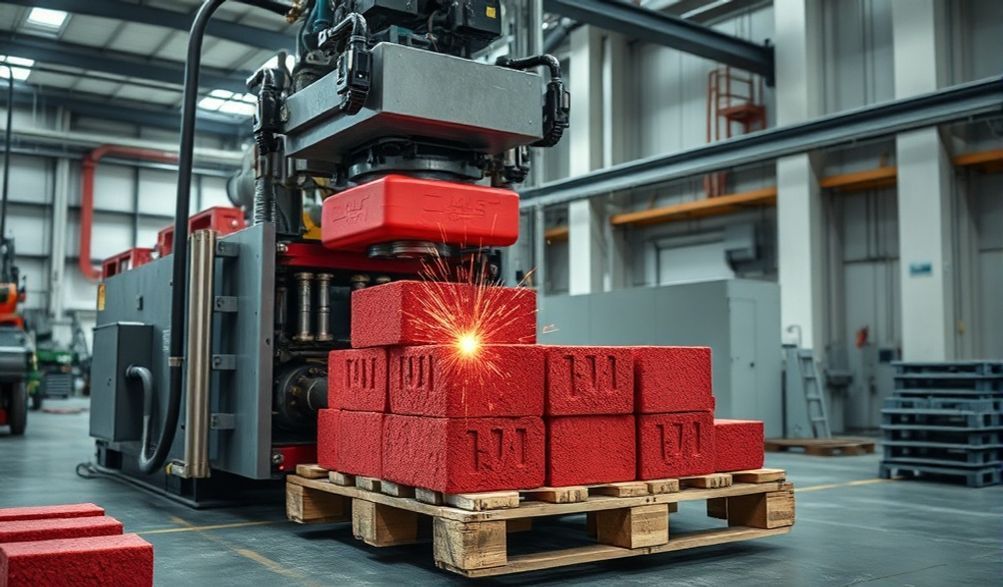
At its core, a paver block manufacturing machine is a mechanized system designed to automate the production of concrete paving units. It transforms raw materials—cement, aggregates, sand, and pigments—into precisely formed, high-density blocks through a process of mixing, compaction, and molding.
Core Function and Output
The primary function is to produce interlocking pavers, standard paving slabs, kerbstones, garden edging, and similar landscaping products. These outputs are essential for:
* Commercial & Public Spaces: Parking lots, pedestrian walkways, city squares.
* Residential Projects: Driveways, patios, pool decks, and garden paths.
* Infrastructure: Road edging, channel drains, and retaining wall units.
The machine ensures each unit has consistent dimensions, high compressive strength (often exceeding 50 MPa), and a uniform surface finish, which are critical for proper installation and long-term performance.
Key Components and How They Work
Understanding the main components clarifies the production magic:
1. Mixer: Where cement, sand, aggregate, and water are combined to create a homogeneous concrete mix.
2. Conveyor: Transports the mixed concrete to the next stage.
3. Hopper: A holding chamber that feeds a measured amount of concrete into the mold.
4. Mold & Vibrating Table: The heart of the machine. The mold defines the block’s shape, while the vibrating table, with its powerful eccentrics, compacts the concrete to remove air voids and achieve maximum density.
5. Hydraulic System: Provides the immense pressure (often measured in tons or MPa) to further compact the concrete in the mold and then eject the freshly formed block.
6. Control Panel: Typically a PLC (Programmable Logic Controller) system that automates the cycle, manages vibration time, and monitors operations.
7. Pallet System: Steel or wooden pallets that carry the green (freshly molded) blocks to the curing area.
The Simplified Production Cycle: Batching & Mixing → Feeding & Molding → Compression & Vibration → Ejection → Curing & Storage.
Types of Paver Block Machines: Choosing the Right One
Selecting the correct machine type is the first critical business decision. The choice hinges on your production goals, budget, and operational scale.
Stationary Block Making Machines
These are heavy-duty, high-output machines designed for permanent installation in a dedicated factory setting.
* Best for: Large-scale manufacturers, established businesses with consistent high-volume orders, and those supplying regional markets.
* Key Insight: They often feature higher vibration frequencies (40-70 Hz) and hydraulic pressure for superior compaction, directly impacting the final block’s strength and water absorption rate.
Mobile Block Making Machines
Also known as egg-layers or mobile block makers, these are portable units that produce blocks directly on the ground or on a concrete slab.
* Best for: Small to medium contractors, on-site production for specific projects, startups with limited capital and space.
* Key Insight: They offer lower initial investment and flexibility but generally have a lower output and require more manual labor for block handling.
Automatic vs. Semi-Automatic vs. Manual
The level of automation defines your operational model.
* Fully Automatic: Entire process from mixing to block stacking is automated. Requires minimal labor, offers the highest and most consistent production capacity, but commands the highest initial investment. Ideal for 24/7 operations.
* Semi-Automatic: Core processes like compaction and molding are automated, but tasks like feeding raw materials or removing blocks may be manual. Offers an excellent balance between operational cost, output, and upfront cost. A common choice for growing businesses.
* Manual: Operator-dependent for most steps. Very low output and high labor intensity. Only suitable for tiny, niche production or as an entry-level learning tool.
Critical Features of a High-Quality Machine (The FUDA Factory Standard)
Not all machines are created equal. Investing in a robustly engineered machine pays dividends in uptime, product quality, and total cost of ownership. Here are the non-negotiable features, benchmarked to industry-respected standards.
Robust Construction and Durability
The machine frame must withstand constant vibration and high pressure. Look for:
* Heavy-duty, high-grade steel plate construction.
* Reinforced structural welding at stress points.
* Wear-resistant liners in the mixer and hopper.
Advanced Vibration System
This is the soul of a good block machine. A superior system ensures full compaction.
* A well-balanced dual-vibration system (both vertical and horizontal) is ideal.
* Vibration motors should be mounted on an isolated platform to prevent energy loss and frame damage.
* Adjustable vibration frequency and amplitude allow optimization for different mix designs.
Hydraulic System Efficiency
A reliable hydraulic system means consistent block quality and fewer breakdowns.
* Look for reputable, brand-name pumps and valves.
* Sealed systems with efficient cooling to prevent overheating during continuous operation.
* Smooth, controlled cylinder movement for precise mold filling and ejection.
Intelligent Control System
The control panel is the machine’s brain. A user-friendly PLC system should offer:
* Touch-screen interface for easy parameter setting (vibration time, pressure).
* Fault diagnosis and alarm indicators for quick troubleshooting.
* Automated production sequences to minimize human error and variability.
Versatility in Molds and Products
Market trends change. A versatile machine protects your investment.
* A quick-change mold system allows you to switch between different paver patterns (like cobblestone, herringbone, or slate finish) in minutes.
* Compatibility with various mold sizes for producing blocks of different thicknesses (e.g., 60mm for pedestrian, 80mm for vehicular traffic).
The Business Case: ROI and Advantages
Moving from manual methods or outdated gear to a modern paver block manufacturing machine is a strategic financial decision.
Cost Analysis and Profitability
Let’s model a basic scenario for a semi-automatic machine:
* Initial Investment: Machine cost, mold sets, and initial setup.
* Operational Costs (Daily): Electricity (~30-50 kW consumption), raw materials (concrete mix), 2-3 operators’ wages.
* Output Value: If the machine produces 5,000 pavers per 8-hour shift and the average selling price per paver is $0.80, the daily revenue is $4,000.
* ROI: After accounting for all costs, a well-run operation can often see a full return on investment within 12-18 months, depending on local market conditions and efficiency.
Unmatched Consistency and Quality
Machine precision eliminates human variability. Every block has:
* Identical dimensions, ensuring easier, faster installation with tighter joints.
* Higher and more uniform compressive strength, meeting or exceeding standards like ASTM C936.
* Better surface finish and color consistency, which is crucial for aesthetic projects.
Scalability for Business Growth
Start with a semi-automatic model to establish your market. As demand grows, you can:
* Add automation (like automatic mixers and stackers).
* Upgrade to a fully automatic production line.
* Increase your mold library to offer more products.
This scalable path protects your initial investment while enabling controlled expansion.
Partnering with a Reputable Manufacturer: Why It Matters
Your machine is a long-term asset. The manufacturer you choose becomes a long-term partner. This is where trust is paramount.
Engineering Expertise and R&D
A manufacturer like FUDA block machine factory invests in continuous research and development. This means your machine benefits from the latest innovations in vibration technology, energy efficiency, and control systems, giving you a competitive edge.
Comprehensive After-Sales Support
This is the most critical differentiator. Essential support includes:
* Installation & Commissioning: On-site supervision by factory engineers to ensure correct setup.
* Thorough Operator Training: Hands-on training for your team on operation, routine maintenance, and basic troubleshooting.
* Spare Parts Availability: A guaranteed supply of genuine spare parts with clear documentation. A common pitfall is buying a machine only to find spare parts are unavailable or exorbitantly priced later.
* Responsive Technical Support: Access to technical experts via phone, email, or video call to resolve issues quickly and minimize downtime.
Compliance and Certification
A reputable manufacturer adheres to international standards.
* ISO Certification (e.g., ISO 9001 for quality management systems) indicates a structured, quality-focused production process.
* Compliance with machinery safety standards (like CE marking for export) ensures the equipment is built with operator safety in mind.
FAQ: Your Paver Machine Questions Answered
Q1: What is the average production capacity of a standard paver block machine?
A: Capacity varies widely. A small mobile machine may produce 2,000-4,000 blocks per 8-hour shift. A standard stationary semi-automatic machine can produce 8,000-12,000 blocks. High-end fully automatic lines can exceed 20,000 blocks in the same timeframe. The specific model and block size are determining factors.
Q2: What raw materials are needed, and what is the ideal concrete mix design?
A: You need Portland cement, fine sand (0-4mm), coarse aggregates (4-8mm or 6-10mm), water, and optionally, iron oxide pigments. A basic starting mix ratio by volume is 1 part cement : 2 parts sand : 3 parts aggregate. However, the ideal mix must be tested locally with your materials to achieve the right workability, strength, and surface finish. Consulting local concrete experts is a best practice.
Q3: How much space and what kind of power supply is required for setup?
A: You need space for the machine itself, raw material storage, a curing area (where blocks gain strength for 14-28 days), and finished product storage. A small operation might need 1,000-2,000 sq. ft. Most industrial block machines require a 3-phase electrical power supply (typically 380V/50Hz or 440V/60Hz), with power requirements ranging from 30 kW to over 100 kW for large lines.
Q4: Can one machine produce different paver designs and sizes?
A: Absolutely. This is a key advantage. By changing the mold in the machine, you can produce hundreds of different designs. Mold changeover can take as little as 15-30 minutes on a well-designed machine. Investing in additional molds is how you expand your product catalog.
Q5: What should I look for in a manufacturer’s warranty and service agreement?
A: Seek clarity on:
* Warranty Period & Coverage: Typically 12-24 months on core parts like the hydraulic system and frame. Understand what is excluded.
* Service Response Time: Do they guarantee a response within 24 hours? Is local agent support available?
* Documentation: Ensure you receive comprehensive operation and maintenance manuals in your language.
* Training Provision: Confirm that training is included in the purchase price.
Conclusion
Investing in a quality paver block manufacturing machine is a decisive step toward building a competitive, profitable, and scalable business in the construction materials sector. It transforms production from a labor-intensive challenge into a streamlined, quality-controlled process. Remember, your success depends not just on the metal and motors of the machine itself, but profoundly on the experience, expertise, authoritativeness, and trustworthiness (E-E-A-T) of the manufacturer you partner with.
The right partner provides the robust engineering, comprehensive training, and unwavering after-sales support that ensures your machine remains a productive asset for decades. Use this guide as your checklist. Arm yourself with these questions and insights, and take the next step: engage with reputable factories like FUDA block machine factory to request detailed technical specifications and a transparent quote. Your informed investment starts here.