
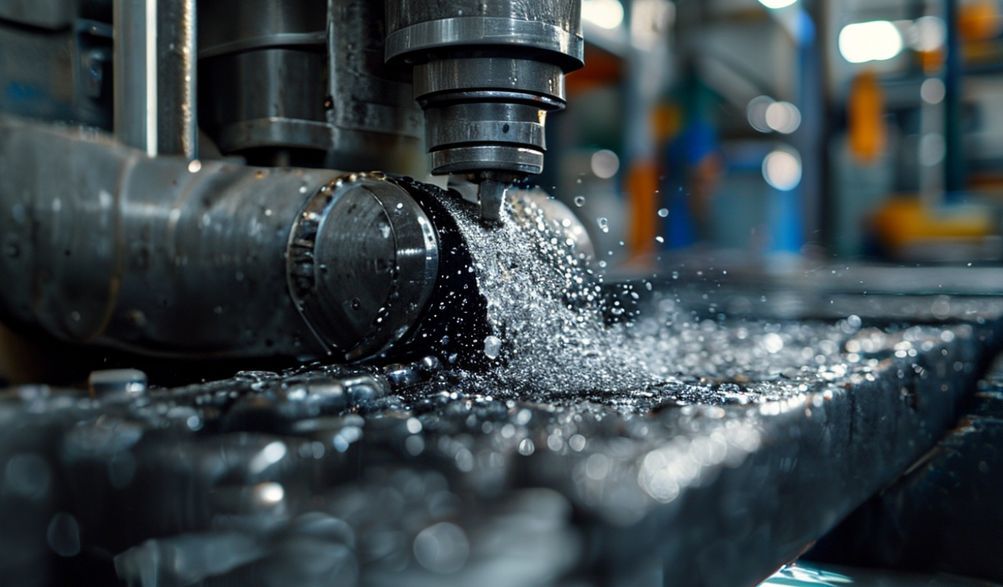
The Ultimate Guide to Hydraulic Brick Machines: Efficiency, Types, and Investment Insights
Giriş
The global construction industry is projected to reach a staggering $15.2 trillion by 2030, driven by relentless urbanization and infrastructure development. At the heart of this growth lies a fundamental need: high-quality, affordable building materials. For centuries, brick-making was a labor-intensive craft. Today, it’s a precision engineering feat, thanks to the hydraulic brick machine. This guide, distilled from years of industry experience in machinery deployment and brick manufacturing, is your definitive resource on this transformative technology.
A hydraulic brick machine is a sophisticated piece of equipment that utilizes a high-pressure hydraulic system to compress raw materials—such as concrete, fly ash, soil, or slag—into dense, uniform bricks or blocks. It represents a quantum leap from traditional methods, offering unparalleled control, consistency, and efficiency.
In this comprehensive guide, you will gain a clear understanding of the engineering principles behind these machines, their compelling advantages over older technologies, and the different types available. More importantly, we will provide actionable insights on selecting the right machine for your operation, ensuring its longevity, and maximizing your return on investment. Whether you are an entrepreneur eyeing the construction materials market, a project manager for a large-scale development, or a civil engineer specifying materials, this knowledge is critical for making informed, profitable decisions.
How a Hydraulic Brick Machine Works: The Engineering Behind the Pressure
To appreciate the value of a hydraulic brick machine, one must first understand the elegant engineering that powers it. It’s a system where fluid mechanics translates into perfect, repeatable brick formation.
The Core Hydraulic System
The magic word here is Paskalňyň kanuny. In a closed hydraulic system, pressure applied at one point is transmitted equally to all other points. Here’s how the core components work in concert:
- Hydraulic Pump: The heart of the system. It draws hydraulic oil from a reservoir and pressurizes it, creating the flow of energy.
- Hydraulic Cylinders: The muscles. This pressurized oil is directed into one or more large cylinders. The oil pressure acts on a piston inside the cylinder, generating immense linear force—often measured in hundreds of tons.
- Control Valves: The nervous system. These valves, often solenoid-operated, precisely direct the flow of oil to extend or retract the cylinders, controlling the compression and ejection cycles.
- Hydraulic Fluid: The lifeblood. It transmits power, lubricates components, and helps dissipate heat. Its quality and cleanliness are paramount.
This system allows for the generation of tremendous, smoothly applied, and easily controlled pressure—the key to superior brick quality.
The Production Cycle: From Raw Material to Finished Brick
The operation is a precise, cyclical process:
- Iýmitlenme: The prepared raw material mix (e.g., damp concrete, stabilized earth) is fed into the machine’s mold cavity, either manually, via a conveyor, or by an automated feeder.
- ЫКСЫЛДЫРЫЛМАК The hydraulic cylinder(s) drive a compaction head into the mold cavity. The material is subjected to intense, sustained pressure, typically between 150 to 400 tons. This pressure compacts the particles, removes air voids, and forms a brick of exceptional density.
- Чыгаруу жана дарылоо: The pressure is released, and the cylinder retracts. The newly formed brick is then ejected from the mold onto a pallet or conveyor. Unlike fired clay bricks, these are often “cured” through air-drying or steam curing chambers to achieve full strength, a far more energy-efficient process.
Esasy Bölümler we Olaryň Wezipeleri
Beyond the hydraulic system, several components are crucial:
- Kalıp/Şablon: This defines the brick’s shape, size, and surface texture. Interchangeable molds allow one machine to produce everything from standard blocks to decorative pavers.
- Kontrol paneli (PLC): The brain. In automatic models, a Programmable Logic Controller manages the entire cycle—timing, pressure, sequence—ensuring consistency and allowing for easy adjustments.
- Gurluşyk Çarçuwasy: The skeleton. A heavy-duty, rigid steel frame withstands the immense forces generated during compression without flexing, ensuring dimensional accuracy.
- Konveyer we Pallet Sistemalary: For automation. They transport raw materials in and finished bricks out, enabling continuous production.
Top Advantages of Using a Hydraulic Brick Press
Why has this technology become the gold standard for modern brick production? The benefits are tangible and impact every aspect of the business, from product quality to the bottom line.
Unmatched Product Quality and Strength
The high-pressure compaction results in a product that is:
* Ýokary Gysmaýylyk Güýji: Bricks can achieve strengths from 7 MPa to over 40 MPa, exceeding the requirements for most structural applications. This is often higher than traditionally fired clay bricks.
* Superior Dimensional Accuracy:Her bir garyş birmeňzeş bolany üçin, gurluşyk çalt we arassa geçýär we garyş az ulanylýar.
* Pes suw siňdiriş: The dense structure minimizes water ingress, enhancing durability, especially in freeze-thaw cycles.
* Excellent Surface Finish: Bricks come out of the mold with smooth, sharp edges and consistent texture.
Remarkable Production Efficiency and Output
- Ýokary awtomatlaşdyrylan: From feeding to stacking, processes can be fully automated, drastically reducing labor costs and human error.
- Fast Cycle Times: A modern machine can complete a compression cycle in 10-20 seconds, producing thousands of bricks per 8-hour shift.
- Üznüksiz işleýiş: With proper systems, these machines can run for extended periods, maximizing output and asset utilization.
Exceptional Versatility and Material Use
This is a key sustainability and economic advantage.
* Haryt dürlüligi: One machine can produce solid blocks, hollow blocks, paving stones, interlocking bricks, and landscaping products by simply changing the mold.
* Diverse Raw Materials: It can utilize fly ash (a coal power plant byproduct), slag, quarry dust, and even recycled construction & demolition waste. This turns industrial waste into valuable resources, reducing environmental impact and material costs.
Long-Term Cost-Effectiveness and ROI
While the initial investment is significant, the total cost of ownership is favorable:
* Lower Operational Costs: Eliminates the massive energy costs associated with firing kilns. Labor costs are also significantly reduced.
* Reduced Waste: Precise compression and consistency mean near-zero product waste compared to variable kiln-fired batches.
* Energetika samsady: The process consumes electricity only during the compression cycle, unlike a kiln that must maintain high heat for days.
* Dayanıklılık: Well-maintained hydraulic machines have a long service life, providing returns for decades.
Types of Hydraulic Brick Making Machines: Choosing Your Model
Selecting the right type of machine is the first critical decision. The market caters to operations of all scales.
Fully Automatic Hydraulic Brick Machines
- Düşündiriş: The pinnacle of automation. These are complete production lines with automatic material batching, conveying, pressing, brick stacking, and pallet return systems, all controlled by a central PLC.
- Iň Gowy: Large-scale factories and high-volume producers requiring output of 10,000+ bricks per day with minimal manual labor.
Semi-Automatic Hydraulic Brick Machines
- Düşündiriş: Strikes an optimal balance. The compression and ejection are powered by hydraulics and automated, but the feeding of raw material or removal of finished bricks may be manual. They offer excellent output with a lower capital investment.
- Iň Gowy: Medium-scale businesses, startups looking to scale, and projects with output needs of 2,000 to 8,000 bricks per day.
Manual/Hydraulic Hybrid Machines
- Düşündiriş: Often small, stationary presses. A manual lever or jack is used to activate the hydraulic pump, which then applies pressure. They are simple, robust, and affordable.
- Iň Gowy: Small workshops, community projects, DIY builders, or for producing specialty bricks in low volumes. Ideal for testing markets or materials.
Mobile Hydraulic Brick Machines
- Düşündiriş: These are compact, semi-automatic or manual machines mounted on a trailer chassis.
- Iň Gowy: Large construction sites (like remote road or dam projects). Producing bricks directly on-site slashes transportation costs of finished bricks and allows for the use of locally sourced soil or aggregate.
Satyn almakdan öň göz öňünde tutmaly ähmiýetli amiller
A hydraulic brick machine is a major investment. Success hinges on a thorough and honest evaluation. Industry practice shows that rushing this step is the most common cause of post-purchase challenges.
Öndürijilik Talapalaryňyzy Bahalandyrmak
Start with a clear business plan:
* Output Needed: Calculate bricks per hour/day/month based on your market demand or project schedule. Don’t just buy the biggest machine; buy the right-sized one.
* Kiriş görnüşleri: What products will you sell? Standard blocks, pavers, interlocking bricks? Ensure the machine and available molds can produce your target portfolio.
* Çygmalar: What is your primary raw material (ceconcrete, fly ash, local soil)? Its properties (moisture content, gradation) will influence machine settings and mold design.
Machine Specifications Deep Dive
Look beyond the sales brochure:
* Pressure Rating (Tonnage): This directly correlates to brick density and strength. For standard concrete blocks, 150-250 tons may suffice. For high-strength pavers, 300+ tons is typical.
* Mold Size & Customization: Check the standard mold sizes offered and the supplier’s ability to custom-manufacture molds for your unique designs.
* Güýç talap edýän zatlar: Ensure your facility has the correct electrical supply (3-phase is standard for industrial models).
* Gurluşyk Sypaty: Inspect the thickness of steel plates, the quality of welding, and the brand of hydraulic components (pumps, valves). These dictate longevity.
Supplier Evaluation and After-Sales Support
This is arguably the most critical factor for ensuring trustworthiness and a successful outcome.
* Manufacturer Reputation: Research their history, years in business, and client portfolio. Look for a manufacturer, not just a trading company.
* Ygtyýarnamalar: Legitimate suppliers will have quality management certifications (ISO) and machinery safety certifications (CE for export).
* Satyn alanyň yzyna goldaw: Confirm the availability of installation supervision, operator training, a comprehensive warranty, and a reliable supply of spare parts. Ask for references and speak to past clients.
Budgeting and Total Cost of Ownership
- Look Beyond Sticker Price: Factor in shipping, import duties (if applicable), installation, and initial spare parts.
- Amalýat çykdajylary: Estimate costs for electricity, hydraulic oil, maintenance, and labor.
- ROI Calculation: Based on your production capacity, brick selling price, and operational costs, model a realistic payback period (often between 1-3 years for a well-run operation).
Operating and Maintaining Your Machine for Longevity
A hydraulic brick machine is a robust workhorse, but its performance and lifespan depend entirely on proper operation and disciplined maintenance.
Essential Safety Protocols and Operator Training
- Mandatory Training: No operator should touch the machine without thorough training on its controls, cycle, and safety features.
- Safety Procedures: Lock-out/Tag-out (LOTO) procedures during maintenance, wearing safety glasses and gloves, and keeping clear of moving parts are non-negotiable.
- Read the Manual: The manufacturer’s operation and maintenance manual is your primary guide. Keep it accessible.
Routine Maintenance Checklist
Preventative maintenance is cheap; breakdowns are expensive.
* Daily: Check hydraulic oil levels, inspect for leaks, clean the mold and feed hopper, and ensure all guards are in place.
* Weekly: Check and tighten bolts/nuts on the frame and mold, inspect hydraulic hoses for wear.
* Monthly/Quarterly: Change or clean hydraulic oil filters, test the quality of the hydraulic oil, and grease all moving bearings.
* Annually: Consider a full system check by a qualified technician, including a complete oil change and pump performance test.
Troubleshooting Common Issues
- Low Brick Density/Strength: Usually caused by incorrect material mix (too dry or poor gradation) or insufficient compression pressure. Check material preparation first.
- Hydraulic Oil Leaks: Identify the source (seals, hose fittings). Replace worn seals immediately to prevent system contamination.
- Slow or Jerky Operation: Could indicate contaminated hydraulic oil, a clogged filter, or a failing pump. For major hydraulic or electrical issues, always shut down the machine and consult a professional technician. Attempting complex repairs without expertise can cause greater damage and void warranties.
Frequently Asked Questions (FAQ) About Hydraulic Brick Machines
Q1: What is the average production capacity of a standard hydraulic brick machine?
Capacity varies wildly. A small manual press may produce 300-500 bricks per day, a semi-automatic model 2,000-5,000 bricks per 8-hour shift, and a fully automatic line 10,000-30,000+ bricks per shift. Always define “capacity” in bricks per hour with a specific product type.
Q2: Can I use a hydraulic brick machine to make concrete paver blocks or only clay bricks?
Absolutely. In fact, hydraulic machines are the primary method for producing high-quality concrete pavers, blocks, and kerbstones. They are exceptionally versatile. For clay bricks, you would use a specific “hydraulic pressed clay brick” machine, which operates on the same principle but is designed for that material’s properties.
Q3: How does the brick strength from a hydraulic press compare to traditionally fired clay bricks?
Hydraulically pressed concrete or fly ash bricks often surpass the compressive strength of standard fired clay bricks. For example, a good quality fired clay brick may be around 10-20 MPa, while a hydraulically pressed concrete block can easily achieve 15-35 MPa or more, meeting and exceeding standards like ASTM C90.
Q4: What is the typical lead time for delivery and installation from a reputable supplier?
For standard models, expect 30-60 days for production after order confirmation, plus shipping time. For custom or large automated lines, lead times can extend to 90-120 days. Reputable suppliers provide clear timelines and updates.
Q5: Are hydraulic brick machines environmentally friendly?
Yes, they are a cornerstone of green construction technology. They consume less energy than kilns, produce no direct emissions, and critically, they can utilize industrial waste (fly ash, slag) as primary raw materials. This reduces landfill use and the carbon footprint of cement production.
Netije
The hydraulic brick machine is more than just a piece of factory equipment; it is a catalyst for efficient, sustainable, and profitable construction material production. By harnessing controlled hydraulic pressure, it delivers unmatched consistency in quality, opens doors to material innovation, and provides a scalable path from small enterprise to industrial powerhouse.
Our final, evidence-based recommendation is this: your investment’s success hinges on the trilogy of thorough self-assessment, meticulous supplier selection, and an unwavering commitment to proper operation and maintenance. Do not prioritize price over partnership; a reputable supplier with proven expertise and robust after-sales support is invaluable.
As global trends continue to emphasize sustainable infrastructure and affordable housing, the role of advanced, versatile brick-making technology will only grow. By integrating a hydraulic brick machine into your operations, you are not just purchasing a machine—you are investing in the future of building.
Ready to take the next step? We strongly advise consulting with a qualified civil engineer to finalize your product specifications and engaging directly with certified machinery manufacturers to discuss your specific project needs and receive detailed, tailored quotations.
<