
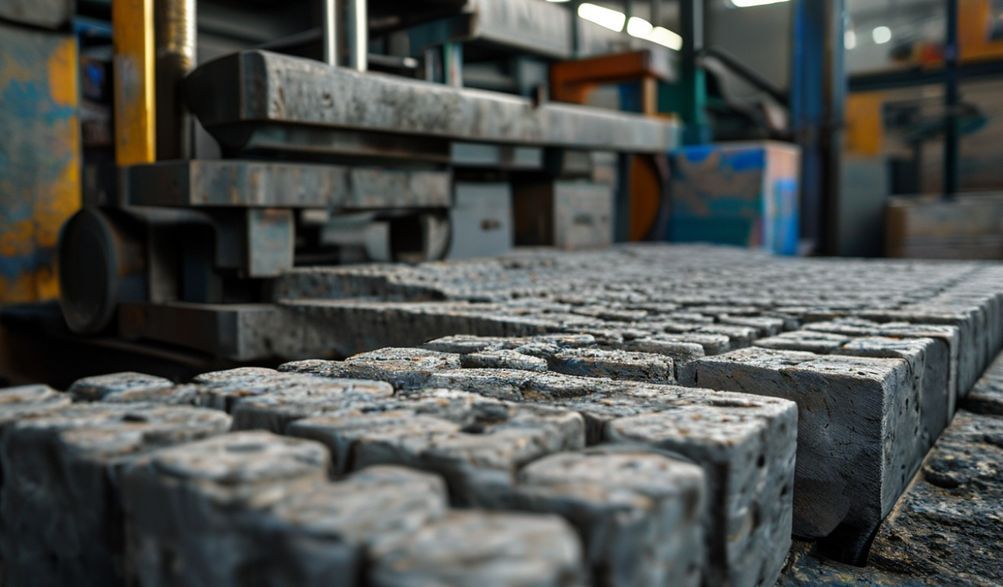
Block Machine Price in Pakistan 2026: A Complete Buyer’s Guide
Giriş
Imagine you’re a contractor in Lahore, midway through a housing project. The quote for bricks just increased by 15% overnight, and the new batch delivered is uneven and crumbling. Your timeline is slipping, your budget is bleeding, and your client is getting impatient. This scenario is all too familiar for builders and entrepreneurs across Pakistan, where the volatility of traditional brick prices and inconsistent quality can derail even the best-planned projects.
The solution? A growing number of industry professionals are turning to in-house concrete block production. Concrete blocks offer superior strength, uniformity, and cost predictability. But stepping into block manufacturing starts with one critical question: what is the actual block machine price in Pakistan?
The answer is not a simple figure. Prices range from a few thousand to tens of millions of rupees, influenced by a maze of factors like automation, capacity, and brand. Based on extensive discussions with local manufacturers, suppliers, and contractors, this guide aims to demystify that very question. Our goal is to provide you with unbiased, factual, and detailed information on block machine prices, types, and the true cost of ownership. By the end, you’ll be equipped to make an informed investment, avoid costly pitfalls, and choose a machine that becomes a profit center, not a liability.
Understanding Concrete Block Machines and Their Market in Pakistan
Before diving into price tags, it’s crucial to understand what you’re buying and why the market is shifting towards concrete blocks.
Why Concrete Blocks? Advantages Over Traditional Bricks
Concrete blocks (or concrete hollow blocks – CHB) are no longer just an alternative; they are becoming the preferred building material in modern Pakistani construction. Here’s why:
- Ыйсаплылык: While the initial machine investment is required, the per-unit cost of producing blocks is often lower and far more stable than purchasing bricks, especially during inflation.
- Superior Strength & Durability: Blocks offer higher compressive strength, leading to more robust and longer-lasting structures.
- Uniformity & Precision: Machine-made blocks are consistent in size and shape, ensuring straight walls, less mortar usage, and faster construction.
- Термик жана тыңшылдык изоляциясы: The hollow cores provide natural insulation, keeping buildings cooler in summer and warmer in winter, while also dampening sound.
- Gurluşyk Tizligi: Their larger size means fewer units are laid per square foot, significantly speeding up the wall-building process.
Types of Block Making Machines Available in Pakistan
The Pakistani market offers a spectrum of machines, from simple manual setups to fully automated plants. Your choice dictates your price, output, and labor needs.
-
Golýama blok maşynlary: These are the most basic, human-powered machines. Operators manually fill the mold, compress the mix with a lever, and remove the finished block.
- Çykyş: Very low (200-500 blocks per 8-hour shift).
- Price Indicator:Iň arzan girýän nokady.
- Iň Gowy: Individuals or startups for very small-scale, personal project use.
-
Ýary-awtomatik blok maşynlar: This is the sweet spot for most small to medium-sized businesses (SMBs). Key processes like mixing and vibrating are mechanized, but block ejection and pallet handling may require some manual intervention.
- Çykyş: Good productivity (800-2,500 blocks per hour).
- Price Indicator: Moderate investment with a strong balance of cost and output.
- Iň Gowy: Small construction firms, block supply businesses, and housing societies.
-
Doly awtomatik blok maşynlary: These are complete production lines with computerized control panels. They automate everything from raw material feeding to block curing and stacking, requiring minimal human oversight.
- Çykyş: High-volume (2,500 to 10,000+ blocks per hour).
- Price Indicator: A significant, industrial-level investment.
- Iň Gowy: Large-scale block manufacturing plants, industrial construction projects, and major developers.
-
Мобил блок машыналары: Mounted on trailers, these machines are designed for on-site production, eliminating transport costs for blocks over long distances.
- Çykyş: Varies (often semi-automatic capacity).
- Price Indicator: Similar to stationary semi-automatic machines, plus mobility features.
- Iň Gowy: Large, remote infrastructure projects like dams, roads, or distant housing schemes.
Key Pakistani Brands and Import Options
- Local Manufacturers: Pakistan has a robust manufacturing base, particularly in industrial hubs like Lahore, Gujranwala, Sialkot, and Karachi. Local brands are popular because they are built for local conditions, offer easier access to spare parts, and provide crucial after-sales service. Their pricing is generally competitive.
- Imported Machines: Machines from Hytaý are widely available and often come with advanced features at a lower upfront cost. European machines (e.g., from Germany) are synonymous with high precision and durability but command a premium price. The critical factor with imports is the supplier’s commitment to after-sales support within Pakistan.
Detailed Breakdown of Block Machine Prices in Pakistan
This section provides a transparent look at current market estimates. Remember, these are 2026 price ranges and can fluctuate based on currency exchange rates, steel prices, and specific model features.
Price Ranges by Machine Type (2026 Estimates)
| Machine Type | Capacity (Blocks per Hour) | Estimated Price Range (PKR) | Best For |
| :— | :— | :— | :— |
| El kitaby | 200 – 500 | 50,000 – 200,000 | Startups, very small personal projects. |
| Ýary-awtomatik | 800 – 2,500 | 400,000 – 1.8 Million | Small/Medium Businesses (SMBs), block supply shops. |
| Doly Awtomatik | 2,500 – 10,000+ | 2 Million – 10+ Million | Large plants, industrial-scale production. |
Möhüm Bellik: The price for a fully automatic line can exceed PKR 20 million for top-tier, high-capacity systems with complete curing and stacking lines.
Factors Drastically Affecting the Final Price
The price tag you get quoted will depend on these key variables:
- Önümçilik kuwwaty: A machine producing 1,000 blocks/hour will cost less than one producing 2,500 blocks/hour, even from the same brand.
- Awtomatlaşdyryş derejesi: This is the primary cost driver. Moving from semi-automatic to fully automatic involves a major price jump due to added robotics, conveyors, and PLC control systems.
- Brand Origin & Reputation: Well-established local brands and premium European imports sit at the higher end, while new local entrants and standard Chinese imports offer more budget-friendly options.
- Mold Type & Versatility: The basic price often includes a standard hollow block mold. If you need to produce solid blocks, paving blocks (interlocking), or designer blocks, additional molds will increase the cost. A machine that can change molds quickly is more expensive.
- After-Sales Service & Warranty: A supplier offering a comprehensive 1-year warranty, on-site training, and guaranteed spare part availability will factor that into the price. This is a value-added cost worth paying for.
- Required Ancillary Equipment: The core machine often needs supporting equipment, which may or may not be included:
- Pan Mixer or Concrete Mixer
- Conveyor Belts
- Block Curing Racks or Chambers
- Pallet Return System
The True Cost of Ownership: Beyond the Sticker Price
The purchase price is just the entry ticket. A smart buyer evaluates the Total Cost of Ownership (TCO).
Initial Investment vs. Long-Term Value
Think of your machine as an asset that should generate a Return on Investment (ROI). Calculate:
* Your Savings: Cost of blocks you no longer need to buy from third parties.
* Potential Revenue: Income from selling surplus blocks to other contractors.
* ROI Timeframe: A well-utilized semi-automatic machine in a busy market can often pay for itself within 12-24 months through these savings and revenues.
Operational Costs to Consider
Your monthly running expenses will include:
* Elektrik energiýasy sarp edişi: Fully automatic lines consume significant electricity. Check the motor power ratings (in kW).
* Çig mal. Cement, sand (or fly ash), and crush stone. Their quality directly affects your block quality.
* Emegeý Even automatic machines need operators, maintenance staff, and laborers for material handling.
* Maintenance & Spares: Regular lubrication, replacement of wear parts like mold liners, and hydraulic oil changes.
Hidden Costs and How to Avoid Them
These are the budget-killers:
* Downtime from Poor Service: A machine stuck for weeks waiting for a technician or spare part loses money daily. Solution: Choose a supplier with a proven service network.
* Frequent Breakdowns from Low-Quality Build: Cheap, substandard steel and poor welding lead to cracks and failures. Solution: Physically inspect the machine’s build quality before buying.
* Inefficient Production from Untrained Staff: Poorly trained operators produce waste blocks and cause machine strain. Solution: Ensure supplier-provided training is part of the deal.
How to Choose the Right Block Machine for Your Needs
Selecting a machine is a strategic decision. Follow this framework.
Öndürijilik Talapalaryňyzy Bahalandyrmak
Özüňi sor:
* What is my current average daily or monthly block consumption?
* Is this for my own projects, or do I plan to start a commercial supply business?
* What are my growth plans for the next 3-5 years? (Buying a slightly larger capacity now can be wiser).
Key Features to Inspect Before Buying
When you visit a showroom or factory, look beyond the brochure:
* Gurluşyk Sypaty: Check the thickness and grade of the steel used in the frame and mold. Inspect the quality of welding.
* Gidrawlik ulgam: It should be robust, leak-free, and from a reliable brand. Ask about the pump and valve origins.
* Вибратор системасы: This is the heart of block density. Powerful, well-mounted vibrator motors ensure strong, solid blocks.
* Kontrol paneli: For semi and fully automatic machines, the panel should be user-friendly, with clear labeling and protective covers.
The Importance of Supplier Verification
This is where due diligence pays off immensely. Always prioritize a supplier with a proven track record of service over the absolute cheapest quote.
- Visit the Factory: See if they actually manufacture or just assemble/import. Assess their workshop’s professionalism.
- Ask for Client References: Get contact details of 2-3 past buyers, preferably from your region, and call them. Ask about machine performance and after-sales service.
- Verify Support Logistics: Where is their service center? How quickly can they dispatch a technician? Do they stock common spare parts?
- Get Everything in Writing: The quotation should detail the price, warranty terms, delivery time, training offered, and list of included items.
Frequently Asked Questions (FAQ) About Block Machine Prices
Q1: What is the cheapest block machine available in Pakistan?
A: Basic manual block machines are the cheapest, starting from around PKR 50,000. However, remember their output is very low and they are labor-intensive. They are only suitable for tiny, personal projects.
Q2: Can I get a good quality semi-automatic machine under PKR 800,000?
A: Yes, it is possible. In this range, you can expect a reliable, basic-model semi-automatic machine from a reputable local manufacturer with a capacity of around 800-1,200 blocks per hour, suitable for a small business startup.
Q3: Are imported Chinese machines better than local ones?
A: It’s not a simple “better or worse.” Chinese machines can offer more features and higher stated capacities for a comparable price. However, local Pakistani machines have the advantage of being designed for local power conditions, material mixes, and crucially, come with easier access to after-sales service and spare parts. The reputation of your specific supplier is more important than the country of origin.
Q4: What is the expected lifespan of a block machine?
A: With proper operation, regular maintenance, and timely replacement of wear parts, a good quality block making machine can have a productive lifespan of 10 to 15 years or more. Neglect can reduce this to just a few years.
Q5: Does the price include installation and training?
A: This varies significantly. Reputable suppliers almost always include basic installation supervision and operator training in the package. You must explicitly confirm this before finalizing any purchase. Always get the scope of training and support detailed in your contract.
Netije
Navigating the “block machine price in Pakistan” landscape requires looking beyond the initial quotation. As we’ve explored, the final cost is a function of capacity, automation, brand, and the invaluable component of after-sales support. Your investment should be judged not just by its price tag, but by its potential for reliable, long-term production and strong return on investment.
The most prudent path forward is to invest time before investing money. Thoroughly assess your production needs, scrutinize the build quality of shortlisted machines, and, most importantly, vet your supplier’s reputation for service. A reliable machine from a trustworthy partner is an asset that will strengthen your construction business for years to come.
Ready to take the next step? We recommend contacting 2-3 reputable suppliers from Pakistan’s major industrial hubs. Schedule visits to their facilities, inspect their machines in person, and request detailed, written quotations that include warranty and support terms. For more insights on building material business plans and optimizing your block production, explore our related guides on plant setup and cost management.
Author Bio:
Ahmed Raza is a Construction Industry Analyst with over a decade of experience in project management and building material procurement across Pakistan. His work focuses on equipping contractors and entrepreneurs with practical, data-driven insights to improve efficiency and profitability in the construction sector.