
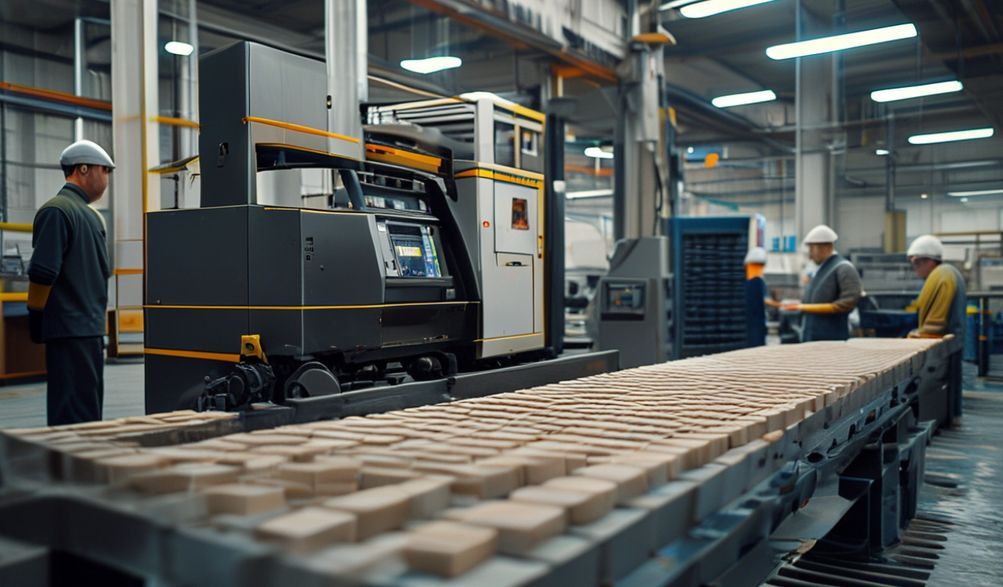
The Definitive Guide to Choosing a China Block Bricks Making Machine Manufacturer
Giriş
The global construction industry is a relentless engine of growth, demanding efficient, sustainable, and cost-effective building materials. At the heart of this supply chain lies a critical piece of equipment: the block bricks making machine. For entrepreneurs, project managers, and construction firms worldwide, sourcing the right machinery is not just a purchase—it’s a pivotal investment in productivity and profitability.
China has unequivocally established itself as the global manufacturing hub for industrial machinery, and block making equipment is no exception. Driven by unparalleled economies of scale, a mature supply chain, and rapid technological adoption, Chinese manufacturers offer a compelling blend of innovation, durability, and value. However, navigating this vast and complex market requires more than just a quick online search; it demands expert insight and a systematic approach.
This guide serves as your authoritative, experience-driven resource. Our purpose is to translate industry knowledge into actionable steps, helping you identify, vet, and partner with a reputable China block bricks making machine manufacturer. We’ll move beyond surface-level advice, delving into technical evaluations, procurement nuances, and long-term operational strategies. By the end, you’ll be equipped with a clear framework to make a confident, informed decision that ensures reliability, performance, and a strong return on investment.
Блок кирпич ясаý машиналарын түшүнүү: Түрлері ве колденилиши
Before evaluating manufacturers, a firm grasp of the machinery landscape is essential. This foundational knowledge allows you to match your specific production goals with the right technology.
Негизги Машина Түрлери: Колдан Автоматлашдырыланга чейин
The spectrum of machines caters to every scale of operation.
- Elýeterli & Ýary-awtomatik Maşynlar: These are the entry point for small-scale startups, community projects, or businesses with limited capital. Operation involves significant manual labor for feeding raw material and removing finished blocks. They are low-cost and simple to maintain but have limited output.
- Doly awtomatik blok ýasama maşynlary: This is the domain of serious, high-volume production. Models like the QT4-15, QT6-15, or QT8-15 represent industry standards. They integrate automatic material batching, mixing, pressing, curing, and pallet return into one seamless line. Controlled by advanced PLC systems, they maximize output (from thousands to tens of thousands of blocks per day) while minimizing labor.
- Мобил блок машыналары: A versatile solution for producing bricks directly at the construction site. By eliminating the cost and hassle of transporting heavy blocks, they are ideal for large infrastructure projects, remote locations, or businesses serving a decentralized market.
Esasy Çykdajylar: Standart Kerpiçlerden Daşary
Modern machines are highly adaptable. By simply changing the mold, a single machine can produce a diverse product portfolio:
- Boş bloklar: The standard for load-bearing walls, offering excellent strength-to-weight ratio and insulation.
- Gaty Bloklar: Used for foundations, pavements, and areas requiring extreme durability.
- Pawerlar we Gyshly Bloklar: For driveways, walkways, and landscaping, known for their aesthetic appeal and permeability.
- Curbstones and Special Shapes: For road construction and architectural detailing.
Furthermore, reputable machines can process various raw materials, including conventional concrete mixes, eco-friendly fly ash, cement, and even soil in certain applications.
The Technology Spectrum: Hydraulic vs. Vibration Systems
The core compaction technology defines the machine’s character and best-use case.
- Vibration Press Systems: Utilize high-frequency vibration combined with mechanical pressure to compact the concrete mix in the mold. They are generally faster for certain block types and can be more energy-efficient. Ideal for standard hollow and solid blocks.
- Gidrawlik Press Sistemalary: Use sustained, high-pressure hydraulic force to compress the material. This results in blocks with exceptionally high density, smooth surfaces, and precise dimensional accuracy. Hydraulic systems are often preferred for paving stones, interlocking blocks, and high-strength products. Many top-tier automatic machines now combine vibration for initial compaction with a hydraulic press for final densification.
Why Source from a China Block Bricks Making Machine Manufacturer?
The decision to source from China is strategic, offering distinct advantages that are hard to match elsewhere.
The Competitive Edge: Cost, Scale, and Innovation
The benefits are multifaceted:
- Ыйсаплылык: China’s integrated supply chain for steel, hydraulics, and electrical components significantly reduces raw material and fabrication costs, translating into more competitive pricing for end buyers.
- Manufacturing Scale & Experience: Decades of serving global markets have honed production processes. Factories are equipped to handle both standardized high-volume orders and customized solutions.
- Çalt Tehnologiýa Öwrenişi: Chinese manufacturers quickly integrate global technologies, such as Siemens or Schneider PLC controls, energy-efficient systems, and user-friendly touchscreen interfaces, offering advanced features at accessible price points.
Navigating the Market: OEMs vs. Export-Focused Factories
Understanding the manufacturer’s orientation is key.
- OEMs (Original Equipment Manufacturers): These are often large factories that may produce for domestic brands or act as the production base for international companies. They excel in engineering and volume but may have less polished export support.
- Export-Focused Factories: These companies are structured specifically for international trade. They typically have English-speaking sales and support teams, understand international standards (CE, ISO), and are experienced with export documentation and logistics. For most first-time international buyers, this is the recommended starting point.
Important Considerations (A Balanced View)
A trustworthy guide must address challenges respectfully:
- Communication Barriers: While improving, language and time-zone differences can still pose issues. Prioritizing manufacturers with clear, responsive communication channels is crucial.
- Quality Variance: The market has a wide quality spectrum. The lowest quote often carries hidden costs in durability and support. Due diligence, as outlined in the next section, is non-negotiable.
- Intellectual Property: If you have a unique block design, ensure your contract includes clear IP and mold ownership clauses. Work with manufacturers who respect confidentiality agreements.
How to Vet and Select a Trustworthy Manufacturer in China
This is the heart of your journey. A systematic vetting process separates market leaders from unreliable suppliers.
Step 1: Deep-Dive Research & Verification
Start with foundational legitimacy checks.
- Business License Verification: Use platforms like Alibaba’s Supplier Verification (if sourcing there) or request the official Chinese business license (Business License). Check the registered capital and scope of business.
- Analyze Online Presence: A professional, informative website with detailed technical specifications, photos, and videos is a positive sign. Look for a history of updates and active engagement.
- Assess Longevity & Specialization: A company with 10+ years of focused experience in block machine manufacturing inherently possesses more accumulated technical knowledge than a general machinery trader.
Step 2: Assessing Technical Expertise & Production Capability
Move beyond sales talk to technical substance.
- Ask Probing Questions:
- “Can you detail your quality control process at each production stage?”
- “What ISO certifications does your factory hold?”
- “Do you have an in-house R&D team for mold and machine customization?”
- “What brand of hydraulic components and PLC systems do you use as standard?”
- Request Documentation: Ask for a manufacturing quality control plan or a detailed testing report for a finished machine. This demonstrates procedural rigor.
Step 3: Evaluating Transparency and Communication
Trust is built on clarity.
- Scrutinize the Quotation: A professional, itemized quote should list the FOB price, machine specifications, warranty terms, spare parts list, and packaging details. Vague quotes are a red flag.
- Demand Real Proof:Soragcustomer references from your region or similar projects. Ask for actual case study photos or videos of machines in operation at client sites, not just staged factory shots.
Step 4: The Critical Role of After-Sales Service
The relationship begins after the machine ships.
- Warranty Clarity: Understand exactly what is covered (e.g., mainframe, hydraulic cylinder, PLC) and what is considered wear-and-tear (e.g., molds, seals). 12-18 months is standard for core parts.
- Support Structure: What does installation support look like? Do they provide comprehensive English manuals, wiring diagrams, and training videos? Is remote troubleshooting via video call available?
- Spare Parts Policy: Confirm the lead time for critical spare parts and their pricing. A reliable manufacturer will maintain a stock of commonly needed parts.
The Procurement Process: From Inquiry to Installation
A smooth procurement process hinges on clear expectations and professional execution.
Phase 1: Initial Inquiry and Technical Specification Alignment
Your Request for Quotation (RFQ) should be detailed. Include:
* Desired block type, size, and output capacity (blocks per hour/day).
* Raw material specifications (cement grade, aggregate size).
* Power supply requirements (voltage, phase).
* Level of automation (semi-auto, fully automatic, with or without palletizer).
Phase 2: Negotiation, Contract, and Payment Terms
- Contract: Ensure a formal Proforma Invoice (PI) and later a Sales Contract are issued, detailing all agreed terms, specifications, and responsibilities.
- Payment: Secure terms are standard. A common structure is 30% deposit via T/T, 70% balance against copy of shipping documents. For large orders, a Letter of Credit (L/C) provides security for both parties.
Phase 3: Pre-Shipment Inspection and Logistics
- Inspection: For high-value orders, hiring a third-party inspection company (like SGS or Bureau Veritas) to conduct a Pre-Shipment Inspection (PSI) at the factory is a wise investment. They verify machine quality, assembly, and function before shipping.
- Logistics: Understand Incoterms. FOB (Free On Board) is common, where you own the goods and assume risk/cost once loaded on the vessel. The manufacturer handles customs clearance on the Chinese side. CIF (Cost, Insurance, and Freight) means they arrange shipping and insurance to your port, simplifying the process for you at a higher overall cost.
Maximizing Your Investment: Operation and Maintenance
Your partnership with the manufacturer should extend into the operational life of the machine.
Best Practices for Machine Longevity
Implement a strict maintenance schedule:
* Daily: Check hydraulic oil levels, clean the machine, and inspect for loose bolts or leaks.
* Weekly: Lubricate all moving parts as per the manual, check vibration motor mounts.
* Monthly: Inspect hydraulic hoses and electrical connections, clean or replace filters.
Troubleshooting Common Issues
- Block Cracking: Often related to improper mix design (too much water or cement), insufficient vibration/pressure time, or improper curing.
- Poor Vibration or Hydraulic Issues: Check motor connections, hydraulic fluid quality and level, and for any solenoid valve blockages.
Sourcing Genuine Spare Parts
Always source critical spare parts (like proprietary hydraulic valves or control boards) directly from your original manufacturer or their authorized agent. Using counterfeit parts can void your warranty and cause machine failure.
Frequently Asked Questions (FAQ)
Q1: What is the average lead time for a machine order from China?
A: For standard models, expect 30-45 days after deposit receipt. For fully automated lines or highly customized machines, lead time can extend to 60-90 days. Seasonality (like Chinese New Year) can also affect timelines.
Q2: Can the machine be customized for my specific block design or local materials?
A: Yes, reputable manufacturers with strong R&D departments routinely perform mold customization. You can provide a drawing or sample. They can also adjust mix formulas and machine settings to optimize performance for your local sand, cement, or fly ash.
Q3: What is the typical warranty period, and what does it cover?
A: A standard warranty is 12-18 months for core components like the mainframe, hydraulic station, and PLC controller, excluding consumable wear parts (molds, seal rings, filter elements). The exact coverage must be explicitly stated in your contract.
Q4: Do manufacturers provide installation and training support overseas?
A: Most offer comprehensive remote support via video call, detailed manuals, and instructional videos. Dispatching a technician for on-site installation and training is almost always available but is an additional, negotiated cost covering their travel, accommodation, and service fees.
Q5: How do I compare prices between different Chinese manufacturers effectively?
A: Compare based on a “like-for-like” specification sheet. Scrutinize the brand and quality of core components (e.g., Siemens vs. unknown PLC), the thickness of steel used, the included services (warranty, support), and the company’s reputation. The cheapest option is rarely the most cost-effective in the long run.
Netije
Sourcing a block bricks making machine from China presents a tremendous opportunity to acquire high-capacity, technologically advanced equipment at a competitive investment. The key to unlocking this value lies not in finding the lowest price, but in identifying the most reliable partner.
This guide has provided a framework built on experience, emphasizing technical verification, transparent communication, and the paramount importance of after-sales support. Use it as your checklist. Approach your search with diligence, ask the detailed questions we’ve outlined, and prioritize building a long-term relationship with a manufacturer whose expertise extends from the factory floor to your production site.
By doing so, you transform your procurement from a transactional purchase into a strategic investment, powered by a dependable China block bricks making machine manufacturer committed to your success.
<