
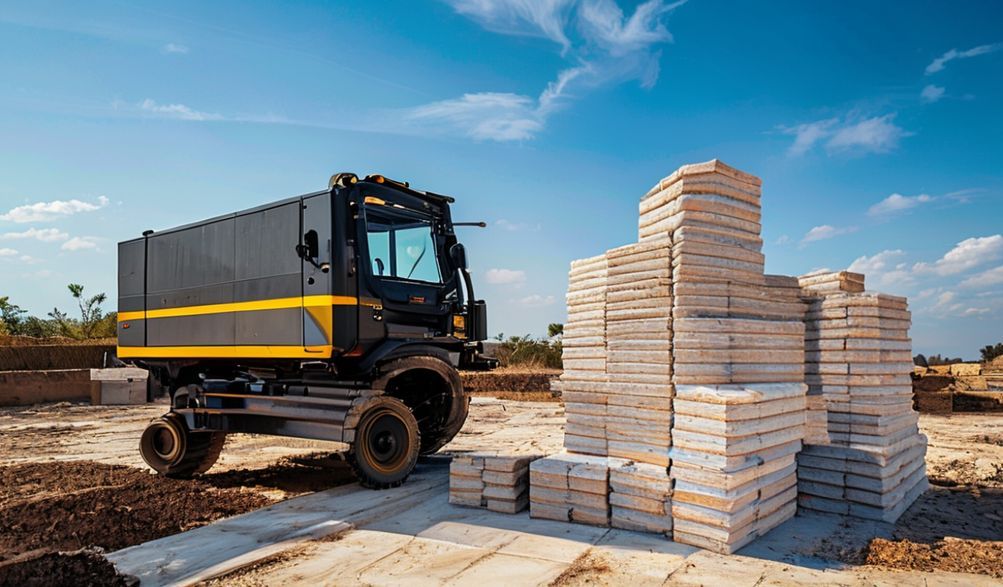
Concrete Block Making Machine Price List in Ethiopia (2026 Buyer’s Guide)
Giriş
Ethiopia’s skyline is transforming. With an annual construction sector growth rate consistently exceeding 10% and a national push for affordable housing and infrastructure, the demand for building materials has never been higher. At the heart of this boom is the humble concrete block—a fundamental component for modern construction. For contractors, developers, and entrepreneurs, this presents a pivotal question: should you keep buying blocks, or should you start making them?
With over a decade of experience supplying and advising on construction machinery across Addis Ababa, Oromia, Amhara, and other regional states, we’ve witnessed firsthand the transformative impact a reliable block making machine can have on a business. The initial search for a “concrete block making machine price list in Ethiopia” often leads to confusion, with figures ranging from a few thousand to millions of Birr.
This guide cuts through the noise. Our purpose is to provide you with a transparent, detailed 2026 price framework, explain the critical factors behind the costs, and offer practical, experience-driven advice. We are committed to unbiased information to help you make a cost-effective investment and avoid the common, costly pitfalls of importing and operating machinery in Ethiopia. Your success in securing the right equipment is our benchmark.
Understanding the Ethiopian Market for Block Making Machines
Navigating the machinery market requires an understanding of the landscape it operates within. Ethiopia’s unique economic and infrastructural context directly influences what machine you need and how you should procure it.
The Construction Boom and Demand for Blocks in Ethiopia
The drive is multi-faceted. Major public infrastructure projects, urban expansion under the Integrated Housing Development Program (IHDP), and private commercial real estate development are creating sustained demand. Concrete blocks are preferred for their durability, thermal properties, and cost-effectiveness compared to traditional materials. This isn’t a fleeting trend; it’s the foundation of the nation’s growth, ensuring a stable market for block producers for years to come.
Benefits of Investing in a Block Making Machine in Ethiopia
The financial logic is compelling:
* Ыкдырдың ыңгайлы болушы: Producing in-house eliminates supplier markups and gives you direct control over material quality and production schedules.
* Gelir ýöretmek: It opens a business opportunity to supply blocks to other contractors, developers, and individual home builders.
* Contribution to Local Economy: You create local jobs, utilize locally available raw materials (aggregates, sand), and contribute to import substitution—a key national economic goal.
Key Considerations Before Looking at Prices
The price tag is just one part of the equation. Ignoring these local factors can turn a good deal into a nightmare:
* Standards & Regulations: Ensure the machine can produce blocks that meet Ethiopian Standards (ES) for dimensions and compressive strength. This is non-negotiable for commercial projects.
* Çygmalaryň elýeterliligi: Assess the consistent supply and quality of cement, aggregates, and sand in your area. The machine is only as good as the mix you feed it.
* Güýç çeşmesi: Voltage fluctuations are common. Can the machine operate on your available power (typically 220V/380V)? For higher-capacity models, a generator backup plan is often essential.
* Satyn alanyň yzyna goldaw: This is arguably the most critical factor. Does the supplier have a local technician, a spare parts inventory in Ethiopia, and a clear service agreement? Downtime is lost income.
Types of Concrete Block Making Machines & Their Price Ranges
Machines are broadly categorized by their level of automation and mobility. Your choice here will define your initial investment, operational model, and growth potential.
Manual / Hand-Operated Block Machines
- Düşündiriş: These are simple, lever-operated machines that require significant manual labor for mixing, feeding, and block ejection. Ideal for very small-scale startups, community projects, or producing blocks for personal use.
- Price Range (2026 Estimate): ETB 15,000 – ETB 80,000
- Basic single mold: ETB 15,000 – ETB 35,000
- Improved multi-mold models: ETB 40,000 – ETB 80,000
Ýarym-awtomatiki blok ýasama maşynlary
- Düşündiriş: These machines use a mechanical or hydraulic system to compress the concrete mix, often with a vibrating table for better compaction. They may have a conveyor for pallet movement but require operators to feed material and remove finished blocks. This is the “sweet spot” for small to medium enterprises (SMEs) looking to scale up from manual labor.
- Price Range (2026 Estimate): ETB 200,000 – ETB 800,000
- Small stationary models (300-500 blocks/hour): ETB 200,000 – ETB 400,000
- Larger models with basic automation (700-1500 blocks/hour): ETB 450,000 – ETB 800,000
Doly awtomatik blok ýasama maşynlary
- Düşündiriş: These are complete production lines with automated material batching, mixing, block molding, curing, and stacking. They require minimal human intervention and offer very high, consistent output. The investment is substantial but justified for large contractors or dedicated block manufacturing plants.
- Price Range (2026 Estimate): ETB 1,000,000 – ETB 5,000,000+
- Standard automatic line (2000-4000 blocks/hour): ETB 1,000,000 – ETB 2,500,000
- High-capacity, computer-controlled plants (5000+ blocks/hour): ETB 3,000,000+
Мобил блок машыналары
- Düşündiriş: Mounted on a trailer, these machines can be towed directly to a construction site. They are typically diesel-powered and produce blocks on-location, eliminating transport costs for the finished product. Excellent for large, remote projects.
- Price Range (2026 Estimate): ETB 500,000 – ETB 2,000,000
- Small mobile units: ETB 500,000 – ETB 1,200,000
- High-output mobile plants: ETB 1,300,000 – ETB 2,000,000
Disclaimer: The prices provided are estimated ranges for 2026 based on current market trends and historical data. Actual prices will vary significantly based on the specific supplier, machine specifications, brand, and prevailing USD/ETB exchange rates at the time of purchase. Always obtain a formal, itemized quotation.
Detailed Price Breakdown: What Influences the Cost?
Why does one machine cost ten times more than another? Let’s dissect the factors so you can understand exactly what you’re paying for.
Machine Capacity (Blocks Per Hour)
Output is the primary price driver. A machine producing 500 blocks per hour (BPH) will cost a fraction of one producing 5,000 BPH. It’s not a linear increase; the technology and robustness required for high-speed production command a premium.
Level of Automation (Manual vs. Auto)
Automation replaces labor with capital investment. The initial cost is higher, but you gain:
* Consistent, higher output.
* Reduced long-term labor costs and dependency.
* Better quality control (less human error).
A semi-automatic machine offers a middle ground, automating the most labor-intensive part—compaction—while keeping the overall system cost manageable.
Brand and Country of Origin
- Chinese Machines: Dominate the market due to competitive pricing and wide availability. Quality can vary immensely, so supplier vetting is crucial.
- Indian Machines: Often offer a good balance of price and ruggedness, designed for challenging operating conditions similar to those in Ethiopia.
- European/Turkish Machines: Represent the premium tier with advanced technology, superior durability, and higher efficiency. The price reflects this, and parts may be more expensive and slower to source.
- Locally Assembled: Some suppliers assemble machines in Ethiopia using imported components. This can offer benefits like easier customization and potentially faster service.
Key Features and Mold Types
The base machine price often includes a standard mold (e.g., for 4″ hollow blocks). Additional, interchangeable molds for producing different products add cost:
* Hollow blocks (6″, 8″)
* Gaty bloklar
* Paving stones (interlocking, rectangular)
* Kerbstones
* Special design blocks
Investing in multiple molds increases your product versatility and market potential.
Hidden Costs: Shipping, Customs, and Installation
For imported machines, the CIF (Cost, Insurance, Freight) price is just the beginning. Ethiopian importers must budget for:
1. Sea Freight to Djibouti: Calculated per cubic meter (CBM) of the machine’s volume.
2. Land Freight to Addis Ababa (or other cities): Trucking from Djibouti port.
3. Customs Duty: Varies by machine type but can be a significant percentage of the CIF value.
4. Value Added Tax (VAT): 15% on the sum of CIF value + Customs Duty + other charges.
5. Clearing Agent Fees: For handling the customs process.
6. Gurnama we ýerine ýetirme: Some suppliers include this; for others, it’s an extra charge. Factor in potential costs for foundation preparation and electrical hookup.
From our experience, the total landed cost in Addis Ababa can be 30% to 50% higher than the ex-factory price. Never base your budget on the machine price alone.
Where to Buy: Suppliers in Ethiopia and Import Options
Your procurement path significantly impacts cost, risk, and long-term support.
Authorized Local Dealers and Distributors
- Artalary: They handle importation, offer warranty valid in Ethiopia, provide local technical support and training, and stock critical spare parts. They understand the local market challenges.
- Kemçilikler: The final price includes their markup for these services. It’s vital to verify their authorization and track record.
Direct Importing from Manufacturers (China, India)
- Proses: You identify a manufacturer, negotiate price (FOB), arrange shipping and insurance, and manage the entire customs clearance process yourself or via an agent.
- Risks & Rewards: You may secure a lower upfront machine cost but assume all risks related to shipping delays, customs issues, and machine quality. After-sales support is often limited to online communication and sending parts via courier, which can lead to weeks of downtime.
Tips for Vetting Suppliers
Whether local or international, due diligence is non-negotiable. Use this checklist:
* Ask for References: Demand contact information for at least 2-3 previous clients in Ethiopia. Call them and ask about machine performance and after-sales service.
* Visit a Showroom or Site: If possible, see the machine in operation. For foreign suppliers, request a video call to see their factory floor.
* Verify Service Agreements: Get in writing what the warranty covers, response time for service calls, and the availability of spare parts in Ethiopia.
* Check for ES Compliance: Request documentation or test reports showing the machine produces blocks meeting Ethiopian Standards.
Maximizing Your Investment: ROI and Operational Costs
A machine is a business asset. Understanding its financial dynamics is key to success.
Calculating Your Return on Investment (ROI)
A simplified formula to estimate payback period:
(Total Machine Investment) / (Monthly Profit from Block Sales) = Payback Period in Months
Example Variables:
* Sermaye goýumy: ETB 1,500,000 (machine + landing costs)
* Monthly Output: 90,000 blocks (e.g., 3000/day)
* Profit per Block: ETB 3 (Sale Price – Total Cost of Production)
* Monthly Gross Profit: 90,000 * ETB 3 = ETB 270,000
* Simple Payback: ~5.5 months (excluding other business expenses).
This is a basic model. Your actual profit margin will depend heavily on managing operational costs.
Ongoing Operational Expenses
Your production cost per block includes:
* Raw Materials (60-70% of cost): Cement, sand, aggregate. Prices fluctuate; source reliably.
* Emegeý Operators, mixers, stackers. More automation reduces this.
* Power/Fuel: Electricity for stationary plants, diesel for mobile units.
* Maintenance & Spare Parts: Regular lubrication, replacement of wear parts like mold liners, springs, and hydraulic seals.
* Site & Overheads: Rent, security, etc.
Essential Maintenance for Longevity
A common challenge we see is neglect leading to premature failure. Protect your investment with a simple schedule:
* Daily: Clean the machine thoroughly, check hydraulic oil levels, tighten loose bolts.
* Weekly: Grease all moving parts (pivots, bearings), inspect mold and pallets for damage.
* Monthly: Check hydraulic system for leaks, inspect electrical connections, test safety features.
* Annually: Consider a full service by a qualified technician, replace hydraulic filters and oil if needed.
Frequently Asked Questions (FAQ)
Q1: What is the cheapest type of block making machine available in Ethiopia?
A1: Manual hand-operated machines have the lowest upfront cost, typically starting around ETB 15,000. However, it’s crucial to factor in high long-term labor costs and very limited output (often 100-200 blocks per day per operator). For any commercial intent, a semi-automatic machine usually offers a better long-term value.
Q2: Are there any government incentives for purchasing this machinery?
A2: Policies can change. We advise readers to directly consult the Ethiopian Investment Commission (EIC) or the Ministry of Industry to inquire about any active support programs, tax holidays, or duty exemptions for SMEs investing in manufacturing equipment, as part of the import substitution strategy.
Q3: Can I get a loan from Ethiopian banks for this equipment?
A3: Yes, several commercial banks offer asset financing or equipment loans. It is advisable to start inquiries with major banks like the Commercial Bank of Ethiopia (CBE), Awash Bank, or Dashen Bank. Be prepared with a solid business plan, quotations for the machine, and any required collateral.
Q4: What is the most important factor besides price when choosing a machine?
A4: Reliable after-sales service and spare parts availability within Ethiopia. A machine at any price is a liability if it breaks down and you cannot get it repaired quickly. Prioritize suppliers who have demonstrated a commitment to local support over those offering only a marginally cheaper machine with no local presence.
Q5: How do I ensure the blocks meet Ethiopian quality standards?
A5: First, use a machine capable of producing consistent density and dimensions. Second, follow a proper mix design (correct cement-to-aggregate ratio). Third, implement a proper curing process (keeping blocks moist for at least 7 days). Finally, you can have sample blocks tested at a local construction materials lab to verify they meet the compressive strength requirements outlined in the relevant Ethiopian Standards (ES).
Netije
Navigating the concrete block making machine market in Ethiopia requires looking beyond a simple price list. As we’ve outlined, the final cost is a composite of machine type, automation level, brand, and—critically—the often-overlooked expenses of shipping, customs, and installation. The construction boom presents a real opportunity, but the key to capitalizing on it is informed decision-making.
Our final, experience-based recommendation is this: the “best” machine is not the one with the lowest sticker price. It is the one that precisely matches your projected business scale, operational budget, and—above all—comes with a verifiable, robust network of local technical support and spare parts. This approach minimizes risk and maximizes your chances of a profitable, sustainable venture.
Need a personalized quote or have specific questions about your project? Contact our team of experts with direct, on-the-ground experience in the Ethiopian market. We can help you navigate supplier options, clarify technical specifications, and understand the true total cost of ownership for your specific needs.
Disclaimer: Prices, duties, and incentives are subject to change based on government policy and market fluctuations. The information here is a guide. Always request detailed, written quotations and confirm all costs with your supplier and clearing agent before committing to a purchase.
<