
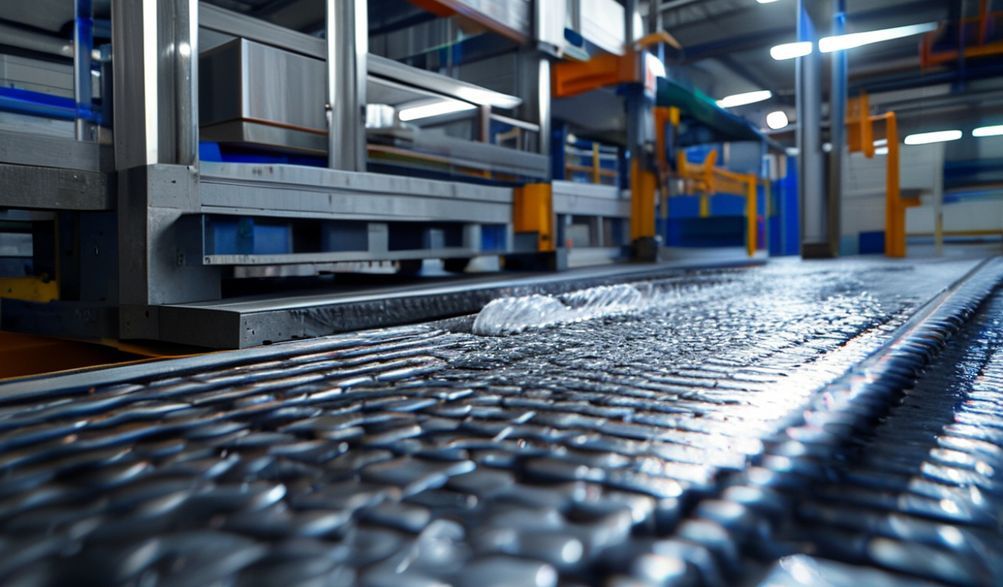
Конкрет плиткаларын ясаý машинасын сайламак үчин төвүнги колланма.
Giriş
Häzirki zaman şäheriniň, �aýly meýdançalarynyň ýa-da jemgyýetçilik meýdanlarynyň birinden geçseňiz, şäher meýdançasynda üňsüz işleýän güýçli materialy: beton plitkalaryny görersiňiz. Çylşyrymly ýol şekillerinden tut, giň jemgyýetçilik meýdanlaryna we berk ýollaryna çenli, köp taraply, berk we gözel görnüşli plitkalara bolan talap dünýäde hemişelikdir. Emma bu talap öndürijiler üçin uly kynçylyk döredýär. Gol güýjüne ýa-da köne enjamlara daýanmak, köplenç durnukly däl hilli, hasaba alynmaýar derejede pes önüm, ýokary iş haky we bazaryň mümkinçiliklerinden peýdalanyp bilmek ýaly kynçylyklaryň dowamly gaýtalanmagyna getirýär.
Bu häzirki zaman önümçilik kynçylygynyň çözgüdi, injenerlik takyklygy bilen işleýän beton plitok ýasama maşynydyr. Bu diňe bir enjam däl; bu öwrülişigiň merkezi bolup, çygly toprak, agregat we sementi üstünlikli, ýokary hilli önümlere, deňi ýok üýtgewsizlik we netijelilik bilen öwürmekdir. Bu gollanma, pudakdaky çuňňur tejribe we tehniki bilimlerden düzüldi. Bizim maksadymyz, işewür, pudakçy ýa-da telekeçi hökmünde size ygtybarly, hereket edip bolýan maglumat bermek we ygtyýarly, strategik maýa goýum etmäge kömek etmekdir.
Biz elýeterli maşynlaryň görnüşlerini gözden geçireris, kararyňyzda ähmiýetli tehniki we iş amaly amilleri düşündireris we operasiýa üstünligi we goýum gelen bahasy üçin açyk ýol görkezeris.
Beton Plitka Ýasama Maşynlaryny Düşünmek
Betondan ýol örtüji blok maşyny näme?
Onuň esasynda, beton plitka ýasama maşyny, garylan beton formulýasiýasyny takyk we ýokary dykyzlykly formalara guýmak üçin niýetlenen mehanizirlenen ýa-da doly awtomatlaşdyrylan ulgamdyr. Dolandyrylan titreme we gysma prosesi arkaly, oňaýly gaýtalanýanlyk bilen bir-birine gireşýän plitkalar, kerpiçler, pliteler, bag plitkalary we bordýur daşlary öndürýär.
Onuň esasy wezipesi, üýtgeýän adam zähmetini mehaniki kesgitlilik bilen çalşyrmakdyr, bu bolsa bloklary ölçeg we görnüşde diňe bir meňzeş däl, eýsem gurluş berkliginde-de üstünlikli edýär. Bu yzygiderlilik, islendik ulanylyşda dogry birikme, gurnama tizligi we uzak möhletli işleýiş üçin esasy ähmiýete eýedir.
Esasy Bölümleri we Olaryň Nädip Işleýändigi
Машинаның ішкі жүйелерін түсіну оның жұмысын түсіндіреді және сатып алу шешімдерін жақсартады. Міне, оның қалай жұмыс істейтіні:
- Хоппер жемдегич:Bu başlangyç noktasy, gury beton garyndysynyň (çägel, agregat we sement garyndysy) ýüklenýän ýeridir. Awtomatik ulgamlarda, konweýer ýa-da beriji, galypa üpjün edilýän garyndynyň yzygiderli we ölçegli bolmagyny üpjün edýär.
- Гап (Гап):Maşynyň ýüregi. Bu takyk işlenen bölek, soňky blokunyň görnüşini, ölçegini, nusgasyny we dokumasyny kesgitleýär. Kalýplar çalşyp bolýar, bir maşynyň dürli önümleri öndürmegine mümkinçilik berýär.
- Titreşim Sistemi:Hili üçin möhümdir. Ýokarlýk derejeli we ýokarlýk amplitudaly titreme stollary, beton garyndysyny kalyp içinde ýygnap, howa boşluklaryny aradan aýyrýar we ýük göteriji ulanyşlar üçin zerur bolan ýygy, berk gurluşy gazanýar.
- Гидравлик ýa-da Pnewmatiki Sistemasy:Bu, titreşim bilen bilelikde güýçli basyş güýjüni üpjün edýär. Gidrawlik ulgamlar ýokary basyşy we gözegçiligi bilen meşhurdyr, her bir bloňy kesgitlenen dykyzlyga çenli gysmagy üpjün edýär.
- Kontrol ulgamy:Operasiýanyň "beýnisi". Bu, ýönekeý modellerdäki ýönekeý el rýeçeklerinden başlap, awtomatiki maşynlardaky ähli sikl parametrlerine takyk gözegçilik etmäge mümkinçilik berýän, sensir ekranly interfeýsler bilen enjamlaşdyrylan çylşyrymly Programlanylýan Logiki Kontroller (PLC) panellerine çenli aralygy öz içine alýar.
- Palet Iýmitlandyryjy we Geçiriji UlgamStasionar maşynlarda, palet (metal ýa-da agaç tagta) galybyň aşagynda ýerleşýär. Blok emele gelenden soň, ulgam täze bloky palet bilen birlikde bejermek üçin rafa ýa-da konweýere geçirýär we maşynyň indiki bloky derrew öndürmegini üpjün edýär.
Maşynlaryň Görnüşleri: Elýeterden Doly Awtomatikliğe Çenli
Dogry görnüşini saýlamak, maýa goýumy, zähmet we çykaryş maksatlaryňyzy deňleşdirýän ilkinji möhüm kararyňyzdyr.
-
El bilen ýa-da ýarym awtomatiki enjamlar:
- Olar nädip işleýär:Operatora bagly ýokary derejede. Işçiler adatça galyby el bilen doldurýarlar, titreme/basgyç siklini işjeňleşdirýärler we soňra emele gelen bloky el bilen aýyrýarlar.
- Artalary: Lowest capital cost, mechanical simplicity, easier maintenance. Ideal for very small-scale startups, niche products, or markets with very low labor costs.
- Kemçilikler: Low output (typically a few hundred blocks per day), high physical labor requirements, and greater potential for product inconsistency due to human variables.
-
Doly awtomatik stansiýa maşynlary:
- Olar nädip işleýär: These are production-line workhorses. They automate material feeding, molding, compaction, and block ejection onto a pallet transfer system. Operators primarily monitor, manage material supply, and handle finished pallets.
- Artalary: High and consistent output (thousands of blocks per shift), significant labor savings, excellent product uniformity, and better working conditions. The standard for serious commercial block manufacturing.
- Kemçilikler: Higher initial investment, requires more space and infrastructure (like a stable concrete supply), and needs more technically aware operators.
-
Fully Automatic Mobile Block Machines (Egg-Laying Type):
- Olar nädip işleýär: These self-contained units mix, mold, and then deposit (“lay”) the finished blocks directly onto a prepared, leveled ground surface (like a road sub-base). They move forward slowly as they produce.
- Artalary: Eliminates the need for pallets, curing racks, and block transportation for on-site placement. Incredibly efficient for large-scale, linear projects like roads, parking lots, or airport aprons.
- Kemçilikler: Limited to on-site production of a single (or very few) block types for that specific project. Not designed for diversified factory production.
Critical Factors for Choosing the Right Machine
Öndürijilik Talapalaryňyzy Bahalandyrmak
Start with a clear business plan. Your machine must serve your market strategy.
- Çykaryş kuwwaty: Be realistic. Calculate your current and projected sales in blocks per day or month. A machine running at 80% of its capacity is more efficient and profitable than one that is constantly overwhelmed or, conversely, sitting idle. Don’t just buy the biggest machine; buy the deň ölçeglimaszyn.
- Блоклардыň Görnüşleri we Ölçegleri: What does your market want? Standard interlocking pavers? Permeable grass pavers for landscaping? Heavy-duty curbstones? Ensure the machine you select can accommodate the mold sizes and the pressure/vibration required for your desired product range. Mold versatility is a key value driver.
- Raw Material Considerations: The machine must work with what you have locally. Test your local sand and aggregate for gradation, silt content, and moisture. Some advanced machines are sensitive to poor-quality materials, while robust models are built to handle a wider range.
Machine Specifications Deep Dive
Look beyond the sales brochure. These technical details dictate performance.
- Pressure & Vibration Force: This directly correlates to block density and compressive strength (measured in MPa). Higher pressure and well-calibrated vibration produce stronger, more durable blocks suitable for vehicular traffic. Ask for the machine’s rated pressure and the MPa range it can achieve.
- Sikl wagty: The total time to produce one block or one pallet of blocks. A faster cycle time means higher potential output. However, balance speed with quality—sometimes a slightly slower cycle with better compaction yields a superior, more marketable product.
- Güýç talap edýän zatlar: Most industrial machines require a 3-phase electrical supply. Verify your facility’s power capacity. Also, note the total connected load (in kW) to estimate your energy operating costs.
- Automation Level & Control: Evaluate the trade-offs. A PLC-controlled machine offers repeatability, easier troubleshooting (error codes), and potential for data logging. It may also require more skilled maintenance. Simpler systems are easier to fix but offer less precision.
Quality, Durability, and Supplier Evaluation
The machine is a long-term asset. Its construction and the company behind it are paramount.
- Gurluşyk Sypaty: Inspect the frame—it should be heavy-duty, welded steel, not bolted light-gauge. Critical components like the mold table, vibration shafts, and hydraulic cylinders should be made from hardened, wear-resistant materials. This reduces long-term maintenance and downtime.
- Satyn alanyň yzyna goldaw: This is non-negotiable. A reliable supplier provides comprehensive technical support, readily available spare parts, and thorough operator training. Ask for specifics: Is there a local service agent? What is the typical spare parts delivery time? Is installation and commissioning included?
- Supplier Reputation: Conduct due diligence. How long have they been in business? Ask for client references and contact them. Search for independent reviews or their presence at industry trade shows. A reputable manufacturer stands behind their product for the long haul.
The Business Case: ROI and Operational Setup
Cost Analysis and Return on Investment (ROI)
Transform the machine from a cost to a calculated investment.
- Башланғыч салым:
- Machine Cost (base price)
- Mold Costs (initial set of 2-3 molds is typical)
- Auxiliary Equipment: Concrete pan mixer or batching plant, conveyor systems, pallets (hundreds may be needed), curing racks or space, forklift for handling.
- Operational Costs (Per Month):
- Raw Materials (cement, sand, aggregate, pigment)
- Labor (machine operators, mixers, forklift drivers)
- Utilities (electricity, water)
- Maintenance & Spare Parts fund
- Revenue Projections: Estimate based on:
(Machine Output per Shift) x (Capacity Utilization %) x (Selling Price per Block) x (Working Days). - Calculating Payback Period: A simplified formula:
Total Initial Investment / (Monthly Gross Profit - Monthly Operational Costs). A typical target payback period for a well-run block yard can range from 12 to 36 months.
Setting Up Your Production Line
Efficiency is born on the factory floor.
- Space & Layout: You need space for: raw material storage, the mixing area, the machine itself, a curing area (covered and protected from sun/wind), and storage for finished blocks. Design a linear workflow to minimize material and product handling.
- Auxiliary Equipment Checklist:
- Concrete Mixer (pan mixer for consistency is recommended over drum mixers).
- Material Loading Conveyor (for automatic machines).
- Pallets and Pallet Return System.
- Curing Racks or a dedicated, leveled curing yard.
- Forklift or Stacker.
- Basic Operational Workflow:
- Raw materials are batched and mixed to a consistent, semi-dry consistency.
- Mix is fed into the machine hopper.
- Machine automatically cycles: feeds mix into mold, vibrates, presses, and ejects block-on-pallet.
- Pallets are moved to the curing area for 24-48 hours of initial curing.
- Blocks are de-palletized, stacked, and continue air-curing for 2-4 weeks to reach full strength before sale.
Maintenance for Longevity and Consistent Output
Preventative care is far cheaper than emergency repairs.
- Daily/Weekly Checklist:
- Clean the machine thoroughly at the end of each shift, removing all concrete buildup.
- Check and tighten any bolts, especially on vibration mounts.
- Lubricate all moving parts as per the manual (grease nipples, guide rails).
- Check hydraulic oil levels and look for leaks.
- Pro Tip from the Field: Keep a logbook. Record daily output, any machine stoppages, and maintenance performed. This data is invaluable for predicting wear-part failure and optimizing performance.
- Common Wear Parts: Be prepared to stock or source: mold liners and wear plates, vibration motor mounts, hydraulic seals and hoses, feeder scraper blades.
- Troubleshooting Common Issues:
- Blocks sticking in mold: Likely a worn mold, insufficient mold release agent, or an overly wet concrete mix.
- Poor compaction/weak blocks: Check vibration motor function, pressure settings, and ensure your concrete mix is not too dry.
- Surface defects: Often caused by a dirty mold, incorrect mix, or issues with the pallet surface.
Maximizing Success with Your Block Making Machine
Optimizing Concrete Mix Design
The machine is a tool; the mix is the raw material. Their synergy defines quality.
- The standard ratio is a starting point (e.g., 1 part cement : 3 parts sand : 3 parts aggregate), but local materials require adjustment. Aim for a semi-dry mix—it should hold its shape when squeezed but crumble apart easily.
- The mix directly affects strength, color absorption (if using pigments), and surface finish. Too much water weakens the block and causes sticking. Too little water leads to poor compaction and laminations.
- Consistency is key. Use a weigh-batching system, not volume buckets, for your raw materials to eliminate daily variation.
Ensuring Product Quality and Consistency
Quality builds your reputation and allows you to command better prices.
- Testing Block Strength: Regularly test samples in a compression testing machine. This verifies you are meeting the required MPa standards (e.g., 35 MPa for heavy traffic areas) and provides certified proof for engineers and clients.
- Ölçeg Takyklygy: Use calipers to randomly check block dimensions. Consistent size is critical for the interlocking system and allows for fast, hassle-free installation by your customers.
- Curing Best Practices: The first 28 days are critical. After initial setting, blocks must be kept moist (by sprinkling water or covering with plastic sheeting) and protected from rapid drying. Proper curing can increase final strength by over 50%.
Safety Protocols for Operators
A safe operation is a productive and sustainable one.
- Hökman şahsy gorag serişdeleri (SGS): Safety glasses, hearing protection (machines are loud), gloves, and steel-toe boots are non-negotiable.
- Maşin howpsuzlygy: Ensure all moving parts have guards. Implement strict Lock-Out/Tag-Out (LOTO) procedures for any maintenance or clearing of jams. Never bypass safety interlocks.
- Material Handling: Train staff on safe lifting techniques for bags of cement and heavy molds. Ensure clear pathways and safe practices for forklift operation in the yard.
Frequently Asked Questions (FAQ)
Q1: What is the average production capacity of a standard automatic block making machine?
A: Capacity varies widely by model and block size. A typical mid-range, fully automatic stationary machine can produce between 4,000 to 10,000 standard 60mm thick pavers in an 8-hour shift. Always confirm output based on the specific block type you intend to produce.
Q2: Can one machine produce different shapes and sizes of blocks?
A: Absolutely. This is a key advantage. By changing the mold (die), the same machine can produce different products. Discuss mold changeover time with your supplier—efficient systems can allow changes in 15-30 minutes. Ensure you purchase compatible molds from your machine manufacturer.
Q3: How much skilled labor is required to operate an automatic machine?
A: For a fully automatic production line, a crew of 2-3 trained individuals is typically sufficient. One may oversee the mixer and material feed, while others manage the machine operation and handle the pallets of fresh blocks. The critical factor is proper training, not the number of people.
Q4: What is the typical lead time for delivery and installation?
A: This varies significantly by manufacturer (local vs. overseas) and machine complexity. It can range from a few weeks for local stock to 3-6 months for a custom-configured line from abroad. Crucially, before purchasing, clarify what “installation” includes—onsite commissioning, calibration, and hands-on operator training are essential services.
Q5: How do I choose between a stationary and a mobile (egg-laying) machine?
A: The choice is defined by your business model. Choose a stationary machine if you are running a factory to produce blocks for stock, sale to distributors, or multiple projects. Choose a mobile “egg-layer” if your primary business is large-scale, on-site paving contracts where you will produce and place blocks directly onto the prepared sub-base in one continuous operation.
Netije
Selecting the right concrete paving block making machine is a foundational decision that will shape the productivity, quality, and profitability of your business for years to come. It requires a careful balance of understanding your production needs, scrutinizing technical specifications, and forging a partnership with a reputable, supportive supplier. We’ve explored the journey from machine types and ROI calculations to the daily practices that ensure quality and safety.
Remember, this investment is not just in metal and hydraulics; it’s in the technology and knowledge that will build your competitive edge. By applying the insights from this guide and conducting thorough due diligence, you lay the groundwork for a sustainable and successful venture in the essential construction materials industry.
Ready to move from planning to action? Download our comprehensive free checklist: “10 Essential Questions to Ask Before Buying Your Block Making Machine,” designed to guide your conversations with suppliers and ensure you cover every critical detail.
<