
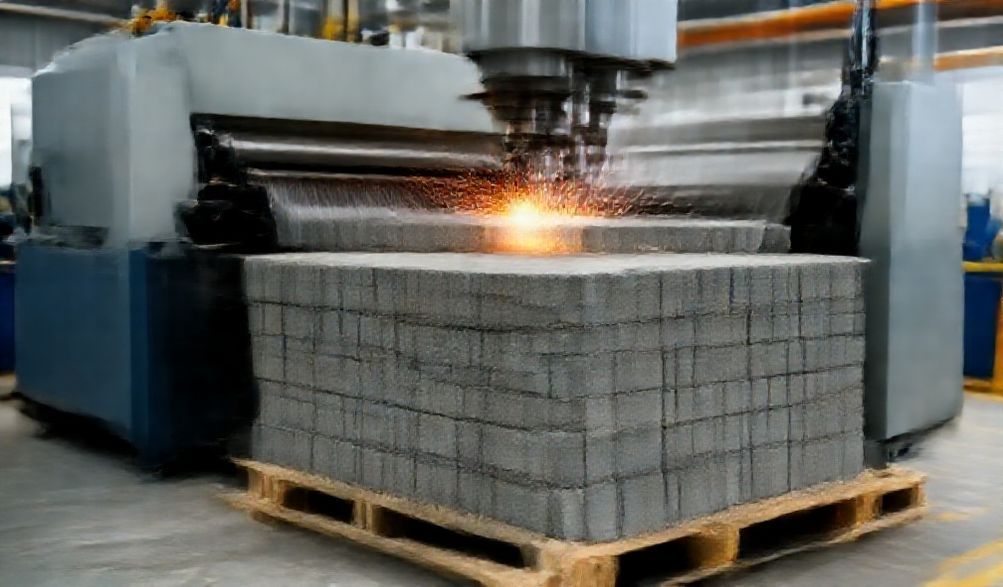
Çement Beton Kiremitleri Ýasama Maşynlarynyň Iň Soňky Gollanmasy: Görnüşleri, Prosesi we Saýlamasy
Giriş
Dünýä gurluşyk senagaty her ýylda 1,5 trilliondan gowrak kerpiç goýýar, bu san urbanizasiýa bilen köpelýär. Emma, häzirki wagtda ähmiýetli üýtgeşiklik bolup geçýär: geleneksel, iş güýjüne köp sarp edýän usullaryndan mehanizirlenen, takyklyga gönükdirilen önümçilige geçiş. Telekeçiler, gurluşyk kompaniýalary we inženerler üçin, sement-beton kerpiç ýasama maşynlarynyň dünýäsinde hereket etmek, tehniki terminologiýa we dürli çaklamalar bilen doly bolup, çylşyrymly bolup biler.
Bu gollanma, siziň kämil we tarapsyz çeşmeňiz bolup hyzmat eder. Inženerlik prinsiplary, senagat düzgünleri we iş amallarynyň iň gowy tejribelerinden düzülen bu gollanmanyň ýeke-täk maksady, sizi ygtybarly we bilimli karar çykarmaga taýýarlamak üçin zerur bilim bilen güýçlendirmekdir. Bu satuw çakylyşy däl-de, bilim berijilikdir. Biz maşyn görnüşlerini düşündireris, öndüriş prosesini aýdyňlaşdyrarys, saýlamanyň esasy nyşanlaryny kesgitleýäris we dogry ýola ýönekmegiňiz üçin iş tejribelerini paýlaşarys.
Sement beton garyndy we olaryň öndürilişi
Maşyn-gurluşyk serişdelerine maýa goýunka, önümi we esasy prosesi düşünmek möhümdir.
Sement Beton Kiremitleri Näme?
Sement beton garyndylary sement, çägel we agrega (döwülen daş ýaly) garyndysyndan ýasalan öňden ýasalan gurluşyk birlikleridir. Olar ýokary basyş we titreme astynda emele getirilýär, soňra güýtlenmek üçin gaýnadylýar. Olar geleneksel ýakylan kerpiç garyndylaryndan tapawutly üstünlikleri hödürleýär:
- Superior Strength & Durability: Higher compressive strength, better resistance to weathering, and lower water absorption.
- Ölçeg Birligiň Birleşmegi: Machine production ensures uniform size and shape, leading to faster construction with less mortar.
- Ыйсаплылык: Raw materials are often more readily available and cheaper than quality clay.
- Köpýönlilik: Can be produced in various shapes (solid, hollow, interlocking) and colors with pigments.
- Eco-Friendlier: Production consumes less energy than kiln-fired bricks and can utilize industrial by-products like fly ash.
Core Components of the Manufacturing Process
The transformation from raw powder and stone to a structural building block follows a core sequence:
- Batching: Precise measurement of raw materials (cement, sand, aggregates, water).
- Gatnaşdyrmak: Homogeneous blending to create a consistent, workable concrete mix.
- Гыпланмак & Ыгырмак: The mix is fed into a mold and subjected to vibration and high pressure to form a dense brick.
- Gowulama: The green (freshly molded) bricks are kept under controlled moisture and temperature conditions to allow the cement to hydrate and gain strength.
- Storage & Dispatch: Cured bricks are stacked, palletized, and stored for delivery.
Why Mechanization? The Economic and Quality Advantages
Manual brick-making is synonymous with low output, high variability, and physical strain. A dedicated machine transforms this into a streamlined, profitable operation:
- Ösdürilip ýaýradyp bolýan çykyş. Production can range from hundreds to thousands of bricks per hour.
- Uncompromised Quality: Every brick meets the same strength and dimensional standard.
- Iş güjüniň optimallaşdyrylmagy: Reduces heavy manual labor, allowing staff to focus on machine operation and quality control.
- Material Ululygy: Precise compaction reduces waste and optimizes raw material use.
Types of Cement Concrete Bricks Making Machines
Selecting the right machine hinges on understanding the classifications. Here, we break them down by operation, production method, and output.
By Operation: Manual, Semi-Automatic, and Fully Automatic
- Elderly Machines: Operated entirely by hand (lever or flywheel). Lowest capital cost but high labor intensity and very low output (100-500 bricks/day). Suitable for tiny, intermittent projects.
- Ýary-awtomatik maşynlar: The sweet spot for many small to medium enterprises. Key processes like mixing and compaction are mechanized (often with an electric motor and hydraulic system), but brick ejection and palletizing may be manual. Offers a great balance of output (1000-4000 bricks/day), cost, and control.
- Doly Awtomatik Maşynlar: The pinnacle of automation. Computer-controlled systems handle material feeding, mixing, molding, curing, and stacking with minimal human intervention. Highest output (10,000+ bricks/day), consistency, and cost. Requires significant investment and stable power supply.
By Production Method: Stationary vs. Mobile
- Стационар блок машинкалары: Fixed installations that produce bricks at a central plant. They are typically more robust, offer higher production capacities, and are used for large-scale commercial production. Finished bricks are transported to construction sites.
- Ыйырылмалы Кирпич Ясагыш Машиналар: Mounted on a trailer or vehicle chassis. The key advantage is on-site production, eliminating transport costs for the finished bricks. Ideal for large infrastructure projects (like remote roads or dams) where establishing a fixed plant is impractical. Output is generally lower than stationary models.
By Brick Output Type
The machine is often defined by the mold it uses and the type of brick it’s designed to produce.
- Solid Block Machines: Produce dense, high-strength bricks for load-bearing walls and foundations.
- Boş Blok Maşynlary: Create bricks with cavities, reducing weight and material cost while providing excellent insulation. Used for partitions and non-load-bearing walls.
- Paver & Interlocking Block Machines: Specialized for producing paving slabs and interlocking bricks for landscaping, driveways, and pavements. They focus on aesthetic finish and wear resistance.
- Interlocking Block Machines: Produce bricks with designed ridges and grooves that lock together without mortar, enabling rapid construction of retaining walls and certain structures.
Key Components and How a Concrete Brick Machine Works
Understanding the machine’s anatomy demystifies its operation and aids in maintenance discussions.
The Essential Machinery Breakdown
A typical stationary machine system comprises:
- Panaralyşma Mikseri: A robust mixer that ensures a homogeneous, consistent concrete blend.
- Konveyer lentasy: Transports the mixed concrete from the mixer to the machine hopper.
- Feed Hopper: Holds the mixed concrete above the molding chamber.
- Mold (ýa-da Öl): The heart of the machine. A precision steel box that gives the brick its shape and dimensions. Interchangeable for different brick types.
- Titreşim Masası: A platform that vibrates at high frequency to compact the concrete mix in the mold, removing air pockets.
- Gidrawlik ulgam: Applies immense pressure (measured in tons) to the concrete in the mold, creating a dense, strong brick. Consists of a pump, cylinders, and rams.
- Kontrol paneli: Houses the electrical controls, from simple buttons to advanced PLC (Programmable Logic Controller) systems in automatic machines.
The Step-by-Step Manufacturing Cycle
- Çyg mal goşma we garyndy etme: Pre-batched materials are loaded into the pan mixer. Water is added precisely, and the mixture is blended for a set time to achieve the right consistency.
- Molding and Compression: The mix is conveyed into the machine’s hopper. It is then fed into the mold cavity. The vibration table activates, settling the mix. Simultaneously, the hydraulic ram descends, applying immense pressure (e.g., 150-300 tons) to form an ultra-dense block.
- Gepleme Prosesi: This is where the brick gains its strength. The green brick is carefully ejected onto a pallet.
- Steam Curing: Pallets are moved into a curing chamber where they are exposed to steam at elevated temperatures (60-80°C) for 8-12 hours. This accelerates strength gain, allowing bricks to be handled and sold within 24 hours.
- Water Curing: Bricks are stacked and kept wet by spraying water for 14-28 days. It’s lower cost but requires more space and time.
- Brick Stacking and Palletizing: After sufficient curing, bricks are automatically or manually stacked on pallets for storage and transport.
Critical Factors for Choosing the Right Machine
This is where your research becomes actionable. Align the machine’s capabilities with your specific goals.
Öndürijilik Talapynyzy Bahalandyrmak
Be brutally honest with these three questions:
* Capacity: How many bricks do you need per day or month? Factor in future growth. Don’t buy a 5000-bricks/day machine for a 1000-bricks/day demand.
* Project Scale & Market: Are you supplying a single project, a local market, or aiming for regional distribution?
* Budget: This includes the machine price, shipping, installation, raw material inventory, and working capital for the first few months.
Technical Specifications to Scrutinize
Look beyond the sales brochure. Demand these details:
- Motor Power & Hydraulic Pressure: Higher power and pressure (measured in tons) generally correlate with the ability to produce denser, stronger bricks and handle stiffer mixes.
- Kalıp Özelleştirme: Can the supplier provide different mold sizes and shapes? What is the lead time and cost for a custom mold?
- Awtomatlaşdyryş derejesi: Does it have a PLC? Automatic pallet feeder? Stacker? Each automation step increases cost but reduces labor and improves consistency.
- Machine Durability: Inspect the build quality. Key structural parts should be made from high-grade steel (mention specific grades if possible). Thicker steel and robust welding indicate a longer lifespan.
Supplier Evaluation: The Make-or-Break Step
A machine is a long-term investment. The supplier is your partner.
- Certifications & Reputation: Do they have ISO or other industry certifications? How long have they been in business?
- Satyn alandan soňky hyzmat: What is included? (Installation, training, warranty). How quickly can they supply spare parts? Ask for references and actually contact them.
- Warranty Terms: Read the fine print. What components are covered, and for how long?
Operational Best Practices and Cost Analysis
Success depends on how you run the machine, not just which machine you buy.
Ылғамлы Материалларды Даярлау
The machine can only be as good as the mix you feed it.
* Ideal Ratios: A common standard mix for solid blocks is 1 part cement : 6 parts all-in aggregate (sand + stone). This varies based on desired strength and local material properties.
* Sapalyňa gözegçilik Use clean, well-graded sand and aggregates. Consistently measure water content—too much weakens the brick, too little causes poor compaction.
Machine Maintenance Checklist
Preventative maintenance is non-negotiable for longevity.
* Daily: Clean the mold, hopper, and mixer. Check hydraulic oil levels and for leaks. Lubricate all moving parts as per manual.
* Weekly/Monthly: Tighten all bolts and nuts. Check vibration motors and electrical connections. Inspect hydraulic hoses for wear.
* Annually: Replace hydraulic oil and filters. Conduct a full mechanical and electrical inspection.
Understanding the Total Investment
| Cost Component | Details & Considerations |
| :— | :— |
| Capital Cost | Machine price, shipping, installation, foundation work. |
| Raw Material Cost | Cement, sand, aggregates. Local availability dictates price. |
| Operating Cost | Electricity, labor, water, pallets, maintenance spare parts. |
| Overheads | Land rent, administrative costs, marketing. |
| ROI Timeline | This varies wildly. A small semi-auto plant might break even in 12-18 months with good market demand and management. A large automatic plant may have a 3-5 year ROI. Create a detailed business plan. |
Common Challenges and Troubleshooting Tips
Anticipating problems minimizes downtime.
Issues with Brick Quality
- Cracks: Often due to improper curing (drying too fast), incorrect water-cement ratio, or excessive vibration time.
- Poor Strength: Caused by low cement content, inadequate compaction pressure, or insufficient curing time.
- Surface Defects: Sticking or rough faces usually point to a worn mold, insufficient mold release agent, or a too-wet mix.
Machine Operational Problems
- Hydraulic Leaks: Check and replace seals/o-rings. Ensure connections are tight.
- Weak Vibration: Inspect vibration motor mounts and electrical supply. The motors themselves may need replacement.
- Brick Sticking in Mold: Clean the mold thoroughly. Apply a recommended release agent. Check for mold damage.
Frequently Asked Questions (FAQ)
Q1: What is the average production capacity of a standard concrete brick making machine?
Capacity ranges dramatically. A small manual machine may produce 400-500 bricks per 8-hour shift, while a large fully automatic plant can produce over 10,000 bricks in the same time. Semi-automatic models, popular for SMEs, typically produce between 2,000 to 5,000 bricks per shift.
Q2: What is the difference between a hydraulic press and a vibration press in brick making?
They work in tandem. The vibration table consolidates the concrete mix, removing air voids and ensuring the mold is filled. The gidroýumly pres then applies static, high-pressure force to further densify the mix, creating the final strength and surface finish. Both are critical for high-quality brick production.
Q3: Can I use recycled materials (like fly ash) in a cement concrete brick machine?
Absolutely. Using fly ash (a by-product of coal combustion) is not only possible but encouraged. It can replace a significant portion of cement (20-30%), reducing costs and the carbon footprint while enhancing long-term strength and workability of the bricks.
Q4: How much space is required to set up a small-scale brick manufacturing plant?
For a semi-automatic operation, you should plan for a minimum of 5,000 to 10,000 square feet. This must accommodate the machine, raw material storage (covered), mixing area, curing area (the largest space consumer), and storage for finished bricks.
Q5: What is the typical lifespan of a well-maintained brick making machine?
A quality machine from a reputable manufacturer, following a strict preventative maintenance schedule, can easily last 15 to 20 years. Key wear parts like molds, hydraulic seals, and vibration motors will need replacement during this time.
Q6: Are there specific safety protocols for operating this machinery?
Yes. Operators must wear safety gear (helmet, gloves, boots, ear protection). Never place hands in the mold or hydraulic ram area during operation. Lock-out/tag-out procedures must be followed during maintenance. Ensure all safety guards are in place and electrical systems are properly grounded.
Netije
Choosing the right cement concrete bricks making machine is a strategic decision that hinges on a clear understanding of your production goals, budget, and technical requirements. There is no universal “best” machine—only the best machine for your specific context.
This guide has armed you with the foundational knowledge to move forward. Remember, thorough research is your greatest asset. Use this information as a benchmark when speaking with suppliers. We strongly recommend taking practical next steps: request material samples and brick test reports from manufacturers, visit an existing plant to see machines in operation, and consider consulting with a civil engineer to finalize your brick mix design and project specifications. By investing time in due diligence, you invest in the long-term success and profitability of your venture.
<