
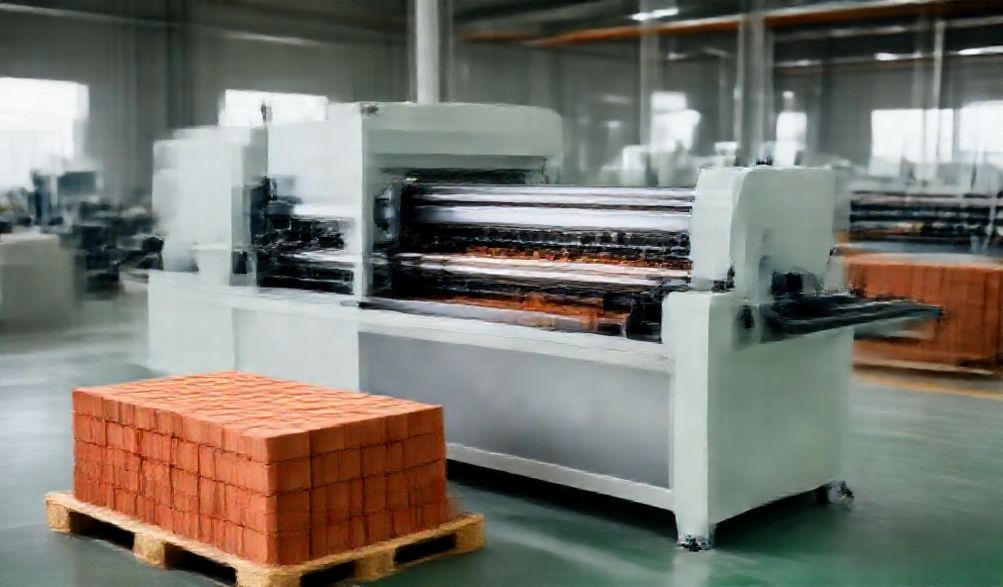
中国小砖机制造厂完全指南(2026)
Giriş
Dünýä gurluşyk senagaty netijelilik we elýeterlilik esasynda işleýär. Iň uly infrastruktura taslamalaryndan tutup, jemgyýetçilik tarapyndan ýöredilen jaý-jaýlar başlangyçlaryna çenli, ygtybarly, tygşytly gurluşyk materiallaryna bolan talap ähli ýerde meşhur. Bu talabyň merkezinde möhüm bir enjam ýerleşýär: kiçi kerpiç ýasama maşyny. Dünýä bu enjamlary satyn alanda, bir döwlet şübhesiz öndürijilik merkezi hökmünde durýar — Hytaý.
Dünýä boýunça telekeçiler, gurluşyk kompaniýalary we hükümet däl guramalary üçin Hytaýdan haryt çeşmesi göz öňünde tutmak hem ajaýyp mümkinçilik, hem-de elhenç synagdyr. Mümkin bolan wariantlaryň mukdary haýran galdyrýar. Ýönekeý onlaýn gözlegler ýüzlerçe teklipçileri açýar, olaryň her biri iň oňat hili, iň pes baha we iň ygtybarly hyzmat barada wada berýär. Bu çylşyrymly ýagdaýy nädip ýol ýöredersiňiz? Hakyky, ýokary hilli zawodlary aradaky satyjylardan ýa-da has erbet, ygtybarly däl işden nädip tapyp bilersiňiz?
Bu gollanma siziň kesgitli ýol haritanyňyz. Biz Hytaýyň kiçi kerpiç ýasama maşyn öndürijilik sektorunyň şeffaf, hünärmen ýolbaşçylygyndaky analizini üpjün etmek üçin gürrüňden geçýäris. Siz senagat toplumlary barada açyk düşünje alarsyňyz, dürli fabrik görnüşlerini tapawutlandyrmagy öwrenersiňiz we üpjünçileri barlamagyň ädim-ädim prosesine eýe bolarsyňyz. Bizim gözleglerimiz birnäçe ýyllap gözlegçilik tejribesine, fabrik barlaglaryna we global söwda öwüşgünleriniň analizine esaslanýar. Muňa üstünlikli, peýdaly çeşme hyzmatdaşlygyna tarap ilkinji we iň ygtybarly ädimiňiz hökmünde serediň.
中国砖机制造业格局解析
Hytaýyň önümçilik güýji tesadufy däl; ol ýöriteleşdirilen senagat toplumlaryna bölünýär. Kerpiç ýasama maşynlary üçin bu sebitleri bilmek siziň ilkinji strategiki üstünligiňizdir. Her toplum onlarca ýyllap özboluşly güýçlerini, üpjünçilik zynjyryny we tejribesini ösdüripdir.
Esasy Önümçilik Toparlary we Merkezleri
- Фуцзянь провинциясы (Цюаньчжоу):"Қытайдың кірпіш машиналары астанасы" деп аталатын Цюаньжоу - бұл әлемдік кірпіш машиналары өндірісінің орталығы.doly awtomatlaşdyrylan we ýokary derejeli blok ýasama maşynlaryBu ýerdäki zawodlar öňdebaryjy tehnologiýasy, güýçli ylmy-zerurlyk işlerine we Ýewropa we Demirgazyk Amerika ýaly talap edýän bazarlara önüm çykaryşy bilen tanalýar. Eger ýokary derejeli, awtomatlaşdyrylan önümçilik zolagy gözleýän bolsaňyz, bu siziň esasy hedefiňizdir.
- Shandong Eýelaty:Bu sebit güýç merkezidir.awır san önümçilik maşınlaryШаньдун фабрикалары uly önümçiligi üçin amatly, güýçli we ýokary önümli maşynlary öndürmekde üstünlik gazanyp, esasanam stasionar zawod enjamlary we sement esasly önümler üçin niýetlenen maşynlary öndürmekde güýçli tarapdyr.
- Guwantan Eýelaty: A hub for all manufacturing, Guangdong offers a wide mix. You’ll find factories producing semi-automatic and fully automatic machines, often with a focus on export-friendly design and packaging. The proximity to major ports like Shenzhen and Guangzhou makes logistics exceptionally efficient.
- Henan Province: This inland cluster is highly competitive on price and specializes in smaller, manual, and semi-automatic machines, as well as mobile brick making machines. It’s an excellent source for affordable, entry-level equipment suitable for small businesses or startups in developing markets.
Types of Factories: From OEMs to Trading Companies
Not all “factories” are created equal. Understanding the business model of your supplier is critical.
-
Original Equipment Manufacturers (OEMs):
- What they are: These are the actual manufacturers. They design, engineer, and build the machines on their own production floors.
- Üstünlikler: Lower costs (no middleman), greater potential for customization, direct control over quality, and deeper technical knowledge.
- How to Identify: Look for extensive workshop videos, details about their R&D team, and ownership of patents or proprietary technology. They will speak in detail about production processes, not just sales.
-
Söwda Kompaniýalary:
- What they are: Intermediaries that source products from various factories and sell them to international buyers.
- Artalary: Easier communication (often have fluent English staff), can consolidate orders from multiple factories, handle export documentation.
- Kemçilikler: Added markup on prices, potentially less technical expertise on specific machine details, less control over production quality and timelines. A trading company’s reliability is only as good as the factory they use.
-
Integrated Exporters:
- These are OEMs that have developed strong, in-house international sales and service departments. They offer the best of both worlds: manufacturing control with export-ready service. They are often the most reliable partners for first-time importers.
How to Identify and Vet Reputable Factories
Due diligence is non-negotiable. This process protects your investment and ensures long-term success.
Essential Factory Credentials and Certifications
Legitimate factories will proudly display their credentials. Key documents to request include:
- Business License: The basic legal document. Verify the company name, registered capital, and scope of business align with manufacturing machinery.
- ISO 9001 Sertifikatlandyrmasy: An international standard for Quality Management Systems. It indicates the factory has structured processes for consistent quality.
- CE Marking (for EU markets): This is a mandatory conformity mark for machines sold in the European Economic Area. It signifies the product meets EU safety, health, and environmental requirements. Note: A “CE Certificate” from a Chinese agency is not the same as EU compliance. Ask for the test reports from a notified body.
- Other Certifications: Depending on your market, look for other marks like SAA (Australia), GOST (Russia), or SONCAP (Nigeria).
Verification Tip: Don’t just accept scanned copies. You can often verify business licenses on Chinese government portals or ask for a video call where they show the original certificates in their office.
Due Diligence Checklist for Buyers
Follow this actionable checklist to separate the best from the rest.
-
Online Verification:
- On B2B platforms like Alibaba, check their “Gold Supplier” tenure. Longer is generally better.
- Analyze their transaction history and read both positive and negative reviews carefully.
- Assess the quality of their storefront: detailed specifications, real workshop photos (not stock images), and professional videos.
-
Factory Audit (Virtual/Physical):
- Request a live video tour. A reputable factory will readily agree.
- What to look for: Organized production lines, active welding and assembly stations, quality control checkpoints, a clean raw material storage area, and a dedicated R&D or testing area.
- Ask to see their quality control sheet for finished machines.
-
Requesting and Evaluating Samples:
- For machinery, a “sample” often means a performance video of the exact model you’re interested in, producing bricks from the raw materials you plan to use.
- Request a video that shows the full cycle: feeding, compression, ejection, and stacking. Listen to the machine’s sound and observe its stability.
- If feasible, visiting to test the machine yourself is the gold standard.
-
Checking References and Past Projects:
- Ask for 2-3 references from clients in your region or a similar industry.
- Request case studies or project photos/videos showing their machines installed and operating at a customer’s site.
- Check if they have an active YouTube channel or social media showcasing real-world applications.
Key Considerations When Sourcing Small Brick Making Machines
Choosing the right partner is half the battle. The other half is specifying the right machine for your needs.
Machine Specifications and Technology
-
Types of Machines:
- Gollanma: Low-cost, low-output, entirely human-powered. Ideal for very small-scale or community projects.
- Ýary-awtomatik: A balance of price and output. Some processes (like mixing, feeding) are manual, while compression and ejection are powered.
- Doly Awtomatik: High-output machines with automated material feeding, compression, ejection, and stacking. Require a higher investment but offer the best efficiency and consistency.
- Мобил блок машыналары: Mounted on a trailer, these can be moved between job sites. Perfect for producing bricks directly where they will be used.
-
Esasy Aýratynlyklar:
- Çykyş: Measured in bricks per hour or per 8-hour shift. Be realistic about your needs.
- Güýç Görnüşi: Electric (clean, consistent), Diesel (for sites without grid power), or Hybrid.
- Brick Size & Type: Ensure the machine can produce the specific brick size (e.g., hollow block, solid block, interlocking brick) you need.
- Esasy Bölümler: Inquire about the brand of the gidrawlyk ulgamy (the heart of the machine), the material and hardness of the göwreler, the thickness of the steel in the frame, and the sophistication of the PLC control system.
Quality vs. Cost: Finding the Right Balance
The initial price tag is just one part of the Total Cost of Ownership.
- Cost Structure: A machine’s price reflects material quality (steel grade), component brands (imported vs. local hydraulics), labor, and the factory’s investment in R&D and testing.
- The “Cheapest Option” Trap: A machine that is 20% cheaper often uses inferior steel, low-grade hydraulic seals, and poorly machined moulds. This leads to frequent breakdowns, high maintenance costs, inconsistent brick quality, and costly downtime. It becomes the most expensive option over 2-3 years.
- Setting a Realistic Budget: Invest in a machine built to last. Your budget should account for a robust machine from a reputable factory that includes a solid warranty and after-sales support, not just the lowest possible FOB price.
After-Sales Service and Support
This is where great factories distinguish themselves from the crowd.
- Documentation: Insist on a comprehensive English manual, a detailed parts catalog with diagrams, and clear installation guides.
- Warranty: Standard warranties range from 1 to 2 years for key components like the hydraulic system and frame. Understand exactly what is covered (parts, labor, shipping) and what is considered “wear and tear.”
- Spare Parts & Support: Confirm that spare parts (like moulds, seals, filters) are available and can be shipped quickly. Determine their technical support model: is it via WhatsApp/Email, remote video diagnosis, or do they have agents in your region for on-site service?
The Procurement and Logistics Process
From Inquiry to Shipping: A Step-by-Step Guide
- Inquiry & RFQ: Send a detailed Request for Quotation. Specify machine type, desired output, brick dimensions, raw materials, and power requirements.
- Proforma Invoice (PI): The supplier will issue a PI detailing price, payment terms, delivery time, and specifications. This is your key negotiating document.
- Payment Terms: Common methods are T/T (Telegraphic Transfer), with a 30% deposit and 70% before shipment, or L/C (Letter of Credit) for larger, higher-risk orders.
- Production & Inspection: Agree on a production timeline. Schedule a Pre-Shipment Inspection (PSI) either by a third-party inspector or via detailed video before the machine is crated.
Navigating Logistics: Incoterms and Shipping
- Understanding Incoterms:
- Экспортчунуң заводунда (Экспортчунуң заводунда тапшырылýан ýeri). You own the goods at the factory gate. You arrange and pay for all shipping, insurance, and customs. Maximum control, maximum complexity.
- FOB (Эркин Бортда): The factory delivers and loads the machine onto the ship at the Chinese port. You take over from there, handling sea freight and destination port costs. The most common and balanced term.
- CIF (Cost, Insurance & Freight): The factory pays for the machine, insurance, and freight to your nearest port. Simpler for you, but you have less control over the shipping process and may pay a premium.
- Shipping Method: For small brick making machines, sea freight (LCL or FCL) is almost always the most cost-effective. Air freight is prohibitively expensive for such heavy, bulky items.
FAQ Section
Q1: What is the average lead time for a small brick making machine from China?
From order confirmation to shipment, lead times typically range from 20 to 45 days, depending on the machine’s complexity, customization level, and the factory’s current order book. Always confirm this in writing before payment.
Q2: Can Chinese factories customize machines for specific brick types or raw materials?
Yes, reputable OEMs excel at customization. You can request modifications for unique brick shapes/sizes, specific raw material mixes (like high fly ash or clay content), or special features like color feeding systems. Customization will affect the price and lead time.
Q3: What are the most common payment methods, and which is safest for the buyer?
T/T with a 30% deposit and 70% balance against copy of shipping documents is standard. For new relationships or large orders, an L/C (Letter of Credit) provides more security as payment is contingent on the bank verifying shipping documents. Avoid 100% upfront payments.
Q4: How do I handle machine installation and operator training?
Most factories provide detailed installation manuals and video guides. Many also offer remote video installation support. For a fee, some factories can send an engineer to your site. Operator training is usually done via detailed video tutorials and remote guidance. Clarify the level of support included in your price.
Q5: What are the hidden costs I should be aware of besides the machine price?
Budget for: International bank transfer fees, export customs clearance in China (if not on CIF), sea freight and insurance, import duties and taxes in your country, customs broker fees, and inland transportation from your port to your site.
Q6: How can I protect myself from scams or low-quality suppliers?
Follow the vetting process in this guide. Be wary of prices significantly below market average, suppliers who avoid video calls or factory tours, and those who pressure for 100% upfront payment. Always start with a small order or sample if possible. Use secure payment methods and consider third-party inspection services.
Netije
Sourcing a small brick making machine from China is a significant step toward building a profitable and sustainable business. The path to success is clear: begin by understanding the specialized manufacturing clusters, diligently vet factories by looking beyond the website to their credentials and production floor, and prioritize a balance of quality and comprehensive after-sales support over the allure of the lowest price. Finally, master the logistics terms to ensure a smooth journey from the factory to your site.
Remember, this is not just a transaction; it’s the beginning of a partnership. The time and effort you invest in thorough due diligence today will pay dividends for years to come in the form of reliable equipment, consistent production, and a trustworthy supplier relationship. Use this guide as your actionable checklist. Forge your partnership with confidence, and lay the foundation for your success, one brick at a time.
<