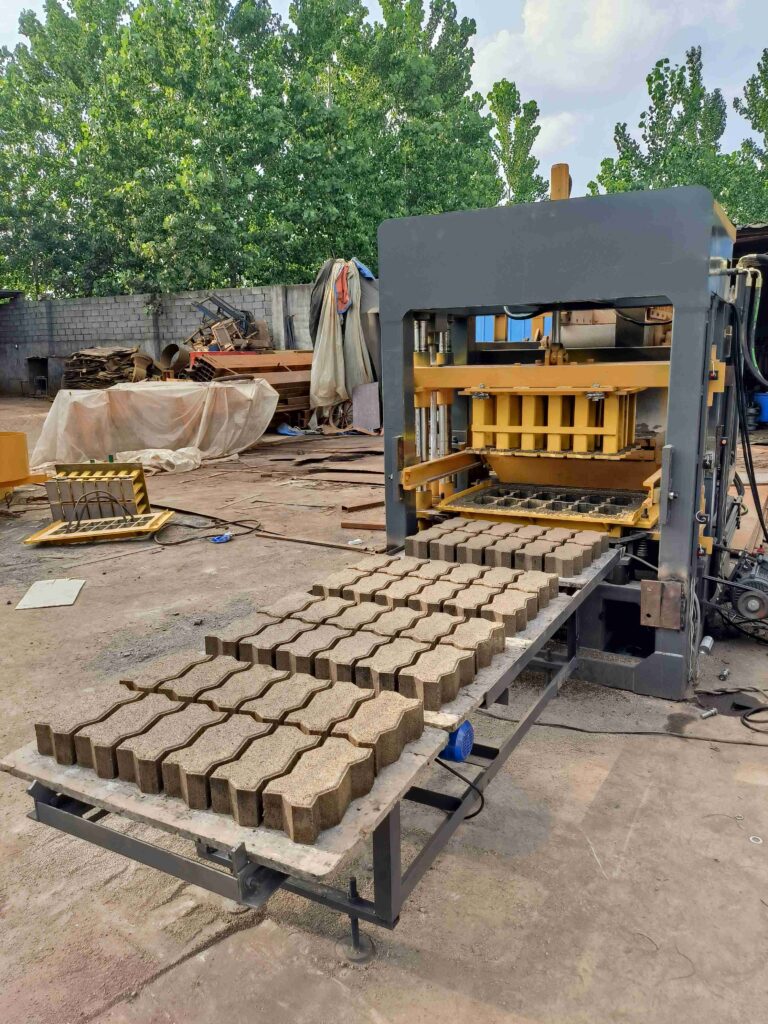
Foundational Optimization: Process and Input Control
Efficiency begins with the inputs and the environment in which the machine operates. Uncontrolled variables here create constant inefficiencies downstream.
A. Consistency in Raw Material Preparation
- Standardized Mix Design: The single greatest factor affecting machine performance is a consistent, optimal concrete mix. Variations in aggregate size, moisture content, or cement ratio force the machine to constantly adapt, leading to cycles of under- or over-compaction, increased wear, and variable block quality. Implementing strict, weight-based batching with moisture compensation is non-negotiable.
- Material Readiness: Ensure a steady, uninterrupted supply of prepared mix to the machine hopper. Stoppages due to mix shortage or manual feeding disrupt the machine’s rhythm, causing thermal cycles in hydraulics and uneven production flow.
B. Environmental and Operational Discipline
- Stable Power Supply: Voltage fluctuations or phase imbalances can damage electric motors, vibrators, and control systems, leading to erratic operation and reduced component lifespan. The use of voltage stabilizers or dedicated transformers is recommended for consistent electrical input.
- Strategic Production Scheduling: Whenever possible, group production runs of the same block type and size. Minimizing changeovers reduces non-productive time for mold changes, parameter adjustments, and cleanup, significantly boosting net productive hours.
II. Machine-Centric Efficiency Drivers
With stable inputs secured, focus shifts to the machine’s own systems and their precise calibration.
A. Precision Tuning of Core Functions
- Cycle Time Optimization: Analyze the machine’s cycle. Each segment—feed, vibration, press, ejection, pallet change—should be set to the minimum time required for consistent quality. Excess dwell time in any stage wastes energy and reduces output. The goal is the fastest reliable cycle, not just the fastest cycle.
- Vibration and Pressure Synchronization: The vibratory frequency and amplitude must be perfectly matched with the hydraulic pressure profile. This synchronization ensures complete compaction with minimal energy waste. An incorrectly set system either fails to consolidate the mix (requiring rework) or uses excessive, unnecessary force.
B. Proactive Health Monitoring and Data Utilization
- Establish Performance Baselines: Record and track key metrics during a period of known good performance: cycle time, hydraulic operating temperature, amperage draw of main motors, and blocks produced per hour. These become your efficiency baselines.
- Monitor for Deviations: Use the machine’s Human-Machine Interface (HMI) and simple logging to watch for trends. A gradual increase in cycle time or hydraulic temperature is an early warning of an evolving problem (e.g., pump wear, contaminant buildup) long before a breakdown occurs.
III. Systemic Maintenance for Sustained Performance
Efficiency cannot be maintained through tuning alone; it requires a regime designed to prevent degradation.
A. Predictive and Condition-Based Maintenance
Move beyond time-based schedules to condition-based actions.
- Hydraulic System Analysis: Regular oil analysis can detect microscopic wear metals and contaminants, predicting pump or valve failure months in advance.
- Thermographic Inspection: Using a thermal camera periodically on electrical panels, motor connections, and hydraulic components can identify hot spots caused by friction, poor connections, or impending failures.
B. Focused Care on High-Impact Wear Zones
- The Material Flow Path: Inefficiency often stems from friction and obstruction. Regularly inspect and maintain the entire flow path—from mixer discharge to feed hopper, through the feed system, and into the mold. Ensure all surfaces are smooth, properly aligned, and free of hardened concrete buildup.
- Pallet System Integrity: A single warped or damaged pallet can cause misfeeds, misalignment, and block damage, forcing slowdowns or stops. A disciplined pallet inspection and repair/replacement program is essential for smooth, continuous operation.
C. Operator Empowerment and Training
The machine operator is the real-time efficiency sensor.
- Training for Observation: Train operators to recognize subtle signs of inefficiency: a change in the sound of vibrators, a slight hesitation in movement, or a minor change in block appearance as they emerge.
- Clear Response Protocols: Empower and require operators to perform basic efficiency-sustaining tasks, such as immediate cleanup of spillage, reporting minor leaks, and ensuring consistent mold release application.
Netije
Ensuring a block machine runs at peak efficiency is a dynamic, continuous process that integrates material science, mechanical precision, data awareness, and human expertise. It represents the difference between merely operating equipment and mastering a production system. For professionals in the supply chain, conveying this holistic approach to clients elevates the conversation from parts and service to total operational excellence. By championing strategies that emphasize input consistency, machine calibration, predictive care, and empowered personnel, you enable clients to achieve the highest possible return on investment, reduce their environmental footprint through lower waste and energy use, and build a formidable competitive advantage based on reliability and cost-effectiveness.
FAQ
Q1: What is the first step to take if I suspect my machine is running inefficiently?
A: Begin by auditing your raw material consistency and then establish a performance baseline. For one week, meticulously document the mix proportions (by weight), moisture content, and key machine metrics (cycle time, energy meter readings, output count). Inconsistencies here are the most common source of hidden inefficiency.
Q2: Can software upgrades from the manufacturer really improve efficiency?
A: Yes, potentially. Manufacturers often release firmware updates that optimize control algorithms for smoother motion profiles, better vibration control, and enhanced diagnostic capabilities. Consult with your supplier to see if updates are available that could refine your machine’s performance and energy management.
Q3: How does machine efficiency impact my cost per block?
A: Directly and significantly. Efficiency lowers costs across multiple vectors: reduced energy consumption per block, lower labor costs due to less downtime and intervention, decreased waste from rejected blocks, and extended component life reducing the depreciation cost per block produced.
Q4: We run multiple shifts. How does this affect our efficiency strategy?
A: Multi-shift operation makes consistency and communication paramount. You must implement standardized procedures and checklists that every shift follows identically. A shared logbook for performance notes and maintenance actions is critical to ensure one shift does not unknowingly inherit or create a problem that reduces the next shift’s efficiency.
Q5: Is it worth investing in additional automation, like a robotic pallet stacker, to improve efficiency?
A: It can be a highly effective investment. Automation in material handling and product staging often yields the most dramatic gains in net output by eliminating bottlenecks soň the block is formed. It reduces labor costs, minimizes product damage from manual handling, and allows the core block machine to run at its optimal, uninterrupted pace. A cost-benefit analysis specific to your production volume is recommended.