
Кирпич басуу машиналарынын Акыркы Колдонмосу: Түрлөрү, Колдонулган Жерлери жана Кантип Тандоо Керек
Köne Jeriko diwarlaryndan şu günüň ýokary gögeriji gökdelenlerine çenli, ýönekeş kerpiç adam medeniýetiniň esasyny döretdi. Emma her bir berk diwar we berk gurluşyň yzky tarapynda bir tehnologiýa bar: kerpiç basyş maşyny. Häzirki gurluşyň yzygiderlilik, berk we netijelilik talaby kerpiç ýasamagy doly el işinden çykaryp, kämil inženerlik prosesine öwürdi. Kerpiç ýasama işini başlaýan telekeçi, materiallar gözleýän gurluş menedžeri ýa-da öndüriş wariantlaryny gözleýän inžener bolsaňyz, bu esasy enjamy düşünmek zerurdyr.
Bu gollanma senagat bilimine, inženerlik mehanika prinsiplerine we amaly iş tejribesine esaslanýar. Biziň maksadymyz, kirpiç presleýji maşynlarynyň işini aňsatlaşdyrmak we size ygtybarly we bilimli karar çykarmak üçin gerekli aýdyň, amaly maglumatlary bermekdir. Biz bu enjamlar nähili işleýändigini, elýeterli dürli görnüşlerini, olaryň esasy ulanylyşlaryny gözden geçireris we öz ýörite gerekleriňiz üçin ideal modeli saýlamak üçin gurluşly çarýehirini hödürleýäris. Netijede, çig materiallary ygtybarly gurluş bloklaryna öwürmek üçin gerekli enjamy bahalandyrmak, kesgitlemek we mümkin bolsa sarp etmek bilimine eýe bolarsyňyz.
Brick Press Machine nämädir? Esasy Prinzipi we Işleýişi
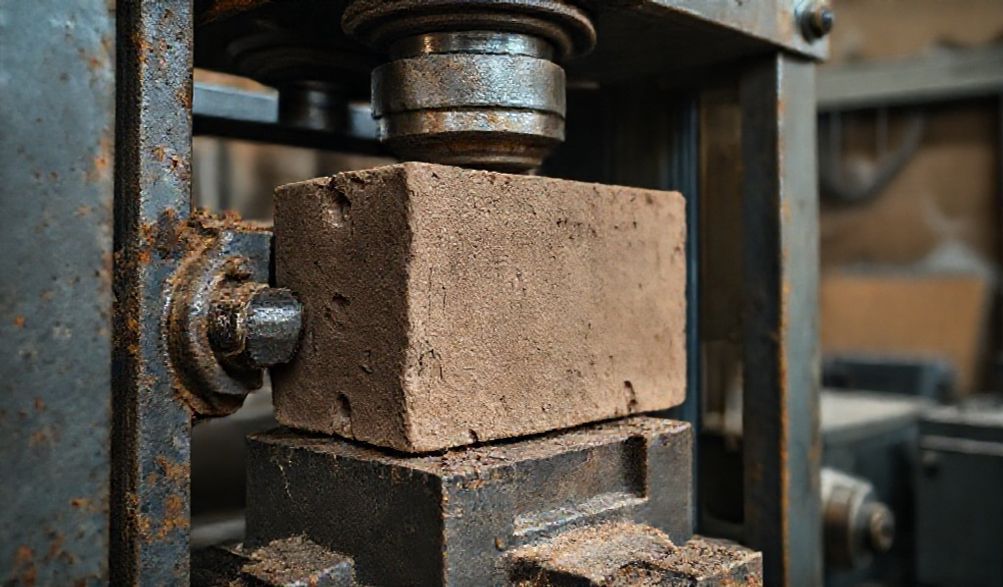
Brick press maşyny, esasan, toz ýa-da däne düzümli çig materialy güýçli basyş bilen ýygy-ýygydan, doly görnüşli kirpije öwürmek üçin ulanylýan enjamdyr. Bu, kalypy boşatmak bilen ýük götermäge ukyply berk gurluş birligini döretmek arasyndaky tapawutdyr. Basyş prosesi, el bilen düzülen alternatiwlaryna garanyňda, basylan kirpijelere ýokary berkligi, ölçeg deňligi we ýygylygy berýär.
ЫКМАЛАМАГЫН НЕГИЗЛИ МЕХАНИЗМЛЕРИ
Esasy prinsip ýönekeý, ýöne güýçlidir. Çig material—gary, toprak-sement goşundysy ýa-da beton—kalyp ýa-da ştamp diýilýän çäkli boşluga berilýär. Soňra güýçli domkrawat ýa-da piston materiala ýokary basyş ýetirýär, ony gysýar we bölejikleriň bir-birine dakynyp we birikmegine mäjbur edýär. Bu mehaniki birikdirme, köplenç nem ýa-da sement ýaly durnuklandyryjy bolmagy bilen güýçlendirilýär, we birleşdiriji "ýaşyl" kerpiç döredýär. Basyş materialyň içki sürtülmegini we howa boşluklaryny ýeňmek üçin ýeterlik bolmaly, netijede çykarylandan soň derrew işlemek üçin güýçli we gurylandan ýa-da ýaklandan soň ygtybarly işleýän önüm döredilýär.
Esasy Bölümler we Olaryň Wezipeleri
Understanding the main components illuminates how the machine achieves this:
* Çerçeve: The robust, heavy-duty steel structure that absorbs the immense pressing forces, ensuring stability and alignment during operation.
* Elektrik ulgamy: This is the machine’s “muscle.” In a gidrawlyk ulgamy, a pump forces fluid into cylinders to generate smooth, controllable pressure. A mekaniki ulgam uses a flywheel, gears, and cams to generate force.
* Kalıp/Ştamplar: The precision-engineered cavity that defines the brick’s shape, size, and surface texture (e.g., smooth, textured, interlocking). Molds are wear items and are critical for final product quality.
* Kontrol paneli: The “brain” of automated machines. It allows operators to set pressure, cycle time, and other parameters, ensuring consistent repeatability.
* Çykaryş Ulgamy: The mechanism that pushes the freshly pressed brick out of the mold, typically using a hydraulic ejector plate or mechanical knock-out system.
Кирпич басыу машиналарының түрлери: Догры дүшүш табув
The market offers a spectrum of brick press machines, from simple human-powered tools to fully robotic production lines. Your choice fundamentally depends on your required output, budget, and labor availability.
Manual Brick Press Machines
- Düşündiriş we Proses: These are lever- or hand-screw-operated devices. The operator manually fills the mold box, applies pressure via a lever system, and then releases and removes the brick.
- Iň Gowy: Extremely small-scale projects, DIY homebuilders, community-led initiatives, and NGOs working in regions with limited infrastructure or electricity.
- Kämil we kemçilikler:
- Artalary: Very low cost, portable, requires no power source, simple to understand and repair.
- Kemçilikler: Highly labor-intensive, very low output (200-500 bricks per day), product consistency relies entirely on operator skill, physically demanding.
Semi-Automatic Brick Press Machines
- Düşündiriş we Proses: These machines mechanize the pressing force (usually via a hydraulic or mechanical system) but require an operator to feed material and remove finished bricks. The pressing and ejection cycles are automated.
- Iň Gowy: Small to medium-sized businesses, start-up brick yards, and contractors needing a dedicated on-site production capability. They offer a sweet spot between investment and output.
- Kämil we kemçilikler:
- Artalary: Significantly higher output than manual presses, good consistency, more manageable labor requirement, relatively affordable operational costs.
- Kemçilikler: Still requires consistent manual labor for feeding/removal, output is limited by operator speed, not suitable for mass industrial production.
Fully Automatic Brick Press Machines
- Düşündiriş we Proses: These are complete, computer-controlled production systems. They feature automated material feeding (via conveyor or hopper), pressing, curing, stacking, and even palletizing. Human intervention is primarily for monitoring and maintenance.
- Iň Gowy: Large-scale commercial brick plants, industrial construction material suppliers, and any operation where high-volume, consistent output is critical.
- Kämil we kemçilikler:
- Artalary: Maximum output (thousands of bricks per hour), unparalleled consistency and quality control, dramatically reduced direct labor costs, integrated material handling.
- Kemçilikler: Very high capital investment, requires stable electrical power, complex maintenance needing specialized technicians, less flexibility for very short production runs.
Hydraulic vs. Mechanical Presses
This is a key technical distinction within semi- and fully-automatic categories:
* Hydraulic Presses: Use fluid power to generate pressure. They offer superior control over the pressing force and speed, which is ideal for delicate materials or complex shapes. They operate more quietly and can maintain full pressure. However, they can be slightly slower per cycle and require vigilant maintenance of hydraulic seals and fluid.
* Mechanical Presses: Use a rotating flywheel and clutch mechanism to drive the ram. They are typically faster per cycle and are often perceived as simpler and more robust for high-volume, standard brick production. They can be noisier and offer less adjustable “dwell” time at maximum pressure.
Primary Applications and Output: What Can You Produce?
A brick press machine is a versatile tool, but its design is often optimized for specific material families.
Fired Clay Bricks
These machines produce high-density “green” bricks from clay or shale. The pressed bricks are then dried and fired in a kiln, where they gain their final hardness and color. The press must deliver sufficient “green strength” for the bricks to survive handling before firing.
Concrete (Cement) Bricks and Pavers
Here, the press works with a semi-dry concrete mix (cement, sand, and aggregate). Many concrete brick machines combine high pressure with high-frequency vibration to fluidize the mix, ensuring it fills the mold completely and results in a dense, strong product right after curing.
Compressed Earth Blocks (CEBs) / Interlocking Bricks
A cornerstone of sustainable construction, CEBs are made from locally sourced soil, often stabilized with 5-10% cement. The press compresses this mix to create incredibly strong, insulating blocks. Many designs feature interlocking profiles, reducing or eliminating the need for mortar. This application highlights the machine’s role in eco-friendly building.
Specialized Shapes and Sizes
Through custom molds, a single press can often produce a wide variety of outputs:
* Solid and hollow blocks
* Paving stones and landscaping bricks
* Curved or angled bricks for special architectural features
* Different standard sizes (e.g., 4x8x16 inch blocks)
Critical Factors for Choosing a Brick Press Machine
Selecting a machine is a strategic decision. Use this framework to guide your evaluation.
Öndürijilik Talapalaryňyzy Bahalandyrmak
Start with the end in mind. Ask yourself:
* What is my required output in bricks per hour or per day?
* Is this for a one-off project or continuous, year-round production?
* What specific brick type, size, and strength are my customers or projects demanding?
* What is my available floor space and headroom?
Raw Material Analysis
This is where expertise is non-negotiable. The machine must be matched to your material.
* Лай Its plasticity and mineral content affect pressing behavior and required pressure.
* Soil for CEBs: Particle size distribution (clay, silt, sand) is critical. Laboratory testing is highly recommended.
* Concrete Mix: Aggregate size and shape must be compatible with the mold and feed system.
* Moisture Content: This is a crucial variable. Too dry, and the brick won’t bind; too wet, and it will stick in the mold or deform.
Power Source and Operational Costs
Look beyond the sticker price.
* Does the site have reliable three-phase electrical power for an automatic machine?
* Would a diesel-engine-powered model be more practical?
* Calculate the estimated cost per brick, factoring in energy consumption, labor, and maintenance.
Budget and Total Investment
Your budget must account for the total cost of ownership:
1. Machine purchase price.
2. Shipping, import duties, and installation.
3. Foundation and utility hookups.
4. Initial stock of spare parts and wear items (molds, seals).
5. Operator and maintenance technician training.
Supplier Reputation and After-Sales Support
This factor can make or break your investment. A reputable supplier is a partner.
* Research: Look for companies with a long track record and verifiable customer references.
* Support: What does the warranty cover? Is there a clear manual?
* Parts Supply: How quickly can you get critical spare parts? Is there local technical support?
* Uzmanlyk: A good supplier will ask detailed questions about your raw materials and goals, demonstrating they want to provide a solution, not just sell a machine.
Maximizing Efficiency and Ensuring Longevity
Proper operation and care protect your investment and ensure consistent output.
Routine Maintenance Checklist
- Daily: Check for hydraulic leaks, inspect for loose bolts/nuts, clean material spillage, ensure safety guards are in place.
- Weekly: Lubricate all moving points as per the manual, clean the mold cavities thoroughly, check hydraulic fluid levels and condition.
- Monthly: Inspect hoses and electrical connections for wear, verify pressure settings, check the alignment of moving parts.
Common Operational Issues and Troubleshooting
- Bricks Sticking in Mold: Likely caused by worn mold liners, incorrect moisture content, or insufficient release agent. Check and adjust.
- Low Brick Density/Strength: Could be insufficient pressing pressure, incorrect material mix, or overly dry material.
- Hydraulic System Overheating: Check fluid level and cooler, look for relief valve issues, ensure the system isn’t operating above its duty cycle.
- Uneven Brick Height: Often a sign of uneven material feeding or a misaligned press ram.
Safety Protocols for Operators
- Şahsy gorag enjamlary (ŞGE): Safety glasses, steel-toed boots, and hearing protection (for mechanical presses) are mandatory.
- Maşin howpsuzlygy: Always follow Lock-Out/Tag-Out (LOTO) procedures before any maintenance or clearing a jam. Never bypass safety interlocks or guards.
- Material Handling: Use proper techniques when handling raw materials (e.g., cement dust) and heavy finished products to avoid strain or injury.
FAQ Section
Q1: What is the average production capacity of a standard brick press machine?
A: Capacity varies dramatically. Manual presses may produce 200-500 bricks per day, while large automatic lines can produce over 20,000 bricks per hour. The key is to match the machine’s rated capacity (bricks/hour) with your actual needs.
Q2: Can one machine produce different types and sizes of bricks?
A: Yes, but it depends on the machine. Most machines allow for mold/die changes. However, switching molds may require adjustments to pressure and feed systems. Discuss your need for versatility with the supplier.
Q3: What is the typical price range for a brick press machine?
A: Prices range from a few hundred dollars for a simple manual press to tens or even hundreds of thousands of dollars for a fully automated production line. Semi-automatic models for small businesses often start in the $5,000 – $20,000 range.
Q4: How important is the quality of raw material for the pressing process?
A: It is crucial. Material composition, gradation, and moisture content directly affect brick strength, machine wear, and production efficiency. Conduct material tests or consult with your machine supplier for specifications.
Q5: What kind of training is required to operate a brick press?
A: Manual presses require minimal training. Semi- and fully-automatic machines require proper training on controls, safety systems, routine maintenance, and basic troubleshooting, which should be provided by the supplier.
Netije
Choosing the right brick press machine is a significant decision that hinges on a clear understanding of your production goals, raw materials, financial constraints, and the reliability of your supplier. It’s a balance between engineering specifications and practical business realities. We’ve equipped you with the framework to navigate this complex landscape—from the core mechanics of compaction to the critical checklist for after-sales support.
Use this guide as a foundation for your research. We strongly advise you to test your raw materials, consult with multiple reputable manufacturers, and, if possible, visit a working installation to see a machine in action. The industry continues to evolve towards greater automation, energy efficiency, and material versatility. By making an informed choice today, you’re not just purchasing a machine; you’re investing in the foundational tool that will build your projects, your business, and your success for years to come.
<