
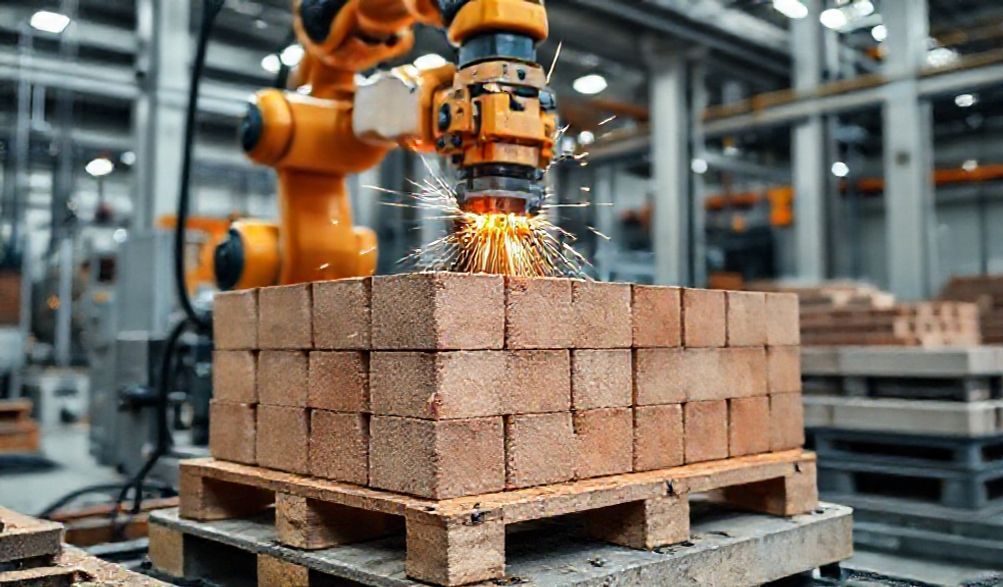
The Complete Guide to Automatic Interlock Brick Machines: Efficiency, Types & Investment
If you’re a construction business owner, civil engineer, or project manager, you know the pain points of traditional brick production all too well. The reliance on large, skilled labor forces, the frustrating inconsistency in brick quality, and the sheer physical limitation of output can strangle project timelines and erode profit margins. In an industry where efficiency and precision are paramount, manual methods are becoming a luxury few can afford.
Enter the automatic interlock brick machine: a transformative piece of industrial engineering that is reshaping the very foundation of masonry construction. This isn’t just another tool; it’s a complete production system designed to deliver uniformity, strength, and scale. This comprehensive guide is crafted from a synthesis of engineering principles, on-ground industry best practices, and clear-eyed economic analysis. Our goal is to provide you with a trusted, expert-led resource to understand, select, and operate these machines, empowering you to make an investment decision that builds not just walls, but a more resilient and profitable business.
What is an Automatic Interlock Brick Machine? Core Technology Explained
At its heart, an automatic interlock brick machine is a sophisticated manufacturing system that transforms raw materials—like soil, sand, cement, or fly ash—into precisely formed, high-strength interlocking bricks with minimal human intervention. It automates the entire cycle: feeding, mixing, compacting, ejecting, and often stacking the final product.
The Principle of Interlocking Bricks
Before understanding the machine, it’s crucial to grasp the product. Interlocking bricks are designed with geometric profiles—such as shear keys, grooves, and ridges—that allow them to lock together like puzzle pieces.
* Dry-Stack or Minimal Mortar: This design often eliminates or drastically reduces the need for wet mortar in bedding joints, relying on the mechanical interlock for stability.
* Esasy Üstünlikler: The system enables faster construction (as alignment is simpler and curing time for mortar is reduced) and can offer superior seismic resistance due to the interlocking mechanism, which allows for slight movement without collapse.
Колданмадан Толук Автоматлашдырылғанга
The evolution of brick-making machinery follows a clear path toward greater autonomy:
* Gollanma: Relies entirely on human labor for material handling, pressing, and curing. Output is low and quality variable.
* Ýary-awtomatik: Mechanizes the pressing operation but requires manual feeding of material and removal of bricks. A significant step up, but still labor-intensive.
* Doly Awtomatik: This is the focus of our guide. A fully automatic system integrates the entire process. Once raw materials are loaded into the hopper, the machine takes over: metering, mixing, conveying to the mold, high-pressure compaction, ejection, and transfer to a curing area—all sequenced and controlled by a programmable logic controller (PLC).
Esasy Bölümler we Olaryň Wezipeleri
Understanding the core components demystifies the machine’s operation:
* Hydraulic Power Pack & Cylinders: The “muscle” of the machine. It generates the immense, controlled pressure (measured in tons) required to densify the raw material into a strong, durable brick.
* PLC-Based Control Panel: The “brain.” This computerized interface allows operators to set parameters (pressure, cycle time), monitor operations, and diagnose issues. It ensures repeatable precision in every cycle.
* Pan Mixer or Twin-Shaft Mixer: Ensures a homogeneous, optimally moistened blend of all raw materials, which is critical for consistent brick quality.
* Konveyer ulgamy: Transports the mixed material to the mold chamber and often moves finished bricks to a stacking or palletizing station.
* Mold or Die Set: The defining component. Made from hardened steel, it gives the brick its precise shape and interlocking design. Different molds can be installed to produce various brick styles.
* Pallet Handling System: Many automatic systems include a circuit of steel or wooden pallets. Bricks are pressed onto these pallets, which are then conveyed to a curing rack, streamlining handling and reducing damage.
Siziň Kerpiç Öndürişiňizi Awtomatlaşdyrmagyň Esasy Peýdalary
Investing in automation is a strategic business decision. Here are the tangible returns you can expect.
Unmatched Productivity and Consistent Output
- Capacity Leap: Shift from producing a few hundred bricks per day manually to thousands. A mid-range automatic machine can easily produce 5,000 to 8,000 standard bricks in an 8-hour shift.
- 24/7 Potential: With proper setup, these machines can operate in multiple shifts, maximizing your capital investment.
- Flawless Uniformity: Every brick is an identical clone of the last. This eliminates waste due to size variation and dramatically speeds up construction, as masons work with perfectly consistent units.
Significant Reduction in Labor Costs and Dependency
Automation redefines your workforce needs. You transition from a large crew of manual laborers to a small team of machine operators, supervisors, and maintenance technicians. This not only cuts long-term salary and management overhead but also mitigates risks associated with labor shortages and skill gaps.
Superior Brick Quality and Structural Integrity
Manual compaction can’t compete with hydraulic force. The high-pressure, computer-controlled compaction of an automatic machine results in:
* Higher Density: Less porosity means lower water absorption and better frost resistance.
* Greater Compressive Strength: Consistently meets or exceeds ASTM, IS, or other relevant standards for load-bearing walls.
* Improved Durability: Dense, well-formed bricks have superior resistance to weathering and abrasion, leading to longer-lasting structures.
Material Efficiency and Sustainability
- Reduced Waste: Precise batching and mixing minimize raw material spillage and reject bricks.
- Use of Local & Eco-Friendly Materials: These machines excel at utilizing on-site soil, quarry dust, or industrial by-products like fly ash, reducing the need for scarce river sand and high-cement content. This lowers the carbon footprint of your bricks.
- Less Mortar: The interlocking design itself reduces mortar consumption by up to 50% or more, offering further material savings.
Types of Automatic Interlock Brick Machines: Choosing the Right Model
Selecting the right machine is critical. The “best” machine is the one that aligns perfectly with your specific business model and project needs.
Stationary vs. Mobile Block Making Machines
- Стационарлык Өсүмликлар: These are heavy-duty, high-output installations fixed in a factory setting. They are ideal for established businesses supplying bricks to multiple construction sites across a region. They offer the highest levels of automation and integration.
- Mobil Maşynlar: Mounted on a trailer, these bring production directly to a large project site (e.g., a housing colony, dam, or large infrastructure project). This eliminates brick transportation costs over long distances, though absolute output is typically lower than a large stationary plant.
Classification by Output Capacity
- Small-Scale / Entrepreneur Models (1,000 – 4,000 bricks/day): Perfect for starting a business or supplying local needs. Often more semi-automatic but can include entry-level fully automatic options.
- Medium-Scale Commercial Models (4,000 – 10,000 bricks/day): The workhorse for growing construction firms and dedicated brick manufacturers. Offers an excellent balance of investment and return.
- Large-Scale Industrial Plants (10,000+ bricks/day): Fully integrated production lines with automated palletizers and robotic stackers. Represents a major capital investment for market leaders.
Specialized Machines for Different Raw Materials
The optimal machine configuration depends on your primary raw material:
* Concrete (Cement & Aggregate) Block Machines: Designed for a mix of cement, sand, and stone aggregate. They produce very high-strength paving blocks, hollow blocks, and solid interlock bricks.
* Compressed Stabilized Earth Block (CSEB) Machines: Optimized for soil (laterite, clay) stabilized with a small percentage of cement or lime. Focus on high pressure for soil compaction.
* Gilli Kiremit Maşynlary: Use extruded or pressed clay, often requiring integrated drying kilns or chambers.
Critical Factors Before You Invest: A Buyer’s Checklist
Due diligence is non-negotiable. Use this checklist to guide your procurement process.
Assessing Your Project Requirements and Scale
- Bazar Talaby: What is the daily brick demand in your target area? What types of bricks (soil, concrete, style) are preferred?
- Kerpiç spesifikasiýalary: Determine the required compressive strength, dimensions, and interlocking design needed for your projects or market.
- Space Availability: Do you have a factory shed, or will production be on-site? Account for the machine, raw material storage, curing area, and finished product yard.
Total Cost of Ownership Analysis
Look beyond the sticker price. Your investment includes:
* Machine Price & Import Duties
* Installation & Foundation Costs
* Operator & Maintenance Training
* Annual Maintenance Contract & Spare Parts Inventory
* Energy Consumption (Hydraulic and electrical load)
* Cost of Additional Molds for different brick types
Machine Specifications Deep Dive
When comparing models, scrutinize these technical details:
* Басым (Тоннаж): Higher tonnage (e.g., 150 tons vs. 80 tons) generally means the ability to produce stronger bricks and handle a wider range of materials.
* Sikl wagty: How many seconds for one complete press cycle? This directly dictates maximum hourly output.
* Awtomatlaşdyryş derejesi: Is it PLC-controlled with a touchscreen HMI? Does it include an automatic pallet feeder and stacker?
* Güýç talap edýän zatlar: Does it need a 3-phase, 415V industrial connection? What is the installed power (HP/KW)?
* Satyn alandan soňky hyzmat: What is the warranty period? Is there a local service engineer? What is the guaranteed response time for breakdowns?
Supplier Vetting for Reliability
Your relationship with the manufacturer is a long-term partnership.
* Reputation & History: How long have they been in business? Look for client testimonials and case studies.
* Factory Visit: If possible, visit their manufacturing facility to assess build quality.
* Client Reference Visit: This is crucial. Ask for contacts of clients with similar machines and visit their operational setup. Ask about performance, support, and challenges.
* Ygtyýarnamalar: Check for certifications of key components like hydraulic pumps, PLCs, and pressure gauges.
Operation, Maintenance, and Best Practices
A machine is only as good as its operation. Proper setup and care determine its lifespan and profitability.
Setting Up for Optimal Production
- Foundation: Pour a level, reinforced concrete foundation as per the machine manual’s exact specifications to absorb vibration.
- Utilities: Ensure correct electrical wiring (with proper earthing) and clean hydraulic connections. Use the recommended grade of hydraulic oil.
- Calibration: Before full production, conduct test runs to calibrate material feed, moisture content, and pressure settings to produce a perfect brick.
Routine Maintenance Schedule for Longevity
Preventive maintenance is far cheaper than major repairs.
* Daily: Check hydraulic oil levels, lubricate all moving points (bearings, guide rods), clean the mold and pallets, and inspect for loose bolts.
* Weekly: Clean the mixer and conveyor thoroughly, check hydraulic hoses for wear, and inspect electrical connections.
* Monthly: Change or clean hydraulic and oil filters, perform a more detailed inspection of the mold and wear plates, and test safety systems.
Troubleshooting Common Issues
- Inconsistent Brick Height: Usually caused by uneven material feed or incorrect moisture content. Calibrate the feeder and check the mix.
- Bricks Sticking in Mold: Mold may need polishing or a release agent. Moisture content could be too high.
- Hydraulic Oil Overheating: Check oil level and cooler. Oil may be contaminated and need changing.
- Low Brick Strength: Likely due to insufficient compaction pressure or an incorrect raw material mix ratio.
Ensuring Operator Safety
- PPE is Mandatory: Safety shoes, gloves, ear protection, and safety glasses must be worn at all times.
- Machine Guarding: Never operate with safety guards or light curtains removed or disabled.
- Lockout/Tagout Procedures: Strict procedures must be followed during any maintenance or mold change to prevent accidental startup.
- Training: Operators must be thoroughly trained on both normal procedures and emergency shutdown.
The Future of Brick Manufacturing: Trends and Innovations
The industry continues to evolve, pushing the boundaries of efficiency and sustainability.
Integration of IoT and Smart Monitoring
Modern machines are becoming nodes in the Industrial Internet of Things (IIoT). Sensors can relay real-time data on production counts, machine health, and energy use to a cloud dashboard. This enables:
* Predictive Maintenance: The system alerts you to replace a part öň it fails, preventing unplanned downtime.
* Remote Diagnostics: A service engineer can often diagnose issues remotely, guiding your technician or preparing the correct spare part in advance.
Advancements in Sustainable Materials
Research is focused on turning more waste streams into resources. Expect increased use of:
* Processed Construction & Demolition Waste as aggregate.
* Agricultural and Industrial By-products.
* Development of “Carbon-Capture” Bricks that actively sequester CO2 during or after the curing process.
Enhanced Automation and Robotics
The automation journey continues beyond the press. We are seeing:
* AI-Powered Vision Systems for 100% automated quality control, scanning each brick for cracks or dimensional faults.
* Collaborative Robots (Cobots) taking over the final stacking and packaging of bricks onto pallets, further reducing manual handling.
FAQ Section
Q: What is the average cost range for a fully automatic interlock brick machine?
A: Prices vary widely based on capacity and features, typically ranging from $50,000 to over $300,000. A robust medium-capacity machine for commercial production often falls in the $80,000 – $150,000 bracket. The final cost depends on output, brand, level of automation (e.g., with or without auto-palletizer), and customization.
Q: Can one machine produce different sizes and styles of interlocking bricks?
A: Yes, absolutely. This is a key advantage. By changing the mold/die set, the same machine can produce various brick designs. However, each mold is a custom-made, high-precision steel component that can cost several thousand dollars. Changing molds also requires downtime (typically 2-4 hours) for skilled technicians.
Q: What raw materials can I use, and what is the ideal soil/sand/cement ratio?
A: These machines are versatile. Common materials include local soil (clay, laterite), sand, quarry dust, cement (5-10% for stabilization), lime, and fly ash. There is no universal “ideal” ratio. The optimal mix depends entirely on the properties of your local soil and the target brick strength. It is essential to conduct laboratory proctor or particle-size tests or strictly follow the mix design guidelines provided by your machine manufacturer.
Q: How much space and what kind of power supply is required for installation?
A: For the machine alone, a covered area of about 200-400 sq. ft. is typical. However, you must plan for significant additional space for raw material storage, brick curing (which can require 10-20 times the daily production area), and finished stock. Power supply almost always requires a 3-phase industrial electrical connection (e.g., 415V, 50Hz), with total connected load ranging from 25 HP to 75 HP or more for larger plants. A professional site assessment is mandatory.
Q: What is the typical return on investment (ROI) period?
A: Providing a single number would be misleading. ROI is highly sensitive to your local brick selling price, operational efficiency, machine utilization rate, and management of costs. With a well-researched purchase, efficient operation, and strong market demand, many businesses achieve a full ROI within 1.5 to 3 years. Creating a detailed financial projection based on your specific variables is the only way to determine your likely payback period.
Netije
The adoption of an automatic interlock brick machine represents more than just a machinery purchase; it’s a strategic pivot towards industrial-grade efficiency, unwavering quality, and sustainable growth. It addresses the core challenges of modern construction—cost, speed, and consistency—head-on.
Success, however, is not guaranteed by the machine alone. It is forged through meticulous planning: a clear assessment of your needs, diligent supplier vetting, and an unwavering commitment to skilled operation and preventive maintenance. This guide serves as your foundational blueprint. Use it to ask the right questions, set realistic expectations, and build a framework for success.
As the construction industry globally leans into precision and sustainability, automating your brick production is no longer just an option for the forward-thinking—it is rapidly becoming the standard for the competitive. Take this knowledge, engage with technical experts, and build the future of your business, one precise, interlocking brick at a time.
<