
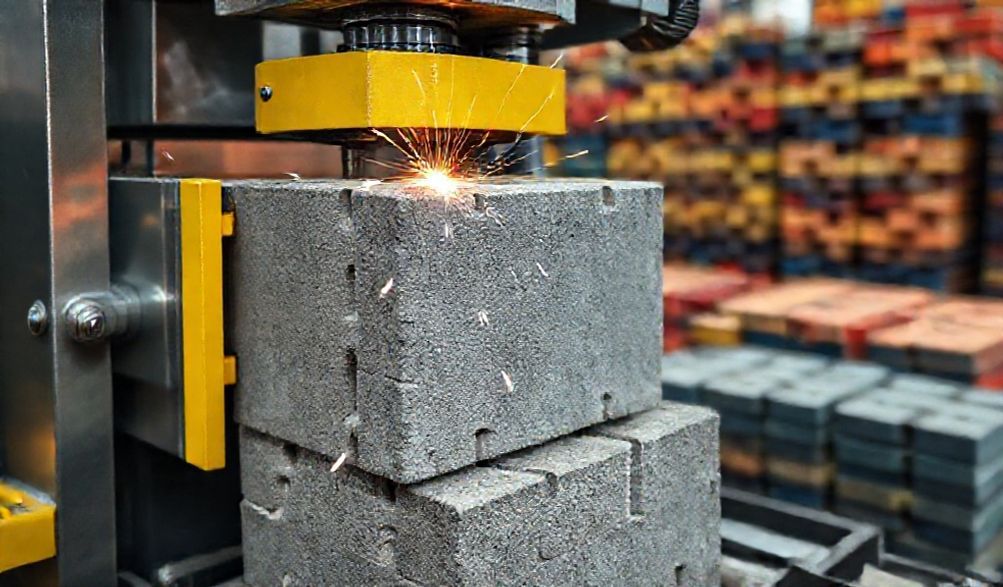
The Ultimate Guide to Brick Interlock Machines: Types, Benefits & How to Choose
Imagine this: you’re a contractor with a backlog of driveway projects, or a homeowner dreaming of a stunning, cobblestone-style patio. The vision is clear—a durable, beautiful surface that adds curb appeal and lasts for decades. But then reality hits. The cost of premium pavers is daunting, the labor for installation is intensive, and the worry about cracking and shifting over time lingers. What if there was a way to take control of quality, cost, and timeline all at once?
Müasir çözgü:brick interlock machine. This powerful piece of equipment is revolutionizing how durable paved surfaces are created, moving production from large, distant factories directly to job sites and small-scale manufacturing yards. It’s the key to unlocking efficiency, superior strength, and remarkable design flexibility.
This comprehensive guide is your expert-backed resource. Compiled from industry specifications, direct manufacturer data, and practical application insights, we’ll demystify this technology. You’ll learn exactly what a brick interlock machine is, how it works, its undeniable benefits, and—most importantly—how to choose the perfect model for your needs, whether for a single project or a thriving new business. Let’s build a foundation of knowledge.
What is a Brick Interlock Machine? Defining the Technology
At its core, a brick interlock machine is a specialized piece of manufacturing equipment designed to produce concrete paving blocks, commonly known as interlocking bricks or paver blocks. Unlike traditional brick-making, which often relies on manual molding or extrusion, these machines use high-pressure compaction to create incredibly dense and uniformly shaped units with precision-engineered edges.
Esasy Wezipa we Çykyş
Esasy işi birbrick interlock machine is to transform a raw concrete mix into finished, high-strength paving blocks. The “interlock” in the name refers to the specially designed edges and sides of the blocks. These aren’t smooth; they feature lips, grooves, or geometric patterns that allow each block to connect snugly with its neighbors.
- The Final Product: The output is a paver block with exceptional structural integrity. When laid, these interlocking edges create a mechanically stable surface that distributes load laterally across the entire paved area. This means the surface resists shifting, sinking, and spreading under weight—a common issue with traditional, non-interlocking pavers or poured concrete.
Esasy Işleýiş Prinsipi
While designs vary, the fundamental operating principle of most interlock machines is a combination of vibration and immense hydraulic pressure. Here’s a simplified step-by-step breakdown:
- Iýmitlenme: A prepared concrete mix (cement, sand, stone dust, and water) is fed into the machine’s hopper.
- Ölçeşdirme we ýerleşdirme: The mix is precisely metered and dropped into a mold cavity on the machine’s pallet or production table. This mold defines the block’s shape, size, and surface texture.
- Gatnaşdyrma: This is the critical phase. A hydraulic ram applies tremendous downward force—often measured in tons—while simultaneous vibration shakes the mold. This dual action removes air pockets and compresses the raw materials into an extremely dense matrix.
- Чыгаруу: The hydraulic system retracts, and the freshly formed, solid block is pushed up and out of the mold onto a conveyor or stacking system.
- Gowulama: The green (freshly made) blocks are then moved to a curing area. Proper curing, typically involving keeping the blocks moist for several days, allows the cement to fully hydrate and reach its maximum strength.
In essence, the process is about density through pressure. The higher the compaction force a machine can apply, the stronger and more durable the final paver block will be.
Key Advantages of Using an Interlock Brick Machine
Why choose machine-made interlocking blocks over traditional options like clay bricks, poured concrete, or purchased pavers? The advantages span efficiency, quality, design, and economics.
Bäşdeşsiz Netijelilik we Öndürijilik
The productivity gap between manual and machine production is vast.
* Output Comparison: A manual laborer might produce a few hundred bricks in a full day. A basic semi-automatic brick interlock machine can produce 500 to 1,000 blocks per hour. Fully automatic models can exceed 3,000 blocks per hour.
* Project Impact: This translates to drastically faster project completion for contractors and a viable product volume for manufacturers. You reduce labor costs significantly and can take on larger or more time-sensitive projects.
Superior Quality and Consistency
This is where the technology truly shines. High-pressure compaction yields blocks with superior physical properties.
* High Density & Strength: Machine-compacted blocks achieve compressive strengths typically ranging from 35 MPa to over 50 MPa. To put that in perspective, a standard residential concrete driveway is often around 20-25 MPa. This makes them ideal for heavy-duty applications like driveways, industrial yards, and public walkways.
* Ölçeg Birligi: Every block from the same mold is identical. This eliminates fitting issues during installation, resulting in perfectly even joints, seamless patterns, and a professional finish. It also drastically reduces material waste on-site.
Remarkable Design Versatility
With a brick interlock machine, your design palette is limited only by the molds you possess. Changing a mold can take as little as 30 minutes, allowing you to switch production between different products seamlessly.
* Shape Variety: Produce classic rectangles, herringbone patterns, hexagons, cobblestones, fans, or even custom-designed shapes.
* Surface & Color: Molds can create smooth, textured, tumbled, or granite-like finishes. By adding color pigments to the concrete mix, you can produce blocks in a spectrum of hues without needing separate glazing or painting processes.
Cost-Effectiveness and ROI
The investment in a machine pays dividends over time.
* Material Savings: On-site or local production cuts out middlemen, long-distance shipping costs, and retailer markups. You also minimize breakage and waste due to the consistency of the blocks.
* Бизnes Mümkinçilikleri: For entrepreneurs, it opens the door to a scalable business model. You can start by supplying blocks for local projects and expand production as demand grows. The ability to produce custom colors and shapes also allows you to command premium pricing.
Types of Brick Interlock Machines: Finding the Right Fit
Not all machines are created equal. Understanding the different types is crucial to matching the equipment with your project scope, budget, and labor resources.
Голланма, Ýary-awtomatiki we Doly Awtomatiki Maşynlar
The level of automation is the primary differentiator.
-
Manual Interlock Machines:
- Olar nädip işleýär: Every step—feeding mix, operating the lever for compaction, and removing the finished block—is done by the operator.
- Iň gowy bolýar: Very small-scale startups, DIY enthusiasts, or contexts with very low labor costs and minimal production needs (under 500 blocks per day).
- Artalary: Lowest capital cost, simple operation, no power requirement (for purely mechanical models).
- Kemçilikler: Very low output, high physical labor, inconsistent quality dependent on operator skill.
-
Semi-Automatic Interlock Machines:
- Olar nädip işleýär: Key processes like vibration, compaction, and sometimes block ejection are powered (hydraulically or electrically). The operator typically feeds the raw material and may initiate the cycle.
- Iň gowy bolýar: Small to medium-sized businesses, contractors, and municipalities. This is the most popular category, offering an excellent balance of output, cost, and control.
- Artalary: Good production rate (1,000-2,500 blocks/hr), significantly improved consistency over manual models, reasonable price point.
- Kemçilikler: Still requires consistent operator attendance.
-
Fully Automatic Interlock Machines:
- Olar nädip işleýär: These are computer-controlled production lines. They feature automatic material feeding, pressing, block ejection, stacking, and pallet return. They often include robotic arms for stacking blocks onto curing racks.
- Iň gowy bolýar: Large-scale commercial paver manufacturing plants requiring high-volume, round-the-clock production.
- Artalary: Maximum output (3,000+ blocks/hr), exceptional and unwavering consistency, minimal direct labor required.
- Kemçilikler: High initial investment, complex installation, requires stable power supply and skilled maintenance.
Stationary vs. Mobile Block Making Machines
It’s important to clarify this distinction:
* Стационар машиналар: The vast majority of dedicated brick interlock machines are stationary plants. They are installed on a solid foundation in a factory or yard and are designed for the high-volume, precision production of standard-sized paving blocks.
* Mobil Maşynlar: Often called “block making machines,” these are typically towed to a construction site to produce larger concrete blocks (like hollow blocks or curb stones) directly where they will be used. While some can be fitted with paver molds, they are generally not optimized for the high-pressure, high-frequency production of small interlocking pavers.
Understanding Production Capacity (Blocks per Hour)
Your required output is the single most important factor in choosing a machine. Here’s a general guide:
| Capacity Tier | Blocks Per Hour (Approx.) | Ideal For |
| :— | :— | :— |
| Small / Entry-Level | 500 – 1,200 | Small contractors, niche landscaping businesses, very small-scale manufacturing startups. |
| Medium / Standard | 1,200 – 2,500 | Growing paver supply businesses, municipal works departments, medium-sized construction firms. |
| Large / Industrial | 2,500 – 5,000+ | Established paver manufacturing plants supplying regional distributors and large projects. |
How to Choose the Best Brick Interlock Machine: A Buyer’s Checklist
Armed with knowledge of the types, use this practical checklist to evaluate your options and make a confident purchase.
Assess Your Production Needs and Scale
Start by asking the right questions:
* What is my current and projected future demand (blocks per day/week)?
* Am I supplying a specific project, starting a business, or expanding an existing one?
* What is my available workforce? Can I manage a manual machine, or do I need automation?
* What are the common paver types and specifications demanded in my local market?
Critical Machine Specifications to Scrutinize
When comparing models, go beyond the brochure and dig into these specs:
- Pressure Force (Tons): This directly dictates block strength. For strong, durable pavers, look for machines offering compaction pressure of at least 150 tons. Heavy-duty models go up to 300+ tons.
- Galyba Ulgamy: Investigate how easy it is to change molds. A quick-change system saves hours of downtime. Ensure the supplier offers a wide range of standard mold options for future versatility.
- Güýç talap edýän zatlar: Does it run on a standard electrical grid, require a high-voltage connection, or use a diesel engine? Your site’s power availability will determine your options and operational costs.
- Awtomatlaşdyryş derejesi: Be honest about your need for consistency and labor savings. Investing in a higher level of automation than you initially need can be a smart move for growth.
Evaluating Brand Reputation and Supplier Support
The machine is only as good as the support behind it. A cheap machine with no spare parts or service is a costly paperweight.
* Satyn alandan soňky hyzmat: Does the supplier have service technicians? What is their response time?
* Ätiýaçlyk bölekleriniň bardygy: Are common wear parts (hydraulic seals, mold liners, vibration motors) readily available locally or via quick shipping?
* Warranty: What is covered and for how long?
* References & Reviews: Ask the supplier for contact information of current customers. Search online for independent reviews and forum discussions about the brand.
Budgeting: Initial Investment vs. Operational Costs
Look at the Total Cost of Ownership (TCO):
1. Başlangyç satyn alyş bahasy:Maşynyň özüniň bahasy.
2. Installation & Setup: This may include foundation work, electrical hookup, and initial calibration.
3. Operating Costs: Electricity/fuel, raw materials, routine maintenance supplies (grease, filters).
4. Emege ödünçleri: Wages for operators and maintenance staff.
5. Downtime Cost: Factor in the potential loss of production if the machine breaks down and support is slow.
Essential Considerations for Operation and Maintenance
To ensure longevity and consistent output, proper operation and maintenance are non-negotiable.
Raw Material Preparation (Concrete Mix Design)
The machine can only make good blocks from good mix. A standard, effective mix for interlocking pavers includes:
* Sement: Ordinary Portland Cement (OPC 43 or 53 grade).
* Fine Aggregates: Well-graded, clean coarse sand and stone dust (quarry dust).
* Coarse Aggregates: For some block types, small (6mm) granite chips may be added for extra strength.
* Suw: Clean, potable water. The water-cement ratio is critical—too much water weakens the block; too little prevents proper compaction.
* Pigmentler: Iron-oxide-based pigments for coloring (added during dry mixing).
Routine Maintenance for Longevity
A simple, disciplined maintenance routine prevents major failures.
* Daily: Clean the machine thoroughly at the end of each shift to prevent concrete buildup. Check hydraulic oil levels and look for leaks.
* Weekly: Lubricate all moving parts as per the manual. Inspect mold liners for wear and check the tension of vibration mounts.
* Monthly: Change hydraulic and engine oil filters. Conduct a thorough inspection of the electrical system and pressure gauges.
Safety Protocols for Operators
Safety must be paramount in a high-pressure industrial environment.
* Şahsy gorag enjamlary (ŞGE): Operators must wear safety glasses, hearing protection, steel-toed boots, and gloves.
* Maşin howpsuzlygy: Ensure all safety guards are in place. Implement a lock-out/tag-out procedure during maintenance. Never place hands in the mold area during operation.
* Material Handling: Use proper lifting techniques or equipment for handling heavy molds and bags of cement.
Frequently Asked Questions (FAQ) About Brick Interlock Machines
Q1: What is the average cost of a brick interlock machine?
A: Prices vary dramatically based on type and capacity. A basic manual machine can start around $5,000-$10,000. A quality semi-automatic model typically ranges from $25,000 to $70,000. Fully automatic production lines begin around $80,000 and can exceed $200,000. The key is to get detailed quotes based on your required specifications.
Q2: Can I start a business with a small interlock machine?
A: Absolutely. Many successful businesses begin with a single, medium-capacity semi-automatic machine. The key is to start lean: conduct thorough local market research, identify a niche (e.g., supplying a specific color or shape), and focus on serving local contractors, landscapers, and homeowners. Manage your cash flow carefully and reinvest profits to grow.
Q3: How strong are machine-made interlocking bricks compared to traditional bricks?
A: They are significantly stronger. Machine-made interlocking pavers are engineered for load-bearing surfaces. They commonly achieve compressive strengths of 35 MPa to 50 MPa or more. Traditional clay bricks for paving are generally much weaker and more prone to abrasion and weathering. The interlocking design also provides far greater flexural strength (resistance to breaking under bending forces) than a standard concrete slab.
Q4: What kind of space and foundation is required to install one?
A: You need a dedicated, sheltered area. Essentials include:
* A leveled, reinforced concrete floor (at least 6 inches thick).
* Ample space for the machine, plus room for raw material storage (sand, cement, pallets) and a block curing area (which can be 5-10 times the footprint of the machine).
* Adequate ventilation and lighting.
* Reliable access to the required power source (three-phase electricity is common for larger models).
Q5: Where can I get training to operate and maintain the machine?
A: Reputable suppliers should provide comprehensive initial training as part of the purchase package, covering operation, basic maintenance, and troubleshooting. For deeper knowledge, look for vocational training courses offered by technical colleges. Additionally, many manufacturers and industry experts provide extensive online video tutorials that serve as excellent ongoing resources.
Netije
A brick interlock machine is more than just a piece of equipment; it’s an investment in quality, efficiency, and versatility. Whether your goal is to gain a competitive edge as a contractor, create a beautiful and lasting hardscape for your property, or build a profitable manufacturing business, this technology provides the tools to take control of the process from raw material to finished installation.
Use this guide as your foundational research. Remember, the most important step is to move from theory to practice. Consult with multiple reputable suppliers, request live demonstrations using a concrete mix, and ask the hard questions about support and service. Carefully analyze your specific production needs, financial model, and growth plans. With due diligence, you can select the machine that will pave the way to your success for years to come.
Ready to explore specific models or get a quote? Start by clearly defining your required daily production capacity and key desired features. Then, reach out to established manufacturers for detailed consultations and proposals.
<