
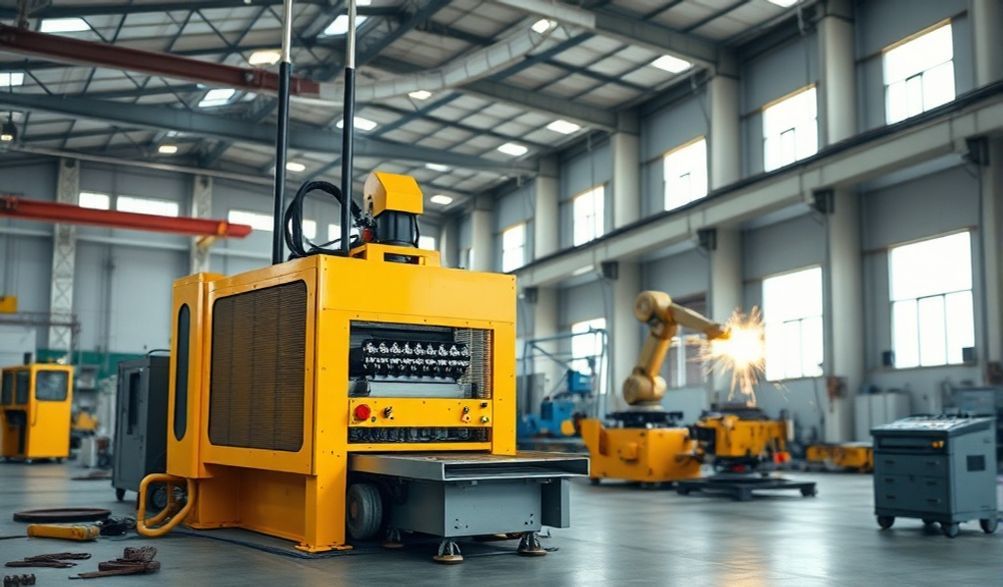
The Ultimate Guide to Sourcing High-Quality Block Machines from China
Giriş
The global construction industry is projected to reach a staggering $15.2 trillion by 2030, driven by relentless urbanization and infrastructure development. At the heart of this growth lies a fundamental demand for efficient, cost-effective building materials, with concrete blocks remaining a cornerstone of modern construction. For businesses looking to capitalize on this demand, investing in a reliable block production line is a pivotal decision. However, sourcing heavy machinery internationally presents a minefield of challenges: daunting quality concerns, navigating an ocean of unknown suppliers, complex logistics, and the ultimate question—will this machine deliver true value for money?
Enter China, the undisputed manufacturing powerhouse of the world. For decades, it has evolved into the leading global hub for block making machinery, offering an unparalleled spectrum of equipment—from simple manual presses to fully integrated, computer-controlled automatic plants. Sourcing a block machine from China is not merely a cost-saving tactic; it’s a strategic move for scalability and competitiveness. But navigating this opportunity requires insight, not just a search engine.
This definitive guide synthesizes years of industry data, direct manufacturer insights, and hands-on procurement experience. Our goal is to transform the complex process of sourcing a block machine in China into a clear, actionable roadmap. Whether you are a construction company scaling operations, a block manufacturing startup, an entrepreneurial investor, or a seasoned procurement manager, this resource is designed to equip you with the knowledge to make an informed, confident, and profitable investment.
Understanding Block Making Machinery: Types and Applications
Before contacting suppliers, understanding the machinery landscape is crucial. The right choice depends entirely on your production goals, budget, and scale. Chinese manufacturers cater to every segment of the market.
Manual and Semi-Automatic Block Machines
These machines are the entry point into block manufacturing, prized for their simplicity and lower capital investment.
* Amal & Çykyş Manual machines require significant physical labor for feeding, molding, and stripping blocks. Semi-automatic models incorporate basic hydraulic or mechanical systems to reduce labor, often featuring a simple vibration table and manual mold handling. Typical output ranges from 800 to 2,500 blocks per 8-hour shift.
* Ideal Üçin: Small-scale startups, community-based projects, or businesses with highly variable, low-volume demand. They are an excellent way to validate a market with minimal risk.
* Ыйсаплылык: Their primary advantage is low initial cost and ease of maintenance. However, the higher labor cost per block and physical demands are important trade-offs.
Fully Automatic Block Making Plants
This is where Chinese engineering shines, offering sophisticated production lines that rival global brands in capability.
* Integrated Systems: A full plant is a symphony of coordinated machinery. It typically includes an automatic batching and mixing system, a conveyor belt for material transfer, the core block making machine (with automatic mold changing and high-frequency vibration), a block elevator, and an automated pallet circulation/curing system. Some advanced lines even feature robotic stackers.
* Scale & Efficiency: Designed for large-scale, high-volume production (5,000 to 30,000+ blocks per day) with minimal manual intervention. One or two operators can often manage the entire line, leading to remarkably low per-unit labor costs and consistent, high-quality output.
Specialized Machines for Diverse Products
The versatility of the Chinese supplier ecosystem is a key strength. Beyond standard hollow blocks, you can source machines engineered for specific products:
* Hollow & Solid Blocks: The bread and butter of construction, with machines optimized for different block sizes and void patterns.
* Paving Stones & Curbs: These require high-pressure compaction and often specialized mold designs for intricate patterns and colors.
* Gapmaç Bloklar: Used for retaining walls and erosion control, these demand precise molding for their unique locking shapes.
* Other Products: Machines for aerated concrete (AAC) blocks, kerbstones, and even soil-cement blocks are readily available. This diversity allows you to diversify your product line and adapt to market needs.
Why Source Block Machines from China? A Data-Driven Analysis
The decision to source from China should be based on concrete advantages, not just lower price tags. The data and market reality support a compelling case.
Unmatched Cost-Effectiveness and ROI
The most apparent advantage is economic. Chinese manufacturers benefit from immense economies of scale, a mature supply chain for components (steel, hydraulics, motors), and competitive labor markets.
* Price-to-Performance: You can often acquire a fully automatic Chinese plant for the price of a semi-automatic line from Europe or North America. This dramatically lowers the barrier to entry and accelerates the return on investment (ROI).
* Göni Týarýaýyş: Eliminating multiple layers of intermediaries (common with local dealers) means your capital goes directly into machinery and quality, not middleman margins.
Tehnologiýanyň ösmegi we täzeçilik
The outdated stereotype of Chinese manufacturing producing only “cheap copies” is obsolete. Leading Chinese block machine manufacturers invest heavily in R&D.
* Modern Controls: Top-tier machines now feature advanced Programmable Logic Controller (PLC) systems with touch-screen interfaces, allowing for precise control over vibration frequency, hydraulic pressure, and production cycles.
* Energetika samsady: Innovations in hydraulic system design and high-efficiency vibration motors reduce power consumption, a significant operational cost.
* Durability & Design: The use of high-grade steel, hardened mold liners, and imported name-brand components (like Siemens PLCs or Schneider electrics) is now standard among reputable factories, ensuring machine longevity.
Vast Supplier Ecosystem and Customization
Unlike sourcing from regions with only a handful of manufacturers, China offers a vast, competitive landscape.
* Specialization: You can find suppliers who specialize solely in paving stone machines, large hollow block machines, or mobile block plants. This specialization often translates to deeper expertise.
* Tailored Solutions: Need a machine to work with a specific local aggregate? Require a unique block size or shape? Reputable Chinese suppliers excel at customization. They can modify mold designs, machine dimensions, and control systems to fit your exact raw materials and product catalog.
A Step-by-Step Guide to Vetting Chinese Block Machine Suppliers
This is the most critical phase, where due diligence separates successful partnerships from costly mistakes. From our experience auditing factories, a clean, organized workshop floor often correlates with stringent quality control processes.
Where to Find Reliable Suppliers (Beyond Alibaba)
While B2B platforms like Alibaba and Made-in-China.com are starting points, dig deeper.
* Industry Platforms: Seek out construction machinery-specific directories and forums.
* Trade Shows: The China International Building Machinery Fair is a premier event to meet suppliers, see machines in operation, and assess build quality firsthand. Visiting a supplier’s booth and their factory (many are near exhibition cities) is invaluable.
* Factory Audits: Whether virtual or in-person, a tour is non-negotiable. A virtual audit via video call can assess workshop organization, inventory of raw materials (steel plate quality), and assembly lines.
Key Due Diligence Checklist
Treat supplier vetting like a professional investigation.
- Factory Visit & Audit: Look for modern CNC cutting/welding equipment, orderly assembly stations, and testing areas for finished machines. Ask to see their quality inspection protocols.
- Technical Specifications & Compliance: Scrutinize the spec sheet. Does it list specific brands for critical components (hydraulic pumps, vibration motors)? Verify certifications like CE (for European standards), ISO 9001 (quality management), and other relevant marks. Be aware that a CE certificate from a reputable third-party agency holds more weight than a self-issued one.
- Client Portfolio & References: Ask for a list of international clients, preferably in your region or with similar production needs. Contact them directly. Ask about machine performance, reliability, and the supplier’s responsiveness to issues.
- After-Sales Service Structure: A professional supplier has a clear plan. What is the warranty period (typically 12-18 months on core parts)? What is their spare parts inventory and shipping policy for urgent orders? Do they offer remote support via video call? Who will provide installation and commissioning guidance?
Navigating the Procurement and Logistics Process
Clear understanding and documentation here prevent misunderstandings that can derail a project.
Incoterms and Payment Terms Clarity
Misunderstanding shipping terms is a common pitfall.
* Incoterms: FOB (Free On Board) is common. You own the goods once they’re loaded on the ship at the Chinese port; you arrange and pay for main shipping freight and insurance. CIF (Cost, Insurance, and Freight) means the supplier handles shipping to your destination port. FOB often provides more control and cost transparency.
* Payment Terms: Secure methods are essential. A common and balanced approach is 30% deposit via T/T (Telegraphic Transfer), 40% upon pre-shipment inspection photos/videos, and 30% against copy of shipping documents. A Letter of Credit (L/C) is also secure but involves more bank fees.
Quality Control During Manufacturing and Pre-Shipment
Do not wait until the machine arrives at your port.
* Staged Inspections: For large orders, hire a third-party inspection company (like SGS, BV, or Intertek) to conduct checks during fabrication (material quality, welding), pre-assembly, and most importantly, a Final Random Inspection (FRI) before crating. They will test-run the machine, check dimensions, and verify packaging.
* Self-Documentation: Request high-resolution photos and videos of the painted machine, control panel tests, and a trial run producing sample blocks with your specified raw material formula.
Shipping, Customs, and Installation
Plan for the journey home.
* Logistics Chain: Work with a reliable freight forwarder experienced in heavy machinery. They will handle booking, customs declaration in China (export), sea freight, and destination port clearance.
* Essential Documentation: Ensure you receive: Commercial Invoice, Packing List, Bill of Lading, Certificate of Origin, and the previously mentioned compliance certificates. Your forwarder and customs broker will need these.
* Gurnama we ýerine ýetirme: Discuss this upfront. Will the supplier send an engineer? If not, will they provide comprehensive installation manuals and video guides? Factor the cost of local technical support for assembly into your budget.
Maximizing Your Investment: Operation and Maintenance Tips
Your relationship with the supplier shouldn’t end at delivery. Proper operation and maintenance are key to a 10+ year machine lifespan.
Efficient Operation for Optimal Output
The machine is only one part of the equation.
* Raw Material Quality: Consistent, properly graded aggregates (sand, gravel) and good-quality cement are critical. Impurities or excessive moisture can affect block density and finish.
* Mix Design: Work with your supplier to fine-tune the water-cement ratio and mix formula for your local materials. A small change can significantly improve block strength and curing time.
* Trained Operators: Ensure your team understands the PLC controls and operating parameters. Running the machine outside its specified pressure or vibration settings causes premature wear.
Preventive Maintenance Schedule
Adherence to a simple schedule prevents 80% of major breakdowns.
* Daily: Check hydraulic oil levels, clean the machine of concrete buildup, inspect mold liners for wear, and listen for unusual noises.
* Weekly: Tighten all bolts and nuts (vibration can loosen them), check belt tensions on conveyors, and inspect electrical connections.
* Monthly: Change hydraulic oil and filters as recommended, grease all bearings, and conduct a thorough inspection of vibration motors and hydraulic cylinders.
Sourcing Genuine Spare Parts
Downtime is lost revenue. Build a proactive spare parts strategy.
* Initial Stock: Purchase a critical spare parts kit (seals, gaskets, common hydraulic hoses, vibration motor mounts) with your machine order.
* Long-Term Relationship: Maintain a good relationship with your supplier for original parts. Using counterfeit or ill-fitting parts can damage other expensive components. Establish a clear channel for ordering and expediting spare parts.
Frequently Asked Questions (FAQ) About Block Machines from China
Q1: What is the average lead time for a block machine order from China?
A: Lead time varies significantly. A standard manual/semi-automatic machine may take 15-30 days. A customized fully automatic plant typically requires 30-60 days for production, plus 1-4 weeks for shipping, depending on your destination.
Q2: How can I ensure the machine quality if I can’t visit the factory?
A: A comprehensive virtual audit via live video call is essential. Additionally, insist on a pre-shipment inspection by a hired third-party agency. Always request high-definition videos of the machine performing a test run with materials similar to yours.
Q3: Are Chinese block machines compatible with the electrical standards and raw materials in my country?
A: Reputable suppliers routinely customize machines for global markets. You must specify your required voltage (e.g., 380V/50Hz, 440V/60Hz) and phase. They can also advise on mold and mix design adaptations for your local aggregates and cement standards.
Q4: What is the typical warranty period, and what does it cover?
A: A standard warranty is 12-18 months for core parts (frame, hydraulic cylinder, vibration motor) from the date of shipment or commissioning. Crucially, the warranty terms must be explicitly stated in your contract, including what is excluded (e.g., wear parts like mold liners, misuse, lack of maintenance).
Q5: Can suppliers provide training for our operators?
A: Yes, professional suppliers provide detailed operation and maintenance manuals (often in English). Many include video guides. For automatic lines, on-site installation and training by a factory engineer is commonly offered, though it may be a separate cost item. Remote training via video conference is also a standard support service.
Netije
Sourcing a block machine from China represents a significant strategic opportunity to enhance your production capability and business competitiveness. The journey, as outlined, involves understanding your machinery needs, recognizing the substantive advantages of the Chinese market, conducting meticulous supplier due diligence, and carefully managing the logistics and long-term operational partnership.
This is more than a transaction; it’s about building a relationship with a manufacturing partner who can support your growth for years to come. By using this guide as a checklist, you move beyond price comparisons to evaluating true value, risk mitigation, and long-term reliability.
Empower your procurement process with knowledge, ask the detailed questions, and verify every claim. The goal is not just to buy a machine, but to invest in a productive asset that will form the foundation of your success for the next decade. We are committed to providing trustworthy, expert-led information to empower these critical business decisions. Your next step is to take this framework and begin conversations with confidence.
<