
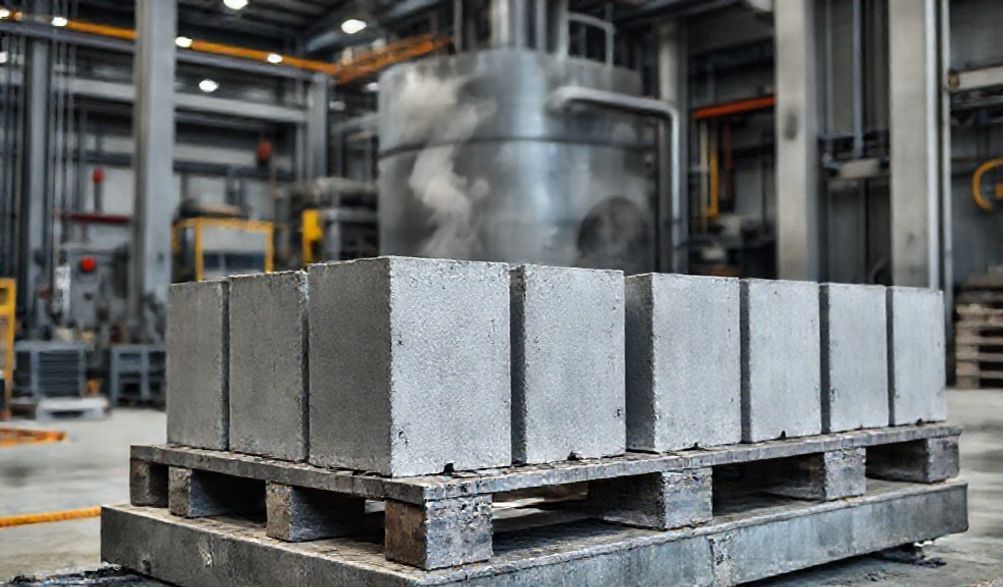
The Art and Science of Making Cinder Blocks: An Inside Look at FUDA Brick Making Factory
For anyone involved in construction—from project managers and masons to ambitious DIYers—the humble cinder block is a foundational element. But what truly goes into creating these ubiquitous building units? The difference between a basic understanding and true mastery lies in the details of industrial manufacturing. This comprehensive guide draws on decades of hands-on manufacturing experience at the FUDA brick making factory to explain the precise process of making cinder blocks. We will move beyond basic theory to detail the machinery, material science, and quality control protocols that define professional-grade block production. By the end, you’ll understand why factory-made blocks from reputable manufacturers like FUDA are non-negotiable for ensuring structural integrity, cost-efficiency, and success in modern construction.
What Are Cinder Blocks? Understanding the Core Building Material
Before we step onto the production floor, it’s crucial to define our subject accurately. Commonly called “cinder blocks,” these building materials have a specific technical identity and set of properties that make them indispensable.
Cinder Blocks vs. Concrete Blocks: A Technical Distinction
The term “cinder block” is a historical holdover. Decades ago, these blocks were often made using industrial by-products like cinders (a type of fly ash from coal furnaces) as a primary aggregate. Today, the manufacturing process has evolved for greater strength and consistency.
- Modern Composition: What are typically called cinder blocks now are almost always concrete masonry units (CMUs). They are primarily made from a controlled mix of Portland cement, water, and aggregates like sand, gravel, or crushed stone.
- Why the Distinction Matters: Using the term CMU is more accurate and reflects the material’s enhanced strength and durability. At FUDA, we produce high-performance concrete blocks, though the familiar “cinder block” name persists in everyday language.
Key Properties and Advantages of Modern Cinder Blocks
The widespread use of concrete blocks is no accident. Their material properties offer distinct advantages for construction:
- High Load-Bearing Capacity: Properly manufactured and reinforced, CMU walls provide excellent structural support for buildings.
- Superior Fire Resistance: Concrete is non-combustible, offering fire ratings that surpass many other building materials.
- Термалдык масса: Blocks absorb and slowly release heat, helping to regulate indoor temperatures and improve energy efficiency.
- Sound Insulation: The density of concrete provides effective noise reduction.
- Cost-Effectiveness & Speed: The blocks are relatively inexpensive to produce and allow for rapid wall assembly compared to poured-in-place concrete or brick.
Inside the FUDA Factory: A Step-by-Step Guide to the Manufacturing Process
From our decades of operation, we’ve refined our process into a seamless, technology-driven operation. Here is a step-by-step breakdown of how raw materials are transformed into pallets of reliable cinder blocks.
Stage 1: Raw Material Selection and Batching
Quality begins at the source. You cannot produce a consistent, high-strength block with inconsistent ingredients.
The Perfect Mix
The specific recipe is proprietary, but the components are standard. Our mix design carefully balances:
* Portland Sementi: The binder that holds everything together.
* Agregatlar: A blend of fine (sand) and coarse (gravel or crushed stone) materials for structure and volume.
* Suw: Precisely measured for proper hydration without making the mix too wet (“no-slump” consistency is key for molding).
Quality at the Source
FUDA doesn’t just order bulk materials. We partner with trusted suppliers and conduct rigorous incoming tests. We analyze aggregates for size, gradation, and cleanliness, and cement for its chemical composition. This ensures every batch starts with a foundation of quality.
Stage 2: Mixing and Conveying
Consistency is paramount. The raw materials are fed into large industrial mixers—often pan mixers or planetary mixers. These machines thoroughly blend the cement, aggregates, and water into a homogeneous, dry-looking concrete mix. This “no-slump” consistency is vital; it must be moist enough to bond but dry enough to hold its shape immediately after molding.
Once mixed, the concrete is transferred via enclosed conveyor belts or automated bucket systems directly to the hopper of the block-making machine. This closed-loop system minimizes waste and contamination.
Stage 3: Molding and Compaction: The Heart of the Operation
This is where the block takes shape. Our hydraulic block-making machines are the workhorses of the factory.
- Iýmitlenme: The concrete mix is fed into a mold box, which defines the block’s shape (e.g., standard 8x8x16 inch, half-block, corner block).
- Gatnaşdyrma: The machine subjects the mix to intense high-pressure vibration. This force removes air pockets and compacts the material densely into every corner of the mold. The quality of this compaction directly influences the block’s final strength and weight.
- Ýapyşyk: The mold is lifted away, leaving a perfectly formed, “green” block on the steel pallet below. This process takes mere seconds.
Stage 4: Curing: Where Strength Develops
A newly molded block has zero usable strength. Curing is the chemical process where cement hydrates, gaining hardness and durability. How this is controlled separates factory production from DIY methods.
- Steam Curing (Kiln): At FUDA, we primarily use controlled steam curing chambers. The pallets of green blocks are rolled into a low-pressure steam kiln.
- The FUDA Cycle: We carefully control temperature (typically between 140-180°F) and humidity for a period of 12-24 hours. This accelerated curing process allows blocks to develop over 70% of their 28-day strength in less than a day, making them ready for handling and shipping much faster than air curing.
Stage 5: Cubing and Palletizing for Shipping
The final, cured blocks are fed to an automated cuber. This machine neatly stacks a specific count of blocks (e.g., 72 or 90) into a cube. The cube is then wrapped with heavy-duty plastic strapping to form a secure, transportable pallet. These pallets are then moved to the storage yard or loaded directly onto flatbed trucks for delivery.
The Technology Behind Quality: FUDA’s Machinery and Quality Control
Our reputation is built on consistent quality, delivered at scale. This is only possible through advanced technology and unwavering quality control.
Advanced Block Making Machines and Automation
We operate state-of-the-art stationary block machines known for their reliability and precision.
* Output & Efficiency: A single machine can produce thousands of blocks per shift, with automation ensuring each block has identical dimensions.
* Ölçeg Takyklygy: Automated feed and vibration systems guarantee that every block meets strict dimensional tolerances, which is critical for straight walls and proper mortar joints on-site.
Rigorous Quality Control Protocols
Quality isn’t checked just at the end; it’s built into every step. Based on our manufacturing logs, our QC process includes:
- Процесдеги тексермелер: Operators perform frequent checks for weight, height, width, and length. Visual inspections catch surface defects or chips.
- Laboratory Testing: We have an on-site lab where we routinely crush sample blocks in a compression tester to verify they meet or exceed ASTM C90 standards for compressive strength (measured in psi). We also perform absorption and density tests.
- Data Logging: Every batch is tracked. This traceability means we can confirm the performance specifications of any block that leaves our factory.
Applications and Best Practices for Using Cinder Blocks in Construction
A quality block is only as good as its installation. Here is practical advice from our experience supplying projects of all scales.
Common Construction Applications
- Foundation & Load-Bearing Walls: The primary use, due to their strength and durability below and above grade.
- Бөлмелерди бөлүш үчүн дубалдар: Excellent for creating interior divisions in commercial and industrial buildings.
- Retaining Walls: Properly engineered and drained, CMUs are ideal for landscape retaining walls.
- Decorative Projects: Split-face, scored, or colored blocks are used for aesthetic facades, planters, and outdoor fireplaces.
Essential Tips for Masons and Builders
- Storage: Keep blocks on pallets and off the ground. Cover them with a tarp to protect them from dirt and excess moisture.
- Mortar: Use the correct type of mortar (Type N, S, or M) for your application. Ensure joints are fully filled and tooled for weather resistance.
- Reinforcement: Always follow engineering plans. Use vertical rebar in filled cells and horizontal ladder or truss reinforcement for structural walls. Fill designated cells with concrete grout for added strength.
Why Choose a Professional Factory Like FUDA Over DIY Methods?
While small-scale block-making machines exist, they cannot replicate the outcomes of an industrial factory. Here’s why.
Consistency and Structural Integrity
The high-pressure vibration and steam curing of a factory are impossible to match on a job site. DIY blocks suffer from inconsistent density, leading to variable strength and higher water absorption, which compromises freeze-thaw durability.
Efficiency, Scale, and Cost-Effectiveness
For any project beyond a tiny garden wall, the labor, time, and quality risk of making your own blocks are prohibitive. FUDA’s economies of scale make professional-grade blocks surprisingly affordable, freeing up your time for actual construction.
Compliance with Building Codes and Standards
Building inspectors require certified materials. Factory-produced blocks come with documented strength ratings (ASTM C90) that simplify permitting and inspections. Using uncertified, homemade blocks can jeopardize a project’s approval and insurance.
Frequently Asked Questions (FAQ) About Making Cinder Blocks
Q: What is the typical compressive strength of a FUDA cinder block?
A: Our standard blocks meet or exceed ASTM C90 requirements. Compressive strength typically ranges from 1,500 to 3,000+ psi, depending on the specific mix design and block type (lightweight vs. normal weight).
Q: How long does it take to make a cinder block from start to finish at your factory?
A: The molding process is instantaneous. However, the critical curing process takes approximately 24-48 hours in our steam kilns to produce a block that has sufficient strength for palletizing and shipping.
Q: Can you customize block sizes, shapes, or colors?
A: Absolutely. As a full-scale factory, FUDA can produce specialty units like corner blocks, lintel blocks, bullnose blocks, and more. We can also incorporate integral pigments for colored blocks or apply surface coatings.
Q: Are the blocks environmentally friendly?
A: Modern block production can be resource-efficient. Many mixes incorporate recycled materials like fly ash. Our process is designed to minimize waste, and the blocks themselves contribute to sustainable building through durability, thermal mass, and local sourcing.
Q: What is the minimum order quantity, and how are blocks shipped?
A: MOQs vary based on block type and customization. Please contact our sales team for a project-specific quote. Blocks are shipped securely on strapped pallets via flatbed truck to your job site or distribution center.
Netije
Making cinder blocks is a sophisticated blend of material science, precision engineering, and rigorous quality assurance. While the fundamental steps may seem straightforward, the consistency, strength, and reliability required for safe, code-compliant construction are only achievable through the controlled, automated processes of a professional factory like FUDA. From our stringent raw material checks to our final compression tests, every stage is designed to build trust into every block. By investing in quality factory-made blocks, builders and developers ensure their projects—from homes to high-rises—are built on a foundation of proven durability.
Ready to build with confidence? Contact the FUDA factory experts today to discuss your project specifications, request technical data, or get a quote.
<