
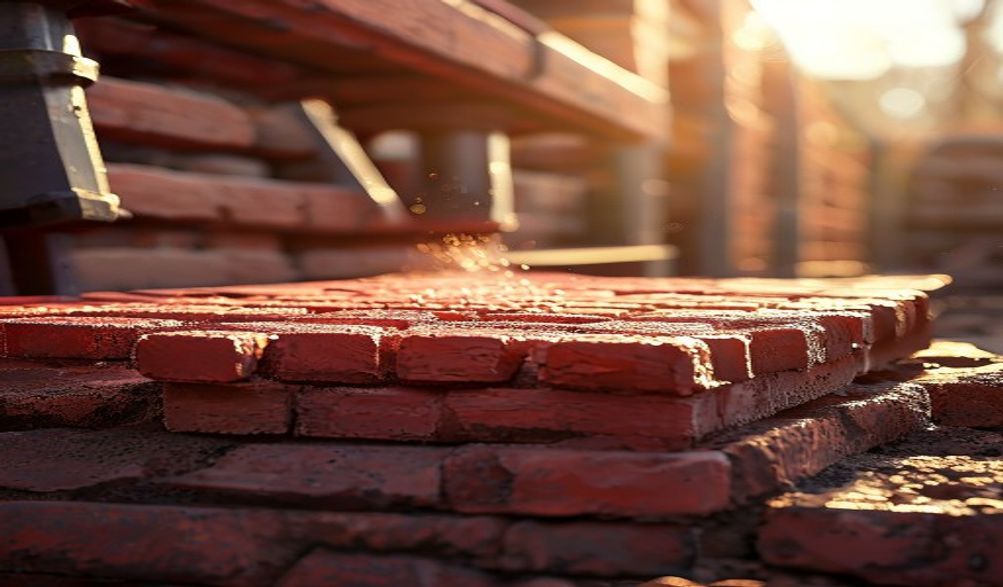
Кил сапраклы кирпич ясагыш машинасыны нәхиле сечмек: 2026-йыл махсуслашдырылган гетирге
Döwrebap gurluşygyň dünýä çäklerinde wajyplyga öwrülýän döwründe, kerpiç daşy gadymy çözgüt hökmünde özüni belli edýär. Olar ekologiýa dostlygyny, tebigy termoregulýasiýany we bahasynyň amatlylygyny özünde jemleýär. Emma, çig topragyň üstünlikli gurluşyk işine öwrülmegi, kerpiçi emele getirýän maşyn arkaly amala aşýar. Nädogry enjamlary saýlamak, işiň togtamagyna, önümiň nädogry bolmagyna we maliýe kynçylyklaryna getirip biler.
Bu gollanma siziň ygtybarly ýol görkezijiniz bolmak üçin düzüldi. Biz onlarça ýyllaryň senagat bilimi, tehniki injenerlik düzgünleri we tejribeli gurluşçylar we maşyn ekspertleriniň gazanylan amaly maslahatlaryny jemleýäris. Gelişýän sebitde kiçi telekeçi bolsaňyz-da ýa-da uly ekogurluşyk üçin taslama menedžeri bolsaňyz-da, biziň maksadymyz sizi öndüriş maksatlaryňyz, büdjetiňiz we ýerli bazaryňyz bilen doly gabat gelýän ygtybarly we çuň karara gelmäge güýç bermekdir.
Proýekt Talapalaryňyzy we Ölçegini Düşünmek
Bir maşynanyň prospektine seretmezden öň, içiňize serediň. Iň ýygy ýalňyşlyk, maşynyň aýratynlyklaryna, däl-de öz islegleriňize görä satyn almakdyr. Bu esasy meýilnama basgançagy, hakyky iş tejribesinden alynýar we üýtgeşiklige ýol berilmeýär.
Önüm çykdysy maksatlaryňyzy kesgitlemek
Seniň öndüriş maksadyňyz bütin işleýişiňiziň demirgazyk ýyldyzy bolmaly. Açyk sanlardan başlaň.
- Talap bahalandyrmasy Siz ýylda 10 öý üçin ýa-da 500 birlikli jaý taslamasy üçin kerpiç üpjün edýärsiňizmi? Orta gündelik ýa-da hepdelik kerpiç zerurlygyňyzy hasaplaň, soňra ösüş we netijelilik ýitgileri üçin 20-30% goşmaça goşuň.
- Ölçeg Tehnologiýany kesgitleýär
- Kiçi göwrümli (günde 100-1500 kerpiç)El bilen ýa-da ýarym awtomatiki maşynlar üçin ideal. Özbaşdak işler, jemgyýetçilik gurluşyklar ýa-da gaty kiçi başlangyçlar üçin amatly.
- Orta we Uly Görnüşli (günde 1500-20,000+ kerpiç)Yarym awtomatiki ýa-da doly awtomatiki maşynlary talap edýär. Söwda girdeýjiligi we potratçylary üpjün etmek üçin zerur.
- Ölçegleşdirme Meýilnamasy:Ösüşe garaşýan bolsaňyz, täzelenip bilýän maşyny (mysal üçin, motor goşmak) ýa-da has ösen modellere aýdyň ýoly bolan üpjün edijini göz öňünde tutuň.
Analyzing Your Raw Material (Clay)
The clay is your raw material; its quality dictates your machine’s performance. You cannot skip this step.
- Conduct Soil Testing: A simple test determines composition (clay, silt, sand ratio), plasticity, and shrinkage. Ideal brick-making clay has enough plasticity to bind but enough sand to reduce cracking.
- Match Machine to Material: Poor, stony clay may require an integrated crusher. Low-plasticity soil might need a pan mixer to add and blend water evenly. High-quality, pre-screened clay allows for simpler, less expensive equipment.
- Factor in Preparation: Account for the cost and labor of sourcing, transporting, weathering, and primary preparation of your clay before it even reaches the machine.
Бюджет ве майа гоюмларыны планлашдырмак
View this as a total investment, not a simple purchase.
- Эээлик дүйүминиң толук баасы (TCO): Include:
- Machine price
- Shipping, customs, and installation
- Cost of auxiliary equipment (mixer, conveyor)
- Foundation and shed costs
- Operating costs (power, labor, water)
- Annual maintenance and spare parts
- ROI Calculation: Research your local brick selling price. Based on your machine’s output, calculate how long it will take to recoup your TCO. A slightly more expensive, reliable machine with higher output often has a faster ROI than a cheap, problematic one.
Key Types of Clay Brick Making Machines Explained
Understanding the core technologies available is where expertise becomes critical. Each type serves a distinct purpose.
Elýeter we Ýary-awtomatik Maşynlar
These are the workhorses of entry-level and low-volume production.
- Ideal Üçin: DIY enthusiasts, micro-enterprises, NGOs in remote areas, and projects with very low capital.
- Artalary:
- Örän pes başlangyç goýum.
- Minimal to no electricity required (for manual types).
- Simple to operate and repair.
- Kemçilikler:
- High labor intensity and physical strain.
- Lower, inconsistent output.
- Brick density and strength can vary based on operator skill.
Doly Awtomatik Maşynlar
These are production lines designed for volume and consistency with minimal human intervention.
- Ideal Üçin: Commercial brick yards, large construction companies producing for their own projects, and industrial-scale operations.
- Artalary:
- Very high, consistent output (thousands of bricks per hour).
- Superior and uniform brick quality and density.
- Drastically reduced labor costs (often just 1-2 operators).
- Programmable for different brick types.
- Kemçilikler:
- Ýokary serişde goýum.
- Require stable, significant power supply (three-phase electricity common).
- Complex maintenance requiring trained technicians.
- Need significant space for the full line.
Specialized Machines: Extruders vs. Presses
The forming technology defines the brick’s character.
- Clay Brick Extrusion Machines: These machines force plastic clay through a die to form a continuous column, which is then wire-cut into bricks.
- Iň gowy bolýar: Hollow bricks, perforated bricks, roofing tiles, and pipes.
- Proses: Softer, wetter clay is used. The “extrusion” process aligns clay particles, which can affect strength.
- Hydraulic or Mechanical Press Machines: These use high pressure (often hundreds of tons) to compress semi-dry clay into a mold.
- Iň gowy bolýar: High-density solid bricks, interlocking bricks, and pavers.
- Proses: Uses clay with lower moisture content. The high pressure creates a very strong, dense brick with excellent dimensional accuracy.
Critical Technical Specifications to Evaluate
Now, drill down into the numbers. Comparing these specs side-by-side is how you separate marketing hype from genuine capability.
Core Machine Specifications
- Önümçilik kuwwaty: Never go by the manufacturer’s “theoretical maximum.” Ask for a practical, 8-hour day output figure considering loading and minor stoppages.
- Güýç talap edýän zatlar: Is it electric (single/three-phase), diesel-engine driven, or a hybrid? This is crucial for locations with unreliable grids. Check the horsepower (HP) or kilowatt (kW) rating.
- Pressure Force (for Presses): Measured in tons. Higher pressure generally yields stronger bricks with lower water absorption. For standard solid bricks, 150-300 tons is common. For high-strength interlocking bricks, 500+ tons may be needed.
- Galyba Ulgamy: Can molds be changed easily? What is the cost of additional molds for different brick sizes (e.g., standard, jumbo, interlocking)? Are custom mold designs possible?
Auxiliary Equipment Needs
The brick making machine is often just the core. The supporting cast is vital for efficiency.
- Clay Mixer/Crusher: Essential for achieving a homogeneous, lump-free clay mixture with consistent moisture content. A double-shaft mixer is often superior to a single-shaft.
- Conveyor Belts & Stackers: For automatic lines, conveyors move raw material and finished bricks. Automatic stackers palletize bricks, saving immense labor.
- Guratmak we bejermek: The machine produces green bricks. Factor in space and time for proper drying (often under shaded, ventilated sheds) and, if required, a kiln for firing. Some modern presses produce bricks stable enough to be stacked immediately.
Vetting Manufacturers and Ensuring Quality
Your relationship with the manufacturer lasts as long as your machine. This step builds the trust your investment relies upon.
Researching Reputable Manufacturers
- History & Certifications: Look for established companies (5-10+ years). Certifications like ISO (quality management) and CE (meets EU safety/health standards) indicate a commitment to formalized processes.
- Beyond Website Testimonials: Seek out independent reviews on B2B platforms. Ask the supplier for detailed case studies with contactable references, preferably in a region with similar clay and climate to yours.
- Satyn alandan soňky hyzmat: This is paramount. What is the warranty period (1 year is standard, 2+ is excellent)? Is there a local service agent or technician? How quickly can they ship spare parts? Request a list of common spare parts and their prices.
The Importance of Machine Trials and References
- “Show Me” Demonstration: Insist on a video demonstration of the exact model you’re considering, processing clay. Even better, visit the factory for a live trial using a sample of your own clay. This reveals more than any spec sheet.
- Talk to Real Clients: Contact the provided references. Ask about machine reliability, actual output vs. promised, brick quality, and the supplier’s responsiveness to problems.
- Physical Inspection (or Proxy): If possible, inspect the machine’s build: the thickness of the steel frame, the quality of the hydraulic cylinders and hoses, the brand of electrical components (e.g., Siemens, Schneider vs. unknown brands). Robustness here dictates longevity.
Making the Final Decision: A Step-by-Step Checklist
Synthesize all your research into actionable steps. This checklist embodies the experienced, methodical approach.
- Re-Confirm: Solidify your final production goals, clay analysis report, and firm budget (including a 15% contingency).
- Shortlist: Based on Sections 2 & 3, narrow down to 3-5 machines from different manufacturers that technically match your needs.
- Detailed Inquiry: Contact each manufacturer with a specific query list: finalized specs, FOB/CIF price, shipping time, installation/training offered, warranty terms, and spare parts catalog.
- Compare Holistically: Create a comparison matrix. Place quotes side-by-side, ensuring all costs (machine, shipping, installation, initial spares) are included. The cheapest machine price often leads to the highest TCO.
- Finalize for Value: Choose the option that offers the best long-term value—reliability, service support, and proven performance—not just the lowest upfront price.
Frequently Asked Questions (FAQ)
Q1: What is the average cost range for a clay brick making machine?
A: The range is vast. Simple manual machines can start from $2,000 – $5,000. Robust semi-automatic presses range from $10,000 – $30,000. High-capacity fully automatic production lines can range from $50,000 to $200,000+. Your budget must always include auxiliary equipment and setup costs.
Q2: Can one machine produce different sizes and types of bricks?
A: Yes, through interchangeable molds. This is a key flexibility feature. When getting a quote, confirm the cost and delivery time for additional molds for different brick designs (e.g., solid, hollow, interlocking).
Q3: How much manpower is required to operate a semi-automatic vs. automatic machine?
A: A semi-automatic machine typically requires 3-6 people for material feeding, machine operation, removing green bricks, and stacking. A fully automatic line, with integrated feeders and stackers, may only need 1-2 trained operators for monitoring and minor adjustments.
Q4: What are the most common maintenance issues?
A: Top issues include: clay hardening and clogging in the mixer or hopper (solved by thorough cleaning), hydraulic oil leaks or contamination (regular oil checks and seal replacement), and wear on mold liners and extrusion dies (planned replacement based on production volume).
Q5: How do I ensure the bricks meet local construction standards?
A: Once your machine is installed, produce a batch of bricks using your local clay and follow proper drying/curing. Then, send samples to a certified construction materials laboratory for tests like gykylyş güýji, water absorptionжанаefflorescence. Ensure your machine is capable of producing bricks that meet or exceed these standards.
Netije
Selecting the right clay brick making machine is a strategic decision that forms the bedrock of your entire operation. It’s not merely a purchase; it’s a partnership with a technology and a manufacturer. By methodically understanding your own needs, demystifying the types of machines, scrutinizing technical details, and rigorously vetting suppliers, you dramatically reduce risk.
Remember, the goal is sustainable profitability. Investing time in this selection process is your first and most crucial step toward building that success. For a major investment, consider having your final choice and plant layout reviewed by a local mechanical or civil engineer. Move forward with the confidence that comes from deep research, and lay the foundation for a venture that is both economically solid and ecologically sound.
<