
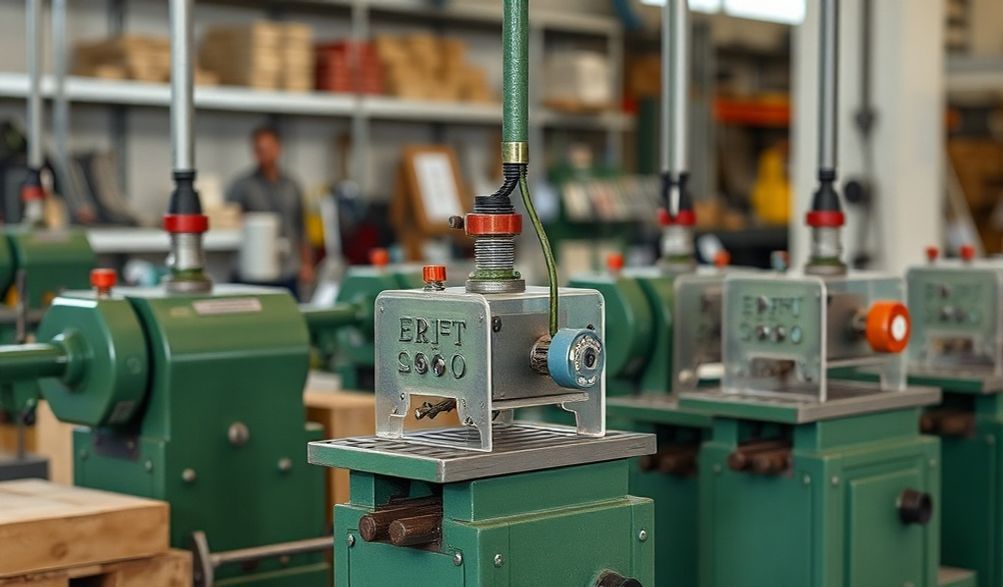
The Complete Guide to Small Block Machines: Choosing, Using, and Maintaining Your Equipment
Giriş
Picture this: you’re a contractor, and your latest project is falling behind schedule because you’re waiting on yet another delayed delivery of concrete blocks. Or perhaps you’re a determined homeowner, looking at a bare patch of garden and envisioning a beautiful, handcrafted retaining wall or patio, only to be quoted a staggering price for materials. In both scenarios, the bottleneck is the same: reliance on an external supply chain for a fundamental building component.
What if you could produce high-quality, uniform blocks on-demand, tailored to your exact project needs? This is the precise problem that small block machines are engineered to solve. Drawing on years of construction industry experience and technical analysis of equipment performance, this comprehensive guide demystifies these powerful tools. We’ll cut through the marketing jargon to provide you with the practical knowledge you need.
Whether you’re a small-scale contractor, an aspiring entrepreneur, or a serious DIY enthusiast, this post will serve as your definitive manual. Our goal is to equip you with the information to understand the different types of machines, select the perfect model for your goals, operate it safely and efficiently, and maintain it for years of reliable service. We’ll cover everything from the core mechanics and cost considerations to mix designs and maintenance schedules.
Here’s what we’ll explore:
* The Basics: What small block machines are and how they work.
* The Types: A clear comparison of manual, semi-automatic, and automatic models.
* The Buyer’s Guide: A detailed checklist for making the right investment.
* Safe Operation: Protocols and steps for efficient production.
* Essential Maintenance: Routines to ensure longevity and performance.
* Your Questions Answered: A dedicated FAQ section.
Bilim üçin esas guralyň.
What Are Small Block Machines? Understanding the Basics
Before investing in any equipment, it’s crucial to understand its fundamental purpose and capabilities. A small block machine, often interchangeably called a concrete block machine, brick making machine, or hollow block machine, is a piece of equipment designed to manufacture construction blocks through compaction and vibration.
Core Definition and Primary Uses
At its heart, a small block machine automates and standardizes the process of creating masonry units. It takes a semi-dry mixture—typically of cement, sand, aggregate, and water—and compresses it into a dense, precise block within a mold. The key differentiator from “large” block plants is scale; these are designed for lower-volume, more flexible production.
Common applications include:
* Jaý gurluşygy: Building walls, foundations, and partitions for homes, extensions, and outbuildings.
* Landşaft Dizaýny we Görnüşli Bezegler: Creating paving stones, retaining wall blocks, garden edging, and decorative features.
* Small-Scale Commercial Projects: Constructing boundary walls, warehouse partitions, or low-rise commercial structures.
* Jemgyýet we Ösüş Taslamalary: An excellent tool for producing affordable housing materials in developing regions or for community-led builds.
Esasy Bölümleri we Olaryň Nädip Işleýändigi
While designs vary, most small block machines share these core components:
1. Хоппер: The chamber where the raw concrete mix is loaded.
2. Mold (or Die): The cavity that defines the block’s shape (e.g., solid, hollow, interlocking).
3. Vibrating Table/Platform: Provides high-frequency vibration to consolidate the mix and remove air pockets.
4. ЫКСЫНДЫРУ СИСТЕМАСЫ: Applies downward pressure, either via a manual lever or a hydraulic/pneumatic ram, to densify the material.
5. Çykaryş Mehanizmi: Pushes the freshly formed block out of the mold and onto a pallet or the ground.
The basic production cycle is straightforward: The operator fills the mold with mix, the machine vibrates and compresses the material, and then ejects the “green” (uncured) block for curing.
Benefits of Using a Small Block Machine
Why consider on-site production? The advantages are compelling for the right user:
* Ыйсаплылык: For projects requiring thousands of blocks, producing on-site can drastically reduce material costs, especially when local aggregates are cheap.
* Logistical Control: Eliminate delivery delays, shipping fees, and handling damage. Produce exactly what you need, when you need it.
* Özelleşdirme: Change the block size, color (with pigments), or surface texture by simply switching molds or adjusting the mix. This is impossible with standard supplier blocks.
* Business Empowerment: For small enterprises, it opens a revenue stream through block sales or allows for competitive bidding on projects by controlling a key cost center.
* Reduced Waste: Produce to order, minimizing the leftover blocks that often end up as construction waste.
Types of Small Block Machines: Manual vs. Automatic
The market offers a spectrum of machines, categorized primarily by their level of automation and power source. Your choice here will be the single biggest determinant of your output, labor requirements, and budget.
Manual Block Machines
These are the simplest and most fundamental type, relying entirely on human power for compression.
- Amal: The operator fills the mold by hand, then uses a long lever to mechanically drive a ram down into the mix, compressing it. Vibration, if present, is often minimal or also manually initiated.
- Iň Gowy: Ultra-low-budget projects, hobbyists, very low-volume needs (e.g., a single garden wall), NGOs in remote areas without reliable power, and educational workshops.
- Artalary:
- Örän pes başlangyç goýum.
- No electricity or fuel required—completely portable.
- Simple design with minimal parts to break.
- Kemçilikler:
- Extremely labor-intensive and physically demanding.
- Very low output (typically 100-400 blocks per 8-hour day).
- Inconsistent block quality due to variable human pressure.
- Limited to simpler, solid block designs.
Semi-Automatic & Fully Automatic Block Machines
This category represents a significant technological leap, using electric motors to drive vibration and hydraulic systems for compression and cycling.
- Amal:
- Ýary-awtomatik: The core processes (vibration, compression) are powered. However, the operator often manually feeds the mixer, initiates the cycle, and removes the finished block. It may have a manual pallet feeder.
- Doly Awtomatik: These are integrated systems. An automated controller manages the entire cycle: feeding mix, compacting, ejecting blocks onto a conveyor, and cycling pallets. Operator involvement is primarily supervisory.
- Iň Gowy: Small-to-medium block-making businesses, contractors with repeated block needs, projects requiring higher volumes (1,000+ blocks daily), and anyone prioritizing efficiency and consistency over absolute lowest cost.
- Artalary:
- Higher Output: Can produce 800 to 5,000+ blocks per day depending on model.
- Üstün Dawamlılyk: Powered vibration and hydraulic pressure ensure every block has identical density and dimensions.
- Reduced Labor Fatigue: The machine does the heavy work, allowing operators to focus on feeding and quality control.
- Wider Mold Options: Can effectively produce complex hollow blocks and interlocking designs.
- Kemçilikler:
- Higher Initial Cost: A significant step up from manual machines.
- Güýç talap edýän zatlar: Needs a reliable electrical supply (often 3-phase for larger models).
- Increased Complexity: Requires more diligent maintenance and potential repair of mechanical, hydraulic, and electrical components.
- Less Portable: Heavier and requires a set production area.
Choosing the Right Type for Your Needs
Ask yourself these critical questions to guide your decision:
1. What is my target production volume (blocks per day or week)? This is the most important question.
2. What is my total budget, including setup and operating costs?
3. Do I have access to reliable electricity at the production site?
4. What skill level is my labor? Can they operate and maintain a more complex machine?
5. What is the primary block design I need? Simple solids or complex hollow blocks?
Simple Rule of Thumb: If you need fewer than 500 blocks for a one-off project, a manual machine may suffice. If you plan to produce blocks regularly for business or large projects, the investment in a semi-automatic machine is almost always justified.
How to Choose the Best Small Block Machine: A Buyer’s Checklist
Moving beyond type, here are the specific factors you must evaluate to select a quality machine that matches your precise requirements.
Critical Technical Specifications to Evaluate
- Önümçilik kuwwaty: Don’t just look at the “theoretical maximum.” Ask for realistic, sustainable output in blocks per hour (e.g., accounting for mold changes, mixing time, and breaks). A machine rated for 500 blocks/hour might sustainably yield 3,500 in an 8-hour day.
- Block Sizes and Mold Versatility: What standard mold does it come with? How easy and costly is it to purchase additional molds for different block types (e.g., 4″, 6″, 8″ hollow blocks, paving stones)? Ensure the machine’s pressure and vibration are adequate for the molds you want.
- Motor Power & Requirements: Note the horsepower (HP) of the vibration and hydraulic motors. Crucially, check if it requires single-phase (common in homes/small workshops) or three-phase (industrial) power. This can be a major installation hurdle.
- Maşynyň ölçegleri we agramy: You need adequate space not just for the machine, but for material storage, mixing, block curing, and movement. Weight indicates sturdiness but also impacts delivery and placement.
Quality and Durability Factors
The machine’s construction determines its lifespan and uptime.
* Каркаслык курулуш: Look for heavy-duty, welded steel frames. Thin, bolted-together frames will flex under load, leading to misalignment and poor block quality.
* Gidrawlik ulgam: For automatic models, a robust, sealed hydraulic system with accessible valves and gauges is vital. Ask about the brand of pumps and cylinders.
* Vibrator Mechanism: High-frequency, externally mounted vibrators are generally more effective and serviceable than internal systems. Check their power rating and mounting.
* Brand Reputation & Support: Research the manufacturer. Do they offer a clear warranty? Can they provide technical drawings, a detailed manual, and spare parts? Are there user reviews or testimonials you can find?
Safety Features and Certifications
Never compromise on safety. A reputable machine should include:
* Physical guards covering all moving parts (rams, conveyors).
* Easily accessible emergency stop buttons.
* Lock-out/tag-out points for maintenance.
* For electrical components, look for IP ratings indicating dust/water resistance.
* While not always mandatory, CE, ISO, or other regional certifications indicate adherence to safety and manufacturing standards.
Budgeting: Initial Cost vs. Total Cost of Ownership
The purchase price is just the beginning. A holistic budget includes:
* Başlangyç bahasy: Machine, delivery, import duties (if applicable), and foundational setup.
* Operating Costs: Electricity, labor, raw materials (cement, aggregate), and wear items (mold liners, pallets).
* Serwisleşdirme çykdajylary: Routine lubricants, hydraulic fluid, and a reserve for part replacement.
* Potential ROI: For business users, calculate your cost per block (materials + operating cost) versus the local market price to understand your payback period and profit margin.
Operating Your Small Block Machine Safely and Efficiently
Owning the right machine is only half the battle. Safe, skilled operation is what turns it into a productive asset.
Essential Safety Protocols
Concrete and machinery pose real hazards. Make these protocols non-negotiable:
* Şahsy gorag enjamlary (ŞGE): Safety glasses, dust mask/respirator (when handling dry cement), heavy-duty gloves, hearing protection (for automatic machines), and steel-toe boots are mandatory.
* Maşin howpsuzlygy: Always follow lock-out/tag-out procedures before any cleaning, adjustment, or maintenance. Never reach into moving parts. Keep the work area clean and free of trip hazards.
* Material Safety: Cement is caustic and can cause skin irritation or lung damage. Wet-mix concrete is heavy. Use proper lifting techniques for bags and mixed material.
The Ideal Block Mix Design
The machine forms the block, but the mix determines its strength. A standard mix for hollow blocks might be a 1:2:4 ratio (1 part cement, 2 parts fine sand, 4 parts coarse aggregate, like 3/8″ gravel). The water-cement ratio is critical—the mix should be semi-dry, holding its shape when squeezed in your hand without dripping water.
* Consistency is Key: Measure your materials by volume or weight for every batch. Inconsistent moisture is the leading cause of block failure.
* Gowulama: After ejection, blocks must be kept damp and covered with plastic sheeting for at least 3-7 days to allow the cement to hydrate and gain strength properly. Rapid drying causes weak, crumbly blocks.
Step-by-Step Production Process
- Setup & Mixing: Position the machine on a level, solid base. Prepare your concrete mix to a consistent, semi-dry consistency.
- Machine Preparation: Lubricate the mold lightly with oil (as per manual) to prevent sticking. Ensure the machine is clear.
- Doldurma: Load the mix into the hopper or directly into the mold chamber, ensuring it is evenly distributed.
- Gatnaşdyrma: Initiate the vibration and compression cycle. Allow the machine to complete its full cycle—do not interrupt it.
- Ejection & Handling: Carefully remove the green block and place it on a curing pallet or a level, prepared surface. Handle it gently.
- Gowulama: Stack blocks carefully, cover them with plastic, and keep them moist.
- Cleaning: At the end of the shift, thoroughly clean all mix residue from the hopper, mold, and table before it hardens.
Troubleshooting Common Issues
- Problem: Blocks breaking during ejection.
- Cause: Mix is too dry, insufficient vibration time, or worn/bent mold.
- Solution: Increase moisture slightly, ensure full vibration cycle, inspect and replace mold if damaged.
- Problem: Poor surface finish or incomplete block edges.
- Cause: Mix is too wet, insufficient compression pressure, or mold is overfilled.
- Solution: Reduce water, check hydraulic pressure, adjust feed volume.
- Problem: Excessive machine vibration or noise.
- Cause: Loose bolts/mounts, unbalanced vibrator motor, or a structural issue with the frame.
- Solution: Power down, lock-out, and inspect all fasteners. Consult a technician for motor or frame issues.
Maintenance Guide for Longevity and Performance
A well-maintained machine is a safe, productive, and profitable one. Treat maintenance as a core part of the operation, not an afterthought.
Daily and Weekly Maintenance Routines
- After Every Use: Clean the hopper, mold, and vibrating table meticulously with water and a brush. Never let concrete cure on the machine.
- Daily: Visually inspect for loose nuts, bolts, or hydraulic leaks. Check that safety guards are secure.
- Weekly: Lubricate all moving pivot points, guide rails, and linkages as specified in the manual with the recommended grease or oil.
Periodic Maintenance and Inspections
- Monthly/Quarterly: For automatic machines, check hydraulic fluid levels and look for hose wear or seepage. Inspect electrical connections for tightness and wear. Listen to vibrator motors for unusual sounds indicating bearing wear.
- Bi-Annually: Conduct a thorough inspection of the mold for wear, dents, or warping that will affect block dimensions. Consider professional servicing of the hydraulic system.
End-of-Season or Long-Term Storage Tips
If storing the machine for more than a few weeks:
1. Perform a deep clean, removing all concrete dust and residue.
2. Apply a light coat of oil or rust inhibitor to all unpainted steel surfaces, especially the mold interior.
3. If possible, store the machine indoors in a dry, covered environment. If outdoors, cover it completely with a heavy-duty tarp.
4. Release pressure from hydraulic systems if recommended by the manufacturer.
Frequently Asked Questions (FAQ) About Small Block Machines
Q1: What is the average production output of a small block machine?
A: Output varies dramatically. A manual machine might produce 100-500 blocks in an 8-hour day with one operator. A semi-automatic machine can typically produce 800 to 3,000 blocks per day, while a fully automatic system can exceed 5,000. The actual output depends on block size, mix preparation speed, and operator efficiency.
Q2: Can I make different block sizes with one machine?
A: In most cases, yes. The key is the interchangeable mold. When purchasing a machine, you usually buy it with one standard mold, but you can typically order additional molds for other block types from the manufacturer or compatible suppliers. Always confirm mold compatibility before purchasing.
Q3: How much space and what kind of power supply do I need?
A: You need a “production cell.” This includes space for the machine (e.g., 10’x10′), a mixing area, raw material storage (sand, aggregate, cement), and a large, level curing yard. For power, manual machines need none. Smaller semi-automatics often run on standard 110V/220V single-phase. Larger, more productive models frequently require a 3-phase industrial power supply (e.g., 380V/415V), which may need to be installed by an electrician.
Q4: Is operating a small block machine difficult to learn?
A: The basic operation is relatively straightforward and can be learned in a day with proper guidance. The true skill lies in mastering the concrete mix design, achieving consistent moisture content, and optimizing the workflow for efficiency. Always insist on training from your supplier and study the manual thoroughly.
Q5: Where can I find reliable suppliers or brands?
A: Conduct thorough research. Attend construction equipment trade shows, browse reputable industrial B2B marketplaces (where you can check seller ratings and reviews), and visit manufacturer websites directly. Look for companies with a long history, clear documentation, and responsive customer service. Request references from past customers if possible.
Netije
Navigating the world of small block machines is a journey from understanding a powerful concept to mastering a practical skill. We’ve explored how these machines transform raw materials into building blocks of opportunity, compared the hands-on nature of manual presses to the efficient rhythm of automatic systems, and outlined the critical checklist for making a wise investment.
Remember, successful block production is a triad: the right equipment, applied knowledge, and consistent practice. This guide provides the foundational knowledge, but your specific machine’s manual is the ultimate authority—consult it religiously. Always prioritize safety above speed, and don’t hesitate
<