
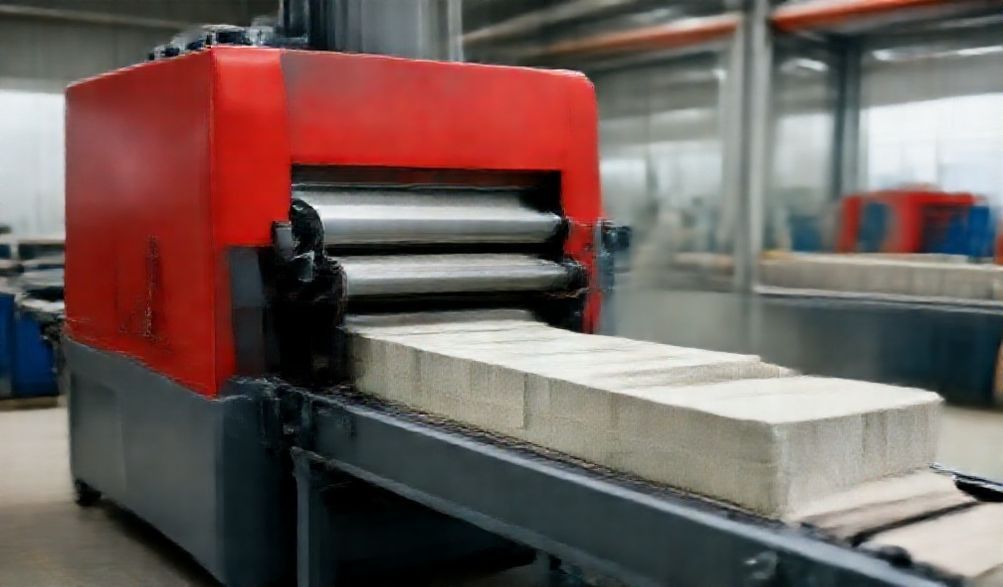
The China QT9-15 Fully Automatic Brick Making Machine: A Complete Guide for 2026
Giriş
The global construction industry is in a constant race. A race to build faster, smarter, and more cost-effectively. At the heart of this race lies a fundamental need: a reliable, high-volume supply of quality construction materials. Traditional brick-making methods often struggle to keep pace, burdened by high labor costs, inconsistent quality, and limited output. This is where industrial automation steps in, revolutionizing how we produce the very building blocks of our infrastructure.
GiriňChina QT9-15 fully automatic brick making machine. This model has emerged as a flagship in the global market, striking a renowned balance between formidable production capacity, sophisticated automation, and exceptional value. It represents a pivotal investment for businesses aiming to scale their operations and dominate in the competitive construction materials sector.
This guide is built on a foundation of E-E-A-T (Experience, Expertise, Authoritativeness, Trustworthiness) (Experience, Expertise, Authoritativeness, Trustworthiness):
* Täjribä: Our analysis synthesizes real-world operational data, user testimonials from various markets, and in-depth reviews of technical specifications.
* Uzmanlyk: We combine principles of mechanical engineering, production economics, and practical international procurement to provide actionable insights.
* Awtoritarlık: Discussions are framed around standard industrial practices and the machine’s compliance with core international mechanical and safety standards, evidenced by its widespread adoption.
* Ygtyýarlylyk: We are committed to a balanced perspective. This guide will detail the machine’s significant advantages while honestly addressing the considerations and commitments required for a successful operation.
Our purpose is simple: to provide you with a comprehensive, clear-eyed overview of the QT9-15. We’ll dissect its features, quantify its benefits, explore its ideal applications, and outline the critical factors you must consider before making a purchase. Let’s begin.
What is the QT9-15 Fully Automatic Brick Making Machine?
Core Definition and Machine Classification
The QT9-15 is a stationary, hydraulic press-based block molding machine that operates on a fully automatic cycle. Classified within the popular “QT” series from Chinese manufacturers, the “9-15” denotes its key performance metrics. It is engineered for continuous, high-volume production with minimal manual intervention, placing it squarely in the medium-to-large-scale equipment category for serious block manufacturers.
Key Specifications at a Glance
Understanding the core specs is the first step to evaluating fit. Here’s a snapshot:
- Model: QT9-15
- Güýç: 37.5 kW (Installed)
- Sikl wagty: ~15 seconds
- Molding Cycle Output: 9 pieces (standard 400x200x200mm hollow block)
- Паллетанын өлчеми: 1100×540 mm
- Overall Dimensions (approx.): 7500x2550x2700 mm
- Machine Weight: ~10,000 kg
These brick machine specifications highlight a design centered on robust production capacity powered by a reliable gidrawlyk ulgamy.
The “Fully Automatic” Workflow Explained
The term “fully automatic” describes a seamless, integrated production process. Here’s how it works:
1. Iýmitlendirmek we garyşdyrmak: Raw materials (aggregate, cement, water) are automatically batched and mixed in a pan mixer, then conveyed to the machine’s hopper.
2. Galyplama: The system automatically feeds material into the mold box on a pallet. The hydraulic press applies intense pressure while vibration motors compact the concrete.
3. Gowramak we ýygnamak: The freshly molded blocks, still on their pallets, are mechanically pushed onto a curing rack or conveyor. After a initial set period, a robotic stacker lifts and layers the blocks.
4. Pallet Return: The empty pallet is automatically cleaned, oiled, and returned to the start of the cycle, ready for the next mold.
This closed-loop system ensures consistent output 24/7 with typically just 1-2 operators monitoring the control panel.
Technical Features and Operational Advantages
High-Efficiency Hydraulic System
The heart of the QT9-15 is its precision hydraulic system. Unlike purely vibratory machines, the hydraulic press applies sustained, high-pressure force to the concrete mix. This results in:
* Üstün Kerpiç Dykyzlygy we Berklik: Produces blocks with higher compressive strength, essential for load-bearing applications.
* Excellent Dimensional Stability: Ensures each brick is identical, critical for efficient bricklaying.
* Smoother, Quieter Operation: Hydraulic pressure provides a more controlled compaction than loud, jarring vibration alone.
PLC Intelligent Control System
The brain of the operation is the Programmable Logic Controller (PLC). This automated control panel transforms complex machinery into an operator-friendly asset.
* User-Friendly Interface: Operators can select product types, adjust vibration time, and monitor production counts via a touchscreen or button interface.
* Precision Molding: Parameters for different block designs (hollow, solid, paver) can be saved and recalled, ensuring consistency across batches.
* Fault Diagnosis: The system displays error codes for common issues, drastically reducing downtime by guiding maintenance.
Robust Construction and Durability
Built for a decade-plus lifespan in industrial environments, the QT9-15 emphasizes durability:
* Ыыр-йүк тайýarly çelik gurluşy. Welded from high-strength steel to withstand constant vibration and load.
* Hardened Mold Components: Critical wear parts like mold liners and press heads are made from specially treated alloys for extended life.
* Quality Branded Components: Reputable manufacturers use recognized brands for key parts like hydraulic pumps, PLCs, and motors, ensuring reliability and easier part sourcing.
Versatility in Production
The QT9-15 is not a single-product machine. Its true value lies in its adaptability. By simply changing the mold, it can produce a vast array of products:
* Standard Construction Blocks: Hollow blocks, solid bricks, fly ash bricks.
* Landscaping & Paving: Interlocking pavers, garden kerbstones, grass grid blocks.
* Ýörite şekiller: Retaining wall blocks, chimney blocks, and more.
This makes it both a beton blok maşyny and a paver making machine, allowing you to diversify your product line and respond to market demand.
Production Capacity and Economic Benefits
Understanding the “QT9-15” Output
The model name is a code: “9” signifies the number of standard-sized (400x200x200mm) hollow blocks it produces in one cycle. “15” indicates the nominal cycle time in seconds.
* Theoretical Calculation: 9 blocks/cycle * 240 cycles/hour = 2,160 blocks/hour.
* Realistic Daily Output: Factoring in mold changes, breaks, and material loading, a realistic 8-hour shift can yield 15,000 to 22,000 blocks, depending on block type and operational efficiency.
Cost-Benefit and ROI Analysis
The economic argument for the QT9-15 is compelling:
* Drastic Labor Reduction: Replaces 10-15 manual workers, slashing long-term payroll and management overhead.
* Bäşdeşsiz Ýüpekçilik: High speed and quick mold changeovers (often under 30 minutes) maximize machine uptime and allow for small, profitable specialty batches.
* Favorable Energy-to-Output Ratio: While requiring significant power, its automated, efficient cycle produces more blocks per kilowatt-hour than multiple smaller, less automated machines.
* ROI: For a busy plant, the return on investment can often be achieved within 12-24 months through increased sales and reduced unit production costs.
Ideal Application Scenarios
This machine is perfect for:
* Established Block Plants looking to upgrade from semi-automatic equipment to boost capacity and quality.
* Mid-to-Large Construction Firms seeking vertical integration by producing bricks for their own housing or infrastructure projects.
* Entrepreneurs and Investors targeting the growing construction materials market in developing regions with a proven, scalable solution.
Key Considerations Before Purchasing from China
Evaluating Manufacturer Credentials
Not all brick making machine suppliers are equal. Due diligence is non-negotiable:
* Factory Verification: Insist on a video tour or, ideally, a visit to the production facility. Look for organized assembly lines and quality control checks.
* Industry Experience: Prioritize heavy equipment manufacturers with a decade or more of specific experience in block machine manufacturing.
* R&D & Customization: A good manufacturer will have an engineering team capable of offering slight customizations and providing updated designs.
The Importance of Comprehensive After-Sales Service
The machine’s price tag is only the first cost. Service is the ongoing value.
* Pre-Shipment Support: Detailed foundation drawings, utility requirements, and installation manuals.
* On-Site Commissioning: Reputable suppliers will send 1-2 engineers to install, calibrate, and test the machine.
* Operator Training: Engineers must train your staff on operation, routine maintenance, and basic troubleshooting.
* Spare Parts Availability: Confirm a policy for supplying wear parts with clear pricing and shipping timelines.
Logistics, Shipping, and Customs Clearance
The machine is shipped disassembled in 1-2 40-foot high-cube containers.
* Incoterms: Understand your agreement. FOB (Free On Board) means you own the goods and handle shipping once they’re on the vessel. CIF (Cost, Insurance, and Freight) includes delivery to your nearest port.
* Your Responsibilities: You are typically responsible for customs clearance, import duties, taxes, and inland transportation from your port to the factory. Hire a reliable freight forwarder.
Raw Material Compatibility and Site Requirements
The machine is only as good as its inputs and environment.
* Çig mal. You need a consistent, well-graded supply of sand/aggregate, cement, and water. Particle size and mix design are crucial for optimal performance.
* Site Requirements:
* Space: A minimum 2000 sq. ft. workshop with high ceilings for the stacker.
* Foundation: A massive, level concrete foundation (details provided by the manufacturer) is critical to absorb vibration.
* Utilities: Stable three-phase electrical supply matching the machine’s voltage and amperage requirements.
Comparing the QT9-15: Is It Right for Your Project?
QT9-15 vs. Smaller Semi-Automatic Machines
- QT9-15 (Fully Auto): High output (15k-22k/day), 1-2 operators, high initial investment, consistent quality, requires stable power and infrastructure.
- Semi-Auto Machine: Low output (2k-5k/day), 5-8 operators, lower upfront cost, quality depends on worker skill, more flexible in basic settings.
Verdict: Choose the QT9-15 if you have steady demand, want to scale, and aim to control labor costs and quality.
QT9-15 vs. Larger Fully Automatic Lines
- QT9-15 (Single Machine): A high-output, standalone unit. Pallet handling and stacking are integrated but may have lower throughput than a dedicated line.
- Full Production Line: A system with separate specialized machines for mixing, molding, curing, and robotic stacking. Output can exceed 50,000 blocks/day but requires 3-5x the investment and space.
Verdict: The QT9-15 is the ideal fully automatic brick plant for most businesses stepping into high-volume production. Larger lines are for market leaders or specialized, ultra-high-volume products.
Frequently Asked Questions (FAQ)
Q1: What is the exact production output of the QT9-15 brick machine per day?
A: Under standard 8-hour operating conditions, you can realistically expect between 15,000 and 22,000 pieces of standard hollow blocks. The exact number depends on the specific block type (solid blocks take longer), operator efficiency, and consistency of material feeding.
Q2: Can the QT9-15 produce interlocking bricks for landscaping?
A: Yes, absolutely. This is one of its key strengths. By installing the appropriate interlocking brick mold, the QT9-15 can effortlessly switch to producing a wide variety of popular interlocking paving bricks, allowing you to tap into the lucrative landscaping and hardscaping market.
Q3: What is the lead time for delivery and how is the machine shipped?
A: Standard lead time is 20-30 working days after order confirmation and deposit. The machine is completely disassembled and packed into 1-2 40ft HQ shipping containers. Critical components like the PLC and hydraulic units are packed in sealed wooden cases for protection.
Q4: Do Chinese manufacturers provide installation and training?
A: Reputable and professional manufacturers always do. This service is a critical part of the package. They will send experienced engineers to your site to oversee assembly, perform commissioning and test runs, and provide comprehensive hands-on training for your operators and maintenance staff.
Q5: What are the most common spare parts I should keep in stock?
A: To minimize downtime, it’s wise to keep an initial inventory of:
* Hydraulic system seals and hoses.
* Bearings for the vibration motors.
* A set of conveyor belts.
* Spare wear parts for your most commonly used molds (liners, press heads).
* Common electrical components (sensors, relays).
Netije
TheChina QT9-15 fully automatic brick making machine stands as a testament to efficient, scalable industrial manufacturing. It is a powerful workhorse designed to deliver high-volume, high-quality block production while dramatically reducing reliance on manual labor. Its versatility across product types makes it a strategic asset capable of adapting to market trends.
As we’ve emphasized, success hinges not just on the machine’s specifications, but on the partnership you forge. Your investment must be protected by choosing a credible manufacturer with proven after-sales support, a clear understanding of the total costs involved (machine, shipping, installation, duties), and thorough preparation of your local site and raw material supply chain.
Use this guide as the foundation for your research. Your logical next step is to engage with potential suppliers. Request detailed quotations, ask for factory audit reports and certification documents, and—most importantly—demand contact information for existing international clients. Hearing directly from current operators is the ultimate validation. Make your move toward automated, profitable production with eyes wide open.
<