
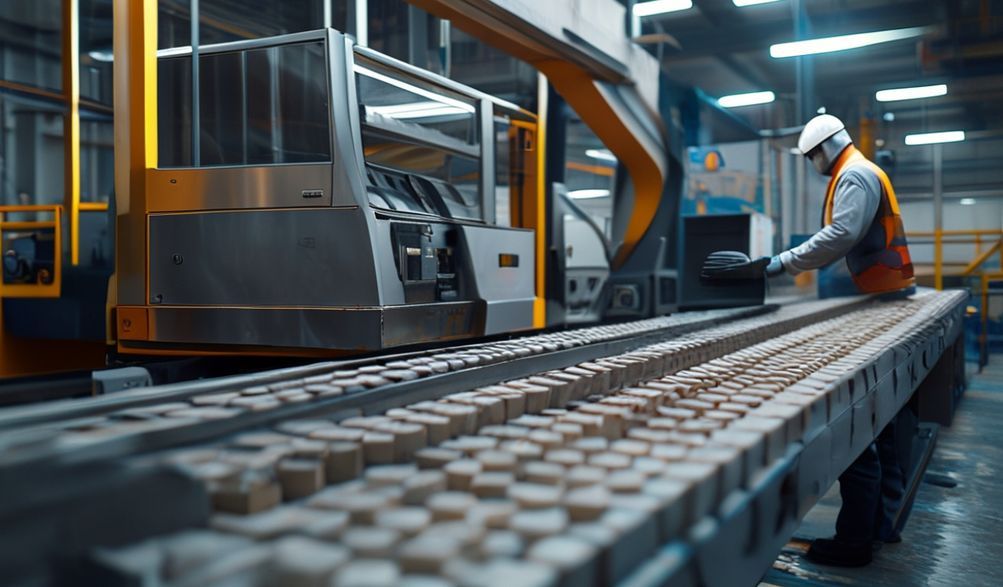
The Ultimate Guide to Choosing an Automatic Block Moulding Machine Supplier
The global construction industry is booming, driven by urbanization, infrastructure development, and housing demands. At the heart of this growth lies a fundamental building block—literally. The quality, efficiency, and cost-effectiveness of concrete blocks directly impact project timelines, structural integrity, and profitability. While savvy business owners recognize the need to upgrade from manual to automatic block moulding machines, many make a critical error. They focus solely on the machine’s specs and price, overlooking the most vital component of their investment: the supplier.
Choosing an automatic block moulding machine isn’t just a purchase; it’s the foundation of a long-term industrial partnership. The right supplier is your ally in productivity, while the wrong one can become a source of endless downtime and financial drain. This guide leverages decades of industry insight to move beyond brochures and price sheets. We will equip you with a strategic framework to navigate the market, separate credible partners from mere sellers, and secure a solution that ensures reliability, profitability, and peace of mind for years to come.
Tedarikçiňiziň Saýlamagyňyz Näme Üçin Görkezýänizden Has Köp Mätäç
In industrial equipment procurement, the machine you see on the factory floor is the culmination of a process. Its performance, durability, and return on investment are inextricably linked to the expertise and integrity of the company that built and supports it. A supplier is not just a vendor; they are the source of your engineering support, technical knowledge, spare parts, and emergency assistance. This relationship directly dictates your total operational costs and production line stability.
Баһасынан да ары: Ээлик догрурынын толук дәпдери (ЭДТД)
The initial invoice is a fraction of the story. True cost is measured over the machine’s entire lifespan—its Total Cost of Ownership (TCO). A lower upfront price can mask exorbitant long-term expenses.
- Initial Cost vs. Long-Term Costs: A cheap machine may use inferior-grade steel for moulds, leading to faster wear and frequent, expensive replacements. Substandard hydraulic pumps or PLC controls fail sooner, requiring costly repairs and halting production.
- The Role of a Good Supplier: A reputable supplier minimizes your TCO through quality engineering. They use durable, brand-name components designed for high-cycle industrial use. Their machines are engineered for energy efficiency, reducing your power bill. They provide clear maintenance schedules and accessible wear parts, preventing minor issues from becoming major breakdowns. Investing more upfront with such a supplier almost always leads to significantly lower costs over five or ten years.
The Direct Impact on Your Production Line’s Uptime
In block manufacturing, time is concrete. Every hour your machine is idle represents lost revenue, delayed projects, and potential damage to your business reputation.
- Reliability as a Foundation: A well-designed and robustly manufactured machine from a quality supplier has inherently higher uptime. It handles continuous operation with consistent output, ensuring you meet deadlines.
- Support as Your Safety Net: When issues do arise—and they will in any industrial setting—your supplier’s response is critical. Their technical expertise for remote troubleshooting, the availability of spare parts in their warehouse, and the ability to dispatch a skilled technician quickly are what prevent a 4-hour fix from becoming a 4-day disaster. Your supplier’s support infrastructure is your most important insurance policy against catastrophic downtime.
Key Factors to Evaluate an Automatic Block Moulding Machine Supplier
Arm yourself with this checklist. Evaluating a supplier across these domains will reveal their true capability and commitment.
Technical Expertise and Manufacturing Experience
This is the bedrock of a reliable partnership. You are buying their accumulated knowledge as much as their hardware.
- Years in Business & Specialization: How long have they been manufacturing block machinery specifically? A company with 20+ years of focus has likely seen and solved every common production challenge. Be wary of general equipment dealers who simply resell machines from unknown factories.
- Içerki Ylym we Tehnika Işleri: Do they have a dedicated engineering team? Can they discuss vibration system optimization, hydraulic circuit design, or control logic? This capability allows for customization and meaningful technical support, not just scripted answers.
- Söýgüli yzygiderlilik: Always ask for a portfolio. A confident supplier will provide detailed case studies, photos, and videos of installed machines in operation, preferably in projects similar to yours. Request contact information for past clients in your region.
Machine Quality and Performance Specifications
Move beyond marketing claims. Demand precise, verifiable data.
- Esasy Görkezijiler:
- Önümçilik kuwwaty: Measured in blocks per hour (e.g., solid blocks 400x200x200mm). Ensure this is a sustainable rate, not a peak theoretical number.
- Sikl wagty: The time for one complete moulding cycle. Shorter cycles mean higher output.
- Басым (Тоннаж): The compaction force. Higher tonnage (e.g., 150 tons vs. 80 tons) typically produces denser, stronger blocks, especially from leaner mixes.
- Kritik Komponentleriň Hil Taýdanlygy:
- Gidrawlik ulgam: Are pumps, valves, and seals from reputable brands (e.g., Bosch Rexroth, Kawasaki, Yuken)?
- PLC & Controls: Is the system from Siemens, Mitsubishi, Schneider, etc.? This ensures reliability and easier troubleshooting.
- Mould Steel: What is the grade and hardness (e.g., Cr12MoV steel, HRC 58-62)? High-grade, heat-treated steel resists wear and maintains block dimensional accuracy.
- Standards Compliance: Look for certifications like CE (indicating compliance with European health, safety, and environmental standards) and ISO 9001 (Quality Management Systems). These are tangible indicators of a structured manufacturing process.
Comprehensive After-Sales Support & Service Network
This is where partnerships are truly tested. Scrutinize their proposed support structure.
- Pre-Installation Support: Will they provide foundation drawings and utility requirements? Do they offer to analyze your local raw materials (soil, fly ash) to recommend optimal mix designs?
- Gurnama we sapak bermek: Do they send engineers for installation, commissioning, and on-site training? Comprehensive training should cover operation, daily maintenance, basic troubleshooting, and safety for your entire team.
- Warranty: What is the period (e.g., 12-18 months)? What does it explicitly cover and exclude? A clear, written warranty is non-negotiable.
- Ehtiyat Bölümleri: Do they maintain a comprehensive inventory? What are their guaranteed delivery timelines for critical spares? Will they provide a recommended spare parts list with OEM codes?
- Ongoing Service: Is remote support (via phone, video call) available? Do they have a network of local or regional service technicians for faster on-site response?
Red Flags and Green Flags in Supplier Selection
Trust your due diligence. These signals will help you distinguish a true partner from a transactional seller.
Warning Signs to Walk Away From
- Vagueness: They are reluctant to provide detailed technical drawings, component brand lists, or clear performance specifications.
- No Clear Service Terms: The warranty is verbal, extremely short, or full of loopholes. They have no defined process for spare parts or technical support.
- Pressure and Unrealistic Pricing: Use of high-pressure sales tactics or prices significantly lower than every other reputable quote. This almost always indicates corner-cutting on quality.
- Lack of Verifiability: They cannot provide verifiable customer references, have no physical factory address you can confirm (relying only on a P.O. Box), or their “case study” images are clearly stock photos.
Indicators of a Trustworthy and Professional Partner
- Açık Habarlaşma: They willingly answer deep technical questions, explain trade-offs, and are honest about machine limitations for your specific application.
- Detailed, Customized Proposals: Their quotation is not a generic PDF. It addresses your specific inquiry, includes a detailed scope of supply, technical specifications, terms & conditions, and a clear breakdown of costs.
- Openness to Verification: They proactively offer client references and encourage (or even arrange) visits to existing customer sites to see their machines running.
- Professional Footprint: They have a professional, informative website with technical resources, downloadable manuals, and clear contact information. Their communication is consistent and professional.
The Procurement Process: From Inquiry to Installation
A smooth procurement process is the first demonstration of a supplier’s competence. Follow these steps.
Preparing Your Inquiry for Accurate Quotations
A vague inquiry leads to inaccurate quotes. Provide this checklist:
* Desired block types and precise dimensions (hollow, solid, paver, etc.).
* Target daily output in blocks or cubic meters.
* Properties of your local raw materials (cement type, aggregate size, potential use of fly ash or slag).
* Available factory space (length, width, height, door access).
* Local power supply (voltage, phase, frequency).
* Degree of automation desired (e.g., automatic pallet return, robotic stacking).
Negotiation and Contract Essentials
The contract is your legal safeguard. Ensure it includes:
* Performance Guarantees: Clearly stated production capacity, block strength, and dimensional accuracy under agreed-upon mix designs.
* Structured Payment Terms: Linked to milestones (e.g., 30% deposit, 40% before shipment, 30% after successful commissioning).
* Delivery and Penalty Clauses: A firm delivery date (ex-works or to site) with defined penalties for unreasonable delays caused by the supplier.
* Detailed Scope of Supply: An exhaustive list of every item included, from the main machine to tools, spare parts, and documentation.
Logistics, Installation, and Commissioning
- Understanding Incoterms: Clarify responsibilities. FOB (Free On Board) means you own the goods and assume all risk/cost once loaded on the ship. CIF (Cost, Insurance, and Freight) means the supplier pays to deliver the goods to your port. Choose based on your logistics capability.
- The Supplier’s Role: A professional supplier will guide you through customs clearance documentation, supervise unloading, lead the installation and alignment, perform rigorous commissioning tests with your materials, and certify the machine is operational before final sign-off.
Frequently Asked Questions (FAQ)
Q1: What is the typical lead time for an automatic block moulding machine?
A: Lead time varies based on customization, factory workload, and shipping. For a standard model, expect 30-45 days for manufacturing. With customization or high demand, it can extend to 60-90 days. Sea freight can add 20-50 days depending on the destination. Always get a written ex-works date in your contract.
Q2: Can the machine be customized for different block designs and raw materials?
A: A competent supplier should offer significant customization. Key customizable elements include interchangeable moulds for different block shapes/sizes, adjustable vibration parameters for different material densities (like lightweight fly ash vs. heavy quarry dust), and feeder configurations for various aggregate sizes.
Q3: How do I ensure the supplier provides genuine spare parts?
A: First, request the OEM part numbers for critical components (hydraulic pumps, PLC modules) in your quotation. Upon delivery, check the branding and packaging of included spares. Finally, establish a long-term supply agreement that specifies the provision of original or supplier-certified parts.
Q4: What kind of training is usually provided with the machine?
A: Standard training should be hands-on and cover: 1) Safe startup/shutdown procedures, 2) Daily operation and control panel functions, 3) Routine daily and weekly maintenance (lubrication, cleaning, bolt checking), 4) Basic troubleshooting for common alarms, and 5) Mould changing procedures. Training should be for your machine operators, maintenance staff, and supervisors.
Q5: What are the most common maintenance requirements?
A: Consistent maintenance is key to longevity:
* Daily: Clean the machine, check hydraulic oil level and for leaks, inspect moulds for wear or concrete buildup.
* Weekly: Lubricate all guide rods and bearings, check and tighten critical bolts and electrical connections.
* Monthly: Change hydraulic oil filters, inspect hydraulic hoses for wear, perform a full system pressure check.
Netije
Selecting an automatic block moulding machine supplier is a strategic business decision with profound implications for your operational efficiency and bottom line. As this guide has detailed, the path to a successful investment lies in looking beyond the initial price. It requires a disciplined evaluation of a supplier’s technical depth, manufacturing integrity, and—most crucially—their unwavering commitment to your success through comprehensive after-sales support.
Prioritize partners who demonstrate proven expertise, transparent operations, and a service ethos that aligns with your long-term goals. Use the frameworks, checklists, and red-flag warnings provided here as your due diligence toolkit. When you engage with potential suppliers, ask the hard questions, demand verifiable proof, and choose the partner who doesn’t just sell you a machine, but equips you for a more productive and profitable future. Your ideal supplier is out there; invest the time to find them.
<