
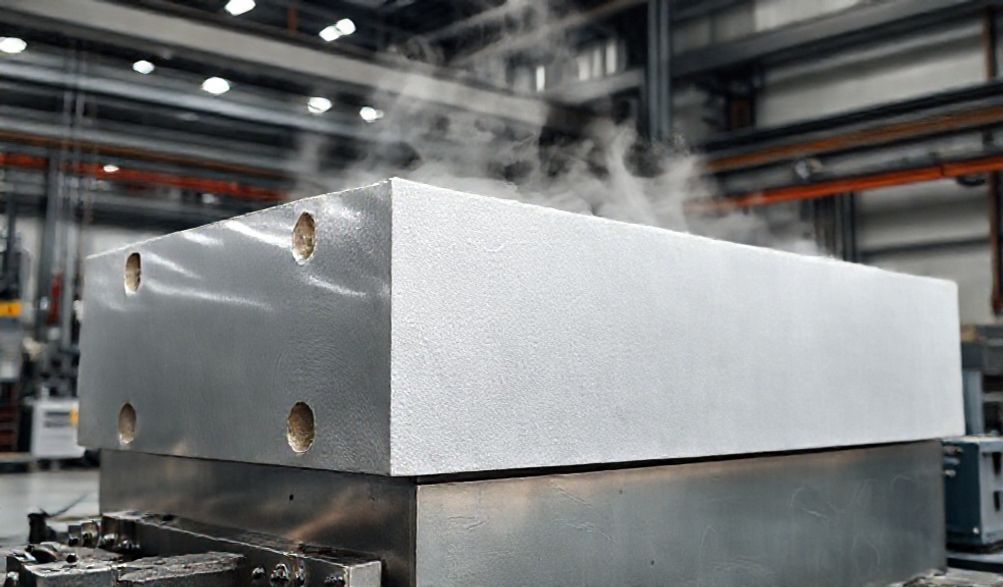
Köpük Blok Maşynlarynyň Iň Soňky Gollanmasy: Öndürişden Ustalyga
Ýalňyş, gurluş we gurluş sektorlaryndaky iş eýeleri we zawod ýolbaşçylary üçin, netijelilik we girdeji gazanmak köplenç bir esasy enjama getirýär: köpük bloklar maşyny. Ilkinji başlangyç maýa goýumyňyzy göz öňünde tutýan bolsaňyz-da, ýa-da bar bolan hatary iň gowy derejä ýetirmek isleseňiz-de, bu tehnologiýany düşünmek ähmiýetlidir. Giňeldilen polistiren (EPS) we ekstrudirlenen polistiren (XPS) köpük bloklar diňe ýeňil material däl; olar energetik täsirli binalaryň, goragly gaplamak çözgütleriniň we dürli senagatlardaky täzeçilikli ulanylyşlaryň esasly düzüjileridir.
Bu gollanma, satuw broşýuralaryndan daşary çykyp, açyk, ygtybarly we amaly çeşme bolmak üçin düzüldi. Biz köpük blok öndürişiniň esasy tehnologiýasyny düşündireris, onyň ýokary talapla ýüzbe-ýüz bolýan bazarlaryny gözden geçireris we maşyny saýlamak, işletmek we saklamak üçin jikme-jik, taraply bolmadyk çarýehry hödürleýäris. Biziň maksadymyz, size habarly kararlar kabul etmek, öndürişiňizi iň ýokary derejä ýetirmek we işiňiziň ösmegi üçin ygtybarly esas döretmek üçin zerur senagat bilimi we amaly tejribeleri bermekdir.
Köpük Blok Maşyny Nedir? Esasy Teknologiýa Düşündirilýär
Onuň esasynda, köpük blok maşyny, çig polimer materiallary—esasan giňelýän polistirol (EPS) dänelerini ýa-da XPS reçinäsini—uly, berk köpük bloklaryna öwürmek üçin niýetlenen bir senagat ulgamy. Bu ýönekeý proses däl; yzygiderli, ýokary hilli önüm çykaryşy üçin bugyň, basyşyň we temperaturanyň takyk dolandyrylmagyna esaslanýar. Bu esasy tehnologiýany düşünmek, ussatlyga ilkinji ädimdir.
Esasy Prensip: Öňki Giňeltme we Soňky Giňeltme
EPS bloglarynyň öndürilişi iki etaply termiki prosesdir. Ol, ilki bilen, üfürüji agent (köplenç pentan) bar bolan kiçijik, gaty polistiren dänelerinden başlanýar.
- Dil genişletmeden öňki döwür.Хаммар мончаклар алдын-ала кеңейтмеге берилип, буга душар едилип, ысылык мончаклардың ичиндеги көбөйтүү агентини буланып, мончаклар баштапкы көлөмүнүн 50 эсесине чейин кеңейет. Бул төмен тыгыздыктагы, эркин агып жаткан алдын-ала көбүк пайда кылат.
- Soňky Giňeltme (Blok Guraldyşy):Öňki köpürme berkidilmek üçin birnäçe wagt saklanyp, soňra uly, deşikli alýumin blok guralynda üfürilýär. Bug täzeden berilýär, bu bolsa öňki köpürmeňi has giňeltmäge we olaryň araçägi birleşip, guralyň aýdyň görnüşini almagyna sebäp bolýar. Blok soňra suw serpmek arkaly sowadylýar we görnüşini berkitmek üçin çykarylýar.
Esasy Bölümler we Olaryň Wezipeleri
Standart EPS blok öndürijilik hatary birnäçe birleşdirilen komponentlerden ybarat:
- Алдын ала кеңейтгич:Başlangyç noktasy, çyg hojalyk däneçikleriniň ilkinji gezek hedef ýygyndylyga çenli giňeldilýän ýeri.
- Bug Buhary:Sistemanyň ýüregi. Ol her iki giňelmä etapy üçin zerur doýgun buguny öndürýär. Onuň netijeliligi işleýän çykdajylara gönüden-göni täsir edýär.
- Блок КалупсыUly, goşa diwarlý alýumin kalyp, blokunyň ölçeglerini kesgitleýär (mysal üçin, 1200 x 600 x 3000 mm). Ol deň ýagdaýy üçin takyk bug deşiklerine eýedir.
- Гемлеме палатасы/участокы:Демонтирленден соң, блокларда калдык жылулук жана нымлык бар. Арнайы кургатыш аянты (12-ден 48 сагатга чейин) толук кургамаклык жана туруклулук үчин мүмкинчилик берип, соңра кыскарууны же деформацияны болдурмайды.
- Kesme Ulgamy:Ыссык-сымлы кесиджилер яки компютерлешдирилениш санлык умумлашдырылан (КСУ) станоклар улкан эсас блоклары соңки улгунде пайдаланыш учун листлерге, тахталарга яки айрым формаларга кесарярлар.
EPS vs. XPS Block Machines: Understanding the Difference
While both produce rigid foam insulation, EPS and XPS involve different technologies:
- EPS Block Machines: Use expandable beads as described above. The process is discontinuous (batch-based). The resulting EPS foam has a slightly open cell structure, is vapor-permeable, and is known for its excellent long-term thermal resistance and cost-effectiveness.
- XPS Block Machines: Use solid polystyrene resin combined with a blowing agent. The mixture is continuously extruded through a die to form a continuous block, which is then cooled and cut. XPS has a closed-cell structure, resulting in higher compressive strength, inherent moisture resistance, and a smooth, dense skin. The machinery is typically more capital-intensive and runs continuously.
Key Applications: Why Foam Blocks Are in High Demand
The versatility of foam blocks drives demand across global markets. Investing in a foam blocks machine means tapping into these resilient and growing sectors.
Construction and Building Insulation (The Largest Market)
This is the primary driver for foam block production. EPS and XPS are premier insulation materials.
* Insulated Concrete Forms (ICFs): EPS blocks are cut into interlocking shapes that serve as permanent formwork for poured concrete, creating incredibly energy-efficient walls.
* Structural Insulated Panels (SIPs): A foam core (EPS or XPS) is sandwiched between oriented strand board (OSB), creating high-strength, insulated wall and roof panels.
* Roof, Wall, and Floor Insulation: Blocks are sliced into boards for exterior insulation and finish systems (EIFS), cavity wall insulation, and under-slab applications.
Protective Packaging and Logistics
From delicate electronics to heavy industrial equipment, custom foam packaging ensures safe transit.
* Custom-Cut Packaging: CNC machines cut precise cavities from foam blocks to cradle products securely. This is ubiquitous for electronics, medical devices, pharmaceuticals, and automotive parts.
* Lightweight Void Fill & Blocking/Bracing: Loose fill (beads) or cut pieces are used to stabilize loads in shipping containers and pallets, replacing heavier, less efficient materials.
Specialized Uses: From Arts to Aquaponics
The utility of foam blocks extends into niche markets:
* Arts, Models, and Set Design: EPS blocks are easily carved and shaped for sculptures, architectural models, and theatrical or film sets.
* Geofoam: Ultra-lightweight EPS blocks are used in civil engineering for road embankments over soft ground, slope stabilization, and reducing lateral pressure on retaining walls.
* Floating Docks and Aquaponics: The buoyancy and rot-resistance of foam make it ideal for floating platforms in marinas and as a supportive medium in hydroponic systems.
Critical Factors When Choosing a Foam Blocks Machine
Selecting the right machine is a balance of technical specs, business strategy, and total cost. Objective evaluation here is key to a profitable investment.
Production Capacity: Matching Output to Your Business Goals
Capacity is not just about machine size; it’s about aligning with your market.
* Sikl wagty: This is the total time to produce one block (filling, steaming, cooling, ejection). Faster cycles mean higher output.
* Block Dimensions: Standard mold sizes exist, but you can customize. Consider the most common sheet sizes your target market requires to minimize cutting waste.
* Daily Output: Calculate based on cycle time and operational hours. A machine with a 5-minute cycle can theoretically produce 288 blocks in a 24-hour period, but practical output will be lower due to curing and handling.
Automation Level: Manual, Semi-Automatic, and Fully Automatic
- Gollanma: Operators control each step (valves, filling, ejection). Lowest upfront cost but highest labor cost, variability, and physical demand.
- Ýary-awtomatik: The core molding cycle (steam, water, air) is controlled by a Programmable Logic Controller (PLC). Operators handle loading and unloading. Offers the best balance of cost, control, and consistency for many businesses.
- Doly Awtomatik: Integrated with automated pre-expander, silos, and robotic handling systems. Minimizes labor, maximizes consistency and output. Highest capital cost, justified by large-scale, continuous production.
Energy Efficiency: The Role of Steam Boilers and Control Systems
Steam generation is the largest operational expense. Modern machines focus on reducing steam consumption.
* Steam-to-Bead Ratio: A key performance metric (e.g., kg of steam per kg of beads). More efficient machines have lower ratios.
* Öňdebaryjy Dolandyryş Ulgamalary: Precise PLCs manage steam injection timing and pressure, optimizing expansion and reducing waste.
* Boiler Type: Condensing boilers or efficient oil/gas-fired boilers can significantly cut energy costs compared to older models.
Total Cost of Ownership: Beyond the Initial Purchase Price
The machine price is just the entry ticket. A realistic budget must include:
1. Capital Costs: Machine, mold, boiler, cutting system, installation, and commissioning.
2. Utilities: Steam (fuel for boiler), electricity for motors and controls, and process water.
3. Çig mal. Cost of EPS beads or XPS resin, which fluctuates with oil prices.
4. Emegeý Wages for operators, maintenance technicians, and material handlers.
5. Maintenance & Spares: Regular servicing and a budget for replacement parts (steam valves, seals, cutting wires).
Operational Best Practices and Maintenance
Owning the machine is one thing; operating it optimally is another. These practices separate profitable operations from problematic ones.
The Optimal Production Workflow: A Step-by-Step Overview
- Raw Material Handling: Store EPS beads in a dry, temperature-stable silo or container.
- Dil öwrenişiň öňüni alyş: Expand beads to the precise bulk density required for the final block (e.g., 10kg/m³, 15kg/m³, 20kg/m³).
- Aging: Allow pre-puff to stabilize in aerated bags or silos for 6-24 hours.
- Блок Гуйýшдирме: Fill the mold, execute the automated steam cycle, cool with water, and eject the block.
- Gowulama: Move blocks to a flat, stable curing area for the recommended period. Do not skip this.
- Cutting & Finishing: Use calibrated hot-wire or CNC machines to cut blocks to customer specifications.
Common Operational Challenges and Troubleshooting
- Poor Fusion (Blocks Breaking Apart): Cause: Insufficient steam pressure/time, low bead pre-expansion density, or wet pre-puff. Solution: Check steam system, increase cycle parameters, ensure proper aging.
- Shrinkage or Warping After Cutting: Cause: Insufficient curing time, blocks cut while still warm/hot. Solution: Enforce strict minimum curing schedules.
- Uneven Density (Hard Spots or Soft Sections): Cause: Uneven steam distribution due to clogged mold holes, improper filling, or faulty steam valves. Solution: Perform regular mold cleaning and steam system maintenance.
- Surface Defects (Holes or Rough Skin): Cause: Bead size too large, condensation in mold, or incorrect vacuum cycle. Solution: Use appropriate bead grade, ensure mold is heated properly before filling.
Essential Maintenance Schedule for Longevity
- Daily: Visually inspect steam and water lines for leaks. Check hydraulic oil levels. Clean the area around the mold.
- Weekly: Clean mold steam holes with a dedicated cleaning brush or rod. Check tension on cutting wires. Inspect seals and gaskets.
- Monthly: Calibrate pressure and temperature sensors. Perform a thorough check of the boiler system (as per manufacturer’s guide). Lubricate all moving parts.
- Annually: Schedule a full professional service, including hydraulic system check, electrical panel inspection, and control system review.
Navigating the Market: Supplier Selection and Quality Checks
Your relationship with the machine manufacturer is a long-term partnership. Due diligence is non-negotiable.
Evaluating Machine Manufacturers: Red Flags and Green Flags
- Green Flags: Decades of industry presence, a portfolio of successful client references (ask for them!), in-house engineering and R&D, and transparency about component origins (e.g., brand of PLC, pumps).
- Red Flags: No physical factory address, inability to provide client contacts, pressure for immediate payment, use of generic or uncertified pressure vessels, and vague warranties.
The Importance of After-Sales Support and Training
The best machine is only as good as the support behind it. Prioritize suppliers who offer:
* On-site Installation & Commissioning: Supervised setup by factory engineers.
* Doly operatorlary taýýarlandyrmak: Hands-on training for your team on operation, basic troubleshooting, and safety.
* Ýörite ýedek bölekler elýeterli. A clear parts catalog and a commitment to shipping critical spares quickly.
* Техникалық қолдау Access to remote or on-call technical assistance.
Key Questions to Ask Before You Buy
Go into discussions armed with these questions:
1. “What is the guaranteed steam-to-bead ratio for this model?”
2. “Can you provide contact information for 2-3 clients in my region who have run this model for over a year?”
3. “What is the structure of your warranty (e.g., 12 months on machine, 6 months on mold)? What is excluded?”
4. “What is included in your training and commissioning package? Is it on-site?”
5. “What is the lead time for critical spare parts, and do you keep a local inventory?”
Frequently Asked Questions (FAQ) About Foam Blocks Machines
What is the typical price range for a foam block making machine?
Prices vary dramatically based on size, automation, and region. A basic semi-automatic line can start around $50,000 – $100,000. A medium-capacity, well-equipped semi-auto system often falls in the $150,000 – $300,000 range. Large-scale, fully automatic production lines with integrated cutting can exceed $500,000. Always factor in shipping, installation, and boiler costs.
What is the minimum factory space required for a foam block production line?
You need space for the machine itself (approx. 10m x 5m), plus significant area for curing (blocks need space between them) and storage for raw beads and finished product. A realistic minimum for a small operation is 300 – 500 square meters, with good ceiling height and ventilation.
How many workers are needed to operate a semi-automatic machine?
For a single shift operating a semi-automatic machine, a team of 2-3 operators is typical. One may focus on the pre-expander and material handling, while the other(s) manage the block mold, ejection, and moving blocks to the curing area.
Can one machine produce blocks of different densities and sizes?
Yes, but with conditions. Different densities are achieved by changing the pre-expansion parameters and using different bead grades. Different sizes require interchangeable molds. While changing a mold is a major task, a single machine can be adapted to produce various standard block dimensions by investing in multiple molds.
What are the main safety considerations when operating these machines?
* Steam & Pressure: High-temperature steam and pressurized vessels pose burn and explosion risks. Proper training, pressure relief valves, and regular inspections are critical.
* Electrical: The system involves high-voltage components. Lock-out/tag-out procedures must be followed for maintenance.
* Mechanical: Moving parts like hydraulic presses and cutting systems require guarding.
* Fumes/Ventilation: During processing, small amounts of styrene vapor may be released. Adequate factory ventilation or extraction systems are essential for operator health.
Netije
Investing in a foam blocks machine represents a significant step toward securing your position in the robust insulation and packaging markets. Success, however, is not guaranteed by the purchase alone. It is achieved by meticulously aligning the right technology with your specific business goals, committing to sound operational practices, and forging a partnership with a reputable, supportive supplier.
This journey requires thorough due diligence. Use this guide as a framework for your evaluation. Visit factories, request live demonstrations, and speak directly to existing customers of your shortlisted suppliers. By combining informed decision-making with hands-on expertise, you can transform this capital investment into a reliable engine for sustainable growth and profitability.
<