
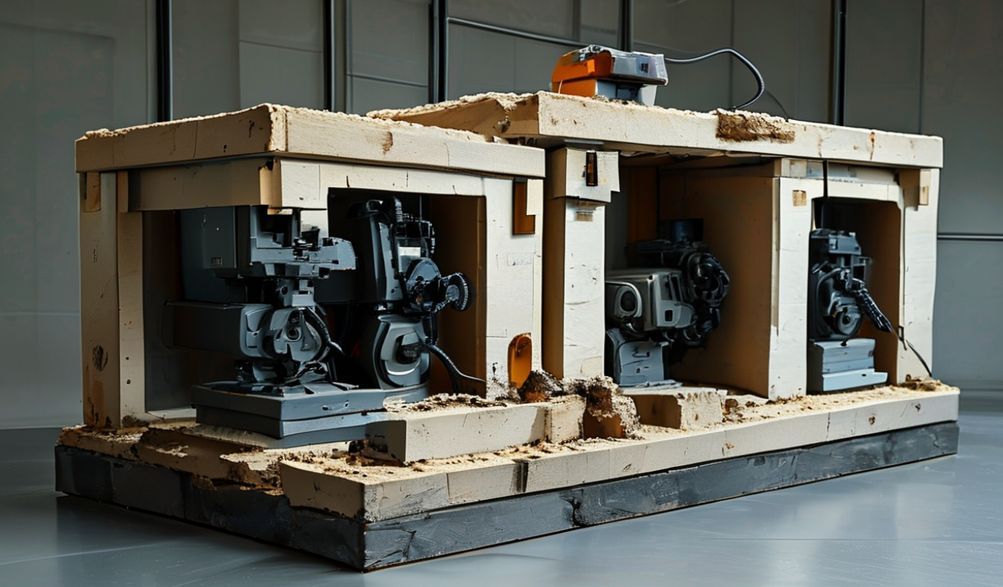
Бош блок машинкаларыныň Ýokary Gollanmasy: Görnüşleri, Bahalary we Nädip Saýlamaly
Giriş
Ýokary gökdelenlerden tutaw, sadaka maşgala öýlerine çenli, häzirki zaman gurluşygy esasy gurluş agzasyna: beton boşlukly bloklara daýanýar. Güýji, termal izolýasiýasy we bahasynyň amatlylygy üçin gymmatlandyrylýan bu ýer ýüzünde giňden ýaýran material, dünýä boýunça infrastrukturanýň bel kemigidir. Ýöne her bir durnukly diwaryň yzky tarapynda, munyň hemmesini mümkin edýän esasy enjam ýatýar—boş blok maşynyGurlaryjy, pudakçylar we telekeçiler üçin dogry maşyny saýlamak diňe satyn alyş däl; bu, öndürijiligi, taslama möhletlerini we peýdalylygy täsir edýän esasy iş kararydyr.
Bu doly gollanma, size ygtyýarly we tarapdarsyz çeşme bolmak üçin düzüldi. Derin senagat tejribesi we tehniki bilimlerden peýdalanyp, marketing şowşunyň arasyndan çykyp, size düşündirişli saýlaw etmek üçin zerur açyklygy hödürleýäris. Ösen pudakçy bolup, işi giňeltmek isleýän bolsaňyz-da, ýa-da bu meýdana girmek isleýän ösüp ýetişýän öndüriji bolsaňyz-da, dürli meýdanlaryň üsti bilen hereket etmegi öwrenersiňiz.boş blok maşynlaryBiz ýönekeý el awtomatlaryndan tut, doly awtomatlaşdyrylan önümçilik hatlaryna çenli dürli görnüşlerini düşündireris, başlangyç bahasyndan daşary eýeçiligiň hakyky düýbündäki bahasyny çözgäreris we öz ýörite zerurlyklaryňyz üçin ideal maşyny saýlamak üçin aýdyň çarýagyny hödürleris. Soňunda, goýlan maýanyňyz uzak ýyllar dowamynda hil bloklar we güýçli peýda getirmegini üpjün etmek üçin iş amallarynyň esasy ugurlaryny öwreris.
Hemmäniň ýüregindäki maşyny düşünmek bilen başlalyň.
Bolok Maşyny Nedir we Ol Nädip Işleýär?
Onuň esasynda, boş blok maşyny, boş beton bloklary takyklyk, yzygiderlilik we netijelilik bilen öndürmek üçin niýetlenen beton blok ýasagynyň aýratyn görnüşidir. Ol ýary-gury beton goşundysyny belli bir şekle ýygnaýar we boş göwreli dizaýny sebäpli hem güýçli, hem ýeňil bolan blok döredýär.
Esasy Wezipa we Soňky Önüm
Maşynuň ýeke-täk maksady öndürmekdir.boş beton bloklarBu bloklar bir ýa-da birnäçe boşluğy bolan dörtburçly bölümler bolup, adatça jemi göwrüminiň 50-75% -ini tutýar. Standart ölçegler sebitlere görä üýtgeýär, ýöne 400mm x 200mm x 100mm ýa-da 400mm x 200mm x 150mm ýaly adaty mysallar bar.
- Gowak bloklarynyň esasy üstünlikleri:
- Ýeňil:Sahada daşamak we işlemek has ýeňil we arzan.
- Gowşaklygy gowulandy. The air pockets provide better thermal and acoustic insulation compared to solid blocks.
- Material Ululygy: Use less concrete, reducing the cost per unit.
- Structural Utility: The cavities can be used for running electrical conduits or plumbing, and can be filled with reinforced concrete for added strength in columns and beams.
Esasy Işleýiş Prinsipi
The transformation from raw powder and aggregate to a solid block follows a systematic process. While automation levels vary, the fundamental steps remain the same:
- Gatnaşdyrmak: Cement, sand, aggregates (like crushed stone), and a precise amount of water are mixed to create a semi-dry concrete mix. The consistency is crucial—it must be damp enough to bind but dry enough to hold its shape immediately after molding.
- Iýmitlenme:Bu goşundy maşynyň bunkuryna berilýär.
- Ыкмалашдырмак ве Гуймалашдырмак: The mix is dropped into a mold (or die) cavity. A combination of high-frequency vibration and mechanical or hydraulic pressure compacts the material, removing air pockets and ensuring density. This is the most critical phase for achieving block strength.
- Çykarma (Aýyrmak): The compacted block is pushed upward out of the mold onto a flat pallet or the factory floor.
- Gowulama: The freshly molded blocks are then moved to a curing area. They are kept moist (often by sprinkling water) for several days to allow the cement to fully hydrate and gain strength before being used in construction.
Машинаныň Esasy Bölümleri
Understanding the main parts demystifies the operation:
- Хоппер: The container that holds and feeds the raw concrete mix.
- Mold (ýa-da Öl): The interchangeable steel component that defines the block’s shape, size, and pattern (e.g., 2-block, 4-block, or paver mold).
- Titreşim Sistemi: Usually an electric motor with eccentric weights that generates high-frequency vibrations to compact the concrete.
- Goşundy Ulgamy: This can be hydraulic (using fluid pressure) or mechanical (using a lever or flywheel) to apply downward force on the mix in the mold.
- Kontrol paneli: Houses the electrical controls for the motors, vibration, and hydraulic systems (varies by automation level).
Types of Hollow Block Machines: A Detailed Comparison
The market offers a spectrum of boş blok maşynlary, categorized primarily by their level of automation and mobility. Your choice here will define your production capacity, labor requirements, and capital investment.
Голланд блокларны эл аралайышдырмашына машиналары
These are the simplest and most fundamental type, relying almost entirely on human power.
- Düşündiriş we Amal Edilişi: An operator manually fills the mold with mix, engages a lever or handle to apply compaction pressure (sometimes aided by a flywheel), and then uses the lever to eject the finished block. Vibration, if present, is often mechanically activated.
- Iň Gowy: Extremely small-scale projects, DIY enthusiasts, remote locations with no power, or entrepreneurs testing the market with a minimal budget.
- Kämil we kemçilikler:
- Artalary: Very low initial cost, simple to understand and repair, no electricity required for basic models.
- Kemçilikler: Very low output (40-100 blocks per 8-hour day), highly labor-intensive, inconsistent block quality dependent on operator skill, physically demanding.
Semi-Automatic Hollow Block Machines
This category strikes the most popular balance for small to medium businesses, automating the most strenuous parts of the process.
- Düşündiriş we Amal Edilişi: The feeding of concrete into the hopper is often manual or assisted by a simple conveyor. However, the compaction (vibration and pressure) and block ejection are powered and automated, activated by a button or pedal. The operator’s main tasks are feeding raw materials and removing finished blocks.
- Iň Gowy: Small to medium-scale block manufacturing businesses, contractors producing blocks for their own projects, and municipal works departments.
- Kämil we kemçilikler:
- Artalary: Moderate cost, significantly higher and more consistent output than manual machines (300-1000+ blocks per shift), better block quality due to consistent vibration/pressure, less physically demanding.
- Kemçilikler: Requires a stable power supply, higher maintenance than manual machines, still requires several operators for efficient production.
Fully Automatic Hollow Block Machines
These are industrial-grade production lines designed for maximum output with minimal human intervention.
- Düşündiriş we Amal Edilişi: These systems are computer-controlled and integrated. They often include automatic batching and mixing plants, conveyor belt feeding, robotic pallet handling, and stackers. The entire process—from raw material to stacked, cured blocks—is automated. Some advanced models feature touch-screen PLC (Programmable Logic Controller) panels.
- Iň Gowy: Large-scale commercial block manufacturing plants supplying construction companies and retailers, government housing projects, and high-volume infrastructure development.
- Kämil we kemçilikler:
- Artalary: Very high output (2000-10,000+ blocks per shift), exceptional consistency and quality, optimized material usage, low labor cost per block.
- Kemçilikler: Very high initial investment, requires significant factory space and three-phase power supply, complex maintenance requiring specialized technicians.
Mobil we Stasionar Blok Maşynlary
This is another key distinction, especially for contractors.
- Мобил блок машыналары: These are typically smaller, trailer-mounted semi-automatic or manual machines. They can be towed directly to a construction site to produce blocks on-location, eliminating transport costs for the finished product. Ideal for remote projects or where local block supply is unreliable.
- Стационар блок машинкалары: These are fixed installations, from a semi-automatic machine in a small shed to a full automatic plant. They are the choice for dedicated manufacturing facilities focused on supplying a market.
Critical Factors to Consider Before Buying
Selecting a boş blok maşyny requires careful self-assessment and technical evaluation. Rushing this decision can lead to costly mismatches between your needs and your equipment’s capabilities.
Öndürijilik Talapynyzy Bahalandyrmak
Start by asking the right questions:
* What is my current and projected demand? Calculate the blocks needed per day/week for your projects or sales forecasts.
* What is my project scale? Are you building a single house, a housing estate, or supplying a region?
* Is this for personal use or a commercial venture?
* What is my growth plan for the next 3-5 years? Consider a machine that can grow with you, perhaps by allowing for future automation upgrades.
Maşyn Spesifikasiýalary we Aýratynlyklary
Drill down into the technical details:
* Kalyp Ýagdaýy: Can the machine accept different molds to produce hollow blocks of various sizes, solid blocks, paving stones, or curb stones? This flexibility expands your product line and marketability.
* Sikl wagty: How many seconds does it take to produce one cycle (e.g., 4 blocks)? This directly determines your hourly output.
* Güýç talap edýän zatlar: Does it run on single-phase or three-phase electricity? Do you have a diesel engine option for areas with unstable power?
* Awtomatlaşdyryş derejesi: Align this with your labor availability and budget, as discussed in the types section.
* Gurluşyk Sypaty: Inspect the thickness of steel plates, the quality of welding, and the brand of critical components like hydraulic pumps and vibration motors. This dictates durability.
Budget and Total Cost of Ownership
Theboş blok maşynynyň bahasy is just the entry ticket. A savvy buyer plans for the full financial picture:
* Başlangyç satyn alyş bahasy: The cost of the machine itself.
* Installation & Foundation: Some machines require a special concrete foundation.
* Көмекчи жабдықтар: Cost of a concrete mixer, conveyor, pallets, curing racks, and potentially a forklift.
* Çig mal. Ongoing cost of cement, aggregates, and water.
* Emegeý Wages for operators and helpers.
* Maintenance & Spare Parts: Regular servicing and the inevitable replacement of wear parts like mold liners, vibration motors, and hydraulic seals.
* Power/Fuel: The ongoing energy consumption cost.
Supplier and After-Sales Service Evaluation
Bu ýerdeyşançlylyk becomes paramount. A reliable supplier is as important as the machine.
* Manufacturer Reputation: How long have they been in business? Can they provide references or visit existing client sites?
* Warranty: What is covered and for how long?
* Spare Parts Availability: Are parts readily available locally or do they ship from abroad with long lead times?
* Техникалық қолдау Do they offer installation supervision, operator training, and troubleshooting support via phone or video?
* Hyzmat Ulgamy: Is there a local service technician, or must you wait for an engineer to travel to you?
Operating and Maintaining Your Hollow Block Machine
Proper operation and maintenance are non-negotiable for safety, block quality, and machine longevity.
Step-by-Step Operational Guide
- Safety First: Always wear safety glasses, gloves, and steel-toe boots. Ensure all safety guards are in place.
- Pre-Operation Check: Inspect the machine for loose bolts, check oil levels in the hydraulic tank, and ensure the mold is clean and properly secured.
- Material taýýarlamak: Prepare a consistent, semi-dry concrete mix with the correct ratio (e.g., 1 part cement : 3 parts sand : 2 parts aggregate is a common starting point).
- Running the Machine: Feed the mix into the hopper, initiate the cycle (via lever, button, or automated system), and allow the machine to compact and eject the block.
- Block Handling: Carefully transfer the green (uncured) blocks onto a curing rack using a pallet, avoiding any impact or distortion.
Essential Maintenance Checklist
- Daily: Clean the machine thoroughly after use, especially the mold and hopper, to prevent concrete buildup. Check for oil leaks and unusual noises.
- Weekly: Lubricate all moving parts (pivots, bearings) as per the manual. Inspect and tighten all bolts and nuts, which can loosen due to vibration.
- Monthly: Check the hydraulic fluid for contamination. Inspect the mold for wear or damage. Test the vibration motor mounts.
Troubleshooting Common Issues
- Poor Block Strength: Usually caused by an incorrect water-cement ratio (too much water), insufficient vibration time/pressure, or low-quality cement.
- Surface Cracks: Often due to too little water in the mix, excessive vibration, or improper curing (drying out too quickly).
- Blocks Sticking in Mold: Indicates a worn or damaged mold, lack of mold release agent (often just water or a light oil), or a mix that is too wet.
- Weak Vibration: Check the vibration motor mounts, power supply, and the eccentric weights on the motor shaft.
Hollow Block Machine Price Ranges and ROI
Providing exact prices is impractical due to global market fluctuations, but understanding the order of magnitude is crucial for planning.
Price Breakdown by Machine Type
- Колдонуучулар үчүн кол менен иштетилчү курулуш блокторун жасагыч машиналар: The most affordable entry point, typically ranging from $1,000 to $4,000, depending on build quality and capacity.
- Ярым-автомат кесилме блок машыналары: This broad category spans from $5,000 to $30,000+.
- Basic single-phase, 4-block models start around $5,000-$10,000.
- More robust, higher-capacity models with better hydraulics and multi-mold capability can cost $15,000-$30,000.
- Fully Automatic Hollow Block Machines: Represent a significant industrial investment, generally starting from $50,000 and easily exceeding $200,000 for complete production lines with batching plants and robotic handling.
Understanding What Influences the Price
The variance within each category is driven by:
* Brand & Origin: Established brands and machines from certain manufacturing hubs command different prices.
* Önümçilik kuwwaty: A machine that makes 10 blocks per cycle costs more than one that makes 4.
* Level of Automation & Features: PLC controls, automatic pallet feeders, and color dosing systems add cost.
* Build Quality & Components: Machines with industrial-grade hydraulics and motors are priced higher than those with commercial-grade parts.
Calculating Your Potential Return on Investment (ROI)
A simple ROI analysis can clarify the business potential:
1. Calculate Production Cost Per Block: Add up the cost of raw materials (cement, sand, aggregate), power, labor, and a portion of maintenance for the number of blocks produced in a period.
2. Determine Local Selling Price: Research the market price for a quality hollow block in your area.
3. Find Gross Profit Per Block: Selling Price – Production Cost.
4. Estimate Break-Even Timeline: Divide the Total Initial Investment (machine + setup) by the Gross Profit Per Block x Blocks Produced Per Month. This gives you the number of months to recover your initial outlay.
For example, if your profit is $0.10 per block and you produce 10,000 blocks a month, your monthly gross profit from blocks is $1,000. A $12,000 machine would have a simple break-even point of about 12 months, not accounting for other business costs. This framework highlights the importance of output and market demand.
FAQ Section
Q1: What is the average production capacity of a semi-automatic hollow block machine?
Capacity varies widely. A standard 4-block machine with a 20-30 second cycle time can produce approximately 500-800 blocks in an 8-hour shift with a good crew. Higher-end models with faster cycles can produce 1,200-2,000 blocks per shift.
Q2: Can one machine produce different sizes and types of blocks?
Yes, most quality machines are designed to accept interchangeable molds. You can typically purchase additional molds for different hollow block sizes, solid blocks, interlocking pavers, or garden curbs, allowing you to diversify your product offering.
Q3: What is the typical lifespan of a well-maintained hollow block machine?
With proper operation, regular maintenance, and timely replacement of wear parts, a robust semi-automatic or automatic machine can easily last 10-15 years or more. The core frame and structure often last decades, while components like molds and hydraulic seals are consumables.
Q4: What raw material mix is recommended for optimal blocks?
A common, reliable mix for standard hollow blocks is a 1:3:2 ratio (by volume) of Portland cement, fine sand (or a sand/stone dust blend), and a 3/8″ coarse aggregate (like crushed stone). The water content should be minimal—just enough to make the mix hold together when squeezed in your hand. Always test your local materials.
Q5: Are there any specific safety certifications I should look for in a machine?
Look for machines that comply with international safety standards, often indicated by CE (for Europe) or similar markings. More importantly, ensure the machine has proper safety guards covering all moving parts, pinch points, and the vibration mechanism. The electrical system should be properly enclosed and grounded.
Q6: How much space is required to set up a small-scale hollow block manufacturing plant?
For a semi-automatic operation, you need space for:
* The machine itself (approx. 4m x 3m).
* Raw material storage (sand, aggregate piles or silos).
* A mixing area.
* A curing area (the largest space, where blocks sit for 7-14 days). This can be under a simple shaded, open-sided shed.
* Storage for finished blocks.
A minimum plot size of 500-1000 square meters (approx. 5,000-10,000 sq ft) is a practical starting point for comfortable workflow.
Netije
Dogry saýlamakboş blok maşyny is a strategic decision that hinges on a clear understanding of your production needs, a realistic assessment of your budget—including the total cost of ownership—and a commitment to proper operation and maintenance. From the labor-intensive manual press to the humming fully automatic plant, each machine type serves a specific purpose in the construction ecosystem.
As an expert final recommendation, prioritize long-term value over short-term savings. A slightly higher initial investment in a robust machine from a reputable supplier with strong after-sales support will pay dividends in consistent output, lower downtime, and superior block quality. This reliability builds your reputation and your bottom line. Use the knowledge in this guide not just to buy a machine, but to build a foundation for your construction or manufacturing success.
Ready to take the next step with confidence? [Download our comprehensive Hollow Block Machine Buyer’s Checklist] to compare specifications, evaluate suppliers, and ensure you’ve covered every critical detail before making your investment.
<