
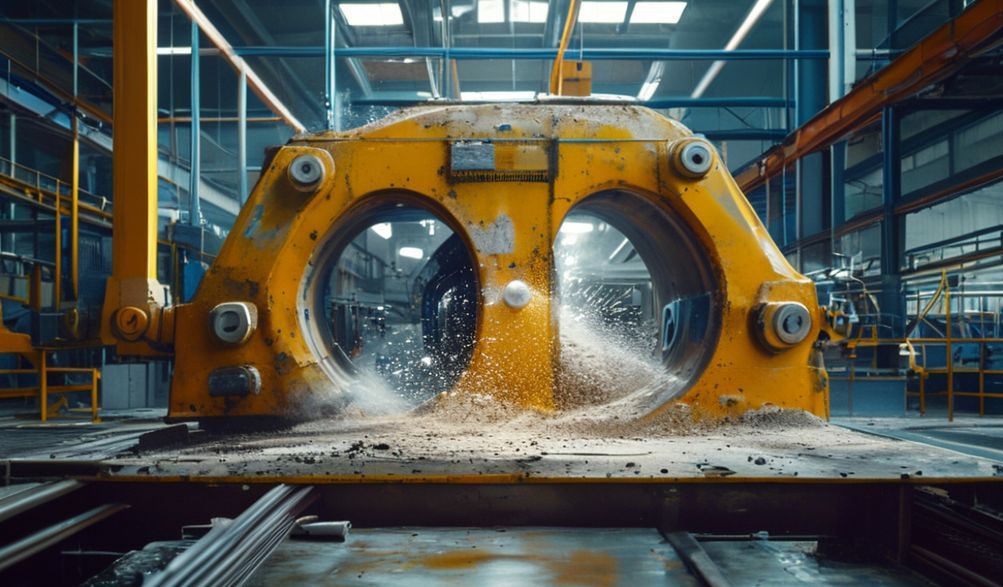
The Ultimate Guide to Hollow Brick Machines: Inside the FUDA Brick Making Factory
Giriş
The global construction industry is at a crossroads, demanding materials that are not only strong and affordable but also sustainable. In this landscape, the humble hollow brick has emerged as a powerhouse solution, offering superior insulation, reduced weight, and significant material savings. But behind every consistent, high-quality hollow brick is a piece of precision engineering: the hollow brick machine.
This guide delves deep into the world of hollow brick production machinery. We’ll explore the technology that drives it, the undeniable benefits it delivers, and the critical factors in selecting the right equipment for your project or business. More than just a generic overview, this resource offers an authoritative, experience-based look from within the industry, drawing directly from the expertise of a leading manufacturer.
Our focus is the ФУДА КИРПИЧ ИШЛЕП ЧЫГАРЫШ ФАБРИКАСЫ, an established name synonymous with reliability, innovation, and robust engineering in brick and block machinery. For decades, FUDA has been at the forefront, designing and building machines that empower businesses worldwide. This guide aims to translate that factory-floor expertise into actionable insights for buyers, contractors, and entrepreneurs.
Biz ýöriteleşdireris:
* The core technology and components of a hollow brick machine.
* The economic and construction benefits of automated brick production.
* A transparent look inside FUDA’s manufacturing and quality control processes.
* A practical framework for selecting the perfect machine for your needs.
* Essential operational and maintenance best practices.
What is a Hollow Brick Machine? Understanding the Technology
At its heart, a hollow brick machine is a device that automates and mechanizes the formation of hollow concrete blocks. It transforms raw, dry-ish concrete mix into perfectly dimensioned, high-strength bricks with designed hollow cavities, ready for curing and construction.
Esasy Funksiýa we Iş Prinsipleri
The process is a marvel of efficient engineering, typically following these stages:
- Gatnaşdyrmak we Iýmek: Raw materials (cement, sand, aggregate, fly ash) are mixed and fed into the machine’s hopper.
- Ölçekleme we Kalyplyma: The mix is conveyed and metered into a mold box on a vibrating table.
- Gatnaşdyrma: Here, the magic happens. High-frequency vibration consolidates the material, removing air pockets. A hydraulic press then applies immense downward pressure (measured in tons), densely compacting the mix into the mold’s shape, which includes cores that form the hollow cavities.
- Чыгару жана паллеталау: The hydraulic press lifts, and the freshly formed, solid block is ejected onto a wooden or steel pallet.
- Gowulama: The palletized bricks are moved to a curing area where they gain strength over days, eventually becoming ready for use.
This cycle repeats every 20-45 seconds, creating a continuous, high-output production line.
Key Components of a Modern Hollow Brick Machine
The reliability of the entire system depends on the quality of its core components. Here’s what to look for:
- Хоппер жемдегич: Stores and regulates the flow of raw material. FUDA designs these for consistent flow without bridging or clogging.
- Миксер: Ensures a homogeneous blend of all raw materials, which is critical for uniform brick strength.
- Калъа/Титреме Системасы: The heart of brick formation. High-quality, hardened steel molds and a balanced vibration system are non-negotiable for product consistency and longevity.
- Hydraulic Press & Power Unit: Provides the essential compaction force. Industrial-grade hydraulics and pumps, like those used by FUDA, ensure steady, powerful, and reliable performance.
- Kontrol paneli: The machine’s brain. Modern panels with PLC (Programmable Logic Controller) systems allow for precise control over vibration time, pressure, and cycle automation.
- Pallet iýmitlendiriji / konweýer Automates the handling of pallets, streamlining production and reducing manual labor.
Why Choose a Hollow Brick Machine? Key Benefits and Applications
Investing in a hollow brick machine isn’t just about making bricks; it’s about transforming your construction project or business model.
Economic and Production Advantages
- High Output with Low Operational Cost: A single semi-automatic machine can produce thousands of bricks per day, drastically outperforming manual labor. The per-unit cost plummets as scale increases.
- Iş güjüne bolan garaýyşyň azalmagy: Automation significantly cuts the need for a large manual workforce, mitigating labor shortages and reducing long-term payroll expenses.
- Material Efficiency & Flexibility: These machines optimally use affordable, locally available materials, including recycled industrial by-products like fly ash, further reducing raw material costs.
Superior Product Quality and Construction Benefits
- Bäsdeşsiz Durnuklylyk: Every brick is identical in dimension and density, leading to faster, cleaner construction with less mortar waste.
- Engineered Strength: Hydraulic pressure creates bricks with high, reliable compressive strength, meeting or exceeding international building standards.
- Inherent Advantages of Hollow Bricks:
- Ыссылык улгемеси: The air cavities provide excellent thermal resistance, reducing heating and cooling costs in buildings.
- Soundproofing: They act as effective sound barriers.
- Ýeňil: Easier and safer to handle, transport, and lay.
- Gurluşyk ýüküniň peseldilmegi: Lighter bricks allow for lighter, more economical foundation and support structures.
Environmental and Sustainability Impact
- Energy Efficient Production: Compared to fired clay bricks, the production process consumes far less energy.
- Kömekçilik: Machines like FUDA’s are designed to incorporate recycled materials (fly ash, slag) into the mix, diverting industrial waste from landfills.
- Greener Buildings: The end product contributes to energy-efficient building envelopes, supporting sustainable construction goals.
Inside the FUDA Brick Making Factory: A Testament to Expertise
Seeing how a machine is built reveals its true character. At the FUDA factory, manufacturing is a philosophy centered on precision, durability, and client success.
FUDA’s Manufacturing Philosophy and Quality Control
FUDA operates on a foundation of rigorous R&D and adherence to international quality management systems. Every machine is a product of:
* Takyklykly Inženerlik: Designs are stress-tested digitally before any metal is cut.
* Multi-Stage Inspection: Quality control is not a final step but a continuous process:
1. Materiýalaryň çeşmesi: Incoming steel plates and components are certified for grade and strength.
2. Процесдеги тексермелер: Welding seams, machining tolerances, and sub-assemblies are inspected at every workstation.
3. Final Assembly Verification: The fully assembled machine is checked for alignment, hydraulic integrity, and electrical safety.
4. Live Testing: Every machine undergoes a pre-delivery test run with actual raw materials to verify performance and output quality.
The Production Line: From Steel to Machine
A walk through the FUDA factory floor is a lesson in industrial efficiency:
* Design & CNC Cutting: Digital designs guide CNC plasma cutters that slice through steel with millimeter precision.
* Fabrication & Welding: Skilled welders assemble the robust machine frame using techniques that ensure long-term structural integrity.
* Assembly Line: Components—hydraulic cylinders, vibration motors, conveyor belts, and the PLC system—are methodically installed.
* Painting & Finishing: A multi-layer anti-corrosion paint treatment protects the machine in harsh working environments.
* Performance Testing Zone: This is where theory meets practice. As our Chief Engineer notes, “We don’t ship a machine until we’ve seen it produce perfect bricks for a full shift. Our reputation rides on every unit.”
FUDA’s Range of Hollow Brick Machines
FUDA offers solutions for every scale of operation:
* Elýeterli & Ýary-awtomatik Maşynlar: Ideal for small to medium businesses or specific projects. They offer excellent value and require some operator intervention. (e.g., Model FDM-500: Capacity ~5,000 bricks/8hrs).
* Doly Awtomatik Maşynlar: For high-volume production. These feature automatic pallet feeders, stackers, and centralized PLC control for near-continuous operation. (e.g., Model FDM-2000A: Capacity ~18,000-22,000 bricks/8hrs).
* Мобил блок машыналары: Versatile units that can produce bricks directly on-site, eliminating transport costs for large projects.
How to Select the Right Hollow Brick Machine for Your Project
Choosing the correct machine is a strategic decision. Here’s a framework based on industry best practices.
Öndürijilik Talapynyzy Bahalandyrmak
Start by answering these questions:
* Required Daily Output: How many bricks do you need per day or month? (Be realistic about growth).
* Available Budget: Consider total cost of ownership, not just purchase price (installation, training, maintenance).
* Labor & Skill Level: Do you have technical staff for a fully automatic system, or is a simpler semi-auto model better?
* Проектиň ölçegi we Dowamlylygy: Is this for a one-time construction project or launching a full-time manufacturing business?
Critical Machine Specifications to Compare
When evaluating models, drill into these specs:
* Биленýý Kuwaty (Tonna): Higher tonnage (e.g., 150 tons vs. 80 tons) generally produces denser, stronger bricks and can handle a wider mix variety.
* Sikl wagty: Seconds per brick. Faster cycles mean higher potential output.
* Kalyp Ýagdaýy: Can the machine easily switch molds to produce different brick sizes (e.g., 4-inch, 6-inch, pavers)?
* Awtomatlaşdyryş derejesi: From manual pallet handling to fully automatic lines with robotic stackers.
* Elektrik energiýasy sarp edişi: Understand the total connected load (in kW) to ensure your facility can support it.
The FUDA Advantage: Beyond the Machine
Your relationship with the manufacturer is crucial. FUDA’s support system is a core part of the product:
* Custom Mold Design: Need a unique brick size or shape? FUDA’s engineering team can design and fabricate the mold.
* Doly Taýýarlyk: On-site or factory training ensures your team can operate and perform basic maintenance safely.
* Installation Guidance: Detailed layout plans and remote/virtual support for setup.
* Ýörite ýedek bölekler elýeterli. A well-organized parts inventory ensures minimal downtime, a cornerstone of trustworthy after-sales service.
Operational Guide and Maintenance Best Practices
A great machine lasts decades with proper care. Here are foundational best practices.
Setting Up for Success: Installation and Raw Materials
- Site Preparation: Ensure a level, concrete-floored foundation that can bear the machine’s weight and vibration. Provide adequate space for material storage and brick curing.
- Raw Material Mix: Consistency is key. A typical mix might be:
- 1 part Portland cement
- 3 parts fine aggregate (sand)
- 5 parts coarse aggregate (6mm stone or crushed recycled concrete)
- 1 part fly ash (optional, for cost savings and workability)
- Water: Achieve a “semi-dry” consistency where the mix holds its shape when squeezed.
Routine Operation and Safety Protocols
- Startup Procedure: Check oil levels, ensure the area is clear, lubricate moving parts, then start the machine without load before beginning production.
- Safety First: Operators must wear safety glasses, gloves, and steel-toe boots. Never clear jams or perform adjustments while the machine is powered on. Lock-out/tag-out procedures are essential.
Preventive Maintenance Checklist
Adhering to a schedule prevents major breakdowns:
* Daily: Clean the machine, especially the mold and hopper. Check hydraulic oil levels and for any leaks. Inspect bolts for tightness.
* Weekly: Grease all bearings and pivot points. Check vibration motor mounts. Inspect electrical connections.
* Monthly: Perform a thorough inspection of the hydraulic system. Check wear parts like mold liners, conveyor belts, and scraper blades. Clean the hydraulic oil filter.
As demonstrated in FUDA factory tests, a well-maintained machine can operate at peak efficiency for over 20 years, making preventive care your most profitable habit.
Frequently Asked Questions (FAQ)
Q1: What is the production capacity of a standard FUDA hollow brick machine?
A: Capacity varies by model. Our semi-automatic machines range from 4,000 to 8,000 bricks per 8-hour shift, while our fully automatic lines can produce 15,000 to 25,000 bricks in the same period. The exact output depends on brick size and operator efficiency.
Q2: Can the machine produce different sizes and types of hollow blocks?
A: Absolutely. This is one of the key advantages. By changing the mold in the machine, you can produce standard hollow blocks, solid blocks, paving stones, and even interlocking bricks. FUDA offers dozens of standard mold designs and provides custom mold fabrication.
Q3: What is the lead time for delivery and installation?
A: For standard models, lead time is typically 20-30 days after order confirmation. Customized machines or large orders may require more time. FUDA manages all export logistics and provides detailed installation manuals and remote video support to ensure a smooth setup.
Q4: What kind of after-sales support does FUDA provide?
A: We provide a comprehensive 12-month warranty on the core machine. Support includes detailed technical manuals in multiple languages, instructional videos, direct access to our engineer team via WhatsApp/Email, and the availability of on-site service technicians if needed. Our spare parts department is always stocked.
Q5: How profitable is a hollow brick manufacturing business?
A: Profitability is strong but depends on local material costs, market demand, and operational efficiency. The high output and low per-unit cost of a machine like FUDA’s create a significant margin. We advise clients on basic business modeling and can connect you with successful operators for insights.
Netije
The journey to efficient, high-quality brick production begins with the right technology and the right partner. Hollow brick machines represent a smart investment, unlocking economic savings, superior construction outcomes, and sustainable practices. As we’ve explored, the choice of manufacturer is paramount—it dictates not only the machine’s initial performance but its longevity and your long-term operational success.
Choosing an expert manufacturer like ФУДА КИРПИЧ ИШЛЕП ЧЫГАРЫШ ФАБРИКАСЫ means investing in more than steel and hydraulics; it’s an investment in decades of engineering experience, rigorous quality control, and a partnership built on trustworthy support. Their transparent manufacturing process and commitment to after-sales service provide the confidence needed for such a critical capital decision.
Ready to transform your construction project or launch your manufacturing venture?
- Esasy Çagyryş Hereketi: Contact the FUDA Brick Making Factory technical sales team today for a personalized consultation, a detailed quote tailored to your needs, and answers to all your specific questions.
- Goşmaça hereket etmek üçin çagyryş Request our full-color specification catalog to compare all our hollow brick machine models and technical data at a glance.