
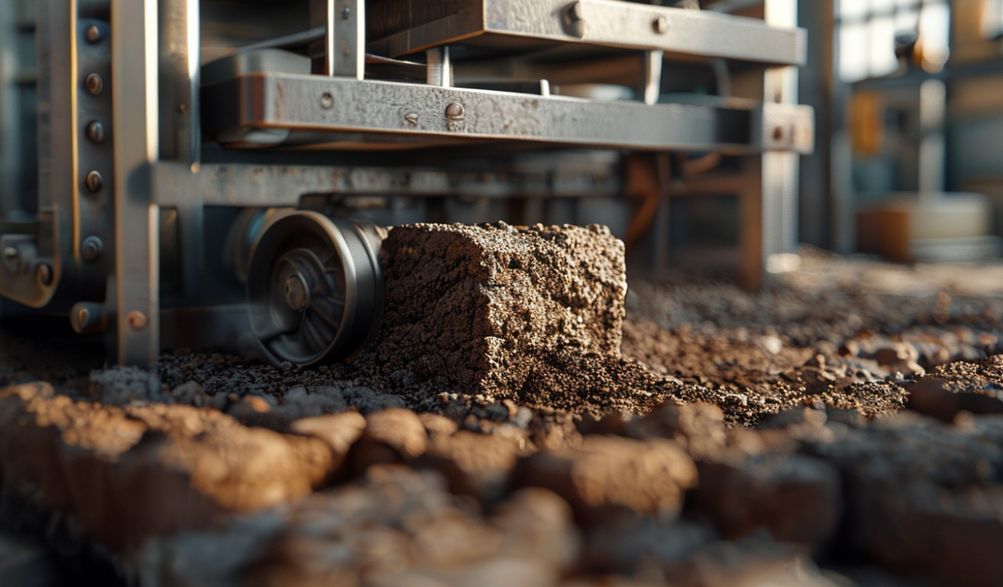
Интерлок кирпич машиналарыны дизайныны түпнусгалы: Принциплер, түрлер жана инновациялар
Giriş
Birleşdirilýän kerpiçler—ýagny gysylan toprak bloklary (GTB)—bir wagtyň özünde elýeterli jaý we ösümlikli gurluşyk global krizislerine ýekeje, owadan çözgüt hökmünde hyzmat edýär. Bu berk, energiýa tygşytlaýjy gurluş bölümleri, ýakylan kerpiçleriň ekologiýa täsiri we betonyň ýokarjy bahasyndan daşlaşmaga ýol açar. Emma, olaryň mümkinçiligi kerpiçiň özi tarapyndan däl-de, ony döredýan maşyn tarapyndan açylýar.
Gadymy kiremit öndürişi köplenç energiýa talap edýän proses bolup, ussat işçilere, gymmat materiallara we çylşyrymly üpjünçilik zynjyryna baglydyr. Biri-birine geçirilýän kiremit maşyny bu çäklendirmeleri ýok edýär. Ol ýerli toprakdan berk gurluşly, ekologik tizelen kiremitleri netijeli we ýerinde öndürmäge mümkinçilik berýän innowasion motordyr.
Bu ýolbaşçy, mehaniki injenerlik prinsiplarynyň, topragy berkidýän tehnologiýalaryň onýyllyk tejribesiniň we senagatyň iň gowy amallarynyň jemlenmesinden düzüldi. Siz täze işjeňlik gözleýän telekeçi, enjamlar kesgitleýän gurluşyk injeneri ýa-da jemgyýetçilik ösüşiniň taslamasyny meýilleşdiriji boluň, bir-birine geçýän kerpiç maşynynyň dizaýnyny düşünmek üstünlik gazanmagyňyz üçin möhümdir. Biz esasy ugurlary düşündireris.“bir-birine kenetlenýän kerpiç maşyny dizaýny”bilimli kararlar çykarmak üçin bilim bilen güýçlendirmek.
Bu çuňňur gözlegde, siz bu maşynlaryň esasy ylym esaslaryny öwrenersiňiz, elýeterli dürli görnüşlerini gözden geçirersiňiz, olaryň esasy böleklerini derňersiňiz we öz ýörite taslamanyňyz üçin dogry dizaýny nädip saýlamaly bolýanyňyzy öwrenersiňiz. Geliň, bu bilimleri düýbüne çenli guralyň.
Интерлок кирпич машиналарының дизайнының негизги принциплери
Onuň esasynda, bir-birine berkidilýän kerpiç maşyny, takyk gysma enjamy bolup durýar. Onuň dizaýny hökman däl-de, topragyň material ylymyna we ýük göterýän gurluş blokuny döretmek üçin zerur bolan mehaniki talablara göni jogap berýär.
Кирпич үчин топракды сакланмак илими
Maşyn üçin çeşme material toprakdyr, ýöne her toprak birmeňzeş däl. Dizaýn prosesi şu ýerden başlaýar.
- Topragyň düzümi:Degişli toprak goşundysy, adatça, balanslaşdyrylan gatnaşykda gyl (birikdirijilik üçin), çigil we gum (skelet gurluşy üçin) öz içine alýar. Gyl köp bolsa, çatlak döredip biler; az bolsa, birikdiriji güýjini peseldýär. Gowy düşünilen maşyn, operatoruň degişli derejeli materialy üpjün ederligini göz öňünde tutýar, köplenç ýönekeý meýdança eleme talap edýär.
- Стабилизаторларың ролу:Toprak ýeke-täk ulanylmaýar. Onuň ýapyşma we suwa berkligini artdyrmak üçin, topraga himiki taýdan birikýän stabilizator hökmünde sement ýa-da hemek goşulýar. Maşyn dizaýny, suw goşulmanka, bu gury komponentleri takyk we yzygiderli garyndy etmek üçin niýetlenilýär.
- Dizaýn Netijesi:Şonuňda, maşyn dizaýnynda iň möhüm tarap, topragyň we stabilizatoruň doly birmeňzeşleşdirilmegini üpjün edýän, goly ýa-da awtomatlaşdyrylan bir garyşdyryş ulgamynyň birleşdirilmegidir. Yzygiderli däl garyşdyryş, her bir kerpiçiň zäýt nokatlaryna getirýär.
Негизги Механикалык Дизайн: Басым, Сығу жана Чыгаруу
Bu işiň ýüregi. Maşynynyň esasy wezipesi, boş materiallar garyşygyna uly, ýygnanlyşykly güýç bermekdir.
- Matbuat ulgamy:Гидравлик пресс ýa-da mehaniki lever/krank ulgamy arkaly, maşyn çäklendirilen galybyň içindäki topraga ýygyşdyryjy basyş ugradýar. Gidrawlik ulgamlar has ýumşak we dolandyrylyp bolýan ýokary basyşly ýygyşdyrmany üpjün edýär, mehaniki ulgamlar bolsa öz ýönekeýligi we berkligi üçin gymmat bahalanýar.
- Берклениш-Күч Бағланышы:Ulgurlanýan basyş, PSI ýa-da MPa-da ölçenilýän, kerpişiň soňky dykyzlygyny we gury gysma berkligini kesgitleýän esasy mehaniki faktor. Ýokary, dowamly basyş bölejikleriň has dykyz bir matrisasyny döredýär we bu gönüden-göni has berk kerpişe öwrülýär. Maşyn spetsifikasiýalary bu ýetirlikli basyşy açyk görkezmeli.
- Çykaryş Mehanizmi:Sıklandyrylandan soň, täze garylan kerpiç ýerinden aýrylmagy zerur. Çykaryş tagtasy ýa-da mehanizminiň dizaýny ähmiýetlidir. Ol, kerpiji gatyndan zyýansyz we deň ýokaryk güýç bilen çykarmaly, onuň takyk birikýän gyralaryna zyýan ýetirmän—bu, erbet dizaýnlarda köplenç duş gelýän bir nädogrylykdyr.
The Heart of the System: Mould and Die Design
If the press is the heart, the mould is the soul. It defines everything about the final product.
- Takyklykly Inženerlik: The mould (or die) is a precision-machined block of hardened steel that forms the brick’s shape, dimensions, and most importantly, its male and female interlocking pattern. This pattern allows bricks to lock together without mortar, providing seismic resistance and construction speed.
- Material and Durability: Given the extreme abrasion from compacted soil, moulds are made from high-grade, heat-treated steel. A quality mould design accounts for wear and may feature replaceable liners or tips on the most vulnerable interlocking features.
- Impact on Production: The mould design directly impacts production speed (how quickly it can be filled and emptied), brick accuracy (consistency of dimensions), and ease of release. A well-polished, properly tapered mould ensures a clean ejection every cycle.
Types of Interlocking Brick Machines and Their Design Philosophies
Interlocking brick machines are not one-size-fits-all. They are designed with specific production scales, budgets, and operational contexts in mind.
Manual Press Machines: Simplicity and Affordability
These are the entry-point machines, embodying a design philosophy of accessibility and low-tech utility.
- Dizaýn: Operated by a long lever, they use mechanical advantage to generate the necessary compaction force. Design focuses on leverage ratios, pivot point strength, and operator ergonomics.
- Best-Use Scenarios: Ideal for very small-scale projects, training centers, or locations with no electricity. Their output is low (often 100-500 bricks per day), and they are highly dependent on operator strength and consistency.
- Çäklendirmeler: Labor-intensive, variable brick quality, and not suitable for commercial production volumes.
Semi-Automatic Machines: Balancing Efficiency and Cost
This category represents the most common choice for small-to-medium enterprises (SMEs) and serious project work.
- Design Hybrid: These machines typically feature an electric motor that powers a hydraulic pump. The operator manually fills the mould, but the pressing and ejection cycles are activated by a button or foot pedal, ensuring consistent pressure every time.
- Key Design Features: The design focuses on improving output (1,000-3,000 bricks per day) while keeping costs manageable. Features often include a simple hopper for easier feeding, a more robust frame, and standardized hydraulic components for easier maintenance.
Fully Automatic Machines: High-Volume Production Design
These are the industrial powerhouses, designed for maximum output with minimal labor.
- Integrated System Design: They are complete factories in one unit. The design integrates an automatic feeder, a pan or paddle mixer, a conveyor system to transport material to the press, the high-pressure press itself, and sometimes an automatic brick stacker or palletizer.
- Sophisticated Control: Operation is managed via Programmable Logic Controllers (PLCs) and touch-screen panels. The design synchronizes all subsystems for seamless, continuous operation.
- Dizaýn Filosofiýasy: The goal is to remove human variability from the process, achieving exceptional consistency in brick quality and very high daily outputs (5,000-20,000+ bricks). The design prioritizes uptime, automation, and volume.
Key Components and Subsystem Design Analysis
To truly evaluate a machine, you must look under the hood. Here’s what separates a durable workhorse from a problematic imposter.
Power Transmission System: Hydraulic vs. Mechanical
This is the “how” of generating compaction force.
- Hydraulic System Design:
- Artalary: Delivers extremely high, smooth, and controllable pressure. Excellent for compacting a wider variety of soil types. Modern systems are reliable and incorporate safety valves.
- Kemçilikler: More complex, requires maintenance of hydraulic fluid, hoses, and seals. Generally has a higher initial cost.
- Mechanical/Crank System Design:
- Artalary: Very robust, simple design with fewer components that can fail. Often easier and cheaper to repair in remote areas.
- Kemçilikler: Can deliver a more jarring impact load, may struggle with very high pressures needed for some stabilizers, and is less adjustable.
Frame and Chassis Design: Ensuring Structural Integrity
The frame is the machine’s skeleton. It must withstand relentless, high-cycle loading without flexing.
- Importance: A flexing or vibrating frame absorbs energy that should go into compacting the brick, leading to weaker products and accelerated wear on all components.
- Good Design Practice: Uses thick, structural steel (often channel or box section) welded into a rigid, box-type chassis. Critical stress points are reinforced with gussets. The design minimizes unsupported spans to resist deflection.
Hopper and Mixer Design: Achieving Material Homogeneity
Consistency in the feed material is non-negotiable for consistency in the final brick.
- Hopper Design: Must facilitate smooth material flow without “bridging” (where material clumps and blocks the outlet). Good designs feature steep, sloped sides and sometimes vibration pads or agitators.
- Mixer Design: In semi- and fully-automatic machines, the mixer is key. Paddle or pan mixers must be designed to create a turbulent, thorough blending action, ensuring every particle of soil contacts the stabilizer before the brief addition of water.
How to Choose the Right Machine Design for Your Project
Selecting a machine is a strategic decision. Align the machine’s design capabilities with your project’s concrete needs.
Assessing Your Needs: Scale, Location, and Budget
Ask these foundational questions first:
* Ölçegi: What is your average daily brick requirement? Be realistic about your project timeline and workforce.
* Ýerleşýän ýeri: Is there reliable grid electricity (3-phase or single-phase)? What is the local availability of diesel fuel or potential for solar power? Is the site accessible for delivery and setup?
* Budget: This includes not only the machine’s purchase price but also shipping, import duties, foundation preparation, spare parts inventory, and operator training.
Critical Design Specifications to Evaluate
When comparing models, scrutinize these specs:
* Sikl wagty: The time to produce one brick (e.g., 15-30 seconds). Faster isn’t always better if it sacrifices pressure or durability.
* Бисим Укубы The maximum force the ram can apply (e.g., 20 MPa / 2900 PSI). This is a primary indicator of potential brick strength.
* Motor Güýji: Indicates the machine’s drive capacity (e.g., 7.5 kW / 10 HP). Should be appropriate for the pressure and cycle time.
* Önümçilik kuwwaty: The claimed bricks per hour or day. View this as a theoretical maximum under ideal conditions; real-world output will be lower.
Design Features for Durability and Ease of Maintenance
Look for these hallmarks of thoughtful engineering:
* Green Flags: Easy-access grease nipples on all bearings, bolted (not just welded) wear plates in high-abrasion areas, use of standard bearing and seal sizes, clear maintenance manuals, and protected hydraulic hoses and electrical lines.
* Red Flags: Excessively thin-gauge steel in the frame, painted-over welds (hiding poor workmanship), no accessible service points, and proprietary components that can’t be sourced locally.
Innovations and Future Trends in Machine Design
The field is not static. Engineering is pushing interlocking brick machines toward greater intelligence, sustainability, and versatility.
Smart Machine Integration (IoT)
Sensors are being integrated to monitor:
* Production counts and machine runtime.
* Hydraulic pressure and temperature in real-time.
* Vibration analysis to predict bearing or component failure before it happens.
This data, accessible via smartphone, enables predictive maintenance and precise production tracking.
Designs for Alternative and Recycled Materials
To enhance sustainability, machine designs are adapting to process non-traditional inputs:
* Senagat Ýadyndyk Önümleri: Fly ash from coal plants can be a primary ingredient, requiring designs that handle very fine, dry powders.
* Gurluşyk we ýykyn galyndylary: Crushed, graded concrete and masonry can be incorporated, demanding exceptionally wear-resistant mixing and pressing components.
* Plastic Composites: Experiments with compacting plastic waste into building blocks require different thermal and pressure profiles.
Energy-Efficient and Solar-Powered Designs
For off-grid applications, innovation is key:
* Ýokary Netijeliligi Elektrik Motorlary: Using IE3 or IE4 class electric motors reduces grid consumption.
* Integrated Solar Solutions: Designs now include DC-driven hydraulic systems or battery banks that can be charged by solar arrays, enabling fully renewable-powered brick production in remote areas.
Frequently Asked Questions (FAQ)
Q1: What is the most important factor in interlocking brick machine design for long-term durability?
A: The quality of the frame and the mould/die. A robust, vibration-resistant frame made of structural steel is the foundation. Paired with a high-grade, hardened steel mould, these two components determine the machine’s ability to withstand years of high-cycle loading without failure or significant degradation in brick quality.
Q2: Can I use any type of soil with an interlocking brick machine?
A: No. The machine is designed to compact a laýyk soil mix. Performing simple field tests (like the jar sedimentation test or ribbon test) is an essential first step. While a well-designed machine has a versatile mixer, it cannot compensate for gravel-heavy or pure clay soil. The operator must provide the correct raw material.
Q3: How does machine design affect the final strength of the brick?
A: Directly and fundamentally. The compaction pressure (determined by the hydraulic or mechanical system design) and the consistency with which it is applied are the primary mechanical drivers of brick density and compressive strength. A machine that cannot deliver sufficient, repeatable pressure will never produce high-strength bricks, regardless of stabilizer content.
Q4: What maintenance does a well-designed machine require?
A: A well-designed machine makes maintenance straightforward. Key routine tasks include: greasing all moving joints and bearings daily or weekly, checking and filtering hydraulic fluid, inspecting hoses for wear, and cleaning the mould and hopper to prevent material buildup. Good design provides clear access points for all these activities.
Q5: Is operator training a major consideration in machine design?
A: Absolutely. While good design incorporates safety guards and intuitive controls, it cannot replace proper training. Effective training on material preparation, machine operation sequences, daily checks, and basic troubleshooting is essential for safety, achieving optimal brick quality, and ensuring the machine reaches its full lifespan.
Netije
The design of an interlocking brick machine is a remarkable fusion of disciplines—mechanical engineering, material science, and practical human factors. It transforms local earth into the building blocks of sustainable communities. As we’ve explored, from the foundational principles of soil compaction to the cutting-edge trends in smart, solar-powered production, every design choice has a consequence for performance, durability, and project success.
Choosing the right machine is therefore a technical decision, not just a financial one. It requires matching a deep understanding of these design principles with the clear-eyed assessment of your project’s specific needs, scale, and context. We encourage you to consult with experienced engineers or operators and to ask manufacturers detailed questions about the design features that matter most.
Ready to analyze your project needs with these design principles in mind? Download our free project planning checklist to systematically evaluate your requirements and potential equipment.
Have specific questions about machine design for your local soil conditions? Contact our engineering team for a detailed consultation to bridge the gap between theory and your on-site reality.
By investing in thoughtful, appropriate machine design, we invest in a more sustainable, resilient, and affordable built environment for all.
<