
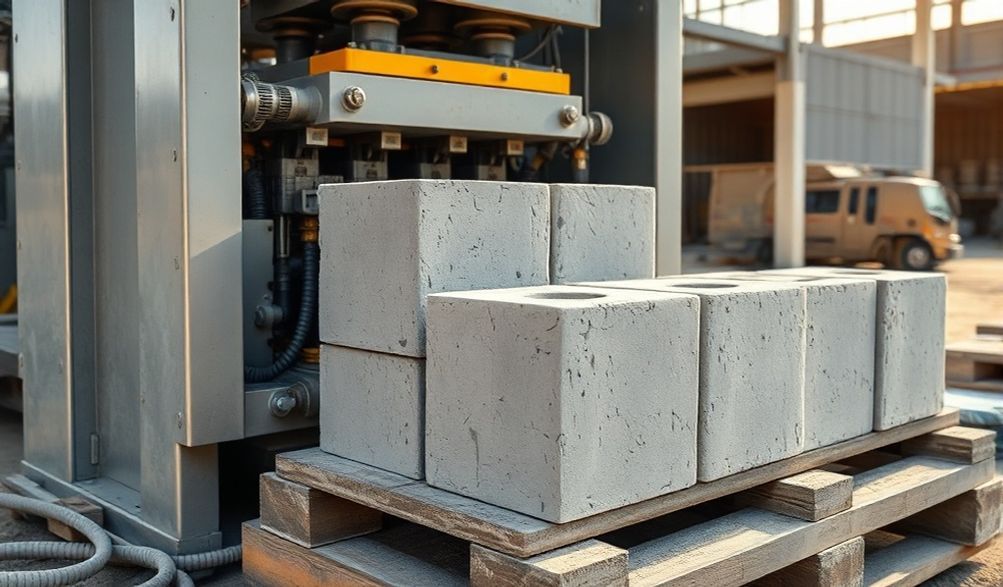
The Ultimate Guide to Semi-Automatic Block Making Machines: Efficiency Meets Affordability
Giriş
You have a growing construction business or a promising startup. Your projects are getting bigger, and the demand for high-quality bricks, blocks, and pavers is rising. Yet, you’re caught in a familiar bind: manual production is too slow and inconsistent, but a fully automated plant is a colossal, budget-breaking investment. The pressure mounts as you try to balance output, quality, and your bottom line.
There is a solution that perfectly bridges this gap: the semi-automatic block making machine. It represents the sweet spot in construction equipment, offering a significant technological leap from manual labor without the staggering cost and complexity of full automation. For small to medium enterprises (SMEs) and ambitious startups, it’s the engine for scalable, profitable growth.
This machine is the workhorse behind countless residential, commercial, and infrastructure projects, forming the very building blocks of modern construction. But how do you navigate the purchase? This comprehensive guide is designed to be your definitive resource. We will demystify how these machines work, detail their compelling advantages, break down the critical technical features, and provide a practical checklist for selecting the right model for your needs. Our goal is to empower you to make a confident, informed investment that fuels your business for years to come.
This guide is compiled from detailed industry specifications, operational manuals, and insights from seasoned construction equipment experts and manufacturers, ensuring you receive accurate and actionable information.
What is a Semi-Automatic Block Making Machine?
At its core, a semi-automatic block making machine is a mechanized system designed to produce concrete blocks, bricks, and pavers with a blend of automated processes and operator assistance. The “semi-automatic” designation is the key differentiator.
Here’s how it typically works: The machine automates the most critical and labor-intensive parts of the cycle—the precise feeding of raw concrete mix into the mold and the powerful compaction (via vibration and hydraulic pressure) that forms the block. Once the block is formed, the machine ejects the finished product onto a pallet or the ground. This is where the operator’s role becomes essential. Tasks like placing empty pallets on the machine, removing filled pallets, and stacking the cured blocks for drying are done manually.
Think of it like a sophisticated kitchen appliance. A bread maker automates the mixing, kneading, and baking, but you still need to add the ingredients, select the setting, and remove the finished loaf. Similarly, the semi-automatic machine handles the core “manufacturing,” while skilled human oversight manages the material flow and product handling. This synergy delivers a massive productivity boost over purely manual methods—where every step is done by hand—while maintaining a level of operational simplicity and affordability that fully robotic systems cannot match.
Key Advantages of Choosing a Semi-Automatic Machine
Investing in a semi-automatic block maker isn’t just about buying a piece of equipment; it’s about upgrading your entire production capability. Here are the compelling benefits that drive this decision.
Optimal Cost-Effectiveness
- Pes maýa goýumlary: The most apparent advantage is the significantly lower initial investment compared to a fully automatic production line. You get mechanized efficiency without the premium for robotic pallet handling and complex conveyor systems.
- Reduced Maintenance Costs: With simpler mechanics and electronics, maintenance is more straightforward and less expensive. Common spare parts are more affordable and often easier to source.
- Excellent ROI: For businesses looking to scale, this machine offers the fastest path to increased output and revenue. The jump from manual to semi-automatic production often pays for the machine itself in a remarkably short time through labor savings and higher sales volume.
Enhanced Productivity & Consistency
- Ýokary çykdajy: A single semi-automatic machine can produce in one hour what might take a manual team an entire day. Typical outputs can range from 500 to over 2000 blocks in an 8-hour shift, depending on the model and block type.
- Ýokary hilli gözegçilik: Every block is subjected to identical, machine-controlled vibration and compression forces. This eliminates human variability, resulting in uniform dimensions, consistent density, and reliable compressive strength—critical for structural integrity and customer trust.
Operational Flexibility & Simplicity
- Ulanyş Amatlylygy: Operators can be trained quickly, as the core compaction process is automated. This reduces dependency on highly specialized (and costly) technicians.
- Önümiň köpýönliligi: With a simple mold change, the same machine can switch from producing solid concrete blocks to hollow blocks, paving stones, or interlocking bricks. This allows you to cater to diverse market demands without multiple machines.
Lower Space and Power Requirements
- Ýapyly Dizaýn: These machines have a relatively small footprint, making them ideal for smaller production yards or startups without vast industrial space.
- Standard Power: Most models run on a standard industrial three-phase electrical supply, unlike some larger fully automatic lines that may have more demanding power requirements. Some models also offer diesel engine options for sites without reliable grid power.
Critical Technical Features and Components to Evaluate
Understanding the specifications is crucial to matching a machine to your needs. Don’t just look at the price tag; examine what these components mean for your operation.
Önümçilik Kuwwaty we Önüm
Capacity is usually stated as “blocks per hour” or “cycles per hour.” Remember, a cycle might produce 4, 6, 8, or more blocks at once, depending on the mold.
* Esasy Sorag: Ask for the output based on a standard block size (e.g., 4″ or 6″ hollow block). A realistic range for semi-automatic machines is 500 to 2000 blocks per 8-hour shift. Factor in time for mold changes, breaks, and material loading.
Machine Type: Static or Mobile?
- Статик машиналар: These are fixed in one location. They produce blocks on pallets, which are then moved to a curing area. They generally offer higher pressure and more consistent output for heavy-duty block production.
- “Ýumurtga taýýarlaýan” mobil maşynlar: Equipped with wheels, these machines move along a prepared concrete floor, laying blocks directly onto the ground. They are excellent for large-scale production of pavers and bricks, as they eliminate the need for pallets. The “egg laying” nickname comes from this action.
Core Mechanisms: Vibration & Compression
This is the heart of the machine, determining block strength.
* Titreşim Sistemi: High-frequency vibration motors consolidate the concrete mix, removing air pockets. Look for a system with adjustable frequency to suit different mix designs.
* Gidrawlik Ýetdirme: Measured in tons, this pressure force is a primary indicator of quality. Higher tonnage (e.g., 60 tons vs. 30 tons) means denser, stronger blocks suitable for load-bearing applications. Ensure the pressure is sufficient for your target block strength.
Mold System & Customization
The mold defines your product.
* Material: Molds should be made from high-carbon, hardened steel for longevity and to resist abrasion from the concrete mix.
* Interchangeability: Check how easily molds can be changed. A good system allows for relatively quick swaps to minimize downtime.
* Ыхласаларын Гуймалары: Reputable manufacturers can often produce custom molds for unique block designs or special profiles, opening up niche market opportunities.
Power Source & Specifications
- Electric Motors: The most common. Verify the voltage (e.g., 380V/415V) and power rating (kW/HP) match your facility’s capacity.
- Diesel Engines: Provide independence from the electrical grid, ideal for remote sites or areas with unstable power.
- Hybrid Options: Some machines offer the flexibility to switch between power sources.
How to Select the Right Semi-Automatic Block Maker: A Buyer’s Checklist
Navigate the purchasing process with this structured approach.
Assess Your Business Needs First
- Demand Forecast: What is your current and projected daily/weekly block requirement? Be realistic.
- Product Mix: List all the block types you need to produce now and anticipate in the next 2-3 years (e.g., hollow blocks, solid bricks, different paver styles).
- Budget Framework: Establish a total budget that includes the machine, a set of starter molds, and any necessary ancillary equipment (like a concrete mixer or forklift).
Evaluate Machine Specifications Against Your Needs
- Match Capacity: Choose a machine that meets your peak demand with a 20-30% growth buffer. Avoid under-buying (which creates bottlenecks) and over-buying (which wastes capital).
- Verify Performance Metrics: Ensure the pressure tonnage and vibration capability align with the compressive strength standards required for your blocks (e.g., for load-bearing walls).
- Material Compatibility: Discuss your local raw material mix (cement, sand, aggregate, potential use of fly ash or slag) with the supplier to confirm the machine is designed for it.
Research the Manufacturer & Supplier
Bu ýerdeE-E-A-T (Experience, Expertise, Authoritativeness, Trustworthiness) becomes critical.
* Reputation & History: How long has the manufacturer been in business? Look for established companies with a track record.
* Satyn alandan soňky hyzmat: This is non-negotiable. What does the warranty cover? Is there local technical support? How readily available are spare parts?
* Proof of Performance: Request customer references, visit existing installations if possible, or ask for detailed case studies/videos of the machine in operation.
Compare Total Operational Costs
Look beyond the sticker price:
* Energiýa sarp edişi: Estimate daily electricity or diesel costs based on the machine’s power rating and your planned operating hours.
* Emegeý While reduced, you still need 2-3 dedicated workers for efficient operation.
* Preventive Maintenance: Factor in the cost and schedule for regular oil changes, part replacements, and general upkeep.
Operational Best Practices and Maintenance Tips
Proper operation and care maximize your machine’s lifespan and output quality.
Proper Setup and Daily Operation
- Foundation is Key: Install the machine on a perfectly level, solid concrete foundation to ensure stable operation and proper vibration transfer.
- Pre-Start Checklist: Before each shift, check hydraulic oil levels, ensure all bolts are tight, inspect the vibration table for debris, and verify the mold is clean and secure.
- Perfect the Mix: The machine can only be as good as the concrete mix fed into it. Consistent proportioning and optimal moisture content (a “semi-dry” mix) are vital for clean ejection and block strength.
Essential Maintenance Schedule
Adhering to a schedule prevents major breakdowns.
* Daily: Thoroughly clean the mold, vibration table, and feed hopper after production ends to prevent concrete buildup.
* Weekly: Check all hydraulic connections for leaks, top up oil if needed, and inspect and tighten key structural bolts and fittings.
* Monthly: Conduct a more detailed inspection of vibration motors, electrical panels and connections, and the wear condition of the mold and pallets.
Troubleshooting Common Issues
- Blocks Breaking During Ejection: Often caused by insufficient vibration/pressure during compaction or an incorrect (too wet/dry) concrete mix. Re-check your mix design and machine settings.
- Uneven Block Height or Surface: This can indicate a worn-out mold, uneven feeding of material into the mold chambers, or an unlevel machine.
- Critical E-E-A-T Advice: Always refer to the official troubleshooting section of your machine’s manual first. For persistent or major mechanical/electrical issues, contact your supplier’s technical support team. Attempting complex repairs without expertise can void warranties and lead to more severe damage.
Frequently Asked Questions (FAQ)
Q1: What is the average production output of a semi-automatic block machine?
A: Output varies significantly by model and block size. A typical range is between 500 to 2000 blocks in a standard 8-hour shift. A machine making smaller bricks will be on the higher end, while one producing large hollow blocks will be on the lower end. Always ask for the output based on your specific target product.
Q2: Can I produce interlocking paving blocks with a semi-automatic machine?
A: Yes, absolutely. This is one of its key strengths. You need to purchase the specific interlocking paver mold set designed for your machine model. The process of compaction and ejection remains the same.
Q3: How much manpower is required to operate it?
A: Efficient operation typically requires 2-3 people. One operator manages the machine controls, while 1-2 assistants handle pallet placement/removal, feeding raw material to the hopper, and stacking the cured blocks. This is a significant reduction from a fully manual operation.
Q4: What is the main difference between semi-automatic and fully automatic block machines?
A: The level of human intervention. Fully automatic machines use robotic arms, stackers, and integrated conveyor systems to automate all steps: feeding, molding, curing, stacking, and pallet return. They offer the highest output with minimal labor but come with a much higher initial cost, complexity, and maintenance requirements. Semi-automatic strikes the balance.
Q5: What raw materials can be used?
A: These machines are versatile and can work with various mixes, including standard concrete (cement, sand, gravel), fly ash-based mixes (which are economical and eco-friendly), and stabilized soil-cement. It’s essential to confirm with the manufacturer that their machine is compatible with your specific mix design for optimal results.
Netije
The semi-automatic block making machine stands as a testament to practical innovation. It is not merely a tool but a strategic asset for any construction business poised for growth. By delivering a powerful combination of enhanced productivity, consistent quality, operational flexibility, and compelling cost-effectiveness, it removes the barriers that once limited small and medium enterprises.
As you move forward, let this guide serve as your foundation. Prioritize a clear understanding of your own production needs, conduct diligent research into the technical specifications that matter, and, above all, partner with a reputable manufacturer known for robust machinery and unparalleled after-sales support. The right machine is an investment that will pay dividends in reliability and profit for years to come.
Armed with this knowledge, you are now ready to engage with suppliers, ask the penetrating questions, and select the perfect semi-automatic block making machine to build the future of your business—one high-quality block at a time.
<